2-in-1 Wall Mounted PTC Heater Fan
Official Store Deal
Expert Analysis Overview
Precision Climate Control: The 2-in-1 Wall Mounted PTC Heater Fan
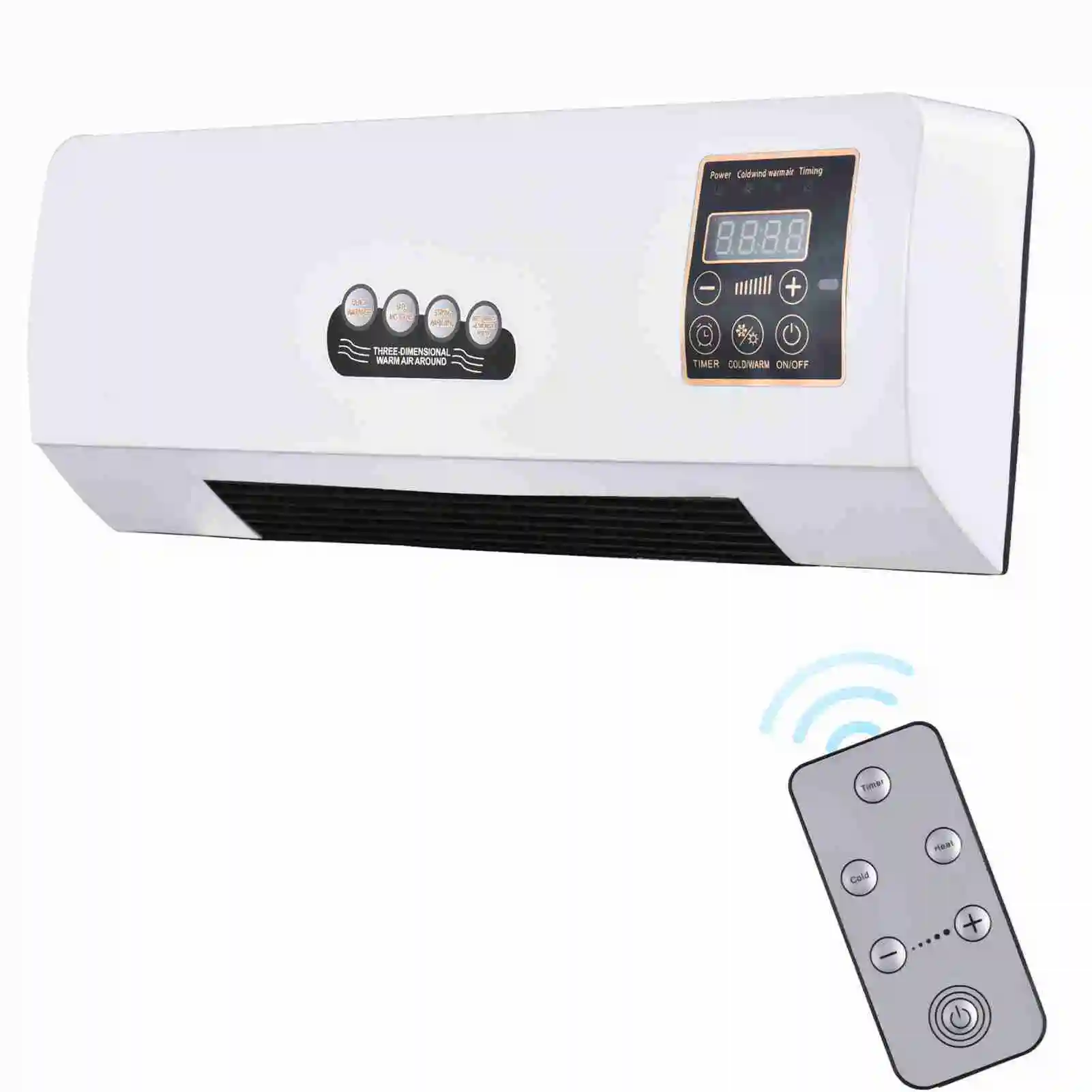
The 2-in-1 Wall Mounted PTC Heater Fan is a versatile climate control unit designed for supplemental heating and air circulation in compact to medium-sized indoor environments. This device integrates both heating and natural wind functions, offering year-round utility. Its wall-mounted form factor addresses common space constraints, making it a practical choice for various settings where floor space is at a premium.
Engineering for Thermal Efficiency: The 1000W PTC System
The core of this unit's heating capability lies in its 1000W PTC Heating System. PTC, or Positive Temperature Coefficient, heaters are ceramic-based elements known for their self-regulating properties. This inherent characteristic means the resistance of the ceramic material increases with temperature, effectively limiting the current and preventing the element from overheating. This design significantly enhances safety and potentially extends the operational lifespan of the heating element compared to traditional coil designs. The system is engineered for rapid heat generation, ensuring quick response times.
The implication of a PTC heating system is immediate and consistent warmth. Unlike traditional coil heaters that can take time to reach optimal temperature and often cycle between full power and off, PTC elements provide near-instantaneous heat and maintain a more stable output. This translates to quicker comfort in a cold room, reducing the waiting period for the desired ambient temperature. Users experience a noticeable warmth almost as soon as the unit is activated, making it ideal for quickly taking the chill out of a space. This rapid response is a key differentiator.
Compared to standard resistance wire heaters, PTC technology often offers a more consistent heat output and improved energy efficiency over time due to its self-regulating nature. Generic portable heaters frequently rely on less sophisticated heating elements, which can lead to fluctuating temperatures, hot spots, and potentially higher energy consumption as they lack the inherent thermal management of PTC. This unit's design prioritizes stable, controlled thermal delivery, aiming for both comfort and a degree of operational economy. It represents a modern approach to electric heating.
Dual Functionality and Year-Round Air Circulation
Beyond its primary heating capabilities, the unit incorporates a natural wind function, effectively operating as a dedicated fan. This dual functionality means the device is not confined to seasonal use; it provides a gentle air current, useful for circulation during warmer periods or simply to move stagnant air. This versatility significantly enhances its overall value proposition, transforming it from a seasonal appliance into a year-round climate management tool.
The practical implication of a 2-in-1 design is reduced clutter and enhanced utility. Instead of requiring separate appliances for heating in winter and cooling in summer, a single wall-mounted unit handles both functions. This simplifies room setup, reduces storage requirements for off-season appliances, and contributes to a cleaner aesthetic, especially in smaller living spaces, offices, or dormitories where floor space is often at a premium. It is a truly space-saving solution.
Many conventional space heaters are single-purpose devices, becoming redundant outside of cold weather and requiring storage. This unit's ability to switch seamlessly to a natural wind mode offers a distinct advantage, providing continuous utility throughout the year. It avoids the need for seasonal appliance swaps and the associated hassle, offering a more integrated approach to indoor climate control. This adaptability makes it a more cost-effective investment over time.
Intuitive Control and Digital Interface for Precision
Operation of the heater fan is managed through a clear digital display and an accompanying remote control. The digital interface provides immediate and precise feedback on current settings, including the target temperature, active mode (heat or natural wind), and timer status. This visual clarity ensures users have accurate and immediate information, allowing for precise control over the unit's functions without guesswork. The display is bright and easy to read.
The remote control offers significant convenience, allowing for adjustments to temperature, mode, or timer settings from a distance. This eliminates the need to physically interact with the wall-mounted unit, which is particularly beneficial in bedrooms where one might be in bed, or in offices where direct access might be inconvenient. The ability to control the unit remotely enhances user comfort and accessibility. Control is truly at your fingertips.
Generic space heaters often feature manual dials or basic button interfaces directly on the unit, requiring physical proximity for any adjustments. The inclusion of a sophisticated digital display and a full-function remote control elevates the user experience, aligning it with modern appliance expectations for ease of use and precision. This enhances accessibility for a wider range of users and scenarios.
Strategic Wall-Mounted Placement and Secure Installation
The wall-mounted design is a critical aspect of this product's utility. It frees up valuable floor space, a significant advantage in compact environments such as dormitories, small offices, or bedrooms where every square foot counts. The unit is intended for permanent or semi-permanent installation, providing a fixed heating and cooling point.
The implication of wall mounting extends beyond mere space-saving; it also significantly enhances safety by keeping the unit out of the way of foot traffic, children, and pets, reducing the risk of accidental tipping or contact with hot surfaces. This addresses a common safety concern associated with portable floor heaters. Secure installation is paramount for both operational stability and long-term safety.
Unlike portable space heaters that occupy floor space, can be tripping hazards, and are easily knocked over, a wall-mounted unit integrates more seamlessly into the room's architecture. This design choice provides a cleaner aesthetic, a more secure operational environment, and reduces the accumulation of dust and debris often found around floor-level appliances. It offers a stable, fixed heating solution that blends into the background.
Programmable Operation and Intelligent Energy Management
A 0-6 hours timing range allows users to program the unit's operation for specific durations. This feature is crucial for supporting energy conservation by enabling automatic shut-off after a set period, preventing unnecessary continuous operation. This contributes directly to lower electricity bills and a reduced environmental footprint.
The practical implication of a timer function is enhanced energy efficiency and peace of mind. Users can set the heater to run for a specific duration, for instance, to pre-warm a room before waking up, to provide warmth during a specific work period, or to turn off automatically after falling asleep. This prevents energy waste from forgetting to turn the unit off and ensures comfort only when needed.
Many basic space heaters lack any form of programmable timer, requiring manual intervention for activation and deactivation, which can lead to wasted energy. This unit's integrated timing function offers a level of automation that is beneficial for both convenience and responsible energy consumption, allowing for tailored heating schedules. It promotes mindful usage and cost savings.
Acoustic Performance and Undisturbed Environmental Comfort
The unit is marketed with a low noise characteristic, suggesting it operates quietly enough not to disturb daily activities, work, or sleep. This is a crucial consideration for appliances intended for use in sensitive living spaces, bedrooms, and quiet office environments where intrusive sound can be a significant detriment. Quiet operation is a key factor for user satisfaction.
The implication of low noise is enhanced comfort and an undisturbed environment. A noisy heater can be a significant distraction, impacting sleep quality, concentration during work, or the enjoyment of leisure activities. This unit aims to provide effective warmth and air circulation without generating intrusive sound, allowing it to blend seamlessly into the background. Users can enjoy warmth without auditory disruption.
Compared to some fan-based portable heaters that can generate considerable operational noise, often exceeding 50-60 decibels, a low-noise design is a distinct advantage. While specific decibel levels are not provided, the claim implies an operational sound profile significantly quieter than typical fan heaters, making it suitable for environments where silence is valued. This contributes to a serene and productive atmosphere.
OEM Compatibility and Critical Installation Verification
As an OEM Compatibility Checker, the primary concern for this wall-mounted heater fan revolves around its integration into existing electrical and structural systems. The unit is a standalone appliance, meaning it does not require compatibility with specific HVAC systems or proprietary smart home ecosystems. However, electrical compatibility is non-negotiable. Users must verify their local voltage and frequency (e.g., 110V-120V/60Hz for North America, 220V-240V/50Hz for many other regions) match the unit's specified requirements. Operating the unit on an incompatible electrical supply can lead to severe malfunction, permanent damage to the appliance, or, critically, fire hazards and electrical shock. A dedicated, properly grounded power outlet is required for safe operation.
The mounting surface integrity is another critical compatibility point. The images depict the unit mounted on a standard interior wall, likely drywall or plaster over studs. This implies the wall must be structurally capable of supporting the unit's weight, which, while not excessive for a compact heater, still requires secure anchoring. Drywall installations will necessitate the use of appropriate heavy-duty anchors designed for the unit's weight, ensuring they are rated for shear and pull-out forces. Mounting directly into wall studs provides optimal stability and is always the preferred method where possible. Failure to secure the unit properly risks detachment, leading to potential injury, property damage, or damage to the unit itself. The provided screws suggest a standard installation method, but the user must assess their wall type.
Furthermore, spatial compatibility and clearance requirements are essential. The unit, as a heat-generating appliance, requires adequate clearance from all flammable materials such such as curtains, drapes, bedding, upholstered furniture, and paper products. The product's heat output necessitates a safe operating perimeter to prevent fire risks. While the exact dimensions are not provided in the metadata, the visual scale suggests a compact form factor. However, manufacturer-specified clearance guidelines, typically found in the user manual, must be strictly followed. Ignoring these clearances can lead to overheating of adjacent materials and potential ignition. This ensures safe heat dissipation and prevents accidental fires.
The power cord length and routing represent a practical compatibility factor. If the unit is to be mounted high on a wall, the power cord must be long enough to reach a suitable, dedicated power outlet without requiring an extension cord. The use of extension cords with high-wattage heating appliances is generally discouraged due to the risk of overheating, fire, and circuit overload, unless the extension cord is specifically rated for the appliance's wattage and gauge. Planning the mounting location relative to accessible and appropriate power sources is crucial for a clean, safe, and compliant installation. This prevents overloaded circuits and potential electrical hazards.
Finally, while the unit is presented as a complete product, any future maintenance or replacement parts would likely be proprietary to the manufacturer. This means users should not expect off-the-shelf compatibility with generic heater components available at local hardware stores. Should a specific internal part fail (e.g., the PTC element, fan motor, or control board), sourcing a replacement would depend entirely on the manufacturer's support channels or specialized distributors. This is a common characteristic of integrated appliances and should be considered for long-term serviceability.
Final Thoughts on Value and Application
This 2-in-1 Wall Mounted PTC Heater Fan presents a compelling option for those seeking a compact, efficient, and versatile climate control solution. Its ability to provide both rapid heating and natural air circulation, combined with a space-saving design and convenient remote operation, positions it as a significant upgrade over many basic portable heaters. The integrated timer and low-noise operation further enhance its appeal for residential and small office environments, offering a blend of comfort, convenience, and energy consciousness.
Imagine stepping into a comfortably warm room on a chilly morning, the heater having silently pre-warmed the space before your arrival, precisely timed to your schedule. Picture a clutter-free living area, free from bulky floor heaters, with the sleek unit discreetly mounted on the wall, blending seamlessly with your decor. Envision the ease of adjusting the temperature or switching modes from your bed or desk with a simple click of the remote, without interrupting your activity. This unit offers not just warmth, but a more organized, convenient, and comfortable living or working environment, allowing for precise climate management without compromise, enhancing daily comfort and efficiency.