28BYJ-48 Stepper Motor with ULN2003 Driver Board
Official Store Deal
Expert Analysis Overview
The 28BYJ-48 Stepper Motor with ULN2003 Driver Board is an accessible and precise motion control solution designed for hobbyists and educators venturing into automated systems, particularly those with solar energy applications. This combination provides a ready-to-use platform for projects requiring accurate angular positioning without significant investment or complex setup.
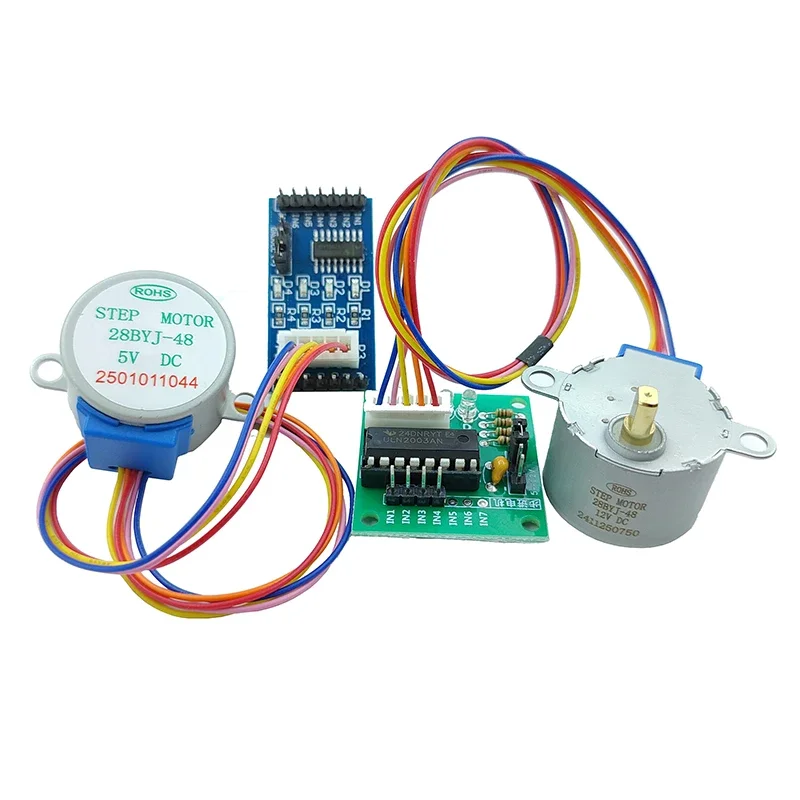
This stepper motor, specifically the 28BYJ-48 model, is a 4-phase unipolar stepper motor. It operates by energizing its coils in a specific sequence, allowing for discrete, incremental movements. The visible motor casing indicates a compact form factor, making it suitable for integration into smaller projects where space is a consideration. It is a small motor.
For solar energy enthusiasts, this precision translates directly into enhanced efficiency. Imagine a small solar panel array that needs to track the sun's movement across the sky. Unlike a standard DC motor, which spins continuously and requires complex feedback loops for positioning, the 28BYJ-48 can be commanded to move a specific number of steps, ensuring the panel aligns accurately. This capability is crucial for maximizing solar energy capture throughout the day, a key aspect of building self-sustaining energy systems.
Compared to generic DC motors often found in entry-level kits, this stepper motor offers a significant upgrade in positional accuracy. While a DC motor might be simpler to wire for basic rotation, achieving precise angles with one typically involves adding encoders and implementing PID control, which adds complexity and cost. The geared design of the 28BYJ-48 provides a high reduction ratio, translating its native step angle into a much finer output resolution, making it inherently more precise for tasks like sun tracking.
The motor is paired with a ULN2003 driver board, a critical component for its operation. The ULN2003 is a Darlington array IC, meaning it contains seven high-voltage, high-current Darlington transistor pairs. These transistors act as switches, allowing a low-current control signal from a microcontroller, such as an Arduino, to switch the higher currents required by the stepper motor coils. This board is compact.
This integration simplifies the interfacing process considerably. Without a driver board, connecting a microcontroller directly to a stepper motor would risk damaging the microcontroller due to insufficient current output or back-EMF spikes. The ULN2003 board provides the necessary current amplification and protection, ensuring a robust and reliable connection. Users can focus on the logic of their solar tracking algorithm rather than intricate power electronics.
Unlike building a driver circuit from discrete components, which involves sourcing individual transistors, resistors, and diodes, the ULN2003 driver board offers a plug-and-play solution. This significantly reduces development time and the potential for wiring errors, making it an ideal choice for hobbyists and students. It's a complete package.
The 28BYJ-48 stepper motor is available in both 5V DC and 12V DC variants. This voltage flexibility is particularly advantageous for solar energy projects. A 5V version can be directly powered by the 5V output of many microcontrollers or small USB power banks, which themselves can be charged via solar panels. The 12V version integrates seamlessly with standard 12V solar battery systems, a common voltage in off-grid setups.
Low power consumption is a hallmark of these small stepper motors, especially when not actively stepping. This characteristic is vital for off-grid solar applications where every watt-hour counts. A solar tracker, for instance, only needs to adjust its position periodically throughout the day, meaning the motor spends most of its time in a low-power holding state. This minimizes drain on the battery bank, extending the operational autonomy of the solar system.
Compared to larger industrial motors or even some higher-torque hobby motors, the 28BYJ-48's minimal power draw makes it a more sustainable choice for battery-powered solar projects. It helps calculate efficiency losses by ensuring the motor itself isn't a significant power sink. This allows for longer run times and smaller battery requirements, contributing to a more efficient and cost-effective self-sustaining energy system.
The capabilities of this motor and driver combination extend well beyond basic rotation. For solar energy hobbyists, it can form the core of a single or dual-axis solar tracker. By precisely controlling the angle of solar panels, the system can ensure optimal sunlight exposure, even as the sun moves or seasons change. This directly impacts the energy yield from a solar installation.
Beyond tracking, these motors can automate various aspects of a solar-powered home or greenhouse. Consider automated ventilation systems that open and close vents based on temperature sensors, or small robotic arms for scientific experiments powered by solar energy. Its versatility makes it a valuable asset for numerous projects. It opens new possibilities.
This motor allows users to verify compatibility with existing solar setups by providing a standard DC interface. Its common voltage options mean it can be directly integrated into existing 5V or 12V circuits without needing complex power conversion. This ease of integration reduces complexity and the potential for compatibility issues, making it a practical choice for expanding existing solar projects or starting new ones.
The visible construction of the 28BYJ-48 motor features a metal housing and standard JST connectors for its multi-colored wires. The ULN2003 driver board is a simple PCB with the IC and pin headers. These components suggest a build quality suitable for educational and hobbyist applications, where they are typically used in controlled environments.
For indoor or protected outdoor solar projects, this construction offers adequate durability. The motor's internal gearing is plastic, which contributes to its quiet operation and cost-effectiveness. While not designed for heavy industrial use or prolonged exposure to harsh weather, it performs reliably within its intended scope. It's built for learning.
Unlike industrial-grade stepper motors that feature sealed housings and heavy-duty metal gears for extreme conditions, this unit prioritizes accessibility and cost. For the average solar hobbyist, this trade-off is perfectly acceptable. It provides enough robustness for prototyping and experimental setups, allowing for repeated assembly and disassembly without immediate failure, provided it's kept away from moisture and excessive dust.
One of the most compelling aspects of the 28BYJ-48 and ULN2003 combo is its extremely low price point. This affordability significantly lowers the barrier to entry for anyone interested in exploring motion control, robotics, or automated solar systems. It allows for experimentation without the fear of damaging expensive components.
This low cost, coupled with its ease of use with popular microcontrollers like Arduino, makes it an ideal educational tool. Students and hobbyists can quickly get a motor up and running, focusing on programming and system design rather than complex hardware debugging. It's a great starter kit.
Compared to more expensive servo motors or integrated stepper motor systems, this combination offers exceptional value. While those alternatives might provide higher torque or more advanced features, they come at a significantly higher cost. For learning the fundamentals of stepper motor control and implementing small-scale automation in solar projects, this kit provides all the necessary capability at a fraction of the price, maximizing the return on investment for educational and hobbyist endeavors.
Imagine the satisfaction of seeing your custom-built solar tracker precisely follow the sun, or an automated greenhouse vent opening and closing on cue, all powered by the sun and controlled with this reliable motor. This combination empowers you to bring your sustainable energy ideas to life, transforming concepts into tangible, working prototypes that contribute to a greener future. The possibilities are endless.
Precision in Motion Control
This stepper motor, specifically the 28BYJ-48 model, is a 4-phase unipolar stepper motor. It operates by energizing its coils in a specific sequence, allowing for discrete, incremental movements. The visible motor casing indicates a compact form factor, making it suitable for integration into smaller projects where space is a consideration. It is a small motor.
For solar energy enthusiasts, this precision translates directly into enhanced efficiency. Imagine a small solar panel array that needs to track the sun's movement across the sky. Unlike a standard DC motor, which spins continuously and requires complex feedback loops for positioning, the 28BYJ-48 can be commanded to move a specific number of steps, ensuring the panel aligns accurately. This capability is crucial for maximizing solar energy capture throughout the day, a key aspect of building self-sustaining energy systems.
Compared to generic DC motors often found in entry-level kits, this stepper motor offers a significant upgrade in positional accuracy. While a DC motor might be simpler to wire for basic rotation, achieving precise angles with one typically involves adding encoders and implementing PID control, which adds complexity and cost. The geared design of the 28BYJ-48 provides a high reduction ratio, translating its native step angle into a much finer output resolution, making it inherently more precise for tasks like sun tracking.
Driving the System with ULN2003
The motor is paired with a ULN2003 driver board, a critical component for its operation. The ULN2003 is a Darlington array IC, meaning it contains seven high-voltage, high-current Darlington transistor pairs. These transistors act as switches, allowing a low-current control signal from a microcontroller, such as an Arduino, to switch the higher currents required by the stepper motor coils. This board is compact.
This integration simplifies the interfacing process considerably. Without a driver board, connecting a microcontroller directly to a stepper motor would risk damaging the microcontroller due to insufficient current output or back-EMF spikes. The ULN2003 board provides the necessary current amplification and protection, ensuring a robust and reliable connection. Users can focus on the logic of their solar tracking algorithm rather than intricate power electronics.
Unlike building a driver circuit from discrete components, which involves sourcing individual transistors, resistors, and diodes, the ULN2003 driver board offers a plug-and-play solution. This significantly reduces development time and the potential for wiring errors, making it an ideal choice for hobbyists and students. It's a complete package.
Energy Efficiency for Off-Grid Applications
The 28BYJ-48 stepper motor is available in both 5V DC and 12V DC variants. This voltage flexibility is particularly advantageous for solar energy projects. A 5V version can be directly powered by the 5V output of many microcontrollers or small USB power banks, which themselves can be charged via solar panels. The 12V version integrates seamlessly with standard 12V solar battery systems, a common voltage in off-grid setups.
Low power consumption is a hallmark of these small stepper motors, especially when not actively stepping. This characteristic is vital for off-grid solar applications where every watt-hour counts. A solar tracker, for instance, only needs to adjust its position periodically throughout the day, meaning the motor spends most of its time in a low-power holding state. This minimizes drain on the battery bank, extending the operational autonomy of the solar system.
Compared to larger industrial motors or even some higher-torque hobby motors, the 28BYJ-48's minimal power draw makes it a more sustainable choice for battery-powered solar projects. It helps calculate efficiency losses by ensuring the motor itself isn't a significant power sink. This allows for longer run times and smaller battery requirements, contributing to a more efficient and cost-effective self-sustaining energy system.
Integration with Solar Projects and Beyond
The capabilities of this motor and driver combination extend well beyond basic rotation. For solar energy hobbyists, it can form the core of a single or dual-axis solar tracker. By precisely controlling the angle of solar panels, the system can ensure optimal sunlight exposure, even as the sun moves or seasons change. This directly impacts the energy yield from a solar installation.
Beyond tracking, these motors can automate various aspects of a solar-powered home or greenhouse. Consider automated ventilation systems that open and close vents based on temperature sensors, or small robotic arms for scientific experiments powered by solar energy. Its versatility makes it a valuable asset for numerous projects. It opens new possibilities.
This motor allows users to verify compatibility with existing solar setups by providing a standard DC interface. Its common voltage options mean it can be directly integrated into existing 5V or 12V circuits without needing complex power conversion. This ease of integration reduces complexity and the potential for compatibility issues, making it a practical choice for expanding existing solar projects or starting new ones.
Build Quality and Longevity for Hobby Use
The visible construction of the 28BYJ-48 motor features a metal housing and standard JST connectors for its multi-colored wires. The ULN2003 driver board is a simple PCB with the IC and pin headers. These components suggest a build quality suitable for educational and hobbyist applications, where they are typically used in controlled environments.
For indoor or protected outdoor solar projects, this construction offers adequate durability. The motor's internal gearing is plastic, which contributes to its quiet operation and cost-effectiveness. While not designed for heavy industrial use or prolonged exposure to harsh weather, it performs reliably within its intended scope. It's built for learning.
Unlike industrial-grade stepper motors that feature sealed housings and heavy-duty metal gears for extreme conditions, this unit prioritizes accessibility and cost. For the average solar hobbyist, this trade-off is perfectly acceptable. It provides enough robustness for prototyping and experimental setups, allowing for repeated assembly and disassembly without immediate failure, provided it's kept away from moisture and excessive dust.
Value Proposition for Experimenters
One of the most compelling aspects of the 28BYJ-48 and ULN2003 combo is its extremely low price point. This affordability significantly lowers the barrier to entry for anyone interested in exploring motion control, robotics, or automated solar systems. It allows for experimentation without the fear of damaging expensive components.
This low cost, coupled with its ease of use with popular microcontrollers like Arduino, makes it an ideal educational tool. Students and hobbyists can quickly get a motor up and running, focusing on programming and system design rather than complex hardware debugging. It's a great starter kit.
Compared to more expensive servo motors or integrated stepper motor systems, this combination offers exceptional value. While those alternatives might provide higher torque or more advanced features, they come at a significantly higher cost. For learning the fundamentals of stepper motor control and implementing small-scale automation in solar projects, this kit provides all the necessary capability at a fraction of the price, maximizing the return on investment for educational and hobbyist endeavors.
Imagine the satisfaction of seeing your custom-built solar tracker precisely follow the sun, or an automated greenhouse vent opening and closing on cue, all powered by the sun and controlled with this reliable motor. This combination empowers you to bring your sustainable energy ideas to life, transforming concepts into tangible, working prototypes that contribute to a greener future. The possibilities are endless.