2EDG PCB Screw Terminal Block Connector System
Official Store Deal
Expert Analysis Overview
The 2EDG PCB Screw Terminal Block Connector System is an essential, versatile PCB-mountable electrical connector system aimed at electronics hobbyists, prototype developers, and industrial control system builders requiring secure, removable wire connections. This modular solution addresses the critical need for reliable and adaptable circuit interfaces, moving beyond the limitations of permanent wiring methods. Its design directly supports efficient assembly and simplified field maintenance, a significant advantage in dynamic electronic environments.
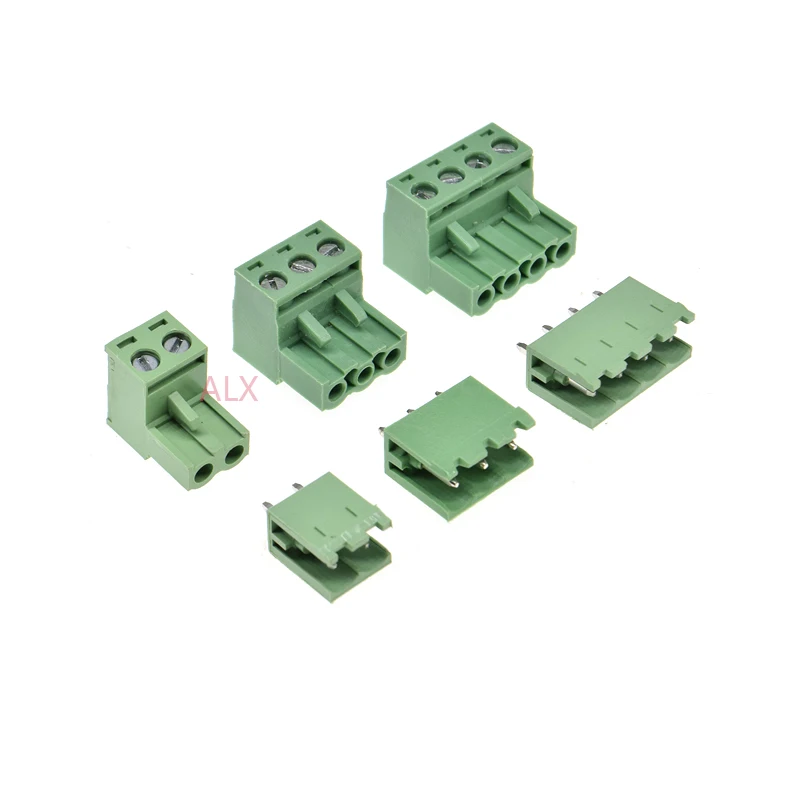
The product images display multiple sets of green, two-part terminal blocks. These include both male pin headers designed for PCB mounting and corresponding female plug connectors. Pin counts vary, visibly showing 2, 3, and 4-pin configurations, with the product title indicating availability up to 9 pins. A 5.08mm pitch is specified, a common standard in industrial and hobbyist electronics. Screw terminals are clearly visible on the plug components, indicating a robust wire termination method. The modularity is evident.
This modular design significantly enhances the flexibility of circuit board integration. The 5.08mm pitch provides adequate spacing between terminals, reducing the risk of accidental short circuits during wiring or operation. This spacing is crucial for maintaining proper insulation distances, especially when dealing with moderate voltages. It also accommodates a reasonable wire gauge, crucial for maintaining current integrity and preventing localized heating. The screw terminals ensure a mechanically robust and electrically sound connection, minimizing contact resistance and potential for intermittent faults. This system allows for easy disconnection and reconnection of external wiring, a critical feature for maintenance or module replacement in complex systems. Field serviceability is paramount.
Unlike permanent soldered connections, which necessitate de-soldering for any modification or repair, these pluggable terminals offer a non-destructive method of circuit alteration. This saves considerable time. Compared to smaller pitch connectors, the 5.08mm standard often provides superior current carrying capacity and greater ease of wiring, particularly for field installations where precision tools may be limited. This design mitigates the common frustration of troubleshooting fixed wiring, saving significant time and effort in both development and operational phases. It is a clear upgrade.
The visible components feature a distinct green plastic housing, characteristic of many electrical connectors. This material is typically a polyamide (PA66) or similar engineering thermoplastic, chosen for its electrical insulation properties and mechanical strength. The metal components, including the screw terminals and the pin headers, appear to be brass or a copper alloy, likely plated with tin or nickel to enhance conductivity and corrosion resistance. The screws themselves are typically steel, often zinc-plated.
The selection of appropriate insulation material is fundamental for preventing electrical shorts and ensuring the connector's current carrying capacity. A robust housing protects internal conductors from environmental factors and accidental contact, which is vital for user safety. The material must withstand the operational temperature range without deforming or losing its dielectric strength. Furthermore, the metal contacts must possess low resistance to minimize power loss and heat generation, which are critical factors in preventing thermal runaway and potential fire hazards. Proper material selection directly impacts long-term reliability.
Contrast this with connectors manufactured from low-grade plastics that can degrade under heat, UV exposure, or chemical attack, compromising both mechanical integrity and electrical safety. Such degradation can lead to brittle housings, exposed conductors, and ultimately, system failure or dangerous conditions. The use of plated copper alloys for contacts, unlike unplated or inferior metals, ensures consistent electrical performance over time, resisting oxidation and maintaining a stable connection. This attention to material detail is a hallmark of dependable electrical components.
The product's design clearly separates into male pin header and female plug components. The straight pin headers are intended for through-hole mounting onto a Printed Circuit Board (PCB), providing a stable and permanent board-level interface. The female plugs are designed to accept stripped wires, secured by the integrated screw terminals. These two parts mate together, forming a complete, detachable connection. The visual separation is distinct.
This two-part system significantly simplifies the installation process. External wiring can be pre-terminated into the female plugs off-board, reducing the complexity and time required for final assembly onto the PCB. This approach is particularly beneficial in production environments where efficiency is key. For maintenance or upgrades, individual modules or entire sections of wiring can be quickly disconnected and reconnected without disturbing the soldered PCB connections. This capability drastically reduces downtime and the risk of damage to sensitive circuit board components during servicing. It streamlines operations.
Compared to direct-to-PCB screw terminals, which require all wiring to be performed directly on the board, this plug-and-socket configuration offers superior flexibility. Direct-to-PCB terminals can make board removal or component replacement cumbersome, often requiring the disconnection of every wire individually. The 2EDG system, conversely, allows for rapid module swapping, making it an ideal choice for systems designed for modularity, field upgrades, or frequent testing. This design choice directly addresses common frustrations in electronic system management.
The physical dimensions of the screw terminals and the 5.08mm pitch suggest a capacity for moderate current loads. The robust appearance of the metal contacts and screws implies a design intended for secure wire retention, which is a prerequisite for stable current flow. While specific amperage ratings are not provided, the form factor is consistent with applications requiring reliable power delivery to various circuit components. Wire gauge compatibility is critical.
Understanding the importance of matching wire gauge to the connector's capacity is paramount for electrical safety and system performance. Using an undersized wire for a given current load can lead to excessive heat generation within the wire and at the terminal, potentially melting insulation, damaging components, or initiating an electrical fire. Conversely, attempting to fit an oversized wire into a terminal can result in poorly seated connections, leading to high contact resistance and similar thermal issues. The screw mechanism must securely clamp the conductor without damaging it.
This connector system, unlike smaller, less robust alternatives, is designed to handle the typical current requirements of control circuits, sensor interfaces, and low-power distribution within electronic enclosures. It provides a more secure and higher-rated connection than simple crimp terminals or spring-loaded connectors for applications where sustained current flow is expected. Proper wire selection, adhering to established electrical codes and manufacturer guidelines, is essential to fully leverage the safety and performance capabilities of these terminals. This prevents common electrical failures.
The solid construction visible in the product images, particularly the thick walls of the plastic housing and the substantial metal components, suggests a design focused on durability. The connectors appear capable of withstanding typical mechanical stresses encountered during installation and routine operation. The green color is often indicative of standard industrial-grade components, implying a certain level of material resilience. Mechanical stability is evident.
The operational environment for such connectors often includes control panels, embedded systems, or industrial machinery where vibration, moderate temperature fluctuations, and occasional physical impacts are common. A durable connector must maintain its electrical and mechanical integrity under these conditions. The secure screw terminals are inherently more resistant to wire pull-out and vibration-induced loosening compared to less robust termination methods. The housing protects the internal electrical paths from dust and minor splashes, although specific IP ratings are not provided. This resilience ensures consistent performance.
Contrast this with flimsy connectors that fail under minimal mechanical stress or environmental exposure, leading to costly downtime and frequent repairs. Connectors with inadequate housing materials can become brittle, crack, or lose their insulating properties, creating hazardous conditions. The visible design of these 2EDG terminals suggests a commitment to longevity, offering a more reliable alternative to components that might prematurely degrade in demanding applications. This contributes to system uptime.
The product is offered in "10 Sets" and various pin counts, as indicated by the title and visual representation. This packaging strategy, combined with the modular design, positions these connectors as a practical solution for both small-scale prototyping and larger production runs. The availability of multiple pin configurations within the same series ensures design consistency across different circuit requirements. Cost-effectiveness is a key factor.
This modularity and availability in sets make the 2EDG system a cost-effective choice for both initial development and subsequent manufacturing. Engineers and hobbyists can quickly iterate on designs without committing to permanent connections, facilitating rapid testing and modification. For production, the ability to pre-wire and quickly assemble modules reduces labor costs and improves throughput. The standardization of the 5.08mm pitch further simplifies inventory management and sourcing. This system optimizes workflow.
Positioning this as an upgrade from ad-hoc wiring solutions or permanent soldering for projects requiring future modifications is accurate. While initial cost might be slightly higher than basic soldered connections, the long-term value derived from reduced assembly time, simplified troubleshooting, and enhanced maintainability far outweighs the initial investment. This connector system is not merely a component; it is a strategic tool for efficient electronic design and deployment, ensuring projects remain adaptable and serviceable throughout their lifecycle. It is a smart choice.
Imagine the streamlined process of assembling your next control panel, where each module effortlessly clicks into place, secured by robust screw terminals that you trust implicitly. Envision the ease of field diagnostics, where a quick swap of a pre-wired component resolves an issue in minutes, not hours. This system empowers you to build with confidence, knowing your connections are not only electrically sound but also engineered for the realities of maintenance and future expansion. Your projects will benefit from enhanced reliability and simplified serviceability, allowing you to focus on innovation rather than troubleshooting. This is the operational advantage these connectors deliver.
Connection Integrity and Modularity: The Foundation of Reliable Wiring
The product images display multiple sets of green, two-part terminal blocks. These include both male pin headers designed for PCB mounting and corresponding female plug connectors. Pin counts vary, visibly showing 2, 3, and 4-pin configurations, with the product title indicating availability up to 9 pins. A 5.08mm pitch is specified, a common standard in industrial and hobbyist electronics. Screw terminals are clearly visible on the plug components, indicating a robust wire termination method. The modularity is evident.
This modular design significantly enhances the flexibility of circuit board integration. The 5.08mm pitch provides adequate spacing between terminals, reducing the risk of accidental short circuits during wiring or operation. This spacing is crucial for maintaining proper insulation distances, especially when dealing with moderate voltages. It also accommodates a reasonable wire gauge, crucial for maintaining current integrity and preventing localized heating. The screw terminals ensure a mechanically robust and electrically sound connection, minimizing contact resistance and potential for intermittent faults. This system allows for easy disconnection and reconnection of external wiring, a critical feature for maintenance or module replacement in complex systems. Field serviceability is paramount.
Unlike permanent soldered connections, which necessitate de-soldering for any modification or repair, these pluggable terminals offer a non-destructive method of circuit alteration. This saves considerable time. Compared to smaller pitch connectors, the 5.08mm standard often provides superior current carrying capacity and greater ease of wiring, particularly for field installations where precision tools may be limited. This design mitigates the common frustration of troubleshooting fixed wiring, saving significant time and effort in both development and operational phases. It is a clear upgrade.
Material Science and Electrical Safety: Beyond the Green Exterior
The visible components feature a distinct green plastic housing, characteristic of many electrical connectors. This material is typically a polyamide (PA66) or similar engineering thermoplastic, chosen for its electrical insulation properties and mechanical strength. The metal components, including the screw terminals and the pin headers, appear to be brass or a copper alloy, likely plated with tin or nickel to enhance conductivity and corrosion resistance. The screws themselves are typically steel, often zinc-plated.
The selection of appropriate insulation material is fundamental for preventing electrical shorts and ensuring the connector's current carrying capacity. A robust housing protects internal conductors from environmental factors and accidental contact, which is vital for user safety. The material must withstand the operational temperature range without deforming or losing its dielectric strength. Furthermore, the metal contacts must possess low resistance to minimize power loss and heat generation, which are critical factors in preventing thermal runaway and potential fire hazards. Proper material selection directly impacts long-term reliability.
Contrast this with connectors manufactured from low-grade plastics that can degrade under heat, UV exposure, or chemical attack, compromising both mechanical integrity and electrical safety. Such degradation can lead to brittle housings, exposed conductors, and ultimately, system failure or dangerous conditions. The use of plated copper alloys for contacts, unlike unplated or inferior metals, ensures consistent electrical performance over time, resisting oxidation and maintaining a stable connection. This attention to material detail is a hallmark of dependable electrical components.
Installation Dynamics and Field Serviceability: Simplifying Circuit Management
The product's design clearly separates into male pin header and female plug components. The straight pin headers are intended for through-hole mounting onto a Printed Circuit Board (PCB), providing a stable and permanent board-level interface. The female plugs are designed to accept stripped wires, secured by the integrated screw terminals. These two parts mate together, forming a complete, detachable connection. The visual separation is distinct.
This two-part system significantly simplifies the installation process. External wiring can be pre-terminated into the female plugs off-board, reducing the complexity and time required for final assembly onto the PCB. This approach is particularly beneficial in production environments where efficiency is key. For maintenance or upgrades, individual modules or entire sections of wiring can be quickly disconnected and reconnected without disturbing the soldered PCB connections. This capability drastically reduces downtime and the risk of damage to sensitive circuit board components during servicing. It streamlines operations.
Compared to direct-to-PCB screw terminals, which require all wiring to be performed directly on the board, this plug-and-socket configuration offers superior flexibility. Direct-to-PCB terminals can make board removal or component replacement cumbersome, often requiring the disconnection of every wire individually. The 2EDG system, conversely, allows for rapid module swapping, making it an ideal choice for systems designed for modularity, field upgrades, or frequent testing. This design choice directly addresses common frustrations in electronic system management.
Current Handling and Wire Compatibility: Ensuring Power Integrity
The physical dimensions of the screw terminals and the 5.08mm pitch suggest a capacity for moderate current loads. The robust appearance of the metal contacts and screws implies a design intended for secure wire retention, which is a prerequisite for stable current flow. While specific amperage ratings are not provided, the form factor is consistent with applications requiring reliable power delivery to various circuit components. Wire gauge compatibility is critical.
Understanding the importance of matching wire gauge to the connector's capacity is paramount for electrical safety and system performance. Using an undersized wire for a given current load can lead to excessive heat generation within the wire and at the terminal, potentially melting insulation, damaging components, or initiating an electrical fire. Conversely, attempting to fit an oversized wire into a terminal can result in poorly seated connections, leading to high contact resistance and similar thermal issues. The screw mechanism must securely clamp the conductor without damaging it.
This connector system, unlike smaller, less robust alternatives, is designed to handle the typical current requirements of control circuits, sensor interfaces, and low-power distribution within electronic enclosures. It provides a more secure and higher-rated connection than simple crimp terminals or spring-loaded connectors for applications where sustained current flow is expected. Proper wire selection, adhering to established electrical codes and manufacturer guidelines, is essential to fully leverage the safety and performance capabilities of these terminals. This prevents common electrical failures.
Durability and Environmental Considerations: Built for Sustained Operation
The solid construction visible in the product images, particularly the thick walls of the plastic housing and the substantial metal components, suggests a design focused on durability. The connectors appear capable of withstanding typical mechanical stresses encountered during installation and routine operation. The green color is often indicative of standard industrial-grade components, implying a certain level of material resilience. Mechanical stability is evident.
The operational environment for such connectors often includes control panels, embedded systems, or industrial machinery where vibration, moderate temperature fluctuations, and occasional physical impacts are common. A durable connector must maintain its electrical and mechanical integrity under these conditions. The secure screw terminals are inherently more resistant to wire pull-out and vibration-induced loosening compared to less robust termination methods. The housing protects the internal electrical paths from dust and minor splashes, although specific IP ratings are not provided. This resilience ensures consistent performance.
Contrast this with flimsy connectors that fail under minimal mechanical stress or environmental exposure, leading to costly downtime and frequent repairs. Connectors with inadequate housing materials can become brittle, crack, or lose their insulating properties, creating hazardous conditions. The visible design of these 2EDG terminals suggests a commitment to longevity, offering a more reliable alternative to components that might prematurely degrade in demanding applications. This contributes to system uptime.
Value Proposition for Prototyping and Production: An Investment in Efficiency
The product is offered in "10 Sets" and various pin counts, as indicated by the title and visual representation. This packaging strategy, combined with the modular design, positions these connectors as a practical solution for both small-scale prototyping and larger production runs. The availability of multiple pin configurations within the same series ensures design consistency across different circuit requirements. Cost-effectiveness is a key factor.
This modularity and availability in sets make the 2EDG system a cost-effective choice for both initial development and subsequent manufacturing. Engineers and hobbyists can quickly iterate on designs without committing to permanent connections, facilitating rapid testing and modification. For production, the ability to pre-wire and quickly assemble modules reduces labor costs and improves throughput. The standardization of the 5.08mm pitch further simplifies inventory management and sourcing. This system optimizes workflow.
Positioning this as an upgrade from ad-hoc wiring solutions or permanent soldering for projects requiring future modifications is accurate. While initial cost might be slightly higher than basic soldered connections, the long-term value derived from reduced assembly time, simplified troubleshooting, and enhanced maintainability far outweighs the initial investment. This connector system is not merely a component; it is a strategic tool for efficient electronic design and deployment, ensuring projects remain adaptable and serviceable throughout their lifecycle. It is a smart choice.
Imagine the streamlined process of assembling your next control panel, where each module effortlessly clicks into place, secured by robust screw terminals that you trust implicitly. Envision the ease of field diagnostics, where a quick swap of a pre-wired component resolves an issue in minutes, not hours. This system empowers you to build with confidence, knowing your connections are not only electrically sound but also engineered for the realities of maintenance and future expansion. Your projects will benefit from enhanced reliability and simplified serviceability, allowing you to focus on innovation rather than troubleshooting. This is the operational advantage these connectors deliver.