304 Stainless Steel Solid Round Rods for Craft and Lathe
Official Store Deal
Expert Analysis Overview
The 304 Stainless Steel Round Rods are an essential, durable stock material for precision restoration and custom fabrication projects. This offering stands as a reliable foundation for intricate work, providing the raw material necessary for creating components that meet exacting standards of authenticity and longevity. Unlike lesser alloys, 304 stainless steel offers a superior balance of strength and corrosion resistance, critical for preserving the integrity of cherished items.
These rods are forged from 304 stainless steel, a widely recognized austenitic stainless steel known for its exceptional properties. The composition includes at least 18% chromium and 8% nickel, which are pivotal in its resistance to oxidation and corrosion. This particular grade is a benchmark for many applications.
When integrated into a restoration, the material's inherent corrosion resistance becomes a significant asset. Components crafted from 304 stainless steel can withstand exposure to moisture and various atmospheric conditions without succumbing to rust or degradation, a common failing of standard steel. Longevity is assured. Imagine a restored outdoor light fixture, its internal mechanisms now impervious to the elements, continuing to function flawlessly for decades. This material choice ensures a future for the piece.
Compared to mild steel, 304 stainless steel exhibits dramatically improved resistance to environmental stressors. It is less prone to the rapid onset of rust that can plague iron or carbon steel, making it a superior choice for any component requiring enduring structural and aesthetic integrity. This upgrade is crucial.
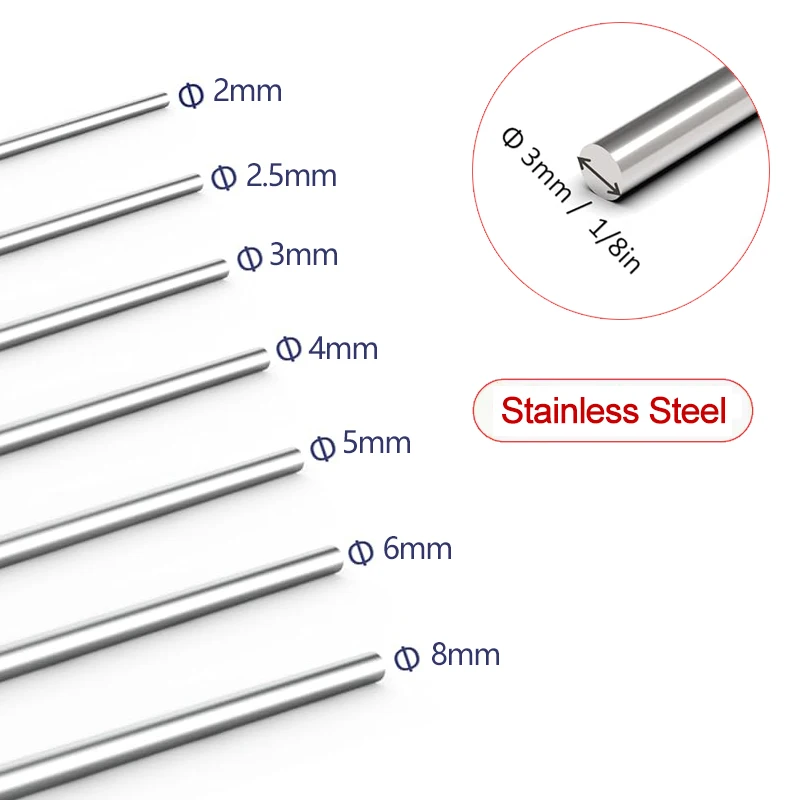
This assortment of rods includes multiple diameters: 2mm, 2.5mm, 3mm, 4mm, 5mm, 6mm, and 8mm, each supplied in a 500mm (20-inch) length. This range provides the essential dimensions for various intricate tasks. Precise sizing is paramount.
For a restoration specialist, the availability of such precise diameters is invaluable. Replicating a period-specific pin, a delicate hinge mechanism, or a small structural brace demands exact fitment; a slight deviation can compromise both function and historical accuracy. The solid construction of these rods allows for straightforward machining, turning, and grinding to achieve the exact profile required. Custom parts are easily made.
Unlike relying on a single, often too-large diameter rod that requires extensive material removal, this range offers a closer starting point. This reduces waste and labor, proving more efficient for projects demanding diverse component sizes. Multiple sizes save time.
As solid round rods, their utility extends far beyond simple replacement parts. They are a blank canvas for custom fabrication.
Consider the creation of custom fasteners, intricate grillework for a historical register, or even bespoke tool components for a specialized craft. The uniform diameter and consistent material properties allow for predictable results in bending, cutting, and welding applications. Each rod performs reliably. Picture restoring an antique clock, needing a new arbor for a gear; these rods provide the perfect stock for turning a precise, durable replacement.
This material offers significantly more design freedom than attempting to adapt pre-fabricated parts. It empowers the artisan to craft components that integrate seamlessly, both functionally and aesthetically, into the original design. True customization is possible.
While 304 stainless steel is celebrated for its corrosion resistance, it does not develop the rich, deep patina found on brass or bronze over time. Its surface tends to remain bright and clean, or achieve a matte finish depending on environmental exposure.
For some restoration projects, particularly those where components are internal or require a consistently clean appearance, this characteristic is an advantage. However, for external elements requiring a weathered, aged look to match a 100-year-old home, the stainless steel may need careful consideration or a specific finishing treatment to blend. Its appearance remains stable. It's a clear aesthetic choice.
Compared to materials like copper or untreated iron, 304 stainless steel demands less maintenance to retain its original appearance. It provides a modern solution for durability while requiring a deliberate approach to achieve a period-correct visual integration when exposed. Less upkeep is needed.
At approximately 1.80 USD for two pieces, these rods represent a minimal initial outlay for a material that offers substantial long-term value. This is not merely a purchase; it is an investment in the longevity of a restoration.
Spending slightly more on a superior material like 304 stainless steel prevents the need for repeated repairs or replacements due to material failure. The labor and time saved from avoiding premature degradation far outweigh the modest cost difference. Durability saves money. This approach aligns with the ethos of true restoration, where the goal is to repair once and for generations.
Unlike cheaper, inferior metals that may rust, bend, or fracture under stress, these stainless steel rods provide a robust, reliable solution. The long-term performance and reduced maintenance translate directly into a superior return on investment for any serious restoration project. Quality prevents future issues.
The choice of 304 stainless steel ensures a consistent and reliable material composition, free from the uncertainties often associated with generic or unmarked metal stocks. This consistency is vital for predictable machining and performance.
When undertaking restoration, the material's known properties allow for confident integration into historic pieces. While stainless steel itself is a modern invention relative to many antiques, its application as an unseen structural reinforcement or a precisely machined component ensures the original item's integrity is preserved without compromise. It respects the original. The material is trustworthy.
This removes the guesswork involved with unknown alloys, allowing the craftsman to focus on the skill of the restoration rather than worrying about material compatibility or unforeseen reactions. Trust the material science. This is a practical choice for discerning artisans.
Envision your cherished antique restored with precision, its new components seamlessly integrated, standing resilient against time. Imagine the satisfaction of knowing every repair is robust, built to endure for generations to come. The effort yields lasting beauty.
Unyielding Material Integrity: The Core of Enduring Craftsmanship
These rods are forged from 304 stainless steel, a widely recognized austenitic stainless steel known for its exceptional properties. The composition includes at least 18% chromium and 8% nickel, which are pivotal in its resistance to oxidation and corrosion. This particular grade is a benchmark for many applications.
When integrated into a restoration, the material's inherent corrosion resistance becomes a significant asset. Components crafted from 304 stainless steel can withstand exposure to moisture and various atmospheric conditions without succumbing to rust or degradation, a common failing of standard steel. Longevity is assured. Imagine a restored outdoor light fixture, its internal mechanisms now impervious to the elements, continuing to function flawlessly for decades. This material choice ensures a future for the piece.
Compared to mild steel, 304 stainless steel exhibits dramatically improved resistance to environmental stressors. It is less prone to the rapid onset of rust that can plague iron or carbon steel, making it a superior choice for any component requiring enduring structural and aesthetic integrity. This upgrade is crucial.
Precision in Form: Replicating the Past with Modern Accuracy
This assortment of rods includes multiple diameters: 2mm, 2.5mm, 3mm, 4mm, 5mm, 6mm, and 8mm, each supplied in a 500mm (20-inch) length. This range provides the essential dimensions for various intricate tasks. Precise sizing is paramount.
For a restoration specialist, the availability of such precise diameters is invaluable. Replicating a period-specific pin, a delicate hinge mechanism, or a small structural brace demands exact fitment; a slight deviation can compromise both function and historical accuracy. The solid construction of these rods allows for straightforward machining, turning, and grinding to achieve the exact profile required. Custom parts are easily made.
Unlike relying on a single, often too-large diameter rod that requires extensive material removal, this range offers a closer starting point. This reduces waste and labor, proving more efficient for projects demanding diverse component sizes. Multiple sizes save time.
Expansive Utility: Beyond Simple Replacements
As solid round rods, their utility extends far beyond simple replacement parts. They are a blank canvas for custom fabrication.
Consider the creation of custom fasteners, intricate grillework for a historical register, or even bespoke tool components for a specialized craft. The uniform diameter and consistent material properties allow for predictable results in bending, cutting, and welding applications. Each rod performs reliably. Picture restoring an antique clock, needing a new arbor for a gear; these rods provide the perfect stock for turning a precise, durable replacement.
This material offers significantly more design freedom than attempting to adapt pre-fabricated parts. It empowers the artisan to craft components that integrate seamlessly, both functionally and aesthetically, into the original design. True customization is possible.
The Passage of Time: Patina and Enduring Aesthetics
While 304 stainless steel is celebrated for its corrosion resistance, it does not develop the rich, deep patina found on brass or bronze over time. Its surface tends to remain bright and clean, or achieve a matte finish depending on environmental exposure.
For some restoration projects, particularly those where components are internal or require a consistently clean appearance, this characteristic is an advantage. However, for external elements requiring a weathered, aged look to match a 100-year-old home, the stainless steel may need careful consideration or a specific finishing treatment to blend. Its appearance remains stable. It's a clear aesthetic choice.
Compared to materials like copper or untreated iron, 304 stainless steel demands less maintenance to retain its original appearance. It provides a modern solution for durability while requiring a deliberate approach to achieve a period-correct visual integration when exposed. Less upkeep is needed.
The Prudent Investment: Value in Lasting Quality
At approximately 1.80 USD for two pieces, these rods represent a minimal initial outlay for a material that offers substantial long-term value. This is not merely a purchase; it is an investment in the longevity of a restoration.
Spending slightly more on a superior material like 304 stainless steel prevents the need for repeated repairs or replacements due to material failure. The labor and time saved from avoiding premature degradation far outweigh the modest cost difference. Durability saves money. This approach aligns with the ethos of true restoration, where the goal is to repair once and for generations.
Unlike cheaper, inferior metals that may rust, bend, or fracture under stress, these stainless steel rods provide a robust, reliable solution. The long-term performance and reduced maintenance translate directly into a superior return on investment for any serious restoration project. Quality prevents future issues.
Sourcing for Authenticity: Bridging Eras with Reliable Materials
The choice of 304 stainless steel ensures a consistent and reliable material composition, free from the uncertainties often associated with generic or unmarked metal stocks. This consistency is vital for predictable machining and performance.
When undertaking restoration, the material's known properties allow for confident integration into historic pieces. While stainless steel itself is a modern invention relative to many antiques, its application as an unseen structural reinforcement or a precisely machined component ensures the original item's integrity is preserved without compromise. It respects the original. The material is trustworthy.
This removes the guesswork involved with unknown alloys, allowing the craftsman to focus on the skill of the restoration rather than worrying about material compatibility or unforeseen reactions. Trust the material science. This is a practical choice for discerning artisans.
Envision your cherished antique restored with precision, its new components seamlessly integrated, standing resilient against time. Imagine the satisfaction of knowing every repair is robust, built to endure for generations to come. The effort yields lasting beauty.