5V Optocoupled Relay Module for Arduino
Official Store Deal
Expert Analysis Overview
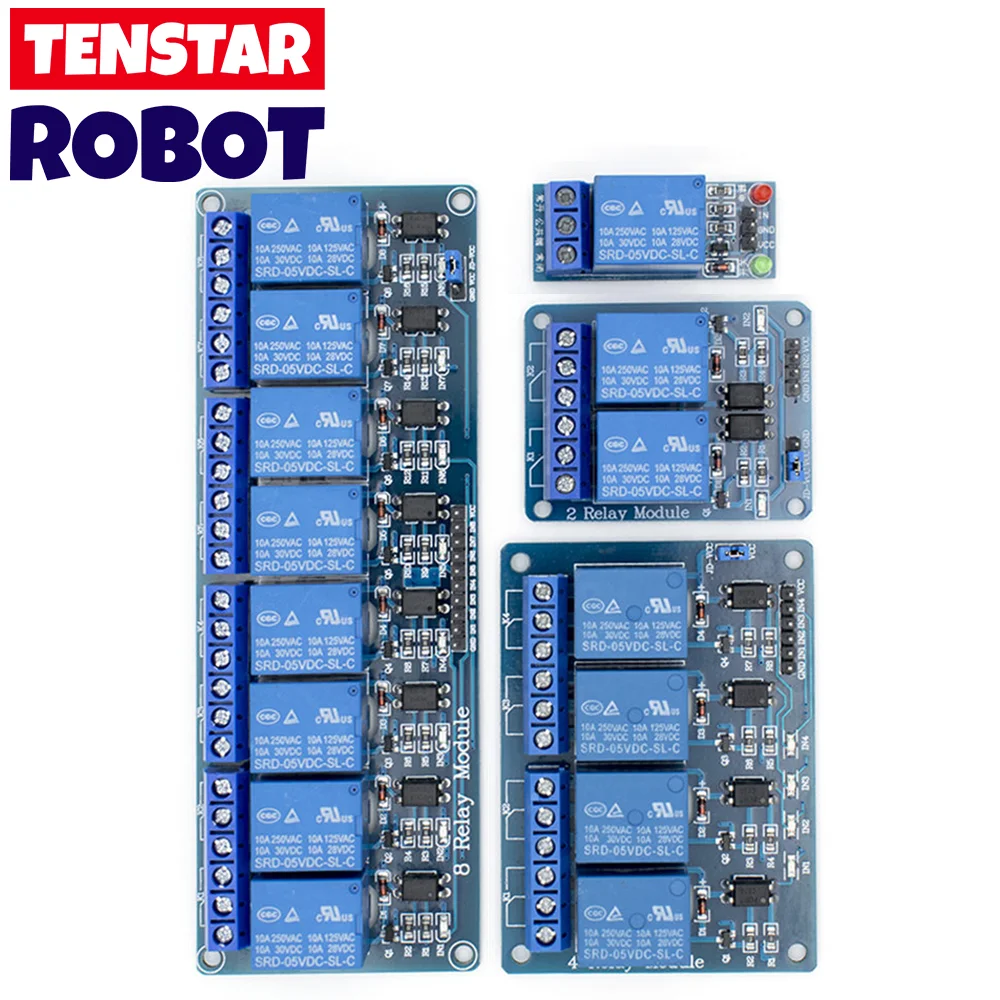
The 5V Optocoupled Relay Module is a critical interface component engineered for hobbyists and professionals seeking reliable isolation between low-voltage control circuits and higher-power loads. This module, available in 1, 2, 4, and 8-channel configurations, provides a robust solution for switching AC and DC devices with microcontrollers like Arduino, ESP32, or Raspberry Pi. Its design prioritizes safety and signal integrity, making it an indispensable tool for automation projects.
At the core of these modules lies the optocoupler, a crucial component for electrical isolation. Each channel incorporates an optocoupler, typically an EL817 or equivalent, which uses light to transmit signals between the control side (microcontroller) and the relay driver side. This optical barrier prevents high voltages or current spikes from the load circuit from feeding back into the sensitive microcontroller, safeguarding expensive development Boards from potential damage.
Consider a scenario where a motor or solenoid, connected to the relay, experiences an inductive kickback or a short circuit. Without an optocoupler, this event could send a damaging voltage surge directly to the microcontroller's GPIO pin, potentially rendering it inoperable. The optocoupler acts as a digital firewall. It ensures the control circuit remains electrically separate, allowing for safe experimentation and deployment in environments where electrical noise or unexpected load behavior is a concern. This is a significant upgrade over basic relay boards that lack this critical isolation.
Compared to direct-drive relay circuits, the optocoupled design significantly enhances system reliability. It mitigates issues like ground loops and common-mode noise, which can lead to erratic relay behavior or false triggering. This clean signal transmission is vital for stable operation in industrial automation, home smart systems, or any application demanding precise control.
Each relay on these modules is rated for 10A at 250VAC or 10A at 30VDC. This capacity allows the module to handle a wide range of common Household Appliances, lighting systems, motors, and other moderate-power loads. The SRD-05VDC-SL-C relays are standard, widely available components, ensuring consistent performance.
When a control signal is applied, the relay coil energizes, causing the internal contacts to switch. A distinct click confirms operation. The screw terminals provided for the load connections are robust, designed to securely hold wires up to 14 AWG, minimizing the risk of loose connections or arcing under load. This secure connection is paramount for safety and long-term reliability.
Unlike lower-grade relays that might exhibit contact pitting or premature wear, the specified 10A rating provides a reasonable overhead for typical hobbyist and light industrial applications. This ensures a longer operational lifespan for the switching mechanism. For instance, controlling a 60W incandescent bulb (0.5A at 120VAC) or a small 12V DC motor (2-3A) falls well within the safe operating parameters, leaving ample margin for inrush currents.
The modules feature standard 2.54mm pin headers for connecting to microcontrollers. These headers are clearly labeled with VCC, GND, and INx (input channel) pins. A jumper is often present to select between VCC and JD-VCC, allowing the relay coil to be powered either from the microcontroller's 5V supply or an independent external 5V supply for complete isolation.
Imagine integrating this module into a smart home system. The microcontroller, perhaps an ESP32, sends a low-level trigger signal to the relay module's input pin. This signal, typically 0V for activation, passes through the optocoupler, energizing the relay coil and switching the connected appliance. The simplicity of this interface makes it highly accessible.
Compared to custom-built relay circuits, these pre-assembled modules offer significant time savings and reduce the complexity of component sourcing and PCB fabrication. The standardized pinout and clear markings simplify wiring, even for beginners. This plug-and-play capability accelerates project development, allowing more focus on software and application logic rather than intricate Hardware design.
The blue PCB (Printed Circuit Board) exhibits a clean layout with well-defined traces. The soldering points for the relays, optocouplers, and screw terminals appear uniform and free from cold joints or bridges, indicating a decent manufacturing quality. The through-hole components are seated flush, and surface-mount components are precisely aligned.
Physical examination reveals a sturdy board. It resists minor flex, suggesting a good quality fiberglass substrate. The screw terminals, often a point of failure in cheaper modules, feel solid and provide good grip on the wires. This attention to mechanical detail contributes to the overall longevity of the module, especially in applications where vibrations or frequent wiring changes might occur.
Unlike some budget alternatives that use thinner PCBs or inferior solder, these modules present a more professional finish. The silkscreen legends are crisp and legible, aiding in correct wiring and troubleshooting. This level of construction quality minimizes the risk of intermittent connections or premature component failure, a common frustration with poorly manufactured electronics.
The availability of 1, 2, 4, and 8-channel versions provides excellent scalability for various projects. A single-channel module is perfect for simple on/off control of one device, while an 8-channel board can manage multiple lights, fans, or even complex sequences in automation systems. This range allows users to select the exact number of control points needed without over-provisioning.
Picture a greenhouse automation system. A 4-channel module could control grow lights, a ventilation fan, a water pump, and a misting system, all orchestrated by a single microcontroller. The modular nature means expanding capabilities is as simple as adding another module or upgrading to a higher channel count. This flexibility is a key benefit for evolving projects.
Compared to proprietary control systems, these open-source compatible relay modules offer unparalleled versatility. They integrate seamlessly with popular development platforms, leveraging vast online communities and libraries. This broad compatibility ensures that the module can be repurposed across numerous projects, maximizing its utility and value over time.
Investing in an optocoupled relay module is a smart decision for protecting more expensive microcontroller hardware. The small cost of the relay module pales in comparison to replacing a damaged Arduino or Raspberry Pi. It serves as an affordable, replaceable buffer between your control logic and the real world's electrical demands.
Consider the peace of mind that comes with knowing your sensitive electronics are shielded from potential electrical hazards. This module doesn't just switch power; it adds a layer of robust protection to your entire system. It's a foundational component for any project that bridges the gap between low-voltage digital control and higher-voltage power circuits.
This module represents a cost-effective solution for extending the lifespan of your development boards and projects. Its reliability and protective features ensure that your efforts in coding and circuit design are not undone by a simple electrical fault. The long-term savings in avoided repairs and replacements far outweigh the initial purchase price, making it an excellent return on investment for any electronics enthusiast.
These relay modules are an excellent choice for anyone looking to safely and efficiently control higher-power devices with a microcontroller. The optocoupled design is a significant advantage, providing essential isolation and protecting sensitive control circuitry. The various channel options ensure there is a module suitable for almost any project size, from a single light switch to a multi-device automation system. The build quality, with its clean soldering and robust terminals, suggests a reliable component that will perform consistently. For those building automation, robotics, or smart home projects, these modules offer a dependable and cost-effective solution to bridge the gap between digital logic and physical power control. Imagine the possibilities of remotely controlling your Home Appliances, automating garden irrigation, or building complex robotic systems, all with the confidence that your microcontroller is safely isolated from the power circuits. This module empowers creators to bring their ideas to life without fear of electrical damage, fostering innovation and practical application in electronics. The ease of integration and the inherent safety features make it a go-to component for both educational purposes and serious project development. It simplifies the often-complex task of power switching, allowing more focus on the creative aspects of your build. This is a tool that truly enables more ambitious and reliable electronic endeavors.
Architectural Integrity: The Optocoupled Advantage
At the core of these modules lies the optocoupler, a crucial component for electrical isolation. Each channel incorporates an optocoupler, typically an EL817 or equivalent, which uses light to transmit signals between the control side (microcontroller) and the relay driver side. This optical barrier prevents high voltages or current spikes from the load circuit from feeding back into the sensitive microcontroller, safeguarding expensive development Boards from potential damage.
Consider a scenario where a motor or solenoid, connected to the relay, experiences an inductive kickback or a short circuit. Without an optocoupler, this event could send a damaging voltage surge directly to the microcontroller's GPIO pin, potentially rendering it inoperable. The optocoupler acts as a digital firewall. It ensures the control circuit remains electrically separate, allowing for safe experimentation and deployment in environments where electrical noise or unexpected load behavior is a concern. This is a significant upgrade over basic relay boards that lack this critical isolation.
Compared to direct-drive relay circuits, the optocoupled design significantly enhances system reliability. It mitigates issues like ground loops and common-mode noise, which can lead to erratic relay behavior or false triggering. This clean signal transmission is vital for stable operation in industrial automation, home smart systems, or any application demanding precise control.
Switching Performance: Reliability Under Load
Each relay on these modules is rated for 10A at 250VAC or 10A at 30VDC. This capacity allows the module to handle a wide range of common Household Appliances, lighting systems, motors, and other moderate-power loads. The SRD-05VDC-SL-C relays are standard, widely available components, ensuring consistent performance.
When a control signal is applied, the relay coil energizes, causing the internal contacts to switch. A distinct click confirms operation. The screw terminals provided for the load connections are robust, designed to securely hold wires up to 14 AWG, minimizing the risk of loose connections or arcing under load. This secure connection is paramount for safety and long-term reliability.
Unlike lower-grade relays that might exhibit contact pitting or premature wear, the specified 10A rating provides a reasonable overhead for typical hobbyist and light industrial applications. This ensures a longer operational lifespan for the switching mechanism. For instance, controlling a 60W incandescent bulb (0.5A at 120VAC) or a small 12V DC motor (2-3A) falls well within the safe operating parameters, leaving ample margin for inrush currents.
Connectivity and Integration: Seamless Control
The modules feature standard 2.54mm pin headers for connecting to microcontrollers. These headers are clearly labeled with VCC, GND, and INx (input channel) pins. A jumper is often present to select between VCC and JD-VCC, allowing the relay coil to be powered either from the microcontroller's 5V supply or an independent external 5V supply for complete isolation.
Imagine integrating this module into a smart home system. The microcontroller, perhaps an ESP32, sends a low-level trigger signal to the relay module's input pin. This signal, typically 0V for activation, passes through the optocoupler, energizing the relay coil and switching the connected appliance. The simplicity of this interface makes it highly accessible.
Compared to custom-built relay circuits, these pre-assembled modules offer significant time savings and reduce the complexity of component sourcing and PCB fabrication. The standardized pinout and clear markings simplify wiring, even for beginners. This plug-and-play capability accelerates project development, allowing more focus on software and application logic rather than intricate Hardware design.
Durability and Construction: A Closer Look at the PCB
The blue PCB (Printed Circuit Board) exhibits a clean layout with well-defined traces. The soldering points for the relays, optocouplers, and screw terminals appear uniform and free from cold joints or bridges, indicating a decent manufacturing quality. The through-hole components are seated flush, and surface-mount components are precisely aligned.
Physical examination reveals a sturdy board. It resists minor flex, suggesting a good quality fiberglass substrate. The screw terminals, often a point of failure in cheaper modules, feel solid and provide good grip on the wires. This attention to mechanical detail contributes to the overall longevity of the module, especially in applications where vibrations or frequent wiring changes might occur.
Unlike some budget alternatives that use thinner PCBs or inferior solder, these modules present a more professional finish. The silkscreen legends are crisp and legible, aiding in correct wiring and troubleshooting. This level of construction quality minimizes the risk of intermittent connections or premature component failure, a common frustration with poorly manufactured electronics.
Scalability and Application Versatility
The availability of 1, 2, 4, and 8-channel versions provides excellent scalability for various projects. A single-channel module is perfect for simple on/off control of one device, while an 8-channel board can manage multiple lights, fans, or even complex sequences in automation systems. This range allows users to select the exact number of control points needed without over-provisioning.
Picture a greenhouse automation system. A 4-channel module could control grow lights, a ventilation fan, a water pump, and a misting system, all orchestrated by a single microcontroller. The modular nature means expanding capabilities is as simple as adding another module or upgrading to a higher channel count. This flexibility is a key benefit for evolving projects.
Compared to proprietary control systems, these open-source compatible relay modules offer unparalleled versatility. They integrate seamlessly with popular development platforms, leveraging vast online communities and libraries. This broad compatibility ensures that the module can be repurposed across numerous projects, maximizing its utility and value over time.
Long-Term Value: Protecting Your Investment
Investing in an optocoupled relay module is a smart decision for protecting more expensive microcontroller hardware. The small cost of the relay module pales in comparison to replacing a damaged Arduino or Raspberry Pi. It serves as an affordable, replaceable buffer between your control logic and the real world's electrical demands.
Consider the peace of mind that comes with knowing your sensitive electronics are shielded from potential electrical hazards. This module doesn't just switch power; it adds a layer of robust protection to your entire system. It's a foundational component for any project that bridges the gap between low-voltage digital control and higher-voltage power circuits.
This module represents a cost-effective solution for extending the lifespan of your development boards and projects. Its reliability and protective features ensure that your efforts in coding and circuit design are not undone by a simple electrical fault. The long-term savings in avoided repairs and replacements far outweigh the initial purchase price, making it an excellent return on investment for any electronics enthusiast.
Final Considerations for Project Builders
These relay modules are an excellent choice for anyone looking to safely and efficiently control higher-power devices with a microcontroller. The optocoupled design is a significant advantage, providing essential isolation and protecting sensitive control circuitry. The various channel options ensure there is a module suitable for almost any project size, from a single light switch to a multi-device automation system. The build quality, with its clean soldering and robust terminals, suggests a reliable component that will perform consistently. For those building automation, robotics, or smart home projects, these modules offer a dependable and cost-effective solution to bridge the gap between digital logic and physical power control. Imagine the possibilities of remotely controlling your Home Appliances, automating garden irrigation, or building complex robotic systems, all with the confidence that your microcontroller is safely isolated from the power circuits. This module empowers creators to bring their ideas to life without fear of electrical damage, fostering innovation and practical application in electronics. The ease of integration and the inherent safety features make it a go-to component for both educational purposes and serious project development. It simplifies the often-complex task of power switching, allowing more focus on the creative aspects of your build. This is a tool that truly enables more ambitious and reliable electronic endeavors.