5x20mm Glass Fuse Holders with 22AWG Wire Cable
Official Store Deal
Expert Analysis Overview
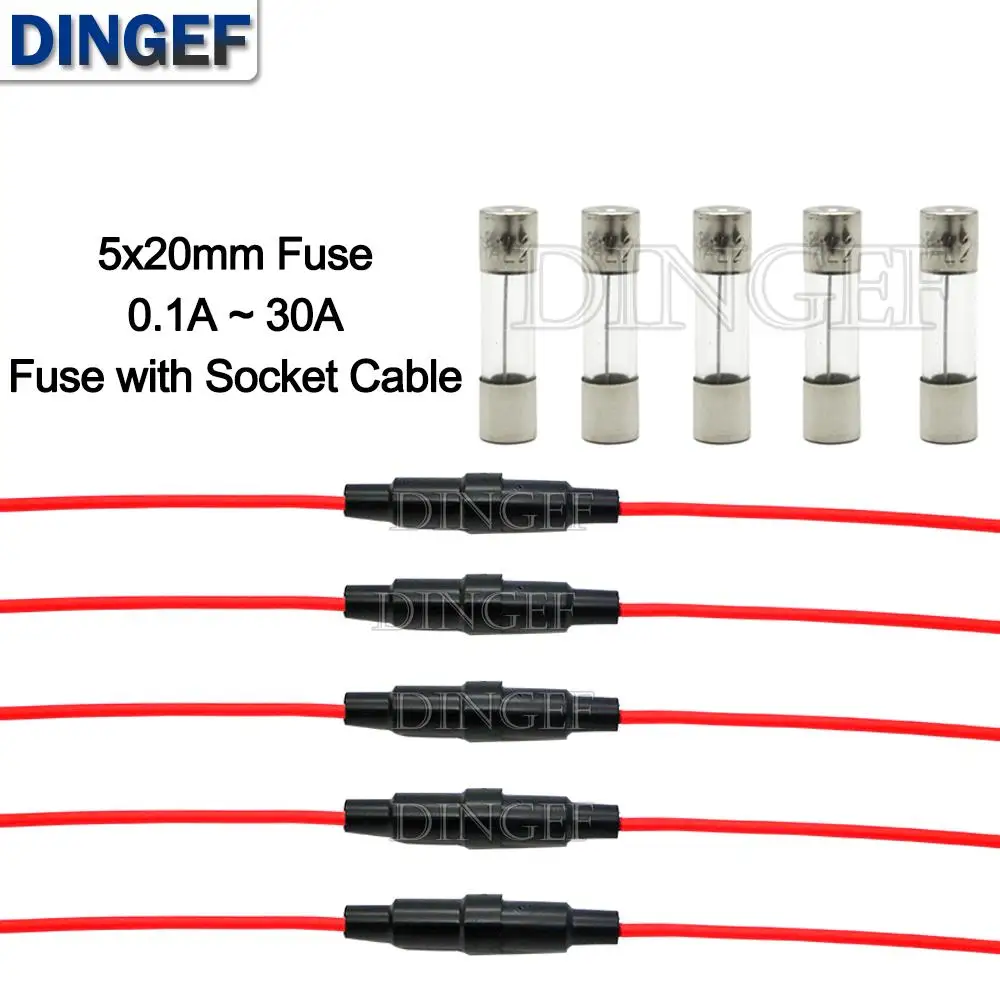
The DINGEF 5x20mm Glass Fuse Holders with 22AWG Wire Cable are essential protective components designed for safeguarding sensitive electronic circuits in low-voltage applications. This assembly provides a convenient and reliable method for integrating overcurrent protection, a critical aspect of any robust electrical design. The pre-wired nature streamlines installation, making these units particularly appealing for hobbyists, automotive enthusiasts, and DIY electronics projects where space and ease of assembly are considerations.
These fuse holders serve as the first line of defense against electrical anomalies. Each unit accommodates a standard 5x20mm glass fuse, a common form factor for a wide range of current ratings. The screw-type cap ensures a secure connection, preventing accidental dislodgement of the fuse, which is paramount for continuous circuit integrity. The internal brass contacts are visible, indicating a conductive material chosen for its corrosion resistance and electrical properties. This is a simple, effective design.
Unlike bare fuse clips or soldered-in fuses, these holders allow for quick and tool-free fuse replacement. Imagine a scenario where a critical component fails due to an unexpected power surge; the fuse holder isolates the fault, protecting the more expensive parts of the system. This modularity reduces downtime and repair costs significantly.
Compared to older, less accessible fuse blocks, these inline holders offer flexibility in placement within a circuit. Their compact form factor means they can be tucked into tight spaces, a distinct advantage in modern, miniaturized electronics. They offer a direct solution.
Each fuse holder comes pre-attached with 22AWG wire cable. The 22AWG specification refers to the American Wire Gauge standard, indicating a conductor with a diameter suitable for lower current applications. Specifically, 22AWG wire is typically rated for currents up to approximately 7 amps for power transmission, though this can vary based on insulation type, ambient temperature, and application duration. This wire gauge is common for signal lines or low-power accessory circuits.
When integrating these into a system, matching the wire gauge to the expected maximum current draw is crucial. Using wire that is too thin for the current can lead to overheating, insulation degradation, and potential fire hazards. The red insulation suggests a positive voltage line in many DC applications, though this is not a universal standard and should always be verified during installation. Proper wire selection is vital.
For circuits drawing higher currents, a heavier gauge wire would be necessary, potentially requiring a different type of fuse holder assembly. However, for the intended applications of these 5x20mm glass fuses, 22AWG is often an appropriate choice. It offers a good balance.
The fuse holder body appears to be constructed from a durable black polymer. The plastic feels dense, suggesting good mechanical strength and insulation properties. The screw cap threads engage smoothly, indicating precise molding during manufacturing. A tight seal is formed when the cap is fully tightened, offering some degree of environmental protection for the fuse element inside.
Visual inspection of the wire-to-holder connection points reveals a factory crimp or solder joint, which appears robust. The red insulation of the 22AWG wire is flexible, allowing for easy routing within an enclosure or vehicle. The overall impression is one of practical, functional construction designed for longevity in typical operating environments. These are built for purpose.
However, it is important to note that while the housing offers protection, these are not typically rated for immersion or extreme outdoor exposure without additional sealing. For applications requiring IP67 or IP68 ratings, specialized waterproof fuse holders would be necessary. This is a trade-off for simplicity.
Reliability in electrical connections is paramount. The brass contacts within the holder provide a low-resistance path for current flow, minimizing voltage drop and heat generation. The spring-loaded mechanism inside the screw cap ensures constant pressure on the fuse ends, maintaining a solid electrical connection even under vibration. This constant pressure is key.
Poor connections can lead to intermittent circuit operation, increased resistance, and localized heating, all of which can degrade performance and shorten component lifespan. The screw-type design, combined with the spring, actively works to mitigate these issues. It ensures consistent contact.
Compared to simpler push-in or blade-type fuse holders, the screw-in mechanism often provides a more secure and vibration-resistant connection, particularly beneficial in automotive or industrial settings. This design choice prioritizes connection stability.
These fuse holders find their utility across a broad spectrum of electronic projects. In automotive applications, they are ideal for adding accessories like LED lighting, dash cams, or auxiliary power outlets, protecting the vehicle's existing wiring harness from overcurrents. A small fuse can save a large repair bill.
For DIY electronics, they provide an accessible way to build in safety features for custom circuits, power supplies, or experimental setups. Imagine building a custom amplifier; a properly fused power input protects the expensive audio components. This prevents catastrophic failure.
Their compact size also makes them suitable for integration into appliance repair, replacing faulty or missing inline fuse protection. They are a versatile component for any electrical toolkit. The convenience is undeniable.
The primary benefit of integrating these fuse holders is the prevention of damage to more expensive equipment. A fuse is a sacrificial component, designed to fail before the device it protects. Replacing a blown fuse, which costs pennies, is vastly preferable to replacing a power supply, a circuit board, or an entire appliance. This is smart engineering.
Without proper fusing, an overcurrent event can lead to component burnout, short circuits, and even fire. These fuse holders provide an affordable and straightforward solution to mitigate these risks. They are an essential safety measure.
This proactive approach to circuit protection offers significant long-term savings by extending the life of electronic devices and reducing maintenance costs. It is an investment in longevity. The value proposition is clear.
These 5x20mm glass fuse holders with pre-attached 22AWG wire offer a practical, cost-effective, and reliable solution for integrating overcurrent protection into various electrical systems. The quality of the plastic housing, the secure screw-type cap, and the robust wire connections contribute to a dependable product. They perform their function well.
For anyone engaged in electronics repair, custom circuit building, or automotive accessory installation, these fuse holders are an indispensable item. They offer peace of mind, knowing that sensitive components are shielded from unforeseen electrical spikes or shorts. The ease of installation and fuse replacement further enhances their utility. This is a practical addition.
Picture your next DIY project, seamlessly integrated with robust overcurrent protection, operating reliably for years. The frustration of unexpected component failure becomes a distant memory, replaced by the satisfaction of a well-protected, functional system. This is the promise of proper fusing.
Circuit Guardianship
These fuse holders serve as the first line of defense against electrical anomalies. Each unit accommodates a standard 5x20mm glass fuse, a common form factor for a wide range of current ratings. The screw-type cap ensures a secure connection, preventing accidental dislodgement of the fuse, which is paramount for continuous circuit integrity. The internal brass contacts are visible, indicating a conductive material chosen for its corrosion resistance and electrical properties. This is a simple, effective design.
Unlike bare fuse clips or soldered-in fuses, these holders allow for quick and tool-free fuse replacement. Imagine a scenario where a critical component fails due to an unexpected power surge; the fuse holder isolates the fault, protecting the more expensive parts of the system. This modularity reduces downtime and repair costs significantly.
Compared to older, less accessible fuse blocks, these inline holders offer flexibility in placement within a circuit. Their compact form factor means they can be tucked into tight spaces, a distinct advantage in modern, miniaturized electronics. They offer a direct solution.
Wire Gauge and Current Handling
Each fuse holder comes pre-attached with 22AWG wire cable. The 22AWG specification refers to the American Wire Gauge standard, indicating a conductor with a diameter suitable for lower current applications. Specifically, 22AWG wire is typically rated for currents up to approximately 7 amps for power transmission, though this can vary based on insulation type, ambient temperature, and application duration. This wire gauge is common for signal lines or low-power accessory circuits.
When integrating these into a system, matching the wire gauge to the expected maximum current draw is crucial. Using wire that is too thin for the current can lead to overheating, insulation degradation, and potential fire hazards. The red insulation suggests a positive voltage line in many DC applications, though this is not a universal standard and should always be verified during installation. Proper wire selection is vital.
For circuits drawing higher currents, a heavier gauge wire would be necessary, potentially requiring a different type of fuse holder assembly. However, for the intended applications of these 5x20mm glass fuses, 22AWG is often an appropriate choice. It offers a good balance.
Construction and Durability Assessment
The fuse holder body appears to be constructed from a durable black polymer. The plastic feels dense, suggesting good mechanical strength and insulation properties. The screw cap threads engage smoothly, indicating precise molding during manufacturing. A tight seal is formed when the cap is fully tightened, offering some degree of environmental protection for the fuse element inside.
Visual inspection of the wire-to-holder connection points reveals a factory crimp or solder joint, which appears robust. The red insulation of the 22AWG wire is flexible, allowing for easy routing within an enclosure or vehicle. The overall impression is one of practical, functional construction designed for longevity in typical operating environments. These are built for purpose.
However, it is important to note that while the housing offers protection, these are not typically rated for immersion or extreme outdoor exposure without additional sealing. For applications requiring IP67 or IP68 ratings, specialized waterproof fuse holders would be necessary. This is a trade-off for simplicity.
Connection Reliability
Reliability in electrical connections is paramount. The brass contacts within the holder provide a low-resistance path for current flow, minimizing voltage drop and heat generation. The spring-loaded mechanism inside the screw cap ensures constant pressure on the fuse ends, maintaining a solid electrical connection even under vibration. This constant pressure is key.
Poor connections can lead to intermittent circuit operation, increased resistance, and localized heating, all of which can degrade performance and shorten component lifespan. The screw-type design, combined with the spring, actively works to mitigate these issues. It ensures consistent contact.
Compared to simpler push-in or blade-type fuse holders, the screw-in mechanism often provides a more secure and vibration-resistant connection, particularly beneficial in automotive or industrial settings. This design choice prioritizes connection stability.
Application Versatility
These fuse holders find their utility across a broad spectrum of electronic projects. In automotive applications, they are ideal for adding accessories like LED lighting, dash cams, or auxiliary power outlets, protecting the vehicle's existing wiring harness from overcurrents. A small fuse can save a large repair bill.
For DIY electronics, they provide an accessible way to build in safety features for custom circuits, power supplies, or experimental setups. Imagine building a custom amplifier; a properly fused power input protects the expensive audio components. This prevents catastrophic failure.
Their compact size also makes them suitable for integration into appliance repair, replacing faulty or missing inline fuse protection. They are a versatile component for any electrical toolkit. The convenience is undeniable.
Preventing Costly Damage
The primary benefit of integrating these fuse holders is the prevention of damage to more expensive equipment. A fuse is a sacrificial component, designed to fail before the device it protects. Replacing a blown fuse, which costs pennies, is vastly preferable to replacing a power supply, a circuit board, or an entire appliance. This is smart engineering.
Without proper fusing, an overcurrent event can lead to component burnout, short circuits, and even fire. These fuse holders provide an affordable and straightforward solution to mitigate these risks. They are an essential safety measure.
This proactive approach to circuit protection offers significant long-term savings by extending the life of electronic devices and reducing maintenance costs. It is an investment in longevity. The value proposition is clear.
Final Assessment and Ownership Experience
These 5x20mm glass fuse holders with pre-attached 22AWG wire offer a practical, cost-effective, and reliable solution for integrating overcurrent protection into various electrical systems. The quality of the plastic housing, the secure screw-type cap, and the robust wire connections contribute to a dependable product. They perform their function well.
For anyone engaged in electronics repair, custom circuit building, or automotive accessory installation, these fuse holders are an indispensable item. They offer peace of mind, knowing that sensitive components are shielded from unforeseen electrical spikes or shorts. The ease of installation and fuse replacement further enhances their utility. This is a practical addition.
Picture your next DIY project, seamlessly integrated with robust overcurrent protection, operating reliably for years. The frustration of unexpected component failure becomes a distant memory, replaced by the satisfaction of a well-protected, functional system. This is the promise of proper fusing.