Automatic Water Level Float Valve
Official Store Deal
Expert Analysis Overview
The Automatic Water Level Control Float Valve is an essential, no-nonsense Plumbing component designed for rapid, reliable water management in tanks and reservoirs. This device immediately addresses the critical need for automated water level maintenance, preventing costly overflows and ensuring consistent supply without any electrical input. It is a fundamental tool for any homeowner or facility manager seeking to fortify their water systems against common failures.
Picture a scenario where a water tank overflows. The ensuing damage to property, the sheer waste of a precious resource, and the frantic scramble to shut off a supply can be incredibly stressful. This valve acts as a silent, passive guardian against such disasters. It stops the flow. Unlike manual systems that demand constant vigilance or complex electronic sensors prone to power outages, this purely mechanical solution provides consistent, autonomous control. It eliminates the anxiety of forgetting to turn off a tap or the frustration of a pump running dry. No more constant checking. The design ensures that as the water level reaches its predetermined maximum, the valve mechanically shuts off the inlet, preventing any excess. This proactive approach saves not only water but also potential structural damage and the significant expense of cleanup or repairs that an uncontrolled overflow would necessitate. Compared to traditional methods of relying on human intervention or more fragile electronic systems, this valve offers a robust first line of defense, ready to act the moment water levels rise too high.
Durability in a plumbing component exposed to water is paramount. This valve is constructed with a Nylon body, a PP float ball, and secured with stainless steel screws. These material choices are not arbitrary; they are critical for ensuring longevity and reliable operation in a wet environment. Nylon provides excellent strength and resistance to many chemicals found in water, while PP (polypropylene) is known for its low water absorption and high chemical resistance, making it ideal for the float component. Rust is a killer. The use of stainless steel for fasteners prevents the common problem of corrosion that plagues many cheaper or older metal valves, which can seize up and fail over time. The tactile feel of the nylon body suggests a dense, resilient plastic, not a brittle, hollow shell. This material selection significantly extends the operational lifespan of the unit, reducing the frequency of replacements and the associated labor. Compared to older brass or galvanized steel float valves, which are susceptible to mineral buildup and electrolytic corrosion, this modern composite construction offers superior resistance to degradation, maintaining its functionality year after year, even in challenging water conditions.
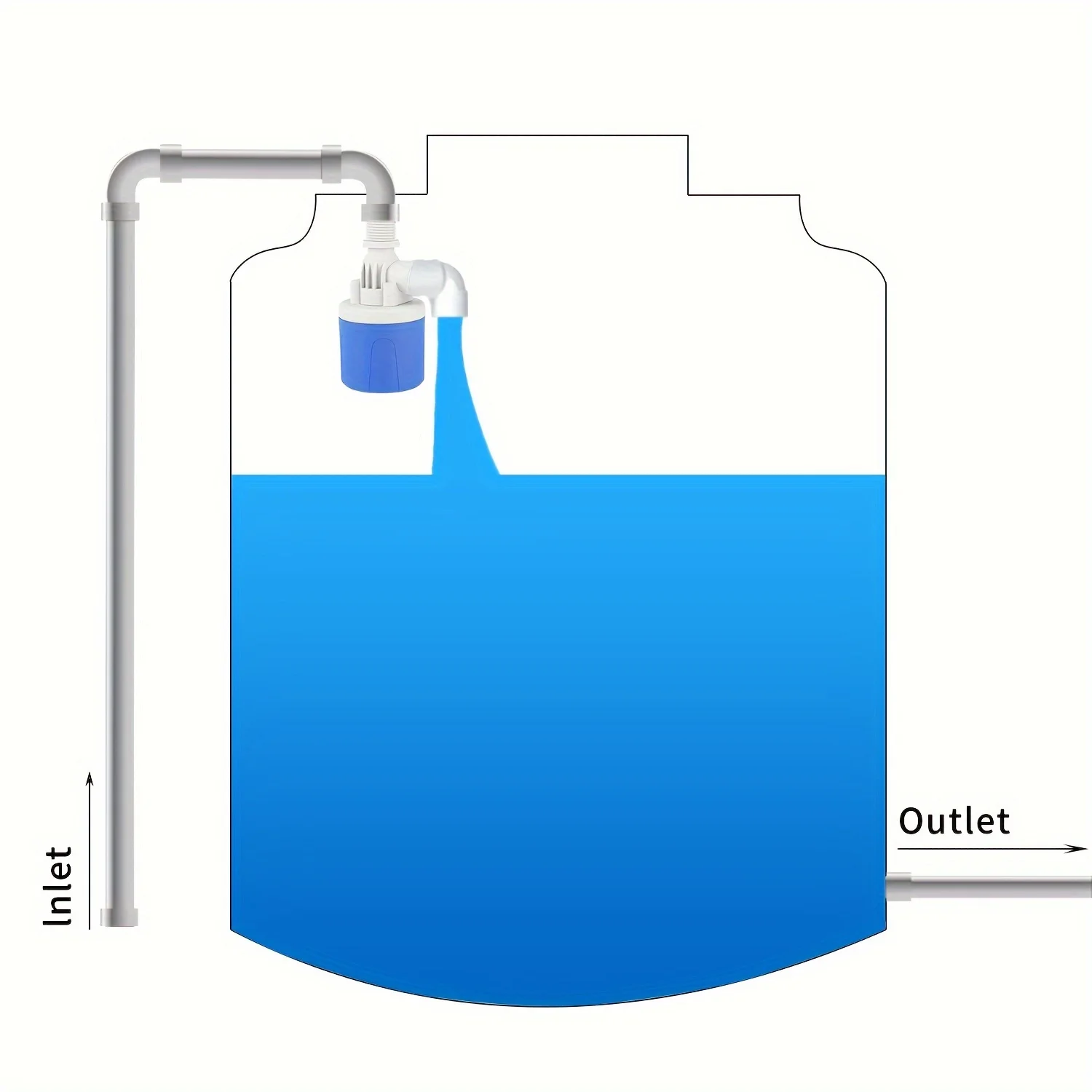
When a water system needs attention, the last thing anyone wants is a complicated installation process. This valve features 1/2" threaded connections, available in both side water inlet and upper water inlet configurations, providing flexibility for various tank designs. Just screw it in. The straightforward threading means installation can often be accomplished with basic plumbing tools, or even by hand with appropriate thread sealant. There is no need for specialized soldering equipment, complex wiring, or power sources, making it a true DIY-friendly solution. The visual instructions clearly depict how the valve integrates into existing pipework, whether built-in or externally mounted, simplifying what could otherwise be a daunting task. This ease of installation drastically cuts down on repair time and the potential cost of calling a professional plumber for a simple level control issue. Unlike the more involved process of installing electric pump controls or larger, more intricate valve assemblies that might require tank modifications, this compact unit offers a swift, effective fix, minimizing downtime for water systems.
Despite its compact size, the valve is designed for a large flow rate, facilitated by its 20mm (0.78-inch) inlet diameter. This is a crucial specification for ensuring that tanks refill efficiently, preventing prolonged periods of low water levels, especially in applications with high demand. Water fills quickly. For residential water storage, animal troughs, or even small-scale agricultural irrigation, this flow capacity is typically more than adequate to maintain desired levels without significant delays. The internal mechanism is engineered to allow a substantial volume of water to pass through when open, then quickly and completely shut off. This balance between rapid refill and positive shut-off is essential for system stability. A slow refill can lead to pumps cycling excessively or insufficient water supply during peak usage. Compared to older, restrictive ballcock valves that often trickle water, this design prioritizes efficient replenishment, ensuring that the system is ready for the next demand cycle without unnecessary waiting periods.
The physical dimensions of this float valve are a significant advantage, particularly in confined spaces. The side inlet model measures 109mm (4.29 inches) in length and 83mm (3.26 inches) in height, while the upper inlet version stands at 125mm (4.92 inches) tall. The float itself has a diameter of 56mm (2.2 inches). Small footprint, big impact. This compact form factor allows for installation in tight tank openings, narrow cisterns, or crowded utility areas where larger, traditional float valves with long lever arms simply would not fit. The ability to choose between side and upper inlet configurations further enhances its adaptability to various tank designs and plumbing layouts. This thoughtful design means that even in emergency repairs, finding a suitable mounting location is rarely an issue, and the valve integrates discreetly without protruding excessively. Unlike bulky, outdated float mechanisms that require considerable clearance and can be an obstruction within the tank, this miniature valve maximizes usable tank volume and simplifies integration into existing infrastructure.
The fundamental brilliance of this automatic water level controller lies in its pure mechanical operation. It requires no electricity, relying solely on the buoyancy of the PP float ball and a simple lever mechanism. Purely mechanical, always works. As the water level in the tank rises, the float ball lifts, causing an internal arm to pivot and gradually close the valve's inlet. When the water level drops, the float lowers, opening the valve and allowing water to flow back into the tank. This elegant simplicity is its greatest strength. Without electrical components, there are no wires to corrode, no sensors to fail due to power surges, and no batteries to replace. The system is inherently robust and reliable, operating consistently regardless of external power conditions. This makes it ideal for remote locations, off-grid systems, or emergency water storage where power might be intermittent or unavailable. Compared to electronic level switches that depend on a continuous power supply and can be vulnerable to environmental factors like humidity or dust affecting their sensors, this mechanical valve offers unwavering performance through its inherent design simplicity.
The product's description highlights its suitability for "Water Tanks and Water Towers," but its utility extends far beyond these primary applications. Many uses, simple solution. The installation diagrams illustrate various mounting configurations, showcasing its adaptability. This valve can be effectively deployed in rainwater harvesting systems to manage storage, in livestock watering troughs to ensure animals always have fresh water, within hydroponic setups to maintain nutrient solution levels, or even as a simple auto-fill for decorative ponds and fountains. Its compact size and non-electric operation make it suitable for locations where electrical access is difficult or undesirable. Imagine using it to automatically top off an emergency backup water supply, ensuring readiness without constant manual checks. The design allows for both internal and external tank mounting, providing flexibility for different plumbing needs. Unlike highly specialized valves designed for a single, narrow purpose, this automatic float valve offers broad utility across a spectrum of water management challenges, making it an invaluable component for diverse DIY and professional projects.
While the initial purchase price is notably low, the true value of this automatic float valve becomes apparent over its operational lifespan. The claim of "long life" is substantiated by its durable, corrosion-resistant materials and simple mechanical design. Saves money long term. By preventing overflows, it directly saves on water bills and potential repair costs from water damage. The absence of any electrical requirement means zero ongoing energy consumption, a significant advantage over pump-driven or electronically controlled systems. Maintenance is minimal, typically involving only occasional inspection for debris. This combination of low upfront cost, no operational expenses, and reduced maintenance translates into substantial long-term savings. When considering the total cost of ownership, including potential water waste, damage, and replacement frequency of lesser quality alternatives, this valve presents an exceptionally economical solution. It stands in stark contrast to cheaper, all-metal valves that corrode quickly, or complex electronic systems that incur both energy costs and higher repair liabilities.
This automatic water level float valve is a testament to effective, simple engineering. It delivers consistent, worry-free water level management, allowing users to set it and forget it. Imagine the peace of mind knowing your water tank will never overflow, your livestock will always have water, and your emergency reserves are always topped up, all without a single watt of electricity or constant manual intervention. This device provides a foundational upgrade to any water storage system, ensuring reliability and efficiency for years to come.
The Immediate Crisis Averted: Preventing Water Catastrophes
Picture a scenario where a water tank overflows. The ensuing damage to property, the sheer waste of a precious resource, and the frantic scramble to shut off a supply can be incredibly stressful. This valve acts as a silent, passive guardian against such disasters. It stops the flow. Unlike manual systems that demand constant vigilance or complex electronic sensors prone to power outages, this purely mechanical solution provides consistent, autonomous control. It eliminates the anxiety of forgetting to turn off a tap or the frustration of a pump running dry. No more constant checking. The design ensures that as the water level reaches its predetermined maximum, the valve mechanically shuts off the inlet, preventing any excess. This proactive approach saves not only water but also potential structural damage and the significant expense of cleanup or repairs that an uncontrolled overflow would necessitate. Compared to traditional methods of relying on human intervention or more fragile electronic systems, this valve offers a robust first line of defense, ready to act the moment water levels rise too high.
Engineered for Durability: Materials That Last
Durability in a plumbing component exposed to water is paramount. This valve is constructed with a Nylon body, a PP float ball, and secured with stainless steel screws. These material choices are not arbitrary; they are critical for ensuring longevity and reliable operation in a wet environment. Nylon provides excellent strength and resistance to many chemicals found in water, while PP (polypropylene) is known for its low water absorption and high chemical resistance, making it ideal for the float component. Rust is a killer. The use of stainless steel for fasteners prevents the common problem of corrosion that plagues many cheaper or older metal valves, which can seize up and fail over time. The tactile feel of the nylon body suggests a dense, resilient plastic, not a brittle, hollow shell. This material selection significantly extends the operational lifespan of the unit, reducing the frequency of replacements and the associated labor. Compared to older brass or galvanized steel float valves, which are susceptible to mineral buildup and electrolytic corrosion, this modern composite construction offers superior resistance to degradation, maintaining its functionality year after year, even in challenging water conditions.
Installation Simplicity: Getting Water Flowing Again, Fast
When a water system needs attention, the last thing anyone wants is a complicated installation process. This valve features 1/2" threaded connections, available in both side water inlet and upper water inlet configurations, providing flexibility for various tank designs. Just screw it in. The straightforward threading means installation can often be accomplished with basic plumbing tools, or even by hand with appropriate thread sealant. There is no need for specialized soldering equipment, complex wiring, or power sources, making it a true DIY-friendly solution. The visual instructions clearly depict how the valve integrates into existing pipework, whether built-in or externally mounted, simplifying what could otherwise be a daunting task. This ease of installation drastically cuts down on repair time and the potential cost of calling a professional plumber for a simple level control issue. Unlike the more involved process of installing electric pump controls or larger, more intricate valve assemblies that might require tank modifications, this compact unit offers a swift, effective fix, minimizing downtime for water systems.
Flow Dynamics: Keeping Pace with Demand
Despite its compact size, the valve is designed for a large flow rate, facilitated by its 20mm (0.78-inch) inlet diameter. This is a crucial specification for ensuring that tanks refill efficiently, preventing prolonged periods of low water levels, especially in applications with high demand. Water fills quickly. For residential water storage, animal troughs, or even small-scale agricultural irrigation, this flow capacity is typically more than adequate to maintain desired levels without significant delays. The internal mechanism is engineered to allow a substantial volume of water to pass through when open, then quickly and completely shut off. This balance between rapid refill and positive shut-off is essential for system stability. A slow refill can lead to pumps cycling excessively or insufficient water supply during peak usage. Compared to older, restrictive ballcock valves that often trickle water, this design prioritizes efficient replenishment, ensuring that the system is ready for the next demand cycle without unnecessary waiting periods.
Compact Design, Mighty Performance: Space-Saving Solutions
The physical dimensions of this float valve are a significant advantage, particularly in confined spaces. The side inlet model measures 109mm (4.29 inches) in length and 83mm (3.26 inches) in height, while the upper inlet version stands at 125mm (4.92 inches) tall. The float itself has a diameter of 56mm (2.2 inches). Small footprint, big impact. This compact form factor allows for installation in tight tank openings, narrow cisterns, or crowded utility areas where larger, traditional float valves with long lever arms simply would not fit. The ability to choose between side and upper inlet configurations further enhances its adaptability to various tank designs and plumbing layouts. This thoughtful design means that even in emergency repairs, finding a suitable mounting location is rarely an issue, and the valve integrates discreetly without protruding excessively. Unlike bulky, outdated float mechanisms that require considerable clearance and can be an obstruction within the tank, this miniature valve maximizes usable tank volume and simplifies integration into existing infrastructure.
The Mechanics of Reliability: How It Works Without Power
The fundamental brilliance of this automatic water level controller lies in its pure mechanical operation. It requires no electricity, relying solely on the buoyancy of the PP float ball and a simple lever mechanism. Purely mechanical, always works. As the water level in the tank rises, the float ball lifts, causing an internal arm to pivot and gradually close the valve's inlet. When the water level drops, the float lowers, opening the valve and allowing water to flow back into the tank. This elegant simplicity is its greatest strength. Without electrical components, there are no wires to corrode, no sensors to fail due to power surges, and no batteries to replace. The system is inherently robust and reliable, operating consistently regardless of external power conditions. This makes it ideal for remote locations, off-grid systems, or emergency water storage where power might be intermittent or unavailable. Compared to electronic level switches that depend on a continuous power supply and can be vulnerable to environmental factors like humidity or dust affecting their sensors, this mechanical valve offers unwavering performance through its inherent design simplicity.
Versatility in Application: More Than Just a Tank Filler
The product's description highlights its suitability for "Water Tanks and Water Towers," but its utility extends far beyond these primary applications. Many uses, simple solution. The installation diagrams illustrate various mounting configurations, showcasing its adaptability. This valve can be effectively deployed in rainwater harvesting systems to manage storage, in livestock watering troughs to ensure animals always have fresh water, within hydroponic setups to maintain nutrient solution levels, or even as a simple auto-fill for decorative ponds and fountains. Its compact size and non-electric operation make it suitable for locations where electrical access is difficult or undesirable. Imagine using it to automatically top off an emergency backup water supply, ensuring readiness without constant manual checks. The design allows for both internal and external tank mounting, providing flexibility for different plumbing needs. Unlike highly specialized valves designed for a single, narrow purpose, this automatic float valve offers broad utility across a spectrum of water management challenges, making it an invaluable component for diverse DIY and professional projects.
Long-Term Value: The True Cost of Ownership
While the initial purchase price is notably low, the true value of this automatic float valve becomes apparent over its operational lifespan. The claim of "long life" is substantiated by its durable, corrosion-resistant materials and simple mechanical design. Saves money long term. By preventing overflows, it directly saves on water bills and potential repair costs from water damage. The absence of any electrical requirement means zero ongoing energy consumption, a significant advantage over pump-driven or electronically controlled systems. Maintenance is minimal, typically involving only occasional inspection for debris. This combination of low upfront cost, no operational expenses, and reduced maintenance translates into substantial long-term savings. When considering the total cost of ownership, including potential water waste, damage, and replacement frequency of lesser quality alternatives, this valve presents an exceptionally economical solution. It stands in stark contrast to cheaper, all-metal valves that corrode quickly, or complex electronic systems that incur both energy costs and higher repair liabilities.
This automatic water level float valve is a testament to effective, simple engineering. It delivers consistent, worry-free water level management, allowing users to set it and forget it. Imagine the peace of mind knowing your water tank will never overflow, your livestock will always have water, and your emergency reserves are always topped up, all without a single watt of electricity or constant manual intervention. This device provides a foundational upgrade to any water storage system, ensuring reliability and efficiency for years to come.