Branch PV Solar Panel Cable Connectors (T2-T6)
Official Store Deal
Expert Analysis Overview
The Branch PV Solar Panel Cable Connectors are specialized electrical components designed for creating parallel connections within photovoltaic (PV) solar panel arrays. These connectors, available in T2, T3, T4, T5, and T6 configurations, facilitate the safe and efficient combining of multiple solar panel strings. Their robust construction and high electrical ratings are critical for maintaining system integrity and optimizing power output in solar installations.
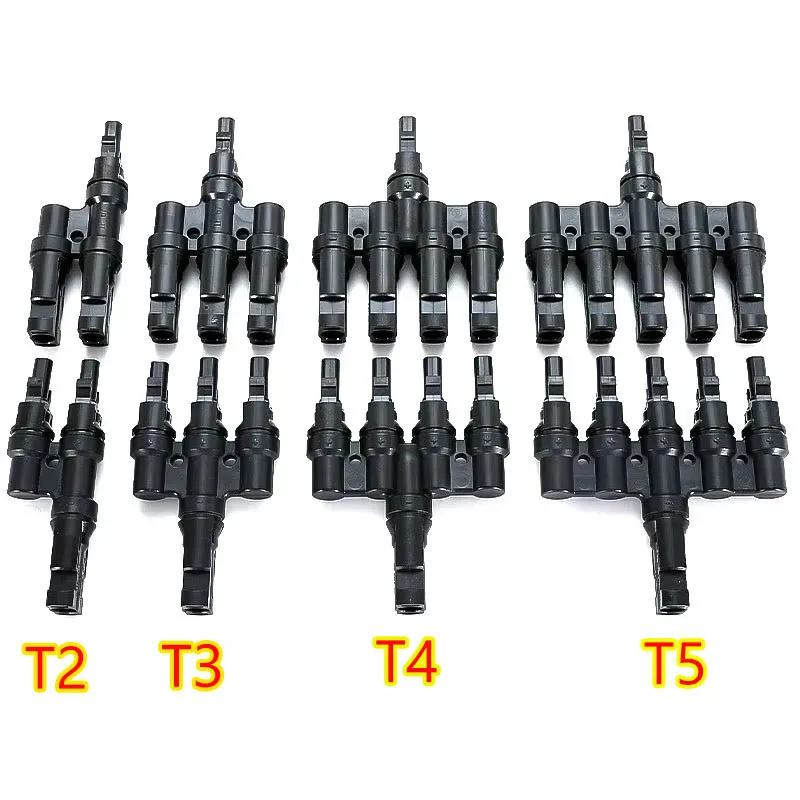
These connectors are engineered to expand solar panel arrays by allowing multiple strings to be wired in parallel. The T-type designation (T2, T3, T4, T5, T6) directly correlates to the number of input branches merging into a single output. A T2 connector combines two strings, a T3 combines three, and so on, up to T6. This modularity is crucial for system designers. It provides flexibility in array sizing.
The ability to combine strings efficiently reduces the number of home run cables required to the inverter or charge controller. This simplification streamlines the wiring process, minimizing potential points of failure and reducing installation time. Fewer cables also translate to lower material costs for larger systems.
Compared to custom wiring harnesses or individual junction boxes, these pre-fabricated branch connectors offer a standardized, plug-and-play solution. They eliminate the need for on-site splicing and complex wiring, which can introduce inconsistencies and potential hazards. This standardization enhances reliability.
Rated for 30A current and 1000V DC voltage, these connectors are built to handle the significant electrical loads typical of modern solar arrays. The 30-ampere rating ensures they can accommodate the output of multiple high-power solar panels without overheating or experiencing voltage drop. A 1000V DC rating provides a substantial safety margin for residential and commercial installations.
The visible material appears to be a high-grade, UV-resistant thermoplastic, likely PPO (polyphenylene oxide) or a similar engineering polymer. This material choice is essential for outdoor applications, where components are exposed to harsh environmental conditions. UV resistance prevents material degradation over time.
Inferior plastics can become brittle, crack, and lose their insulating properties when exposed to prolonged sunlight and temperature fluctuations. These connectors, by contrast, appear to utilize materials designed for longevity in direct sunlight. This ensures the electrical insulation remains intact for decades.
The male and female connector design, characteristic of MC4-compatible systems, ensures a secure, locking connection. This locking mechanism prevents accidental disconnections due to wind, vibration, or other environmental stresses. A reliable connection is paramount for consistent power generation.
Visual inspection suggests an IP67 or IP68 ingress protection rating, typical for high-quality solar connectors. This level of sealing protects the internal electrical contacts from dust, dirt, and moisture ingress. Water and dust can cause corrosion and short circuits.
Without proper sealing, even minor moisture can lead to galvanic corrosion on the copper contacts, increasing resistance and reducing power transfer efficiency. The robust sealing of these connectors helps maintain low contact resistance over the system's lifespan. This preserves optimal performance.
Installation involves simply plugging the male and female connectors from the solar panel strings into the corresponding ports on the branch connector. The click-lock mechanism provides tactile feedback, confirming a secure connection. This ease of installation reduces labor costs.
Maintenance requirements are minimal due to the sealed design. Periodic visual inspections for physical damage or signs of wear are generally sufficient. The black coloration helps absorb heat, but the material's inherent properties manage thermal expansion.
Compared to screw-terminal connections, these plug-and-play connectors offer superior long-term stability and require no specialized tools for basic connection. They simplify troubleshooting by providing clear, distinct connection points. This makes fault isolation easier.
The various T-type configurations (T2, T3, T4, T5, T6) allow installers to select the precise number of inputs needed for their specific array design. This prevents the use of oversized or undersized connectors, optimizing both cost and space. Correct sizing is important.
These connectors are designed to be compatible with standard MC4-type solar cables, typically ranging from 10 AWG to 14 AWG (2.5mm² to 6mm²). This broad compatibility ensures they can integrate seamlessly into most existing or new solar installations. They offer broad utility.
Their dimensions, as indicated in the image (e.g., 107.5mm length, 63mm width for a T3 type), suggest a compact form factor. This allows for neat and organized wiring within tight spaces, such as behind solar panels or within combiner boxes. Space efficiency is a design priority.
Investing in high-quality branch connectors like these translates to significant long-term value. The initial cost is quickly offset by reduced installation time, minimized maintenance, and enhanced system reliability. These components are critical for system uptime.
Failure of a single connector can lead to a partial or complete shutdown of a solar string, resulting in lost energy production and potential repair costs. The durability and electrical integrity of these connectors protect against such failures. They ensure consistent energy harvest.
Imagine a solar array operating flawlessly for decades, consistently generating clean energy without unexpected downtime due to faulty connections. These branch connectors contribute directly to that vision, providing a robust and dependable backbone for your photovoltaic system, ensuring maximum energy yield and peace of mind for the system owner. They are a foundational element for reliable solar power generation.
Engineering for Array Expansion
These connectors are engineered to expand solar panel arrays by allowing multiple strings to be wired in parallel. The T-type designation (T2, T3, T4, T5, T6) directly correlates to the number of input branches merging into a single output. A T2 connector combines two strings, a T3 combines three, and so on, up to T6. This modularity is crucial for system designers. It provides flexibility in array sizing.
The ability to combine strings efficiently reduces the number of home run cables required to the inverter or charge controller. This simplification streamlines the wiring process, minimizing potential points of failure and reducing installation time. Fewer cables also translate to lower material costs for larger systems.
Compared to custom wiring harnesses or individual junction boxes, these pre-fabricated branch connectors offer a standardized, plug-and-play solution. They eliminate the need for on-site splicing and complex wiring, which can introduce inconsistencies and potential hazards. This standardization enhances reliability.
Electrical Integrity and Material Science
Rated for 30A current and 1000V DC voltage, these connectors are built to handle the significant electrical loads typical of modern solar arrays. The 30-ampere rating ensures they can accommodate the output of multiple high-power solar panels without overheating or experiencing voltage drop. A 1000V DC rating provides a substantial safety margin for residential and commercial installations.
The visible material appears to be a high-grade, UV-resistant thermoplastic, likely PPO (polyphenylene oxide) or a similar engineering polymer. This material choice is essential for outdoor applications, where components are exposed to harsh environmental conditions. UV resistance prevents material degradation over time.
Inferior plastics can become brittle, crack, and lose their insulating properties when exposed to prolonged sunlight and temperature fluctuations. These connectors, by contrast, appear to utilize materials designed for longevity in direct sunlight. This ensures the electrical insulation remains intact for decades.
Connection Reliability and Environmental Sealing
The male and female connector design, characteristic of MC4-compatible systems, ensures a secure, locking connection. This locking mechanism prevents accidental disconnections due to wind, vibration, or other environmental stresses. A reliable connection is paramount for consistent power generation.
Visual inspection suggests an IP67 or IP68 ingress protection rating, typical for high-quality solar connectors. This level of sealing protects the internal electrical contacts from dust, dirt, and moisture ingress. Water and dust can cause corrosion and short circuits.
Without proper sealing, even minor moisture can lead to galvanic corrosion on the copper contacts, increasing resistance and reducing power transfer efficiency. The robust sealing of these connectors helps maintain low contact resistance over the system's lifespan. This preserves optimal performance.
Installation and Maintenance Considerations
Installation involves simply plugging the male and female connectors from the solar panel strings into the corresponding ports on the branch connector. The click-lock mechanism provides tactile feedback, confirming a secure connection. This ease of installation reduces labor costs.
Maintenance requirements are minimal due to the sealed design. Periodic visual inspections for physical damage or signs of wear are generally sufficient. The black coloration helps absorb heat, but the material's inherent properties manage thermal expansion.
Compared to screw-terminal connections, these plug-and-play connectors offer superior long-term stability and require no specialized tools for basic connection. They simplify troubleshooting by providing clear, distinct connection points. This makes fault isolation easier.
Sizing and Compatibility
The various T-type configurations (T2, T3, T4, T5, T6) allow installers to select the precise number of inputs needed for their specific array design. This prevents the use of oversized or undersized connectors, optimizing both cost and space. Correct sizing is important.
These connectors are designed to be compatible with standard MC4-type solar cables, typically ranging from 10 AWG to 14 AWG (2.5mm² to 6mm²). This broad compatibility ensures they can integrate seamlessly into most existing or new solar installations. They offer broad utility.
Their dimensions, as indicated in the image (e.g., 107.5mm length, 63mm width for a T3 type), suggest a compact form factor. This allows for neat and organized wiring within tight spaces, such as behind solar panels or within combiner boxes. Space efficiency is a design priority.
Long-Term Value Proposition
Investing in high-quality branch connectors like these translates to significant long-term value. The initial cost is quickly offset by reduced installation time, minimized maintenance, and enhanced system reliability. These components are critical for system uptime.
Failure of a single connector can lead to a partial or complete shutdown of a solar string, resulting in lost energy production and potential repair costs. The durability and electrical integrity of these connectors protect against such failures. They ensure consistent energy harvest.
Imagine a solar array operating flawlessly for decades, consistently generating clean energy without unexpected downtime due to faulty connections. These branch connectors contribute directly to that vision, providing a robust and dependable backbone for your photovoltaic system, ensuring maximum energy yield and peace of mind for the system owner. They are a foundational element for reliable solar power generation.