BUC/BTC Pneumatic Push-In Quick Joint Connector Hand Valve
Official Store Deal
Expert Analysis Overview
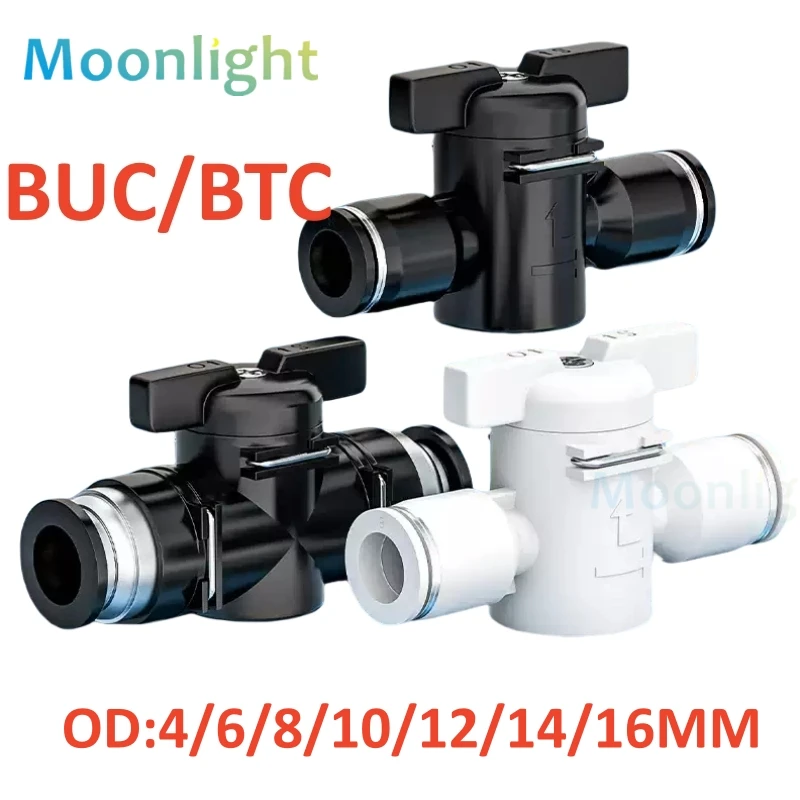
The BUC/BTC Pneumatic Push-In Quick Joint Connector Hand Valve is a critical component for fluid and air management, offering immediate manual control in various pneumatic systems. This connector, visible in both black and white finishes, is engineered for rapid tube connection and disconnection, streamlining setup and maintenance for cabinet makers and general workshop technicians. Its design prioritizes operational clarity and material integrity, a necessary attribute for reliable workshop infrastructure. The visible components suggest a focus on robust construction, ensuring consistent performance under typical operating pressures.
These manual ball valves are designed to provide instant shut-off or flow regulation within a pneumatic line. The integrated handle, clearly visible on both the black and white versions, allows for a quick visual check of the valve's status, either opened or closed. This immediate feedback is crucial in dynamic workshop environments where quick adjustments are often necessary. The ability to manually adjust the flow path ensures that air tools or dust collection systems can be isolated or regulated without complex electronic controls.
The practical implication of such direct control is significant for efficiency and safety. Imagine a scenario where a specific air tool needs to be disconnected for maintenance or a dust collection branch requires temporary isolation. A simple quarter-turn of the valve handle achieves this, preventing air loss or unwanted suction in other parts of the system. This level of granular control minimizes downtime and optimizes resource allocation within a busy shop.
Unlike more complex solenoid valves that require electrical power and often specialized controllers, these manual valves offer a straightforward, mechanical solution. Their simplicity reduces potential points of failure and makes them an economical choice for applications where automated control is not a primary requirement. The tactile feedback of the handle provides confidence in the valve's position.
The construction of these connectors incorporates several key materials, each chosen for specific performance characteristics. The primary body appears to be PBT plastic material, a common choice for pneumatic components due to its good mechanical strength, rigidity, and resistance to wear and chemicals. The metallic components, including the plug-in anti-stripping mechanism and internal fixed needle, are specified as tinned brass and stainless steel.
These material selections directly impact the connector's longevity and reliability. Tinned brass offers excellent corrosion resistance and strength, particularly important when dealing with moisture or varying air quality. Stainless steel for the fixed needle provides robust support against repeated insertions and withdrawals of tubing, preventing premature wear. The use of NBR sealing rings further enhances the system's integrity by providing an effective seal against air or water leakage, a critical factor in maintaining system pressure and efficiency.
For a workshop setting, where dust, moisture, and occasional impacts are common, the durability offered by these materials is paramount. Components made from lesser plastics or untreated metals often degrade quickly, leading to leaks, pressure drops, and frequent replacements. This connector's material composition suggests a product designed for sustained use, reducing the overall cost of ownership through extended service life. It provides a solid foundation for pneumatic plumbing.
The push-in quick joint design is a hallmark feature, allowing for rapid and tool-free connection of various tubing types. The connectors accommodate outer diameter (OD) tubing ranging from 4mm up to 16mm, offering broad compatibility for different pneumatic applications. This range covers most standard air lines used in cabinet making, from small airbrushes to larger pneumatic nailers and dust collection systems.
The ease of installation translates directly into time savings during initial setup and subsequent modifications. Users simply push the appropriate tube into the connector until it seats firmly. The internal stainless steel card spring and anti-stripping plug ensure a secure grip on the tubing, resisting accidental disconnection even under pressure. To release, a gentle press on the collar allows the tube to be withdrawn, simplifying reconfiguration.
Compared to traditional threaded fittings that often require wrenches, sealants, and considerable time for installation, the push-in mechanism offers unparalleled convenience. This system minimizes the skill required for assembly, making it accessible for a wider range of users, from seasoned professionals to DIY enthusiasts. The versatility in tube sizes means fewer specialized connectors are needed, streamlining inventory.
One of the practical benefits highlighted by the imagery is the clear visual indication of the valve's state. The handle's position directly correlates with the open or closed status, which is explicitly demonstrated with tubing. A handle aligned with the tube indicates an open flow path, while a perpendicular handle signifies a closed state. This visual cue prevents operational errors.
This immediate visual feedback is particularly valuable in complex pneumatic setups where multiple lines and valves are present. Operators can quickly scan their system and ascertain the status of each valve without needing to physically test the air flow. This contributes to a safer working environment and reduces the risk of incorrect valve manipulation, which could lead to equipment damage or injury.
Unlike some in-line valves that offer less distinct visual indicators, the prominent handle on these BUC/BTC connectors makes their operational status unmistakable. This design choice underscores a commitment to user-friendliness and practical application, ensuring that even under demanding conditions, the valve's function is clear. It provides peace of mind in critical applications.
The product specifications indicate compatibility with both air and water as media, expanding its utility beyond purely pneumatic applications. While primarily designed for air systems common in workshops, its ability to handle water suggests it could be integrated into low-pressure fluid transfer systems or cooling lines, provided the pressure and temperature limits are respected. The operating temperature range of -5°C to 60°C further broadens its applicability.
This dual-media capability means a single type of connector can serve multiple purposes within a workshop or industrial setting. For instance, a cabinet maker might use these for compressed air lines to power nail guns and sanders, and also for a low-pressure water line to a dust suppression system. This versatility simplifies procurement and inventory management, as fewer specialized parts are required.
Many standard pneumatic connectors are strictly air-only, or their sealing components are not rated for fluid contact. The specified compatibility with water, combined with the NBR sealing rings, positions these connectors as a more adaptable solution than many basic alternatives. This makes them a more valuable asset for diverse workshop needs, ensuring consistent performance regardless of the medium.
Investing in quality pneumatic connectors like the BUC/BTC series is an investment in the efficiency and safety of any workshop. The combination of durable materials, easy installation, and clear operational feedback creates a system that is both reliable and user-friendly. These connectors facilitate precise control over air and fluid flow, which is essential for tasks ranging from powering tools to managing dust.
The long-term value of these connectors far outweighs their initial cost. By preventing leaks, reducing downtime, and simplifying system modifications, they contribute to a more productive and less frustrating work environment. Imagine the smooth operation of your air tools, the efficient collection of sawdust, and the ease with which you can reconfigure your shop layout. These connectors provide the foundational reliability for such a seamless experience, ensuring your focus remains on craftsmanship, not on faulty hardware.
Precision in Airflow Management
These manual ball valves are designed to provide instant shut-off or flow regulation within a pneumatic line. The integrated handle, clearly visible on both the black and white versions, allows for a quick visual check of the valve's status, either opened or closed. This immediate feedback is crucial in dynamic workshop environments where quick adjustments are often necessary. The ability to manually adjust the flow path ensures that air tools or dust collection systems can be isolated or regulated without complex electronic controls.
The practical implication of such direct control is significant for efficiency and safety. Imagine a scenario where a specific air tool needs to be disconnected for maintenance or a dust collection branch requires temporary isolation. A simple quarter-turn of the valve handle achieves this, preventing air loss or unwanted suction in other parts of the system. This level of granular control minimizes downtime and optimizes resource allocation within a busy shop.
Unlike more complex solenoid valves that require electrical power and often specialized controllers, these manual valves offer a straightforward, mechanical solution. Their simplicity reduces potential points of failure and makes them an economical choice for applications where automated control is not a primary requirement. The tactile feedback of the handle provides confidence in the valve's position.
Material Integrity for Enduring Performance
The construction of these connectors incorporates several key materials, each chosen for specific performance characteristics. The primary body appears to be PBT plastic material, a common choice for pneumatic components due to its good mechanical strength, rigidity, and resistance to wear and chemicals. The metallic components, including the plug-in anti-stripping mechanism and internal fixed needle, are specified as tinned brass and stainless steel.
These material selections directly impact the connector's longevity and reliability. Tinned brass offers excellent corrosion resistance and strength, particularly important when dealing with moisture or varying air quality. Stainless steel for the fixed needle provides robust support against repeated insertions and withdrawals of tubing, preventing premature wear. The use of NBR sealing rings further enhances the system's integrity by providing an effective seal against air or water leakage, a critical factor in maintaining system pressure and efficiency.
For a workshop setting, where dust, moisture, and occasional impacts are common, the durability offered by these materials is paramount. Components made from lesser plastics or untreated metals often degrade quickly, leading to leaks, pressure drops, and frequent replacements. This connector's material composition suggests a product designed for sustained use, reducing the overall cost of ownership through extended service life. It provides a solid foundation for pneumatic plumbing.
Installation and Adaptability
The push-in quick joint design is a hallmark feature, allowing for rapid and tool-free connection of various tubing types. The connectors accommodate outer diameter (OD) tubing ranging from 4mm up to 16mm, offering broad compatibility for different pneumatic applications. This range covers most standard air lines used in cabinet making, from small airbrushes to larger pneumatic nailers and dust collection systems.
The ease of installation translates directly into time savings during initial setup and subsequent modifications. Users simply push the appropriate tube into the connector until it seats firmly. The internal stainless steel card spring and anti-stripping plug ensure a secure grip on the tubing, resisting accidental disconnection even under pressure. To release, a gentle press on the collar allows the tube to be withdrawn, simplifying reconfiguration.
Compared to traditional threaded fittings that often require wrenches, sealants, and considerable time for installation, the push-in mechanism offers unparalleled convenience. This system minimizes the skill required for assembly, making it accessible for a wider range of users, from seasoned professionals to DIY enthusiasts. The versatility in tube sizes means fewer specialized connectors are needed, streamlining inventory.
Operational Clarity and Visual Feedback
One of the practical benefits highlighted by the imagery is the clear visual indication of the valve's state. The handle's position directly correlates with the open or closed status, which is explicitly demonstrated with tubing. A handle aligned with the tube indicates an open flow path, while a perpendicular handle signifies a closed state. This visual cue prevents operational errors.
This immediate visual feedback is particularly valuable in complex pneumatic setups where multiple lines and valves are present. Operators can quickly scan their system and ascertain the status of each valve without needing to physically test the air flow. This contributes to a safer working environment and reduces the risk of incorrect valve manipulation, which could lead to equipment damage or injury.
Unlike some in-line valves that offer less distinct visual indicators, the prominent handle on these BUC/BTC connectors makes their operational status unmistakable. This design choice underscores a commitment to user-friendliness and practical application, ensuring that even under demanding conditions, the valve's function is clear. It provides peace of mind in critical applications.
Versatility Across Media and Environments
The product specifications indicate compatibility with both air and water as media, expanding its utility beyond purely pneumatic applications. While primarily designed for air systems common in workshops, its ability to handle water suggests it could be integrated into low-pressure fluid transfer systems or cooling lines, provided the pressure and temperature limits are respected. The operating temperature range of -5°C to 60°C further broadens its applicability.
This dual-media capability means a single type of connector can serve multiple purposes within a workshop or industrial setting. For instance, a cabinet maker might use these for compressed air lines to power nail guns and sanders, and also for a low-pressure water line to a dust suppression system. This versatility simplifies procurement and inventory management, as fewer specialized parts are required.
Many standard pneumatic connectors are strictly air-only, or their sealing components are not rated for fluid contact. The specified compatibility with water, combined with the NBR sealing rings, positions these connectors as a more adaptable solution than many basic alternatives. This makes them a more valuable asset for diverse workshop needs, ensuring consistent performance regardless of the medium.
The Investment in Reliable Control
Investing in quality pneumatic connectors like the BUC/BTC series is an investment in the efficiency and safety of any workshop. The combination of durable materials, easy installation, and clear operational feedback creates a system that is both reliable and user-friendly. These connectors facilitate precise control over air and fluid flow, which is essential for tasks ranging from powering tools to managing dust.
The long-term value of these connectors far outweighs their initial cost. By preventing leaks, reducing downtime, and simplifying system modifications, they contribute to a more productive and less frustrating work environment. Imagine the smooth operation of your air tools, the efficient collection of sawdust, and the ease with which you can reconfigure your shop layout. These connectors provide the foundational reliability for such a seamless experience, ensuring your focus remains on craftsmanship, not on faulty hardware.