Compact PWM DC Motor Speed Controller (1.8V-15V, 2A)
Official Store Deal
Expert Analysis Overview
The Compact PWM DC Motor Speed Controller is a specialized electronic module engineered for precise regulation of low-voltage DC motor speeds, targeting hobbyists, educators, and small-scale automation developers. This device utilizes Pulse Width Modulation (PWM) technology, a superior method for motor control compared to simple voltage reduction, ensuring efficient power delivery and consistent torque across varying speeds. Its compact footprint and integrated safety features make it a practical choice for a range of applications where space and reliability are paramount.
This controller operates on a wide input voltage range from 1.8V to 15V DC, accommodating various power sources from small battery packs to regulated power supplies. The output current capacity is rated at 2A, suitable for driving a multitude of small DC motors commonly found in robotics, model trains, and DIY projects. This broad voltage compatibility is a significant advantage.
Unlike traditional resistive dimmers that dissipate excess energy as heat, the PWM method rapidly switches the motor's power on and off. This switching occurs at a high frequency, effectively varying the average voltage supplied to the motor without significant power loss. The result is cooler operation and improved energy efficiency.
Compared to simpler voltage dividers, this PWM controller maintains motor torque more effectively at lower speeds. This capability is crucial for applications requiring smooth acceleration and deceleration, preventing motor stalling or erratic behavior. It offers a much more refined control experience.
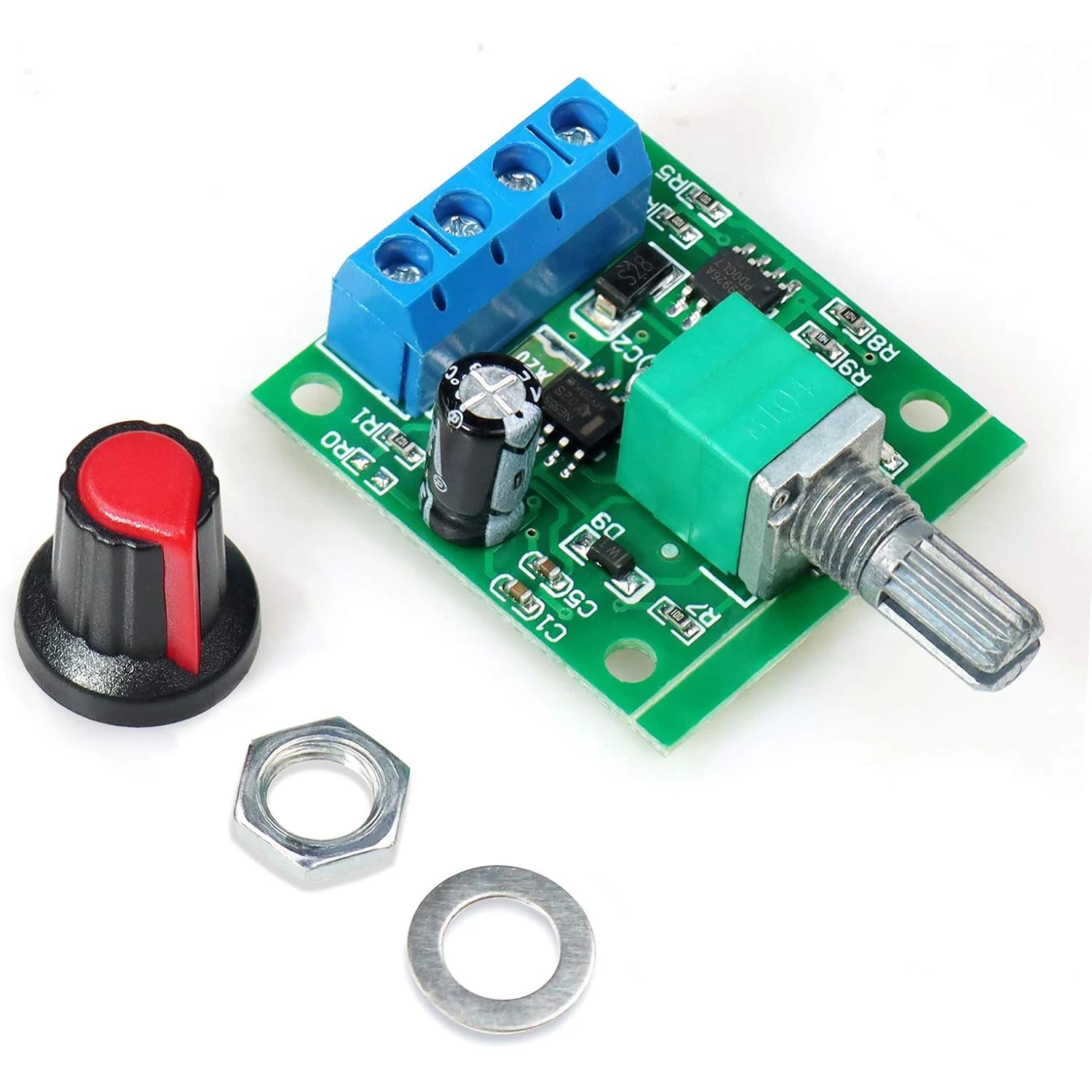
The visible green PCB (Printed Circuit Board) houses several key components, including an 1803BK chip, which is central to the PWM generation. Surface-mount technology (STM patch) components are evident, indicating a modern manufacturing process that allows for a smaller board size and potentially better signal integrity. The board is well-populated.
Critical to its operation is the potentiometer, featuring an 8mm hole size for mounting, which provides the user interface for speed adjustment. This component is robustly integrated, suggesting durability for repeated adjustments. A tactile knob with a red indicator is included for intuitive control.
Unlike many generic modules that might cut corners, this unit includes a 2A resettable fuse. This fuse is a vital safety feature, automatically interrupting the circuit in the event of an overcurrent condition, protecting both the motor and the controller from damage. This prevents electrical fires.
Electrical connections are facilitated by blue or green screw terminals, designed for secure wire termination. These terminals are clearly labeled for input power (IN) and motor output (Motor), simplifying the wiring process. Proper terminal quality is essential.
Each terminal accepts bare wire, which is then secured by a screw, ensuring a firm electrical contact. This method is generally preferred over less secure push-in connectors for applications where vibrations or accidental tugs might occur. Verifying wire gauge accuracy is critical for safety.
Compared to modules with soldered connections, screw terminals offer greater flexibility for users to connect and disconnect wires without specialized tools. This makes the module highly adaptable for prototyping and experimental setups. It simplifies circuit modifications.
The inclusion of a switch function integrated into the potentiometer means the motor can be turned completely off without disconnecting power, adding a layer of convenience and safety. This eliminates the need for an external switch in many basic setups. It simplifies user interaction.
An LED indicator is present on the board, providing visual feedback on the module's operational status. This indicator illuminates when power is applied, confirming the circuit is active and ready for use. This small detail aids in troubleshooting.
This level of integrated functionality, particularly the resettable fuse and switch, elevates the module beyond basic speed controllers. It provides a more complete and safer solution for controlling small DC motors. Users gain peace of mind.
Given its specifications, this controller is ideal for applications such as controlling the speed of small cooling fans, adjusting the pace of miniature conveyor belts, or varying the intensity of low-voltage LED lighting. Its compact size allows for integration into tight enclosures. It fits almost anywhere.
In educational settings, it serves as an excellent tool for demonstrating PWM principles and motor control concepts. Students can easily experiment with different motor types and observe the effects of speed variation. It is a great learning aid.
Unlike larger, more complex industrial motor drivers, this module is specifically tailored for low-power, low-voltage scenarios, offering a cost-effective and straightforward solution without unnecessary complexity. It is purpose-built for small tasks.
Installation involves connecting the DC power source to the 'IN' terminals, observing polarity, and then connecting the DC motor to the 'Motor' terminals. The potentiometer knob is then used to adjust the motor's rotational speed. Always double-check connections.
For optimal performance and longevity, it is crucial to ensure that the motor's current draw does not consistently exceed the 2A rating. While the resettable fuse offers protection, continuous overcurrent can degrade components over time. Adhering to specifications is key.
Compared to modules without integrated fuses, this controller offers superior protection against accidental short circuits or motor stalls. However, users should still exercise caution and ensure proper wiring practices to prevent potential hazards. Safety protocols are paramount.
The robust construction, featuring a durable PCB and quality components like the resettable fuse and integrated potentiometer, suggests a product designed for sustained use in its intended applications. This is not a disposable component. It offers lasting performance.
By providing efficient speed control, this module can extend the lifespan of DC motors by preventing them from running at unnecessarily high speeds or experiencing sudden jolts. Smooth operation reduces mechanical stress. Motors last longer.
Unlike cheaper, unprotected modules that might fail prematurely under minor electrical stress, this controller's integrated safety features contribute to its overall reliability and long-term value. It is a smart investment for consistent performance. This unit is built to last.
Imagine effortlessly fine-tuning the speed of your miniature robot, ensuring precise movement, or perfectly adjusting the airflow of a small cooling fan to maintain optimal temperature. This controller empowers creators and hobbyists to bring their low-voltage DC motor projects to life with confidence and precision, knowing that integrated safety measures protect their valuable components. The ability to seamlessly integrate this compact, efficient module into diverse applications means less time troubleshooting and more time innovating, making it an indispensable tool for any electronics enthusiast's workbench. The control it provides is truly transformative for small-scale automation. It simplifies complex tasks.
Precision Power Regulation
This controller operates on a wide input voltage range from 1.8V to 15V DC, accommodating various power sources from small battery packs to regulated power supplies. The output current capacity is rated at 2A, suitable for driving a multitude of small DC motors commonly found in robotics, model trains, and DIY projects. This broad voltage compatibility is a significant advantage.
Unlike traditional resistive dimmers that dissipate excess energy as heat, the PWM method rapidly switches the motor's power on and off. This switching occurs at a high frequency, effectively varying the average voltage supplied to the motor without significant power loss. The result is cooler operation and improved energy efficiency.
Compared to simpler voltage dividers, this PWM controller maintains motor torque more effectively at lower speeds. This capability is crucial for applications requiring smooth acceleration and deceleration, preventing motor stalling or erratic behavior. It offers a much more refined control experience.
Integrated Circuitry and Build Quality
The visible green PCB (Printed Circuit Board) houses several key components, including an 1803BK chip, which is central to the PWM generation. Surface-mount technology (STM patch) components are evident, indicating a modern manufacturing process that allows for a smaller board size and potentially better signal integrity. The board is well-populated.
Critical to its operation is the potentiometer, featuring an 8mm hole size for mounting, which provides the user interface for speed adjustment. This component is robustly integrated, suggesting durability for repeated adjustments. A tactile knob with a red indicator is included for intuitive control.
Unlike many generic modules that might cut corners, this unit includes a 2A resettable fuse. This fuse is a vital safety feature, automatically interrupting the circuit in the event of an overcurrent condition, protecting both the motor and the controller from damage. This prevents electrical fires.
Secure Electrical Interfacing
Electrical connections are facilitated by blue or green screw terminals, designed for secure wire termination. These terminals are clearly labeled for input power (IN) and motor output (Motor), simplifying the wiring process. Proper terminal quality is essential.
Each terminal accepts bare wire, which is then secured by a screw, ensuring a firm electrical contact. This method is generally preferred over less secure push-in connectors for applications where vibrations or accidental tugs might occur. Verifying wire gauge accuracy is critical for safety.
Compared to modules with soldered connections, screw terminals offer greater flexibility for users to connect and disconnect wires without specialized tools. This makes the module highly adaptable for prototyping and experimental setups. It simplifies circuit modifications.
Operational Safety and Indicators
The inclusion of a switch function integrated into the potentiometer means the motor can be turned completely off without disconnecting power, adding a layer of convenience and safety. This eliminates the need for an external switch in many basic setups. It simplifies user interaction.
An LED indicator is present on the board, providing visual feedback on the module's operational status. This indicator illuminates when power is applied, confirming the circuit is active and ready for use. This small detail aids in troubleshooting.
This level of integrated functionality, particularly the resettable fuse and switch, elevates the module beyond basic speed controllers. It provides a more complete and safer solution for controlling small DC motors. Users gain peace of mind.
Versatile Applications
Given its specifications, this controller is ideal for applications such as controlling the speed of small cooling fans, adjusting the pace of miniature conveyor belts, or varying the intensity of low-voltage LED lighting. Its compact size allows for integration into tight enclosures. It fits almost anywhere.
In educational settings, it serves as an excellent tool for demonstrating PWM principles and motor control concepts. Students can easily experiment with different motor types and observe the effects of speed variation. It is a great learning aid.
Unlike larger, more complex industrial motor drivers, this module is specifically tailored for low-power, low-voltage scenarios, offering a cost-effective and straightforward solution without unnecessary complexity. It is purpose-built for small tasks.
Installation and Maintenance Considerations
Installation involves connecting the DC power source to the 'IN' terminals, observing polarity, and then connecting the DC motor to the 'Motor' terminals. The potentiometer knob is then used to adjust the motor's rotational speed. Always double-check connections.
For optimal performance and longevity, it is crucial to ensure that the motor's current draw does not consistently exceed the 2A rating. While the resettable fuse offers protection, continuous overcurrent can degrade components over time. Adhering to specifications is key.
Compared to modules without integrated fuses, this controller offers superior protection against accidental short circuits or motor stalls. However, users should still exercise caution and ensure proper wiring practices to prevent potential hazards. Safety protocols are paramount.
Long-Term Value and Reliability
The robust construction, featuring a durable PCB and quality components like the resettable fuse and integrated potentiometer, suggests a product designed for sustained use in its intended applications. This is not a disposable component. It offers lasting performance.
By providing efficient speed control, this module can extend the lifespan of DC motors by preventing them from running at unnecessarily high speeds or experiencing sudden jolts. Smooth operation reduces mechanical stress. Motors last longer.
Unlike cheaper, unprotected modules that might fail prematurely under minor electrical stress, this controller's integrated safety features contribute to its overall reliability and long-term value. It is a smart investment for consistent performance. This unit is built to last.
Imagine effortlessly fine-tuning the speed of your miniature robot, ensuring precise movement, or perfectly adjusting the airflow of a small cooling fan to maintain optimal temperature. This controller empowers creators and hobbyists to bring their low-voltage DC motor projects to life with confidence and precision, knowing that integrated safety measures protect their valuable components. The ability to seamlessly integrate this compact, efficient module into diverse applications means less time troubleshooting and more time innovating, making it an indispensable tool for any electronics enthusiast's workbench. The control it provides is truly transformative for small-scale automation. It simplifies complex tasks.