Compact Silicone Round Ice Bucket and Cylinder Mold
Official Store Deal
Expert Analysis Overview
Revolutionizing the Home Cocktail Hour
The Silicone Round Ice Bucket Mold is a high-utility barware tool engineered for those who value efficiency and presentation in their home beverage service. Traditional ice trays often create more frustration than refreshment, requiring aggressive twisting or lukewarm water rinses to dislodge a few jagged shards. This cylinder system replaces that struggle with a tactile, squeeze-to-release mechanism that produces sixty uniform cubes in a fraction of the footprint. It is efficient.
Hosting a dinner party requires attention to detail. Ice is often the most overlooked ingredient, yet it is the most vital for maintaining the integrity of a well-crafted cocktail. This device ensures a steady supply of small, 1.3cm cubes that chill liquids rapidly without the excessive dilution associated with larger, slower-melting blocks. Guests will notice the difference. The compact, stackable design allows for multiple units to reside in even the most crowded freezers, ensuring the party never runs dry.
The Physics of the Silicone Squeeze
Construction relies on a dual-material architecture consisting of a flexible silicone outer ring and a rigid internal PP plastic cylinder. This combination creates a precise cavity where water is forced into the grooved edges of the outer mold. For those unfamiliar with material science, food-grade silicone is chosen here for its low thermal conductivity and high elasticity. It stays flexible at sub-zero temperatures. Unlike polyethylene trays that become brittle and prone to cracking when frozen, this silicone remains soft to the touch. It feels premium.
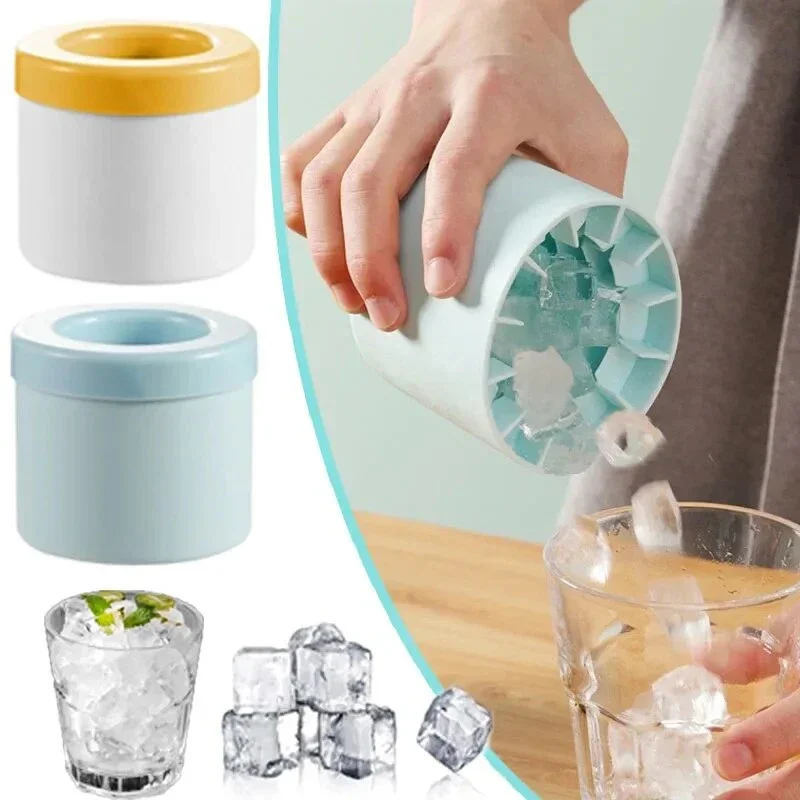
When the internal cylinder is removed after freezing, the remaining ice sits in a series of hexagonal or rectangular pockets along the inner wall of the bucket. A simple rhythmic squeeze of the outer shell causes these pockets to flex, popping the cubes inward into the central void. This process is satisfying. The kinetic energy required is minimal, making it accessible for those who find traditional trays difficult to manipulate. No more banging trays on the counter. The resulting cubes are uniform, clean, and ready for immediate serving or storage within the bucket itself.
Rethinking Freezer Real Estate
Space is a luxury in modern kitchens. Standard flat ice trays are notorious for their inefficient use of vertical space and their tendency to spill water during the precarious journey from the sink to the freezer. This cylinder design solves both issues simultaneously. The vertical orientation utilizes the often-wasted height of freezer shelves. It stands tall. The secure lid and internal plug system prevent spills, ensuring the freezer remains free of ice buildup and sticky messes.
Imagine a scenario where a small apartment freezer is packed with frozen meals and bags of vegetables. Fitting a standard tray would be impossible without a complete reorganization. This mold, however, slides into narrow gaps or sits neatly in the door rack. It fits anywhere. By stacking two or three of these units, a host can produce 180 cubes in the same footprint a single traditional tray would occupy. This is a massive logistical win for the home entertainer.
The Upgrade from Generic Alternatives
Generic ice trays are frequently manufactured from low-density plastics that leach odors into the ice over time. This mold uses high-quality, BPA-free materials that are inert and non-porous. It stays fresh. The ice produced is free from the "freezer taste" that often ruins a delicate glass of scotch or a fresh lemonade. Furthermore, the 1.3cm cube size is specifically chosen for versatility. These fit into narrow-mouthed sports bottles that standard cubes simply cannot enter. Small ice is better.
Cleaning is a non-issue compared to the intricate nooks and crannies of decorative trays. The silicone can be flipped inside out, and the entire assembly is dishwasher safe. This saves time. Many cheaper imitations lack the internal rigid cylinder, leading to misshapen ice or leakages during the filling process. The inclusion of the structural core ensures that the water stays exactly where it belongs until it is solid. It works perfectly every time.
From Pour to Pour: The Experience
Using this tool changes the rhythm of kitchen prep. Filling the unit takes roughly three seconds, as water is poured directly into the top rather than carefully aimed into individual squares. Speed is key. Once frozen, the transition from freezer to glass is a singular, fluid motion. The user squeezes, the ice rattles into the center, and it is poured directly into the waiting tumbler. It is elegant. There is no contact between the hands and the ice, which is more hygienic for guests and prevents the ice from melting prematurely.
Picture a warm summer evening on the patio. The drinks are flowing, and the mood is light. Instead of running back to the kitchen to wrestle with a stuck tray, the host brings out this sleek, colorful cylinder. A quick press, a splash of gin, and a sprig of mint later, the drink is served. Life is easier. This tool is not just a mold; it is a centerpiece of social efficiency. Own the evening with perfectly chilled refreshments that look as good as they taste.