DC Motor PWM Speed Controller 1.8V-15V
Official Store Deal
Expert Analysis Overview
The DC Motor PWM Speed Controller is a compact, highly adaptable power management module designed for hobbyists and small-scale solar energy projects requiring precise control over brushed DC motors. This module offers a practical solution for varying the rotational speed of motors, which is critical for optimizing performance in diverse applications, from solar trackers to small water pumps. Its low voltage operation makes it particularly suitable for direct integration with common battery banks found in off-grid setups.
This controller operates on the principle of Pulse Width Modulation (PWM), a method for controlling the average power delivered to an electrical load by varying the duty cycle of an electronic switch. The visible potentiometer knob allows for continuous adjustment of this duty cycle. This direct manipulation of the power signal provides a smooth and efficient way to regulate motor speed without significant energy loss, unlike traditional resistive dimmers that dissipate excess energy as heat. Its operation is straightforward.
The implication of PWM technology is significant for energy efficiency. By rapidly switching the power on and off, the controller minimizes the energy wasted in the control process, directing more power to the motor itself. This is especially vital in solar-powered systems where every watt-hour of energy is precious. The ability to fine-tune motor speed means systems can adapt to varying environmental conditions or operational requirements, such as adjusting the flow rate of a pump based on water availability or demand.
Compared to simple on/off switches, a PWM controller offers a vastly superior level of control. Standard switches provide only two states, full power or no power. This controller, however, enables a spectrum of speeds, allowing for nuanced operation that can extend the lifespan of mechanical components by reducing sudden stresses. It also prevents overshooting desired speeds.
The module is explicitly rated for a wide input voltage range, from 1.8V to 15V DC, and can handle a continuous current of up to 2A. This broad voltage compatibility means it can be powered by various low-voltage DC sources, including single-cell or multi-cell battery packs, and directly from small solar panels with appropriate voltage regulation. The 2A current rating is suitable for many small DC motors commonly found in hobbyist projects.
This wide voltage range makes the controller exceptionally versatile for solar energy applications. If you are building a small solar-powered fan, a mini conveyor belt, or a tracking mechanism for a small solar panel, this controller fits seamlessly. Its ability to work with voltages as low as 1.8V means it can even be integrated into very low-power circuits, maximizing the utility of minimal energy inputs. This adaptability is a key advantage.
Many generic motor controllers often have a narrower operational voltage window, limiting their utility across different battery configurations or direct solar panel outputs. This module's flexibility reduces the need for additional voltage conversion steps, simplifying system design and potentially improving overall efficiency by minimizing conversion losses. It is a robust choice.
For solar energy hobbyists, the ability to control motor speed is fundamental for optimizing system performance. Consider a solar tracking system: fine adjustments to motor speed allow for precise alignment with the sun's path throughout the day, maximizing energy capture. Similarly, in a solar-powered irrigation system, controlling the pump speed can match water delivery to plant needs, conserving water and energy.
The real-world application here is about maximizing the return on investment for renewable energy components. A solar panel operating at its peak efficiency requires its load to be managed effectively. This controller facilitates that by allowing motors to run at their most efficient point, rather than simply full throttle, which might draw more current than necessary and reduce battery life or panel efficiency. It supports intelligent energy use.
Unlike systems that rely on fixed-speed motors, which can lead to inefficient energy consumption or suboptimal performance under varying conditions, this PWM controller provides the necessary granularity. It bridges the gap between raw power generation and intelligent power utilization, a critical aspect of sustainable energy solutions. This makes it an essential tool.
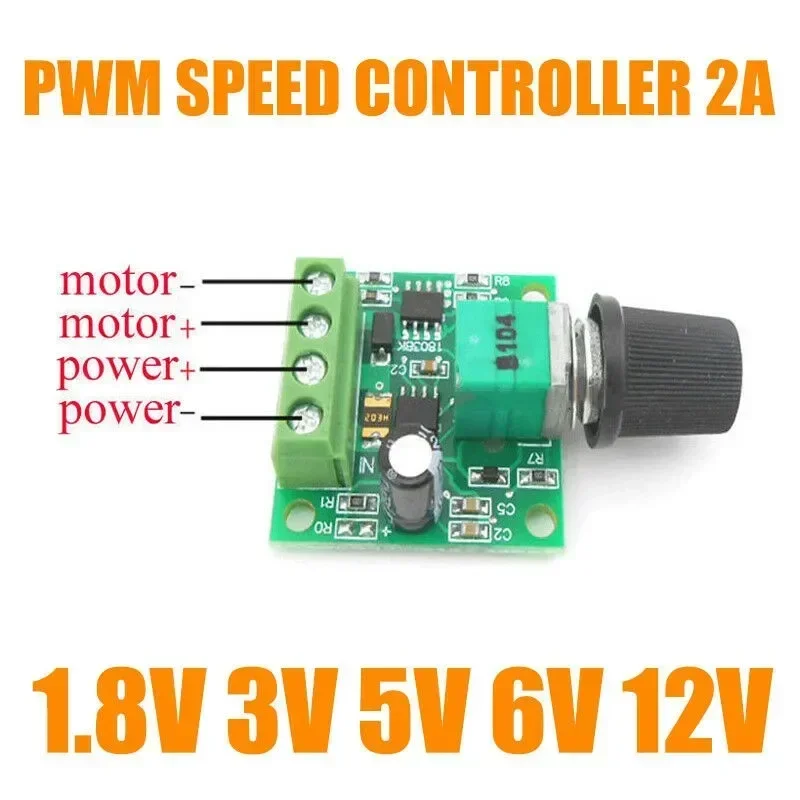
Visually, the controller presents a compact form factor, measuring approximately 32mm x 32mm, with a height of 15mm including the potentiometer. The green PCB (Printed Circuit Board) appears to be of standard quality, populated with surface-mount components (SMD) and a few through-hole components like the capacitor and the terminal block. The potentiometer features a standard knob, which may vary in color (black or red).
This small size is a significant advantage for integration into space-constrained projects, common in portable solar setups or compact enclosures. The use of SMD components contributes to the module's overall miniaturization, allowing it to be tucked away discreetly. A small footprint means less physical space is consumed, leaving more room for batteries or other critical components. It fits almost anywhere.
Compared to older, larger through-hole component designs, this compact build minimizes the physical impact on a project. While the specific brand of components is not visible, the general layout suggests a straightforward and functional design typical of entry-level hobbyist electronics. The terminal block provides a secure connection for wiring.
The module features a 4-pin screw terminal block for easy connection of power input and motor output. The connections are clearly labeled: 'power+' and 'power-' for the DC input, and 'motor+' and 'motor-' for the motor output. This clear labeling simplifies the wiring process, making it accessible even for beginners in electronics. The knob provides tactile feedback.
This user-friendly design ensures that getting the controller up and running is not a complex task. For a solar energy hobbyist, quick and reliable setup means more time can be spent on experimenting with different configurations and optimizing the overall system, rather than troubleshooting basic wiring. The direct control offered by the potentiometer is intuitive. Adjusting motor speed becomes a simple twist.
Many entry-level controllers sometimes suffer from ambiguous labeling or require soldering for connections, which can be a barrier for new users. This module's screw terminals and clear labels represent an upgrade in user convenience, promoting a smoother build experience. It is designed for ease of use.
While the 2A continuous current rating is suitable for many small motors, it is important to match the motor's current draw to the controller's capacity. Exceeding this limit can lead to overheating and potential damage to the module. The inclusion of a capacitor on the board suggests some level of ripple filtering, contributing to smoother motor operation.
Understanding the current limitations is crucial for project longevity. In a solar application, unexpected current spikes, perhaps from a motor stalling or starting under heavy load, could stress the controller. Proper circuit design, including fuses or circuit breakers, is always recommended to protect both the controller and the motor. This protects your investment.
Unlike industrial-grade controllers with robust heat sinks and higher current capacities, this module is clearly positioned for lighter duty applications. Its simplicity is both a strength and a limitation; while easy to use, it requires the user to be mindful of its operational boundaries to ensure reliable performance. It is not for heavy industrial use.
Imagine your small-scale solar projects operating with newfound precision, your homemade solar tracker smoothly following the sun, or your miniature water pump delivering just the right flow. This compact controller empowers you to fine-tune your DC motor applications, enhancing efficiency and extending the life of your components. It transforms simple on/off functionality into a spectrum of intelligent control, bringing your eco-friendly innovations to life with greater finesse and reliability.
Precision Power Delivery
This controller operates on the principle of Pulse Width Modulation (PWM), a method for controlling the average power delivered to an electrical load by varying the duty cycle of an electronic switch. The visible potentiometer knob allows for continuous adjustment of this duty cycle. This direct manipulation of the power signal provides a smooth and efficient way to regulate motor speed without significant energy loss, unlike traditional resistive dimmers that dissipate excess energy as heat. Its operation is straightforward.
The implication of PWM technology is significant for energy efficiency. By rapidly switching the power on and off, the controller minimizes the energy wasted in the control process, directing more power to the motor itself. This is especially vital in solar-powered systems where every watt-hour of energy is precious. The ability to fine-tune motor speed means systems can adapt to varying environmental conditions or operational requirements, such as adjusting the flow rate of a pump based on water availability or demand.
Compared to simple on/off switches, a PWM controller offers a vastly superior level of control. Standard switches provide only two states, full power or no power. This controller, however, enables a spectrum of speeds, allowing for nuanced operation that can extend the lifespan of mechanical components by reducing sudden stresses. It also prevents overshooting desired speeds.
Voltage Versatility and Current Capacity
The module is explicitly rated for a wide input voltage range, from 1.8V to 15V DC, and can handle a continuous current of up to 2A. This broad voltage compatibility means it can be powered by various low-voltage DC sources, including single-cell or multi-cell battery packs, and directly from small solar panels with appropriate voltage regulation. The 2A current rating is suitable for many small DC motors commonly found in hobbyist projects.
This wide voltage range makes the controller exceptionally versatile for solar energy applications. If you are building a small solar-powered fan, a mini conveyor belt, or a tracking mechanism for a small solar panel, this controller fits seamlessly. Its ability to work with voltages as low as 1.8V means it can even be integrated into very low-power circuits, maximizing the utility of minimal energy inputs. This adaptability is a key advantage.
Many generic motor controllers often have a narrower operational voltage window, limiting their utility across different battery configurations or direct solar panel outputs. This module's flexibility reduces the need for additional voltage conversion steps, simplifying system design and potentially improving overall efficiency by minimizing conversion losses. It is a robust choice.
Integration into Renewable Systems
For solar energy hobbyists, the ability to control motor speed is fundamental for optimizing system performance. Consider a solar tracking system: fine adjustments to motor speed allow for precise alignment with the sun's path throughout the day, maximizing energy capture. Similarly, in a solar-powered irrigation system, controlling the pump speed can match water delivery to plant needs, conserving water and energy.
The real-world application here is about maximizing the return on investment for renewable energy components. A solar panel operating at its peak efficiency requires its load to be managed effectively. This controller facilitates that by allowing motors to run at their most efficient point, rather than simply full throttle, which might draw more current than necessary and reduce battery life or panel efficiency. It supports intelligent energy use.
Unlike systems that rely on fixed-speed motors, which can lead to inefficient energy consumption or suboptimal performance under varying conditions, this PWM controller provides the necessary granularity. It bridges the gap between raw power generation and intelligent power utilization, a critical aspect of sustainable energy solutions. This makes it an essential tool.
Compact Footprint and Build Quality
Visually, the controller presents a compact form factor, measuring approximately 32mm x 32mm, with a height of 15mm including the potentiometer. The green PCB (Printed Circuit Board) appears to be of standard quality, populated with surface-mount components (SMD) and a few through-hole components like the capacitor and the terminal block. The potentiometer features a standard knob, which may vary in color (black or red).
This small size is a significant advantage for integration into space-constrained projects, common in portable solar setups or compact enclosures. The use of SMD components contributes to the module's overall miniaturization, allowing it to be tucked away discreetly. A small footprint means less physical space is consumed, leaving more room for batteries or other critical components. It fits almost anywhere.
Compared to older, larger through-hole component designs, this compact build minimizes the physical impact on a project. While the specific brand of components is not visible, the general layout suggests a straightforward and functional design typical of entry-level hobbyist electronics. The terminal block provides a secure connection for wiring.
Operational Versatility and User Experience
The module features a 4-pin screw terminal block for easy connection of power input and motor output. The connections are clearly labeled: 'power+' and 'power-' for the DC input, and 'motor+' and 'motor-' for the motor output. This clear labeling simplifies the wiring process, making it accessible even for beginners in electronics. The knob provides tactile feedback.
This user-friendly design ensures that getting the controller up and running is not a complex task. For a solar energy hobbyist, quick and reliable setup means more time can be spent on experimenting with different configurations and optimizing the overall system, rather than troubleshooting basic wiring. The direct control offered by the potentiometer is intuitive. Adjusting motor speed becomes a simple twist.
Many entry-level controllers sometimes suffer from ambiguous labeling or require soldering for connections, which can be a barrier for new users. This module's screw terminals and clear labels represent an upgrade in user convenience, promoting a smoother build experience. It is designed for ease of use.
Potential Considerations and Longevity
While the 2A continuous current rating is suitable for many small motors, it is important to match the motor's current draw to the controller's capacity. Exceeding this limit can lead to overheating and potential damage to the module. The inclusion of a capacitor on the board suggests some level of ripple filtering, contributing to smoother motor operation.
Understanding the current limitations is crucial for project longevity. In a solar application, unexpected current spikes, perhaps from a motor stalling or starting under heavy load, could stress the controller. Proper circuit design, including fuses or circuit breakers, is always recommended to protect both the controller and the motor. This protects your investment.
Unlike industrial-grade controllers with robust heat sinks and higher current capacities, this module is clearly positioned for lighter duty applications. Its simplicity is both a strength and a limitation; while easy to use, it requires the user to be mindful of its operational boundaries to ensure reliable performance. It is not for heavy industrial use.
Imagine your small-scale solar projects operating with newfound precision, your homemade solar tracker smoothly following the sun, or your miniature water pump delivering just the right flow. This compact controller empowers you to fine-tune your DC motor applications, enhancing efficiency and extending the life of your components. It transforms simple on/off functionality into a spectrum of intelligent control, bringing your eco-friendly innovations to life with greater finesse and reliability.