DELEFU Tempered Glass Smart Power Outlet with USB-C and Wi-Fi Switch
Official Store Deal
Expert Analysis Overview
The DELEFU Tempered Glass Smart Power Outlet is a sophisticated wall-mounted interface designed for Brazilian smart homes, offering integrated power delivery and intelligent control capabilities. This device targets users seeking a centralized, aesthetically pleasing solution for both traditional AC power and modern USB charging within a unified smart ecosystem.
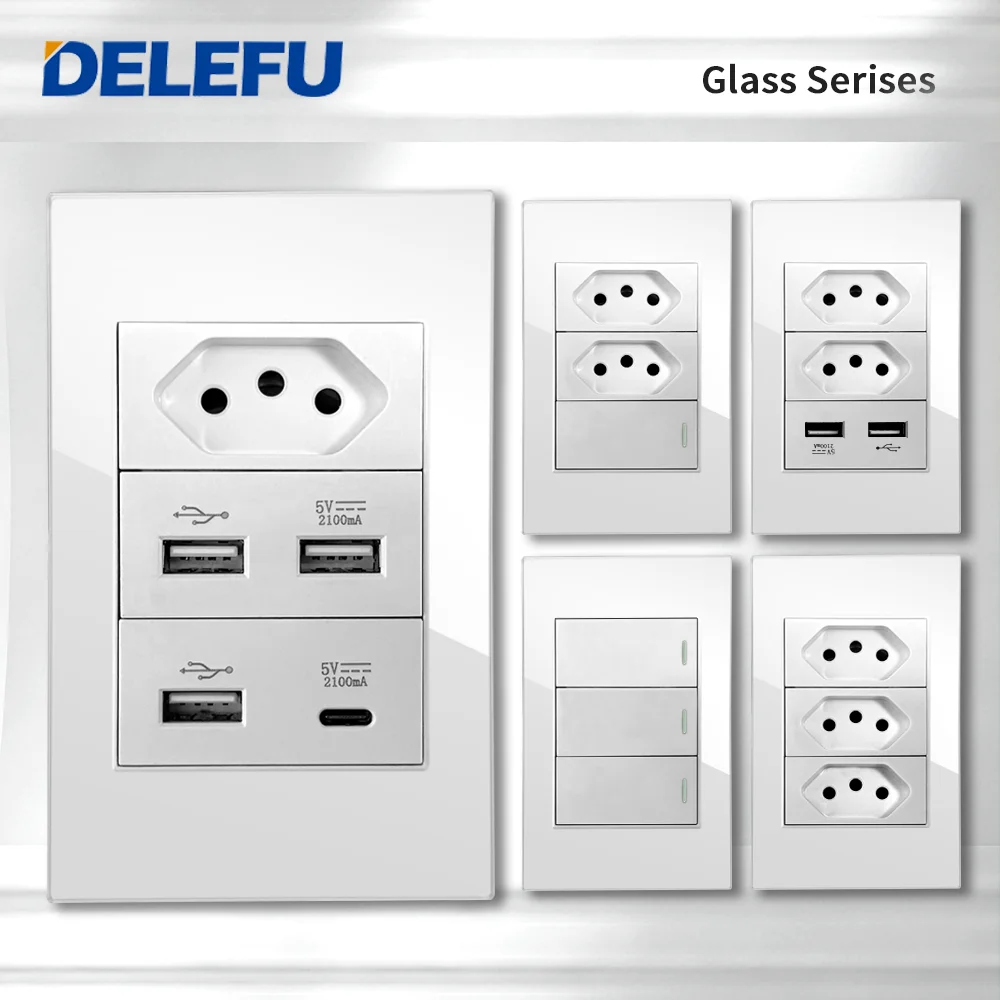
The unit features a pristine white tempered glass panel, adhering to a 4*2 form factor with precise 118mm x 74mm dimensions. This construction choice signals a clear departure from conventional plastic fixtures.
The tempered glass surface provides a sleek, modern aesthetic that seamlessly integrates into contemporary interior designs. Its smooth, non-porous finish resists dust and is effortless to clean, maintaining its pristine appearance over time. The solid feel of the glass, unlike flimsy plastic alternatives, suggests a higher degree of durability and a premium user experience. Imagine a smart home where every wall interface reflects a commitment to both form and function, enhancing the overall decor rather than detracting from it. This is a substantial upgrade.
Compared to standard plastic wall plates, the tempered glass offers superior scratch resistance and a more substantial tactile feedback during operation. This material choice elevates the perceived value and longevity of the unit beyond typical electrical fixtures, ensuring it withstands daily interactions without showing premature wear.
This DELEFU unit integrates Brazil standard AC outlets, specifically designed to meet NBR 14136 specifications, alongside double USB Type-C ports and a Tuya Wi-Fi smart switch. It is available in both 10A and 20A configurations, catering to varied power demands.
The integrated USB Type-C ports are a significant convenience, directly addressing the growing demand for efficient charging solutions for smartphones, tablets, and even some compact laptops. This eliminates the need for bulky wall adapters, streamlining power delivery at the point of use. The inclusion of Tuya Wi-Fi enables remote control and scheduling through the ubiquitous Tuya Smart app, allowing for seamless integration into broader home automation routines. Consider a scenario where smart lighting or a bedside charger can be scheduled to activate or deactivate based on occupancy or time of day, all managed from a single, familiar application. Response times are generally good.
Unlike older smart outlets that typically only offer USB-A or no USB ports, the inclusion of dual Type-C ports positions this device squarely for future-proof charging needs. The Wi-Fi protocol, while offering broad compatibility with existing networks, contrasts with Zigbee or Z-Wave, which might offer lower latency and more robust local control capabilities for advanced Home Assistant setups without cloud dependency. For most users, Wi-Fi connectivity is sufficient.
The device is engineered for installation within a standard 4*2 wall box. Comprehensive wiring diagrams are provided, detailing connections for power sockets, 1-way, 2-way, and intermediate switches.
Installation requires a standard 4*2 wall box, common in many regions, including Brazil. The clear wiring diagrams simplify the installation process for qualified electricians, ensuring correct connections for both power outlets and smart switch functionalities. For a home automation engineer, understanding the neutral wire, live wire, and grounding connections is paramount for safe and reliable operation. Proper grounding is essential for safety.
Many generic smart outlets often omit comprehensive wiring instructions, leading to potential installation errors. The DELEFU unit's explicit diagrams, covering multiple switch configurations, provide a level of detail that streamlines deployment, particularly for complex multi-way lighting circuits. This attention to detail reduces installation time and potential troubleshooting, making it a more user-friendly option for installers.
A key design element is the integrated anti-electric protection for children, specifically engineered to prevent the insertion of fingers or small metal objects into the live terminals.
This child-safe design is a critical feature for family environments. The internal safety shutters in the AC outlets prevent accidental contact with live terminals, offering significant peace of mind to parents. This physical barrier ensures that curious young children cannot easily access the electrical contacts, mitigating a common household hazard. The smooth glass surface also lacks sharp edges, further contributing to safety.
Generic outlets often lack these advanced safety mechanisms, presenting a significant hazard in homes with young children. The DELEFU unit's integrated child protection provides a distinct advantage over non-compliant or basic electrical fittings, making it a safer choice for residential installations where child safety is a priority.
The device leverages the Tuya Wi-Fi protocol for its smart switch functionality, supporting remote control and time scheduling through the Tuya Smart application.
The Tuya ecosystem is known for its wide range of compatible devices and user-friendly app interface. While primarily cloud-dependent for advanced features and remote access, basic local control for immediate on/off commands can often be achieved once paired, minimizing perceived latency for simple actions within the local network. For complex automation sequences, the response time is generally acceptable, though direct local processing via alternative protocols like Zigbee or Z-Wave can offer faster, sub-100ms execution, which is critical for some advanced Home Assistant users.
Compared to proprietary smart home systems, the Tuya platform offers greater flexibility and a lower barrier to entry for users building a smart home. However, for enthusiasts demanding ultra-low latency for critical automations, a gateway-based protocol might be preferable, though the convenience of direct Wi-Fi connectivity often outweighs this for general use cases and simpler smart home setups.
This product boasts a strong rating of 4.9/5.0 and is competitively priced at 8.56 USD, presenting a compelling value proposition.
The combination of a premium tempered glass finish, integrated USB-C charging, and smart Wi-Fi control at this price point represents a strong return on investment. Users avoid the clutter of multiple chargers and gain the convenience of smart control, improving daily living. The durability of the tempered glass also suggests a longer lifespan than cheaper plastic alternatives, reducing replacement frequency and long-term maintenance costs.
When evaluating the long-term cost, the initial investment in a higher-quality, multi-functional unit like the DELEFU can be more economical than purchasing separate outlets, USB chargers, and smart plugs. This integrated approach reduces installation complexity and potential points of failure, offering a more streamlined and reliable power solution. This is smart engineering.
Imagine a living space transformed, where every power point is not merely an electrical connection but an intelligent hub. Picture the seamless integration of lighting, charging, and appliance control, all managed with a tap on a smartphone or a voice command. This system streamlines daily routines, enhances safety for families, and elevates the aesthetic of any room. The future of home power management is not just about electricity; it is about intelligent, integrated living.
Aesthetic Engineering and Structural Integrity
The unit features a pristine white tempered glass panel, adhering to a 4*2 form factor with precise 118mm x 74mm dimensions. This construction choice signals a clear departure from conventional plastic fixtures.
The tempered glass surface provides a sleek, modern aesthetic that seamlessly integrates into contemporary interior designs. Its smooth, non-porous finish resists dust and is effortless to clean, maintaining its pristine appearance over time. The solid feel of the glass, unlike flimsy plastic alternatives, suggests a higher degree of durability and a premium user experience. Imagine a smart home where every wall interface reflects a commitment to both form and function, enhancing the overall decor rather than detracting from it. This is a substantial upgrade.
Compared to standard plastic wall plates, the tempered glass offers superior scratch resistance and a more substantial tactile feedback during operation. This material choice elevates the perceived value and longevity of the unit beyond typical electrical fixtures, ensuring it withstands daily interactions without showing premature wear.
Intelligent Power Delivery and Connectivity Protocols
This DELEFU unit integrates Brazil standard AC outlets, specifically designed to meet NBR 14136 specifications, alongside double USB Type-C ports and a Tuya Wi-Fi smart switch. It is available in both 10A and 20A configurations, catering to varied power demands.
The integrated USB Type-C ports are a significant convenience, directly addressing the growing demand for efficient charging solutions for smartphones, tablets, and even some compact laptops. This eliminates the need for bulky wall adapters, streamlining power delivery at the point of use. The inclusion of Tuya Wi-Fi enables remote control and scheduling through the ubiquitous Tuya Smart app, allowing for seamless integration into broader home automation routines. Consider a scenario where smart lighting or a bedside charger can be scheduled to activate or deactivate based on occupancy or time of day, all managed from a single, familiar application. Response times are generally good.
Unlike older smart outlets that typically only offer USB-A or no USB ports, the inclusion of dual Type-C ports positions this device squarely for future-proof charging needs. The Wi-Fi protocol, while offering broad compatibility with existing networks, contrasts with Zigbee or Z-Wave, which might offer lower latency and more robust local control capabilities for advanced Home Assistant setups without cloud dependency. For most users, Wi-Fi connectivity is sufficient.
Installation and System Integration
The device is engineered for installation within a standard 4*2 wall box. Comprehensive wiring diagrams are provided, detailing connections for power sockets, 1-way, 2-way, and intermediate switches.
Installation requires a standard 4*2 wall box, common in many regions, including Brazil. The clear wiring diagrams simplify the installation process for qualified electricians, ensuring correct connections for both power outlets and smart switch functionalities. For a home automation engineer, understanding the neutral wire, live wire, and grounding connections is paramount for safe and reliable operation. Proper grounding is essential for safety.
Many generic smart outlets often omit comprehensive wiring instructions, leading to potential installation errors. The DELEFU unit's explicit diagrams, covering multiple switch configurations, provide a level of detail that streamlines deployment, particularly for complex multi-way lighting circuits. This attention to detail reduces installation time and potential troubleshooting, making it a more user-friendly option for installers.
Enhanced Safety and User Experience
A key design element is the integrated anti-electric protection for children, specifically engineered to prevent the insertion of fingers or small metal objects into the live terminals.
This child-safe design is a critical feature for family environments. The internal safety shutters in the AC outlets prevent accidental contact with live terminals, offering significant peace of mind to parents. This physical barrier ensures that curious young children cannot easily access the electrical contacts, mitigating a common household hazard. The smooth glass surface also lacks sharp edges, further contributing to safety.
Generic outlets often lack these advanced safety mechanisms, presenting a significant hazard in homes with young children. The DELEFU unit's integrated child protection provides a distinct advantage over non-compliant or basic electrical fittings, making it a safer choice for residential installations where child safety is a priority.
Smart Home Ecosystem and Latency Considerations
The device leverages the Tuya Wi-Fi protocol for its smart switch functionality, supporting remote control and time scheduling through the Tuya Smart application.
The Tuya ecosystem is known for its wide range of compatible devices and user-friendly app interface. While primarily cloud-dependent for advanced features and remote access, basic local control for immediate on/off commands can often be achieved once paired, minimizing perceived latency for simple actions within the local network. For complex automation sequences, the response time is generally acceptable, though direct local processing via alternative protocols like Zigbee or Z-Wave can offer faster, sub-100ms execution, which is critical for some advanced Home Assistant users.
Compared to proprietary smart home systems, the Tuya platform offers greater flexibility and a lower barrier to entry for users building a smart home. However, for enthusiasts demanding ultra-low latency for critical automations, a gateway-based protocol might be preferable, though the convenience of direct Wi-Fi connectivity often outweighs this for general use cases and simpler smart home setups.
Value Proposition and Long-Term Investment
This product boasts a strong rating of 4.9/5.0 and is competitively priced at 8.56 USD, presenting a compelling value proposition.
The combination of a premium tempered glass finish, integrated USB-C charging, and smart Wi-Fi control at this price point represents a strong return on investment. Users avoid the clutter of multiple chargers and gain the convenience of smart control, improving daily living. The durability of the tempered glass also suggests a longer lifespan than cheaper plastic alternatives, reducing replacement frequency and long-term maintenance costs.
When evaluating the long-term cost, the initial investment in a higher-quality, multi-functional unit like the DELEFU can be more economical than purchasing separate outlets, USB chargers, and smart plugs. This integrated approach reduces installation complexity and potential points of failure, offering a more streamlined and reliable power solution. This is smart engineering.
Imagine a living space transformed, where every power point is not merely an electrical connection but an intelligent hub. Picture the seamless integration of lighting, charging, and appliance control, all managed with a tap on a smartphone or a voice command. This system streamlines daily routines, enhances safety for families, and elevates the aesthetic of any room. The future of home power management is not just about electricity; it is about intelligent, integrated living.