DeWalt 20V Battery Jumper Cable Adapter Kit
Official Store Deal
Expert Analysis Overview
The DeWalt 20V Battery Jumper Cable Adapter Kit is an innovative power solution designed for users who seek to repurpose their existing 20V DeWalt batteries for emergency vehicle jump-starting and various off-grid DC power applications. This system offers a compelling blend of utility and resourcefulness, transforming a common power tool battery into a versatile energy source. Its design prioritizes robust power delivery and user safety, making it a valuable addition to any workshop or vehicle emergency kit. For the solar energy hobbyist, this adapter kit presents an intriguing opportunity to integrate readily available power tool batteries into smaller, temporary DC systems, extending their utility beyond their primary function.
At the core of this adapter kit is its ability to efficiently transfer high current, a critical factor for both jump-starting vehicles and powering demanding DC loads. The system is engineered to handle a 100A high current, ensuring sufficient power for most standard passenger vehicles and light trucks. This capability is not merely a number; it translates directly into effective engine cranking power when a vehicle's battery is depleted. The adapter's internal construction features a 1mm copper sheet, a significant upgrade over the often-seen 0.7mm iron sheets in less durable alternatives. This thicker copper ensures superior conductivity and minimizes resistance, which is vital for maintaining voltage under heavy load. Less resistance means less heat generation and more efficient power delivery to the starter motor.
Imagine a scenario where a vehicle's battery unexpectedly fails in a remote location, far from conventional power outlets or another vehicle. This adapter, paired with a charged DeWalt 20V battery, provides an immediate, self-contained solution. It eliminates the reliance on external power sources, granting a degree of energy independence. Compared to traditional portable jump starters that require their own charging and maintenance, this kit leverages an existing battery ecosystem, simplifying logistics and reducing redundant equipment.
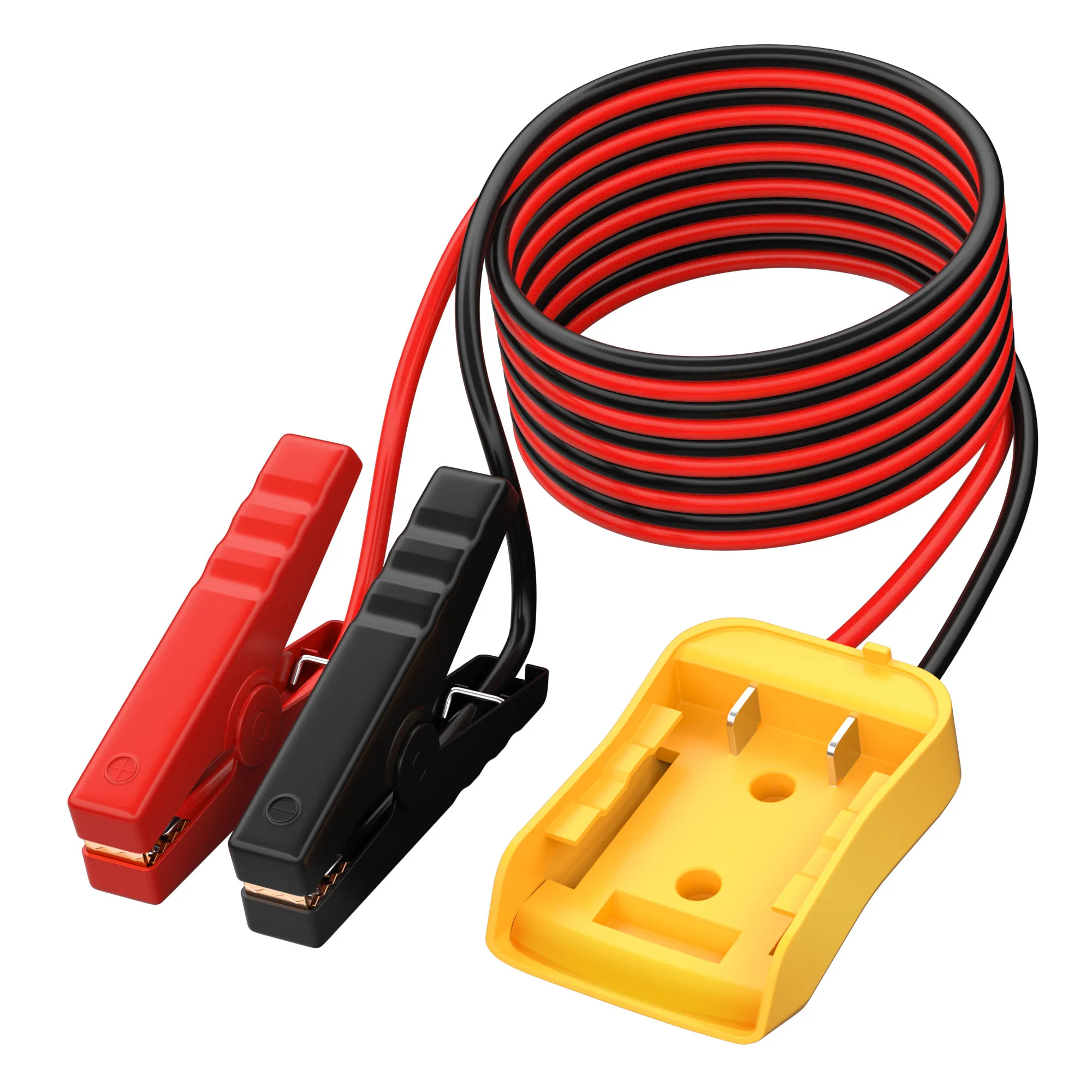
The choice of materials for the jumper cables themselves speaks volumes about the kit's design philosophy. It utilizes silicone wire, known for its exceptional flexibility and wide temperature tolerance, ranging from -60°C to 200°C. This flexibility is crucial when maneuvering cables in tight engine compartments or during cold weather, where standard PVC cables can become stiff and brittle. A flexible cable is easier to connect and less prone to damage from bending or kinking. The length of 6 feet provides adequate reach without excessive slack, which can introduce resistance and clutter.
Inside the silicone insulation, the conductors are made from tinned copper. This is not merely an aesthetic choice; tinning copper wires significantly enhances their performance and longevity. The tin coating provides anti-oxidation properties, protecting the copper from corrosion over time, especially in humid or harsh automotive environments. Corrosion can lead to increased resistance and reduced current flow, effectively degrading the cable's performance. The tinning also improves corrosion resistance and ensures excellent conductivity, maintaining the cable's electrical integrity throughout its lifespan. This attention to material science directly impacts the efficiency of power transfer, a key consideration for any solar energy application where every watt counts. Unlike generic cables that use untinned copper, which can degrade rapidly, tinned copper offers a sustained, reliable connection.
Safety is paramount when working with electrical systems, particularly high-current applications like jump-starting. The heavy-duty clamps are designed for safe and stable connections. They feature insulated handles, which are essential for preventing accidental short circuits or electrical shocks during connection and disconnection. The robust construction of these clamps ensures a firm grip on battery terminals, minimizing the risk of dislodgement during operation. A secure connection is vital for efficient current flow and preventing sparking, which can be a fire hazard around battery gases. The tactile feedback of the clamps suggests a solid, reassuring grip when applied to terminals.
For those integrating this into a temporary solar setup, the insulated clamps offer peace of mind when connecting to charge controllers or small inverters. The design prevents leakage of current, ensuring that power is directed precisely where intended. This level of insulation and stability is often overlooked in cheaper alternatives, which can pose significant safety risks. The robust build quality of the clamps, visible in their substantial construction, indicates they are built to withstand repeated use in demanding conditions.
While marketed primarily for car jump-starting, the adapter's compatibility with DeWalt 20V batteries (including models like DCB182, DCB183, DCB184, DCB200, DCB203, DCB204, DCB205, DCB206, DCB208, DCB230, DCB240) opens up a world of possibilities for the solar energy enthusiast. These batteries, typically used for power tools, become portable power banks. Imagine powering a small 12V inverter to run LED lights or charge USB devices during a camping trip, directly from a DeWalt battery. The adapter effectively converts the proprietary battery connection into standard automotive-style terminals, making it highly adaptable.
This capability allows for the creation of small, self-contained off-grid power systems. A solar panel could charge a DeWalt battery via a compatible charger, and then this adapter could be used to draw power for various DC loads. This creates a flexible, modular energy solution. Compared to dedicated portable power stations, this approach leverages existing tools, reducing overall investment and increasing the utility of equipment already owned. It is an excellent example of maximizing resource efficiency, a core principle in sustainable energy practices.
Understanding the electrical characteristics of the system is crucial for optimal performance and safety. The adapter provides a direct DC output from the 20V battery. When jump-starting a 12V vehicle, the higher voltage of the DeWalt battery (typically 20V nominal, 21V max) provides a robust initial surge. While the car's 12V system will regulate the charging, the initial voltage difference helps overcome a deeply discharged battery. It starts engines effectively.
For solar energy applications, converting this 20V output to 12V or 5V (for USB) would require appropriate DC-DC converters or buck converters. While this adds a component, it allows for fine-tuning the voltage to match specific devices, minimizing efficiency losses. The high current capacity of the cables and clamps ensures that even with conversion losses, a significant amount of usable power remains. The durability of the components, from the tinned copper wire to the robust ABS shell of the adapter, contributes to long-term reliability, a key factor in any sustainable energy setup. This kit extends the life and utility of existing battery investments.
The construction of the power wheel adapter itself is a testament to its intended durability. The housing is made from a durable ABS shell, a common material known for its impact resistance and rigidity. This protects the internal copper contacts from physical damage and environmental factors. The comparison image clearly shows a thicker copper sheet (1mm) in this product versus a thinner iron sheet (0.7mm) in competitors. This visual detail reinforces the claim of superior build quality and performance. A thicker contact surface reduces heat buildup and ensures a more stable connection, particularly under repeated use.
This robust construction means the adapter can withstand the rigors of a workshop environment or being tossed into a vehicle's trunk. It resists wear and tear. Unlike flimsy plastic adapters that crack under stress, this unit feels substantial in hand, promising a longer service life. For a solar hobbyist, equipment that can endure outdoor conditions and frequent handling is invaluable. The longevity of components directly impacts the overall cost-effectiveness of a DIY energy system.
This DeWalt 20V Battery Jumper Cable Adapter Kit is more than just a jump starter; it's a versatile power utility tool. It transforms readily available power tool batteries into a portable energy source for emergency vehicle assistance and a foundation for small, temporary off-grid power solutions. The careful selection of materials like silicone wire and tinned copper, combined with heavy-duty, insulated clamps, underscores a commitment to both performance and safety. Its robust construction ensures reliability, making it a sound investment for anyone seeking to maximize the utility of their DeWalt 20V battery ecosystem. Imagine the peace of mind knowing that a dead car battery is no longer a stranded situation, or the convenience of powering essential devices at a remote job site or campsite, all with the batteries you already own. This kit empowers users with adaptable, on-demand power, ready for unexpected challenges or planned excursions.
Engineering for Reliable Power Transfer
At the core of this adapter kit is its ability to efficiently transfer high current, a critical factor for both jump-starting vehicles and powering demanding DC loads. The system is engineered to handle a 100A high current, ensuring sufficient power for most standard passenger vehicles and light trucks. This capability is not merely a number; it translates directly into effective engine cranking power when a vehicle's battery is depleted. The adapter's internal construction features a 1mm copper sheet, a significant upgrade over the often-seen 0.7mm iron sheets in less durable alternatives. This thicker copper ensures superior conductivity and minimizes resistance, which is vital for maintaining voltage under heavy load. Less resistance means less heat generation and more efficient power delivery to the starter motor.
Imagine a scenario where a vehicle's battery unexpectedly fails in a remote location, far from conventional power outlets or another vehicle. This adapter, paired with a charged DeWalt 20V battery, provides an immediate, self-contained solution. It eliminates the reliance on external power sources, granting a degree of energy independence. Compared to traditional portable jump starters that require their own charging and maintenance, this kit leverages an existing battery ecosystem, simplifying logistics and reducing redundant equipment.
The Conductor's Advantage: Silicone and Tinned Copper
The choice of materials for the jumper cables themselves speaks volumes about the kit's design philosophy. It utilizes silicone wire, known for its exceptional flexibility and wide temperature tolerance, ranging from -60°C to 200°C. This flexibility is crucial when maneuvering cables in tight engine compartments or during cold weather, where standard PVC cables can become stiff and brittle. A flexible cable is easier to connect and less prone to damage from bending or kinking. The length of 6 feet provides adequate reach without excessive slack, which can introduce resistance and clutter.
Inside the silicone insulation, the conductors are made from tinned copper. This is not merely an aesthetic choice; tinning copper wires significantly enhances their performance and longevity. The tin coating provides anti-oxidation properties, protecting the copper from corrosion over time, especially in humid or harsh automotive environments. Corrosion can lead to increased resistance and reduced current flow, effectively degrading the cable's performance. The tinning also improves corrosion resistance and ensures excellent conductivity, maintaining the cable's electrical integrity throughout its lifespan. This attention to material science directly impacts the efficiency of power transfer, a key consideration for any solar energy application where every watt counts. Unlike generic cables that use untinned copper, which can degrade rapidly, tinned copper offers a sustained, reliable connection.
Safe and Secure Connections
Safety is paramount when working with electrical systems, particularly high-current applications like jump-starting. The heavy-duty clamps are designed for safe and stable connections. They feature insulated handles, which are essential for preventing accidental short circuits or electrical shocks during connection and disconnection. The robust construction of these clamps ensures a firm grip on battery terminals, minimizing the risk of dislodgement during operation. A secure connection is vital for efficient current flow and preventing sparking, which can be a fire hazard around battery gases. The tactile feedback of the clamps suggests a solid, reassuring grip when applied to terminals.
For those integrating this into a temporary solar setup, the insulated clamps offer peace of mind when connecting to charge controllers or small inverters. The design prevents leakage of current, ensuring that power is directed precisely where intended. This level of insulation and stability is often overlooked in cheaper alternatives, which can pose significant safety risks. The robust build quality of the clamps, visible in their substantial construction, indicates they are built to withstand repeated use in demanding conditions.
Versatility Beyond Jump-Starting
While marketed primarily for car jump-starting, the adapter's compatibility with DeWalt 20V batteries (including models like DCB182, DCB183, DCB184, DCB200, DCB203, DCB204, DCB205, DCB206, DCB208, DCB230, DCB240) opens up a world of possibilities for the solar energy enthusiast. These batteries, typically used for power tools, become portable power banks. Imagine powering a small 12V inverter to run LED lights or charge USB devices during a camping trip, directly from a DeWalt battery. The adapter effectively converts the proprietary battery connection into standard automotive-style terminals, making it highly adaptable.
This capability allows for the creation of small, self-contained off-grid power systems. A solar panel could charge a DeWalt battery via a compatible charger, and then this adapter could be used to draw power for various DC loads. This creates a flexible, modular energy solution. Compared to dedicated portable power stations, this approach leverages existing tools, reducing overall investment and increasing the utility of equipment already owned. It is an excellent example of maximizing resource efficiency, a core principle in sustainable energy practices.
Operational Considerations and Efficiency
Understanding the electrical characteristics of the system is crucial for optimal performance and safety. The adapter provides a direct DC output from the 20V battery. When jump-starting a 12V vehicle, the higher voltage of the DeWalt battery (typically 20V nominal, 21V max) provides a robust initial surge. While the car's 12V system will regulate the charging, the initial voltage difference helps overcome a deeply discharged battery. It starts engines effectively.
For solar energy applications, converting this 20V output to 12V or 5V (for USB) would require appropriate DC-DC converters or buck converters. While this adds a component, it allows for fine-tuning the voltage to match specific devices, minimizing efficiency losses. The high current capacity of the cables and clamps ensures that even with conversion losses, a significant amount of usable power remains. The durability of the components, from the tinned copper wire to the robust ABS shell of the adapter, contributes to long-term reliability, a key factor in any sustainable energy setup. This kit extends the life and utility of existing battery investments.
Durability and Construction
The construction of the power wheel adapter itself is a testament to its intended durability. The housing is made from a durable ABS shell, a common material known for its impact resistance and rigidity. This protects the internal copper contacts from physical damage and environmental factors. The comparison image clearly shows a thicker copper sheet (1mm) in this product versus a thinner iron sheet (0.7mm) in competitors. This visual detail reinforces the claim of superior build quality and performance. A thicker contact surface reduces heat buildup and ensures a more stable connection, particularly under repeated use.
This robust construction means the adapter can withstand the rigors of a workshop environment or being tossed into a vehicle's trunk. It resists wear and tear. Unlike flimsy plastic adapters that crack under stress, this unit feels substantial in hand, promising a longer service life. For a solar hobbyist, equipment that can endure outdoor conditions and frequent handling is invaluable. The longevity of components directly impacts the overall cost-effectiveness of a DIY energy system.
Final Evaluation: A Resourceful Power Solution
This DeWalt 20V Battery Jumper Cable Adapter Kit is more than just a jump starter; it's a versatile power utility tool. It transforms readily available power tool batteries into a portable energy source for emergency vehicle assistance and a foundation for small, temporary off-grid power solutions. The careful selection of materials like silicone wire and tinned copper, combined with heavy-duty, insulated clamps, underscores a commitment to both performance and safety. Its robust construction ensures reliability, making it a sound investment for anyone seeking to maximize the utility of their DeWalt 20V battery ecosystem. Imagine the peace of mind knowing that a dead car battery is no longer a stranded situation, or the convenience of powering essential devices at a remote job site or campsite, all with the batteries you already own. This kit empowers users with adaptable, on-demand power, ready for unexpected challenges or planned excursions.