DIY Multi-Output DC UPS for Routers and Smart Devices
Official Store Deal
Expert Analysis Overview
The Core of Off-Grid Reliability: A Customizable DC UPS
The DIY Multi-Output DC UPS is an essential power solution for solar energy hobbyists and off-grid enthusiasts seeking reliable, customizable backup for critical low-voltage electronics. This unit provides a flexible, user-assembled platform for maintaining power to essential devices, even when the grid fails or during remote deployments. Its design explicitly caters to the need for stable, uninterrupted power, a non-negotiable requirement for network infrastructure and monitoring systems.Modular Energy Resilience
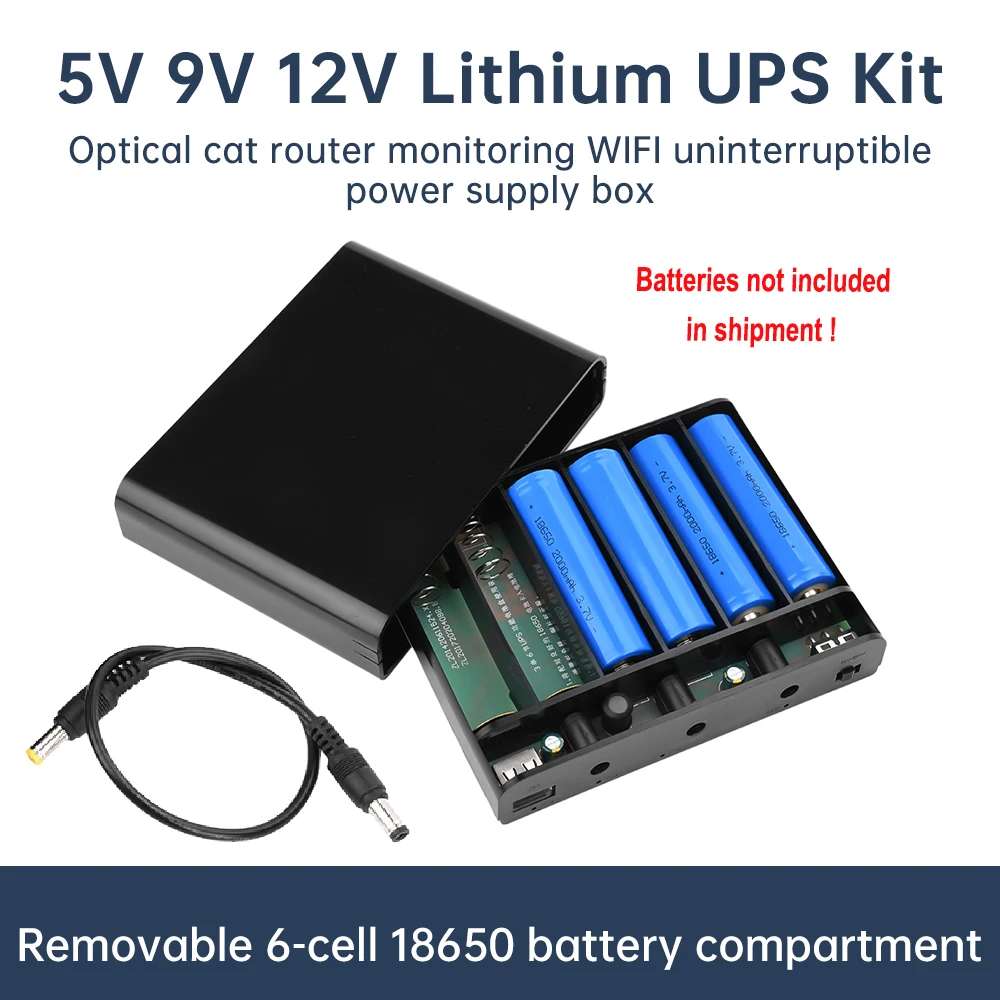
This UPS kit features a removable 6-cell 18650 battery compartment, allowing users to integrate their preferred high-capacity lithium-ion cells. The design is solder-free, drastically simplifying assembly and making it accessible even for those new to electronics projects. This modularity means the user is not locked into a fixed capacity; battery cells can be upgraded or replaced as technology evolves or as specific power requirements change. Such flexibility is rarely found in off-the-shelf solutions.Imagine building a remote weather station powered by a small solar panel. The 18650 cells housed within this UPS would act as the crucial energy buffer, ensuring the station's router or data logger remains operational through cloudy days or long nights. The ability to swap out cells on-site simplifies maintenance and extends the system's overall lifespan. This is a truly self-sustaining approach.
Compared to sealed lead-acid batteries, which are heavy and have a shorter cycle life, or proprietary battery packs that are expensive to replace, the 18650 format offers superior energy density and longevity. This makes the DIY approach a more cost-effective and environmentally conscious choice in the long run. The initial investment in quality 18650 cells pays dividends over years of reliable service.
Precision Power Delivery
With multi-functional output covering 5V, 9V, and 12V, this unit addresses the power needs of a broad spectrum of common low-voltage devices. A dedicated USB 5V port handles smartphones and tablets, while the 9V 1A and 12V 3-5A outputs are specifically designed for optical cats, routers, and surveillance cameras. This triple-output capability eliminates the need for multiple power adapters or inefficient converters, streamlining any power setup.Consider a scenario where a sudden power outage occurs. A home router, typically requiring 12V, and a smart home hub, often on 5V, would both lose power. With this UPS, both devices can remain operational, maintaining internet connectivity and smart home functionality. The ability to power multiple devices simultaneously from a single, reliable source is a significant advantage. This keeps critical systems online.
Unlike many single-output power banks or basic battery holders, this UPS integrates intelligent output management. The stability of the output voltages is paramount for sensitive electronics, preventing brownouts or over-voltage conditions that could damage connected devices. This attention to stable power delivery sets it apart from simpler, less regulated solutions on the market.
Integrated Charge Management
The unit features an input voltage range of 12.7V to 15V for charging, making it highly compatible with standard 12V solar charge controllers or wall adapters. A clear charging indicator (red for charging, off for full) provides immediate visual feedback on the battery status. This integrated circuitry protects the 18650 cells from overcharge and over-discharge, extending their lifespan and ensuring safe operation.When integrated into a solar power system, the UPS can be directly connected to the load output of a solar charge controller. This allows the solar panel to charge the internal 18650 cells during the day, providing continuous power to connected devices and backup for the night. Monitoring the charging status becomes effortless with the simple LED indicator. It is a simple, effective system.
Many basic DIY battery holders lack any form of charge management, leaving batteries vulnerable to damage and posing safety risks. This UPS kit, however, incorporates essential protection, ensuring the longevity of the expensive 18650 cells and the safety of the entire power system. This adds a layer of professionalism to a DIY build.
Durability and Construction
The enclosure presents a matte black finish on what appears to be a durable ABS plastic casing. Its compact form factor suggests easy integration into various setups without demanding excessive space. The internal PCB, visible in the images, shows a clean layout with clearly marked battery terminals and output ports. The design prioritizes functionality and ease of assembly.Handling the unit, the plastic feels dense and robust, not hollow or flimsy. The ports offer a snug fit for cables, indicating good manufacturing tolerances. While the activation switch is small, it provides a firm click, confirming engagement. This attention to detail suggests a product built for practical, long-term use in various environments.
Compared to some low-cost DIY kits that use thin, brittle plastic, this enclosure appears designed to withstand regular handling and minor impacts. The overall impression is one of a reliable, well-thought-out housing for the critical electronics within. It protects the investment in both the kit and the 18650 cells.
Off-Grid Integration Potential
For the solar energy hobbyist, this DC UPS represents a crucial component in building a self-sustaining energy system. Its ability to accept a 12V input for charging directly from a solar charge controller output, coupled with its multi-voltage DC outputs, makes it an ideal buffer and backup power source. Calculating efficiency losses is simplified by its direct DC-to-DC conversion for the 9V and 12V outputs, minimizing energy waste compared to systems involving DC-to-AC inverters and subsequent AC-to-DC adapters.Consider a small off-grid cabin where a 12V solar system powers lighting and a water pump. This UPS can provide dedicated, stable power for a Wi-Fi router and a small media player (5V or 9V), ensuring entertainment and communication remain available even when the main 12V bus experiences fluctuations. The calculation of runtime for a typical 10W router, using six 3000mAh 18650 cells (totaling approximately 66Wh at 3.7V nominal), would yield several hours of backup, depending on the actual load and conversion efficiency. This allows for precise energy planning.
Verifying compatibility with existing solar setups is straightforward: if the solar charge controller has a 12V load output, this UPS can seamlessly integrate. Its direct DC output eliminates the need for additional conversion steps, which inherently introduce efficiency losses. This direct approach maximizes the usable energy harvested from solar panels, a critical factor in any off-grid application where every watt-hour counts.
Safety and User Experience
The product explicitly warns against reverse battery installation, stating that it will burn components. This highlights the importance of careful assembly, a common requirement for DIY kits. An activation switch on the PCB ensures that output is only enabled when desired, preventing accidental discharge or power delivery before the system is ready. User responsibility is key.Proper battery orientation is critical for the safe and correct operation of the unit. The clear diagrams provided emphasize the correct positive and negative terminal placement. This visual guidance is invaluable for preventing costly mistakes during the initial setup. A moment of attention during installation saves significant trouble.
While the DIY nature requires user involvement, the solder-free design simplifies the process significantly. The included warnings and clear instructions empower the user to build a functional and safe power solution. It is a project that rewards careful execution with reliable performance.
This DIY Multi-Output DC UPS kit offers solar energy enthusiasts and off-grid users a powerful, flexible, and cost-effective solution for ensuring uninterrupted power to their essential low-voltage devices. Its modular battery system, versatile outputs, and integrated charging capabilities make it an indispensable tool for building resilient, self-sufficient power infrastructure. Imagine the peace of mind knowing your critical network devices will remain operational during any power disruption, all powered by a system you customized for your exact needs, seamlessly integrated with your solar setup. This is true energy independence.