EARU Din Rail 2P Modular Manual Transfer Switch
Official Store Deal
Expert Analysis Overview
The EARU Din Rail 2P Modular Manual Transfer Switch is a critical electrical component engineered for seamless power source management in AC400V systems. This device targets users requiring a reliable, manually operated solution for switching between two distinct power inputs, such as grid power and a backup generator. Its design prioritizes operational safety and long-term durability, making it a pragmatic choice for residential, commercial, and light industrial applications where uninterrupted power is essential.
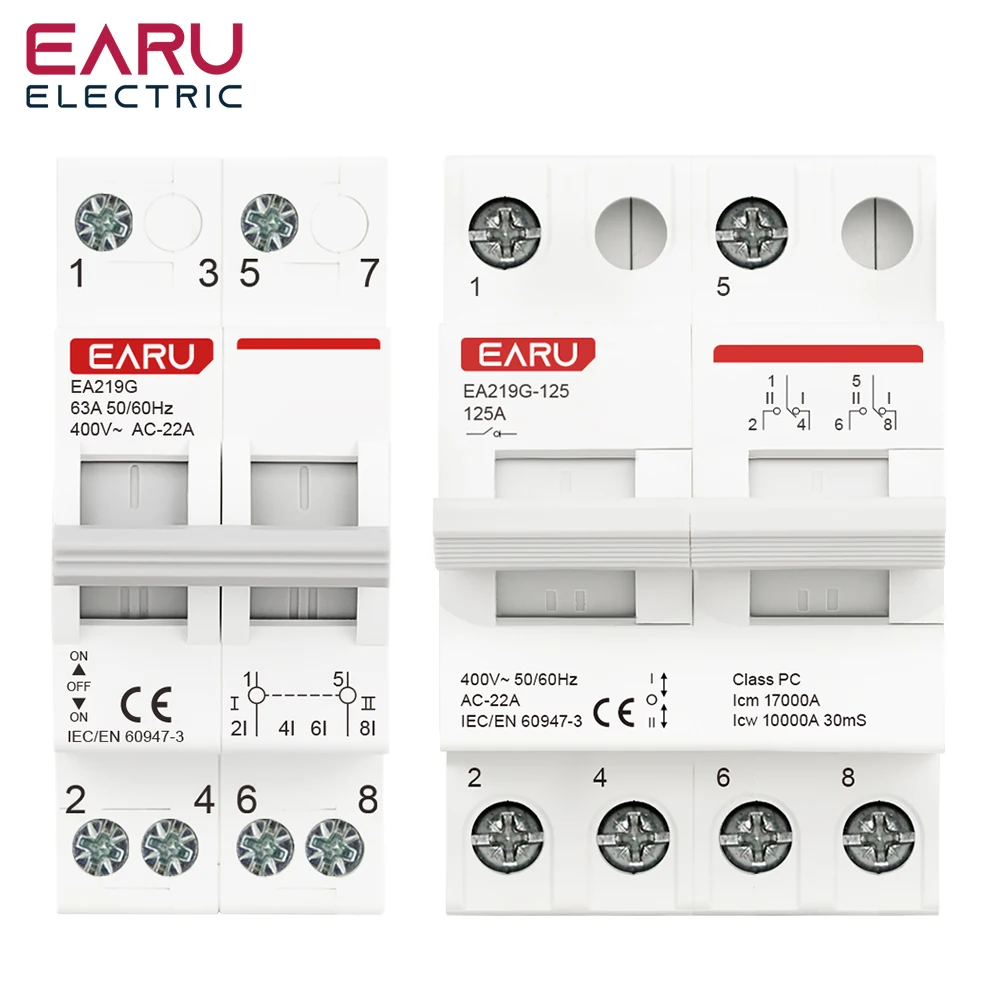
This manual transfer switch operates as a 2-pole device, clearly indicated by the '2P' designation in its specifications. The visible terminal layout, with distinct input and output connections (1, 3, 5, 7 for inputs and 2, 4, 6, 8 for outputs), facilitates straightforward wiring for dual power sources. The switch mechanism itself appears robust, designed for positive engagement in either the 'Common Power' (Position I) or 'Standby Power' (Position II) configurations, with a clear 'Disconnect' (Middle) position for isolation. This ensures a definitive break before making, preventing accidental cross-connection of power sources.
The operational principle involves physically isolating one power source before connecting the other. This mechanical interlock is fundamental to preventing back-feeding, a dangerous condition where power from a generator could flow back into the utility grid, posing a severe hazard to line workers. The manual operation provides direct control, which is often preferred in scenarios where automated systems might introduce complexity or potential failure points. This direct control is a significant advantage.
Compared to automated transfer switches, which can be expensive and require complex control circuitry, this manual switch offers a cost-effective and inherently simpler alternative. It removes the need for sophisticated sensing and logic, relying instead on human intervention. For installations where immediate, automatic power restoration is not paramount, or where budget constraints are a factor, this manual approach provides a highly reliable and manageable solution. It simplifies maintenance significantly.
The housing of the EARU switch is constructed from PC flame-retardant material. This material choice is critical for electrical safety, as it provides high heat resistance and insulating properties. Such a composition is designed to contain potential electrical faults, minimizing the risk of fire propagation within an electrical panel. The visible finish suggests a robust, non-brittle plastic, suitable for the demands of an electrical enclosure.
High heat resistance is not merely a safety feature; it directly contributes to the longevity of the device. Electrical components generate heat during operation, and a material capable of dissipating or withstanding this thermal stress without degrading ensures the switch maintains its structural integrity over time. This prevents premature material fatigue and potential operational failures. Longevity is key.
Unlike many generic electrical components that might use lower-grade plastics, the explicit mention of PC flame-retardant material positions this switch as a more reliable and safer option. This material choice aligns with industry standards for electrical safety, providing peace of mind for installers and end-users. It offers a clear upgrade in safety and durability compared to components lacking such specific material certifications.
The switch is designed for 35mm DIN rail mounting, a universal standard in electrical panel construction. This mounting method allows for quick and secure installation within existing or new electrical enclosures. The inclusion of securing clips further simplifies the process, ensuring the switch remains firmly in place despite vibrations or operational stresses. Installation is straightforward.
Ease of installation translates directly into reduced labor costs and time for electricians. The standardized DIN rail compatibility means it can be readily integrated into a wide array of electrical setups without requiring custom brackets or modifications. This modularity is a significant benefit for system designers and installers, streamlining the overall assembly process. It saves valuable time.
Many electrical components require specialized mounting hardware or intricate panel cutouts. This DIN rail design, however, offers superior flexibility and compatibility with other modular devices, such as circuit breakers and contactors. It ensures a clean, organized, and easily expandable electrical panel, contrasting sharply with older, less standardized mounting methods that complicate upgrades and maintenance.
Operation of the switch is managed via a large D-shaped handle. This ergonomic design is intended to provide a comfortable grip and facilitate easy switching between power sources, even under load. The handle's arc conforms to human ergonomics, reducing strain during manual operation. Smooth operation is vital.
The clear labeling of positions I, II, and the middle 'Disconnect' state, along with the corresponding terminal connections (e.g., '1 and 2 Connect' for Position I), eliminates ambiguity during operation. This intuitive interface minimizes the chance of incorrect switching, which could lead to power interruptions or equipment damage. Clarity prevents errors.
Compared to switches with small, stiff levers or unclear indicators, this ergonomic handle and explicit labeling represent a significant user experience improvement. It ensures that even in urgent situations, the operator can quickly and correctly manipulate the switch, a critical factor in maintaining power continuity. This design choice enhances both safety and efficiency.
The switch features a tunnel-type terminal block. This design is engineered to tightly wrap around wires, ensuring a secure and reliable electrical connection. The specified terminal/cable sizes (16mm² for 40A/63A models and 35mm² for 125A models) indicate compatibility with standard wiring gauges for the respective current ratings. Secure connections are paramount.
A tight and reliable connection is fundamental to preventing resistive heating, which can lead to power loss, component damage, and fire hazards. The tunnel-type design minimizes the risk of loose connections, which are a common point of failure in electrical systems. This attention to connection integrity directly contributes to the overall safety and efficiency of the installation. It ensures stable power delivery.
Many lower-quality switches use simpler, less robust terminal designs that can loosen over time, especially under vibration or thermal cycling. The tunnel-type terminal block, combined with the specified cable sizes, offers a superior level of connection security and longevity. This design choice is a clear upgrade for maintaining clean signal transmission and long-term reliability of connections, reducing the need for frequent maintenance or re-tightening.
The product parameters indicate a rated voltage of AC400V, suitable for three-phase systems common in many regions. The rated currents vary from 40A, 63A, to 125A, offering flexibility for different load requirements. An electrical life of 1500 cycles and a mechanical life of 8500 cycles (or >80000 manual operations) suggest a durable product. These figures are critical.
These specifications imply that the switch is built for consistent, long-term performance in its intended applications. The high mechanical life, in particular, indicates that the internal switching mechanism can withstand frequent manual operations without premature wear. This reliability is crucial for systems where power source switching might occur regularly, such as during generator tests or planned outages. It minimizes downtime.
Compared to industrial-grade switches designed for continuous, heavy-duty cycling, the 1500 electrical cycles might seem modest but are entirely appropriate for a manual transfer switch that is not expected to switch under full load thousands of times annually. For typical backup power scenarios, where switching is infrequent, these ratings provide ample assurance of long-term service. This offers excellent value for its intended use.
Considering its robust construction, safety features, and specified durability, this EARU manual transfer switch presents a compelling value proposition. It offers a reliable means to manage dual power sources, protecting sensitive equipment from power fluctuations and ensuring continuity during outages. The cost-effectiveness of a manual solution, compared to complex automatic systems, makes it an attractive investment for many users. It protects assets effectively.
The ability to fix expensive equipment with affordable, reliable components like this switch significantly reduces the overall cost of maintaining a resilient power system. Instead of investing in a complete overhaul or high-end automated solutions, this switch provides a targeted, effective upgrade for power management. It extends system lifespan.
Imagine a scenario where a critical business operation relies on a stable power supply. With this manual transfer switch, the transition to backup power during an outage becomes a controlled, reliable process, minimizing operational disruptions and potential financial losses. This capability ensures peace of mind, allowing users to focus on their primary tasks rather than worrying about power continuity. It provides essential control and reliability for critical infrastructure, ensuring operations continue smoothly even when the primary power source is compromised. This device is a proactive investment in operational resilience, safeguarding against unforeseen power interruptions and the associated costs of downtime. Its straightforward operation and robust build mean less time spent on complex configurations and more time on core activities, making it an invaluable asset for any facility prioritizing consistent power availability. The long-term savings from preventing equipment damage and maintaining productivity far outweigh the initial investment, solidifying its role as a smart, strategic component in any comprehensive power management strategy.
Core Switching Mechanism
This manual transfer switch operates as a 2-pole device, clearly indicated by the '2P' designation in its specifications. The visible terminal layout, with distinct input and output connections (1, 3, 5, 7 for inputs and 2, 4, 6, 8 for outputs), facilitates straightforward wiring for dual power sources. The switch mechanism itself appears robust, designed for positive engagement in either the 'Common Power' (Position I) or 'Standby Power' (Position II) configurations, with a clear 'Disconnect' (Middle) position for isolation. This ensures a definitive break before making, preventing accidental cross-connection of power sources.
The operational principle involves physically isolating one power source before connecting the other. This mechanical interlock is fundamental to preventing back-feeding, a dangerous condition where power from a generator could flow back into the utility grid, posing a severe hazard to line workers. The manual operation provides direct control, which is often preferred in scenarios where automated systems might introduce complexity or potential failure points. This direct control is a significant advantage.
Compared to automated transfer switches, which can be expensive and require complex control circuitry, this manual switch offers a cost-effective and inherently simpler alternative. It removes the need for sophisticated sensing and logic, relying instead on human intervention. For installations where immediate, automatic power restoration is not paramount, or where budget constraints are a factor, this manual approach provides a highly reliable and manageable solution. It simplifies maintenance significantly.
Material Science and Durability
The housing of the EARU switch is constructed from PC flame-retardant material. This material choice is critical for electrical safety, as it provides high heat resistance and insulating properties. Such a composition is designed to contain potential electrical faults, minimizing the risk of fire propagation within an electrical panel. The visible finish suggests a robust, non-brittle plastic, suitable for the demands of an electrical enclosure.
High heat resistance is not merely a safety feature; it directly contributes to the longevity of the device. Electrical components generate heat during operation, and a material capable of dissipating or withstanding this thermal stress without degrading ensures the switch maintains its structural integrity over time. This prevents premature material fatigue and potential operational failures. Longevity is key.
Unlike many generic electrical components that might use lower-grade plastics, the explicit mention of PC flame-retardant material positions this switch as a more reliable and safer option. This material choice aligns with industry standards for electrical safety, providing peace of mind for installers and end-users. It offers a clear upgrade in safety and durability compared to components lacking such specific material certifications.
Installation and Integration
The switch is designed for 35mm DIN rail mounting, a universal standard in electrical panel construction. This mounting method allows for quick and secure installation within existing or new electrical enclosures. The inclusion of securing clips further simplifies the process, ensuring the switch remains firmly in place despite vibrations or operational stresses. Installation is straightforward.
Ease of installation translates directly into reduced labor costs and time for electricians. The standardized DIN rail compatibility means it can be readily integrated into a wide array of electrical setups without requiring custom brackets or modifications. This modularity is a significant benefit for system designers and installers, streamlining the overall assembly process. It saves valuable time.
Many electrical components require specialized mounting hardware or intricate panel cutouts. This DIN rail design, however, offers superior flexibility and compatibility with other modular devices, such as circuit breakers and contactors. It ensures a clean, organized, and easily expandable electrical panel, contrasting sharply with older, less standardized mounting methods that complicate upgrades and maintenance.
Operational Dynamics and User Interface
Operation of the switch is managed via a large D-shaped handle. This ergonomic design is intended to provide a comfortable grip and facilitate easy switching between power sources, even under load. The handle's arc conforms to human ergonomics, reducing strain during manual operation. Smooth operation is vital.
The clear labeling of positions I, II, and the middle 'Disconnect' state, along with the corresponding terminal connections (e.g., '1 and 2 Connect' for Position I), eliminates ambiguity during operation. This intuitive interface minimizes the chance of incorrect switching, which could lead to power interruptions or equipment damage. Clarity prevents errors.
Compared to switches with small, stiff levers or unclear indicators, this ergonomic handle and explicit labeling represent a significant user experience improvement. It ensures that even in urgent situations, the operator can quickly and correctly manipulate the switch, a critical factor in maintaining power continuity. This design choice enhances both safety and efficiency.
Terminal Block Design and Connection Integrity
The switch features a tunnel-type terminal block. This design is engineered to tightly wrap around wires, ensuring a secure and reliable electrical connection. The specified terminal/cable sizes (16mm² for 40A/63A models and 35mm² for 125A models) indicate compatibility with standard wiring gauges for the respective current ratings. Secure connections are paramount.
A tight and reliable connection is fundamental to preventing resistive heating, which can lead to power loss, component damage, and fire hazards. The tunnel-type design minimizes the risk of loose connections, which are a common point of failure in electrical systems. This attention to connection integrity directly contributes to the overall safety and efficiency of the installation. It ensures stable power delivery.
Many lower-quality switches use simpler, less robust terminal designs that can loosen over time, especially under vibration or thermal cycling. The tunnel-type terminal block, combined with the specified cable sizes, offers a superior level of connection security and longevity. This design choice is a clear upgrade for maintaining clean signal transmission and long-term reliability of connections, reducing the need for frequent maintenance or re-tightening.
Performance Specifications and Reliability
The product parameters indicate a rated voltage of AC400V, suitable for three-phase systems common in many regions. The rated currents vary from 40A, 63A, to 125A, offering flexibility for different load requirements. An electrical life of 1500 cycles and a mechanical life of 8500 cycles (or >80000 manual operations) suggest a durable product. These figures are critical.
These specifications imply that the switch is built for consistent, long-term performance in its intended applications. The high mechanical life, in particular, indicates that the internal switching mechanism can withstand frequent manual operations without premature wear. This reliability is crucial for systems where power source switching might occur regularly, such as during generator tests or planned outages. It minimizes downtime.
Compared to industrial-grade switches designed for continuous, heavy-duty cycling, the 1500 electrical cycles might seem modest but are entirely appropriate for a manual transfer switch that is not expected to switch under full load thousands of times annually. For typical backup power scenarios, where switching is infrequent, these ratings provide ample assurance of long-term service. This offers excellent value for its intended use.
Value Proposition and Investment
Considering its robust construction, safety features, and specified durability, this EARU manual transfer switch presents a compelling value proposition. It offers a reliable means to manage dual power sources, protecting sensitive equipment from power fluctuations and ensuring continuity during outages. The cost-effectiveness of a manual solution, compared to complex automatic systems, makes it an attractive investment for many users. It protects assets effectively.
The ability to fix expensive equipment with affordable, reliable components like this switch significantly reduces the overall cost of maintaining a resilient power system. Instead of investing in a complete overhaul or high-end automated solutions, this switch provides a targeted, effective upgrade for power management. It extends system lifespan.
Imagine a scenario where a critical business operation relies on a stable power supply. With this manual transfer switch, the transition to backup power during an outage becomes a controlled, reliable process, minimizing operational disruptions and potential financial losses. This capability ensures peace of mind, allowing users to focus on their primary tasks rather than worrying about power continuity. It provides essential control and reliability for critical infrastructure, ensuring operations continue smoothly even when the primary power source is compromised. This device is a proactive investment in operational resilience, safeguarding against unforeseen power interruptions and the associated costs of downtime. Its straightforward operation and robust build mean less time spent on complex configurations and more time on core activities, making it an invaluable asset for any facility prioritizing consistent power availability. The long-term savings from preventing equipment damage and maintaining productivity far outweigh the initial investment, solidifying its role as a smart, strategic component in any comprehensive power management strategy.