EARU Electric Optocoupled Relay Modules for Automation
Official Store Deal
Expert Analysis Overview
Precision Switching: An Electrical Engineer's Perspective
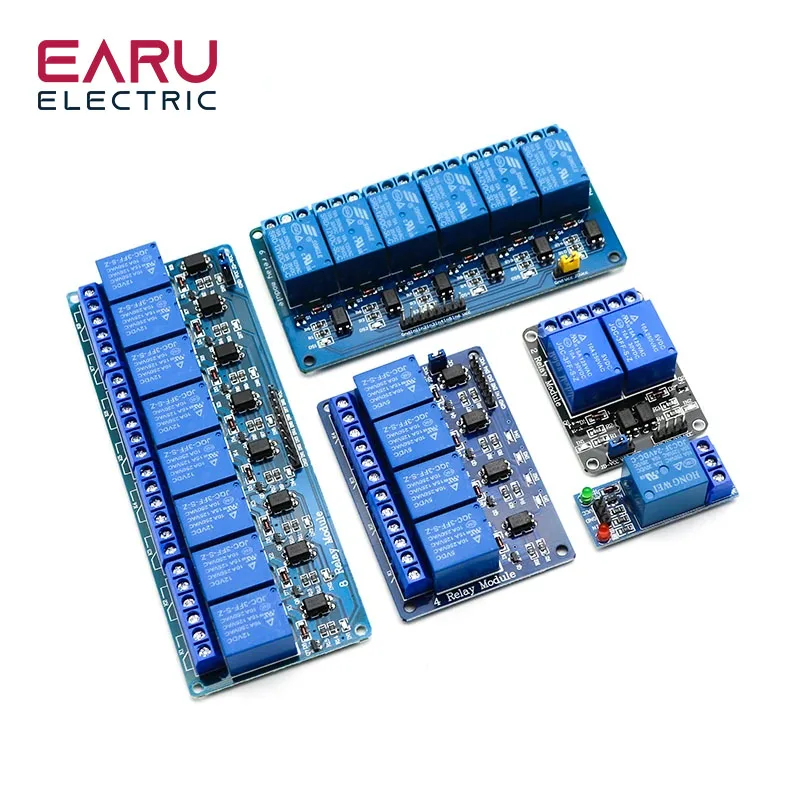
The EARU Electric Optocoupled Relay Module series represents a fundamental component in low-voltage control systems, specifically targeting hobbyists, educational platforms like Arduino, and light industrial PLC automation. This range, available in 1, 2, 4, 6, 8, and 16-channel configurations, is designed to provide isolated switching capabilities for various electrical loads. The inclusion of an optocoupler is a critical design choice, ensuring electrical separation between the control circuit and the load circuit. This isolation is paramount for protecting sensitive microcontrollers from voltage spikes or ground loops originating from the switched load.
These modules are not merely simple switches; they are carefully engineered interfaces. The visible PCB layouts indicate a standard design approach, utilizing discrete components for reliable operation. Each channel operates independently, allowing for granular control over multiple devices. The blue relay casings, often indicative of general-purpose power relays, suggest a robust switching capacity suitable for a range of applications. This modularity offers significant flexibility for system designers.
Compared to direct transistor switching or solid-state relays, mechanical relays like these offer true galvanic isolation and can handle both AC and DC loads with minimal voltage drop across the contacts. This makes them a versatile choice for applications where a wide range of load types might be encountered. The physical clicking sound of a mechanical relay also provides immediate audible feedback on its operational status, which can be beneficial during troubleshooting.
Ensuring Electrical Isolation and Load Management
The core of these modules' utility lies in their ability to safely switch higher voltage or current loads using a low-power control signal. The specified operating voltages of 5V, 12V, and 24V cater to common microcontroller and industrial control system power rails. The relays themselves are rated for 10A at 250VAC and 10A at 30VDC, which is a substantial capacity for many common appliances, motors, and lighting circuits. This rating must be strictly adhered to for safe operation.
Optocouplers, visible on the PCB, provide crucial isolation. They prevent high-voltage transients or noise from the load side from affecting the delicate control electronics. This is a non-negotiable safety feature in any system bridging low-voltage control with higher-power loads. Without this isolation, a fault on the load side could easily destroy the controlling microcontroller or PLC, leading to system failure or even fire hazards. The separation is critical.
Unlike direct wiring solutions that expose control circuits to the full load voltage, these modules act as a protective barrier. This design philosophy significantly reduces the risk of electrical damage to expensive control equipment. For instance, if a motor connected to the relay experiences a short circuit, the optocoupler helps ensure the microcontroller remains unaffected, allowing for graceful system shutdown or error handling. This protective layer is a key differentiator from simpler, non-isolated relay boards.
Robust Connectivity and Signal Integrity
The modules feature screw terminals for connecting the load and power supply, and pin headers for the control signals. Screw terminals are preferred in many electrical applications due to their secure mechanical connection, which resists vibration and ensures good electrical contact. This is vital for maintaining consistent power delivery to the load and preventing intermittent operation or arcing.
Input connections typically include VCC (positive power supply), GND (ground), and IN (control signal). The presence of trigger status indicators (LEDs) for each channel provides immediate visual feedback on the state of the control signal, simplifying debugging. An operating power indicator also confirms the module itself is energized. These visual cues are invaluable during setup and troubleshooting, allowing for quick diagnosis of control signal issues.
Compared to solder pads or less robust connectors, screw terminals offer superior long-term reliability for power connections. They allow for easy connection and disconnection of wires, which is beneficial during prototyping or maintenance. The clear labeling of NO (Normally Open), NC (Normally Closed), and COM (Common) contacts on the relay output terminals ensures straightforward wiring for either normally open or normally closed switching configurations. This flexibility is a standard expectation for general-purpose relays.
Integrating into Automation Ecosystems
These relay modules are explicitly designed for integration with platforms like Arduino and PLC automation equipment. Their low-level trigger capability (0 to 1.2V) makes them compatible with the digital output pins of most microcontrollers. This means a simple HIGH/LOW signal from an Arduino can effectively switch a 250VAC appliance. The ability to interface with various control voltages (5V, 12V, 24V) further broadens their applicability across different automation environments.
In a scenario where a PLC needs to control multiple industrial solenoids or contactors, a multi-channel relay module provides a compact and efficient interface. Instead of individual relay circuits, a single module simplifies wiring and reduces panel space. This consolidation is a significant advantage in complex automation projects, streamlining both design and implementation. The modules act as a bridge, translating low-power control logic into higher-power switching actions.
Unlike custom-built relay circuits, these pre-assembled modules offer a standardized, tested solution. This reduces development time and potential wiring errors. For educational purposes, they provide a clear, tangible example of how control systems interact with real-world loads. The availability of various channel counts allows users to select the exact module needed, avoiding unnecessary complexity or cost. This scalability is a key benefit for diverse projects.
Operational Considerations and Best Practices
While these modules offer significant utility, proper installation and wiring are paramount for safety and performance. Always ensure the module's operating voltage matches the control system's power supply. Overloading the relay contacts beyond their 10A rating will lead to premature failure, overheating, and potential fire hazards. It is crucial to calculate the actual current draw of the load before connecting it.
For inductive loads such as motors or solenoids, it is highly recommended to include flyback diodes (for DC loads) or snubber circuits (for AC loads) across the load. While the relay itself handles the switching, these external components protect the relay contacts from arcing and extend their lifespan. Ignoring these protective measures can significantly degrade relay performance and reliability over time. Proper load protection is essential.
Compared to industrial-grade solid-state relays or contactors, these modules are generally intended for less demanding, non-critical applications. While robust for their intended use, they may not offer the same cycle life or environmental resilience as specialized industrial components. Users should assess their application's requirements carefully. For critical safety systems, redundant switching or higher-rated industrial components are often necessary. This is a matter of appropriate component selection.
The Value Proposition in Automation
The EARU Electric Optocoupled Relay Modules offer a compelling value proposition for anyone building or experimenting with automation systems. Their low cost, combined with essential safety features like optocoupler isolation, makes them an accessible entry point into controlling higher-power devices. The range of channel options ensures there is a module suitable for almost any project size, from a single light switch to a multi-channel home automation system.
These modules streamline the process of interfacing microcontrollers with real-world loads, saving time and effort compared to designing discrete relay circuits. The clear labeling and indicator LEDs simplify debugging, a common pain point in electronics projects. For educational settings, they provide a safe and practical way to demonstrate control principles without complex circuit design. They are a practical tool.
Imagine effortlessly integrating a smart home system where your Arduino controls lighting, fans, and even small appliances with complete electrical isolation. These modules provide the reliable switching backbone for such projects, ensuring your sensitive control electronics remain protected while managing diverse loads. The peace of mind that comes from knowing your system is both functional and electrically sound is invaluable. This is the capability these modules deliver.
Conclusion: Empowering Control Systems
The EARU Electric Optocoupled Relay Module series stands as a highly functional and cost-effective solution for bridging low-voltage control logic with higher-power electrical loads. The integrated optocoupler isolation is a critical safety and reliability feature, protecting sensitive control electronics from the inherent risks of power switching. With various channel counts and compatibility with common control voltages, these modules are well-suited for a broad spectrum of applications, from hobbyist projects to light industrial automation. The robust screw terminals and clear indicators further enhance their usability and ease of integration. For those seeking a dependable and isolated switching solution, these modules provide a solid foundation for building responsive and secure control systems. They are a smart choice for expanding automation capabilities.