ECGSOLAX 5KW 6.5KW Solar Hybrid MPPT Inverter
Official Store Deal
Expert Analysis Overview
Powering Sustainable Systems: An Electrician's Perspective on the ECGSOLAX Hybrid Inverter
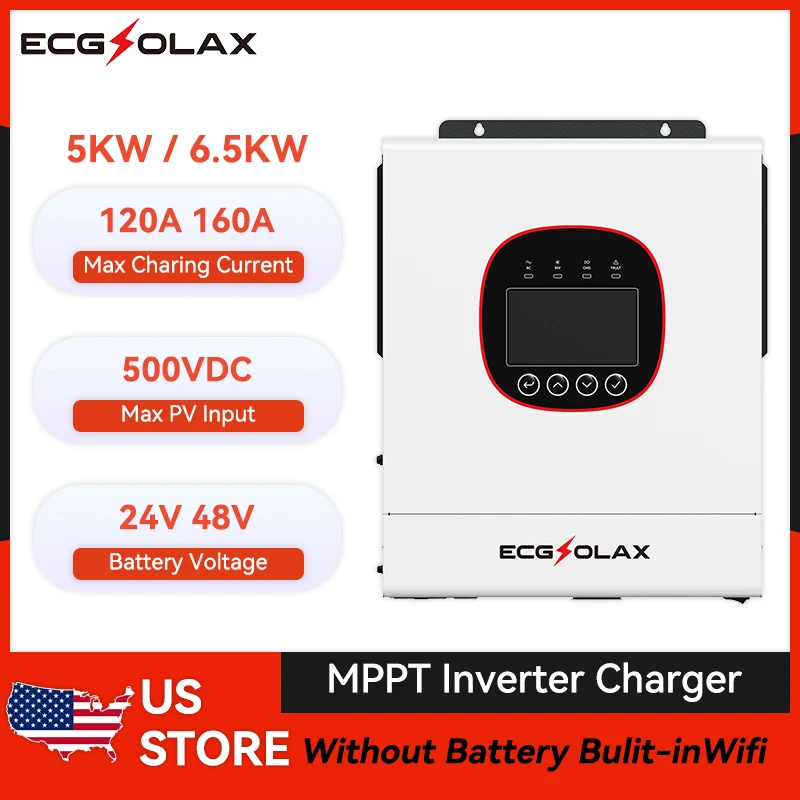
The ECGSOLAX 5KW/6.5KW Solar Hybrid Inverter is a robust power management solution designed for off-grid and hybrid solar installations requiring reliable and efficient energy conversion. This unit integrates a pure sine wave inverter, an MPPT solar charger, and a battery charger into a single, compact enclosure. Its design targets users seeking comprehensive control over their solar energy systems, offering both 24V and 48V battery compatibility.
Unlike basic grid-tie inverters, this hybrid model provides flexibility. It manages power flow from solar panels, batteries, and the utility grid, ensuring continuous power supply. This integrated approach simplifies system design and installation for homeowners and small businesses.
The inverter's capacity, ranging from 5KW to 6.5KW, positions it for medium to large residential applications. It handles significant power demands. This capability is crucial for running multiple household appliances simultaneously.
Core Power Conversion Prowess
The ECGSOLAX inverter features a pure sine wave output, a critical specification for sensitive electronics. This ensures that connected devices receive clean, stable power, preventing potential damage or erratic operation often associated with modified sine wave inverters.
The unit's Max PV Input of 500VDC allows for flexible solar array configurations. Higher voltage input reduces current, minimizing wire losses and allowing for longer cable runs. This translates to more efficient power harvesting from the solar panels.
Compared to older, less efficient PWM charge controllers, the integrated MPPT (Maximum Power Point Tracking) solar charger significantly optimizes solar energy harvesting. MPPT technology dynamically adjusts to maximize power output from the solar array, especially under varying weather conditions. This means more energy captured throughout the day.
Charging Capabilities and Battery Integration
The inverter offers a maximum charging current of 120A or 160A, depending on the model. This high amperage ensures rapid and efficient charging of battery banks. Fast charging is essential for maintaining battery health and system readiness.
Its 24V/48V battery voltage compatibility provides versatility for system designers. This allows for selection of battery banks based on capacity and cost-effectiveness. The unit supports various battery types, including SLD, FLD, AGM, GEL, LI (Lithium), and SUER, as indicated by the visual documentation. This broad compatibility is a significant advantage.
Lithium battery activation is a key feature, ensuring proper initialization and management of modern battery chemistries. The inverter also supports a batteryless mode, allowing it to function directly from solar and/or grid power without a connected battery bank. This offers operational flexibility and can reduce initial system costs.
Connectivity, Control, and Monitoring
A prominent LCD display on the front panel provides real-time operational data. Users can monitor voltage, current, power output, and system status directly. This immediate feedback is vital for system management.
The inclusion of built-in WiFi facilitates remote monitoring and control. This allows users to access system data and adjust settings via a smartphone application or web interface. Remote access enhances convenience and proactive maintenance.
Physical controls, including ESC, Up, Down, and Enter buttons, allow for direct interaction with the inverter's settings. These tactile controls offer a reliable backup to digital interfaces. They ensure system configurability even without network access.
Installation and System Integration
The inverter's design includes clearly labeled connection points for AC input, AC output (two ports), PV input, and battery input. This clear demarcation simplifies wiring procedures. Proper labeling reduces the risk of connection errors.
Dedicated communication ports, BMS (Battery Management System) and COM, indicate advanced integration capabilities. The BMS port allows for intelligent communication with compatible battery systems, optimizing charging and discharging cycles. This extends battery lifespan.
An AC input breaker is integrated, providing essential overcurrent protection. This protects the inverter and connected circuits from potential electrical faults. Safety is paramount in any electrical installation.
The visual diagrams illustrate the inverter's ability to integrate with multiple power sources: solar panels, a generator, and the utility grid. This hybrid functionality ensures maximum uptime and energy independence. It provides a resilient power solution.
Safety Protocols and Electrical Integrity
From an electrician's standpoint, the visible construction and listed features suggest a focus on electrical safety. The presence of a dedicated PE (Protective Earth) terminal is fundamental for grounding the unit. Proper grounding is non-negotiable for preventing electrical shock hazards.
The robust casing, as depicted in the images, implies adequate protection for internal components. This physical integrity is important for long-term reliability in various environments. It safeguards against dust and minor impacts.
While specific insulation ratings (e.g., UL/CE) are not explicitly visible on the unit itself, the product's nature demands adherence to such standards. Installers must verify local compliance. Always consult the manufacturer's documentation for certification details.
Wire gauge accuracy is critical for safe operation, especially with high charging currents (120A/160A). The terminals appear substantial enough to accommodate appropriate wire sizes for these amperages. Undersized wiring can lead to overheating and fire hazards.
Terminal quality, often overlooked, is crucial for secure and low-resistance connections. The visible terminals appear to be screw-type, which, when properly torqued, provide reliable electrical contact. Loose connections are a common point of failure and heat generation.
Operational Resilience and Value Proposition
The ability to operate in utility/photovoltaic access triggers battery activation highlights its intelligent power management. This ensures the battery system is brought online efficiently when needed. It maximizes energy utilization.
Its support for batteryless mode offers a unique advantage for specific installations. For instance, in scenarios where grid power is stable but solar augmentation is desired without the upfront cost or maintenance of batteries, this mode is ideal. It provides flexibility for different energy strategies.
This inverter represents a significant upgrade over basic off-grid or grid-tie only systems. It offers a comprehensive solution for energy independence and cost savings. The integrated features reduce complexity and potential points of failure.
Imagine a scenario where a power outage occurs, and your home seamlessly transitions to solar and battery power, keeping essential appliances running without interruption. This inverter provides that peace of mind. It ensures your critical systems remain operational, regardless of external grid stability. The investment in such a hybrid system pays dividends in reliability and reduced energy bills over its lifespan.