Elastic Food Storage Covers
Official Store Deal
Expert Analysis Overview
The Engineering of Convenience: Elastic Food Storage Covers
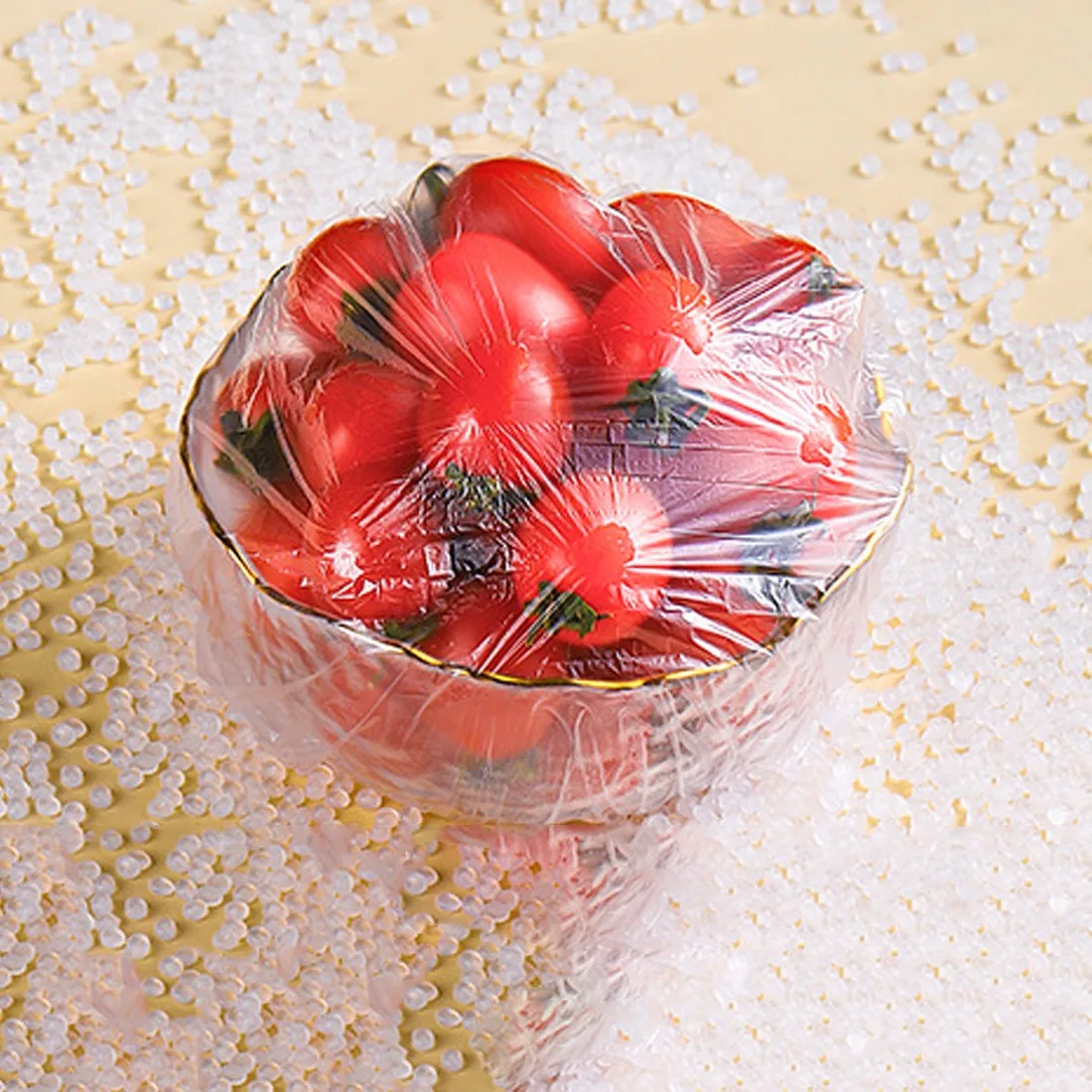
Elastic Food Storage Covers are a practical kitchen utility designed for rapid and adaptable food preservation. This bulk offering targets households and commercial kitchens that demand efficient, flexible solutions for keeping foodstuffs fresh without the bulk of rigid containers or the fuss of traditional cling film. The design prioritizes quick deployment and a secure, yet adaptable, fit over a wide array of dishware and produce.
Material Science and Structural Integrity
These covers are constructed from food-grade polyethylene, a polymer known for its flexibility and chemical inertness. The visible material implies a low-density polyethylene (LDPE) composition, which provides the necessary stretch and resilience for repeated application. This choice of material is crucial for direct food contact, ensuring no undesirable leaching into edibles.
The implication of using LDPE is a cover that can conform tightly to irregular shapes, creating a barrier against airborne contaminants and moisture loss. Unlike more rigid plastics, LDPE allows for significant elastic deformation, returning close to its original shape after stretching. This property is key to its functionality.
Compared to standard, non-elastic plastic wraps, the integrated elastic band eliminates the need for manual stretching and tearing, streamlining the covering process. This engineered elastic perimeter ensures a consistent tension around the rim of a container, a significant upgrade from the often-frustrating adhesion challenges of conventional film.
Operational Adaptability and Seal Performance
The core functionality revolves around the elasticized opening, which allows the covers to stretch from a natural length of approximately 12 cm to an impressive 38 cm. This wide range of expansion means a single cover size can accommodate numerous bowl, plate, and even fruit dimensions. Such adaptability is a hallmark of efficient design.
In real-world scenarios, this translates to less time spent searching for the right-sized lid or wrestling with cling film. A quick pull and stretch over a container's rim provides an immediate, snug fit. This rapid deployment is invaluable in high-volume settings or when dealing with multiple dishes simultaneously.
Unlike rigid lids that require precise diameter matching, these elastic covers offer a forgiving fit. This eliminates the common issue of mismatched lids and containers, a frequent source of kitchen clutter and inefficiency. The flexible nature also means they can cover items with handles or unusual contours more effectively than standard lids.
Durability and Wear Resistance in Practice
While designed for convenience, the material thickness and elastic quality contribute to a surprising degree of wear resistance for their intended use. The polyethylene film, though thin, possesses sufficient tensile strength to resist minor punctures and tears during typical handling. This is not a heavy-duty industrial wrap.
For practical application, this means the covers can withstand the stresses of being stretched over various rims without immediately failing. Their ability to maintain elasticity after initial stretching is also a key factor in their perceived durability. A cover that loses its stretch after one use is functionally useless.
Compared to ultra-thin, single-use cling films, these covers offer a more robust solution. While not intended for indefinite reuse, careful handling and gentle cleaning can extend their lifespan beyond a single application, providing a practical middle ground between disposable convenience and long-term reusability.
Moisture Resistance and Environmental Control
The primary function of any food cover is to protect contents from external elements and to retain internal moisture. The polyethylene material inherently possesses excellent moisture barrier properties. This is critical for preventing dehydration of fresh produce and prepared meals.
When applied, the snug fit created by the elastic band minimizes air exchange, which slows down oxidation and bacterial growth. This controlled environment within the covered container helps to extend the freshness of perishable items. It's a simple, effective barrier.
Unlike open storage or loosely covered dishes, these elastic wraps create a more consistent microclimate around the food. This is particularly beneficial in a refrigerator, where circulating air can rapidly dry out uncovered items. The transparent nature also allows for quick visual inspection without disturbing the seal.
Thermal Performance and Versatility
Beyond refrigeration, the covers demonstrate versatility with their microwave-safe designation. This capability is a significant advantage, allowing for direct reheating of covered food without transferring it to another container. Convenience is paramount here.
When used in a microwave, the material's thermal stability ensures it won't melt or degrade under typical reheating temperatures. However, it is always prudent to ensure a small vent is present to allow steam to escape, preventing pressure buildup. This detail is important for safety.
This dual-purpose functionality, from cold storage to reheating, streamlines kitchen workflows. It reduces the number of dishes required and simplifies the entire food handling process. The covers serve as a single solution for multiple stages of food preparation and storage.
Economic Value and Bulk Procurement
Offered in bulk quantities of 350 or 500 pieces, these covers represent a highly cost-effective solution for ongoing food storage needs. The per-unit cost becomes negligible, making them an economical choice for daily use. This volume strategy appeals to both large families and small businesses.
The value proposition shifts from the initial purchase price to the long-term cost-per-use. Stocking up on these covers prevents the recurring expense and inconvenience of frequently buying smaller packs of cling film or disposable containers. It's a sensible investment in kitchen efficiency.
Unlike purchasing individual rigid containers, which can be expensive and space-consuming, these bulk covers offer a low-cost, high-volume alternative. They provide a flexible inventory that adapts to immediate needs without significant upfront capital expenditure. This is smart resource management.
The Garage Tinkerer's Perspective on Utility
From a utility standpoint, these elastic covers are a prime example of simple engineering solving a pervasive problem. The elastic band is the critical component, providing the mechanical advantage to create a seal with minimal effort. This is pure functional design.
Their ability to quickly secure food, whether it's a half-eaten watermelon or a bowl of salad, speaks to their practical application in a dynamic environment. The transparency allows for immediate identification of contents, a small but significant detail for efficiency. These covers are about getting the job done without fuss.
Consider the workshop equivalent: a quick, adaptable cover for parts bins or paint cans. While not their intended use, the principle of rapid, flexible containment is identical. These covers bring that same level of no-nonsense utility to the kitchen, making them an indispensable tool for anyone who values efficiency and practicality in their daily routines. Imagine the ease of covering leftovers after a large meal, knowing they will stay fresh until the next day, or quickly prepping multiple dishes for a gathering without worrying about spills or spoilage. This simple innovation ensures your food remains protected and ready when you are, simplifying kitchen tasks and reducing daily friction.