Electric Solenoid Valve for Fluid Control
Official Store Deal
Expert Analysis Overview
Stopping the Deluge: Immediate Flow Control
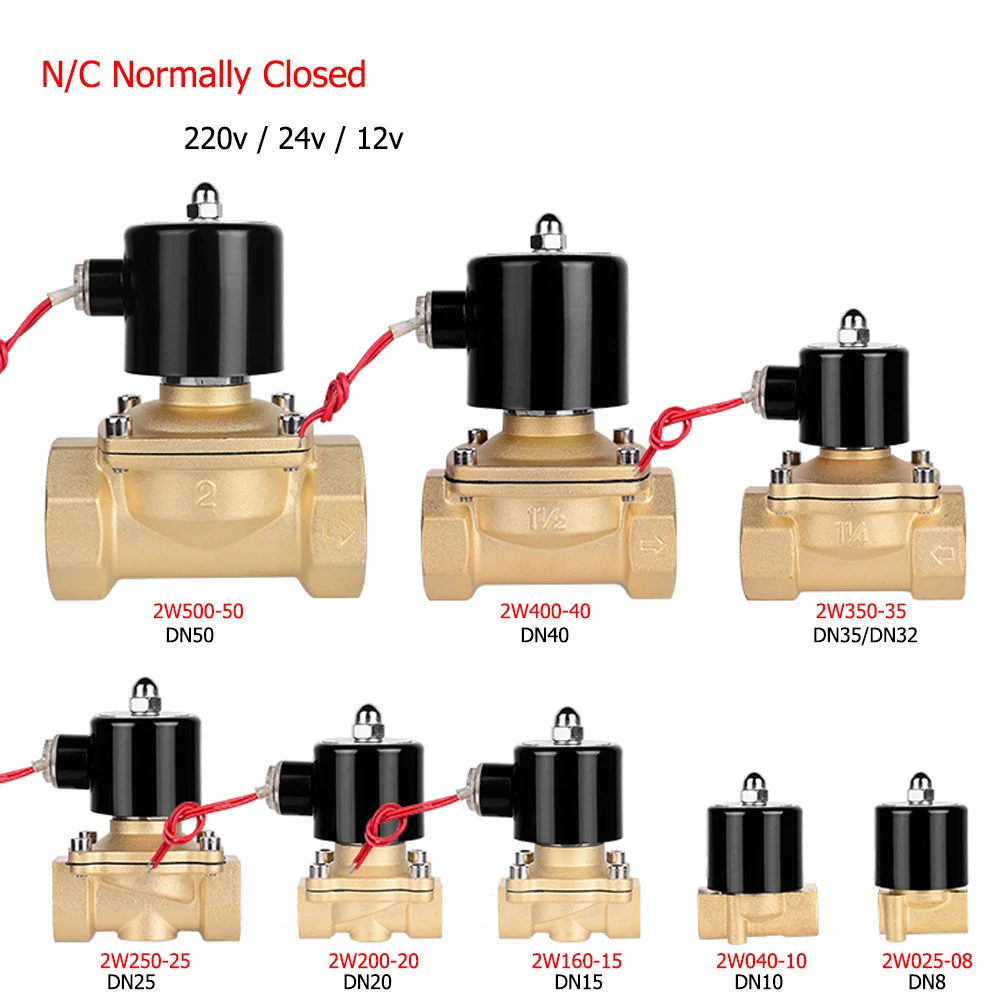
The Electric Solenoid Valve is a critical emergency shut-off component designed for DIYers facing an unexpected fluid control crisis. This device offers rapid, remote, or automated control over liquid and gas flows, proving indispensable when manual intervention is too slow or impossible. Its primary function is to seal off a line instantly, acting as a digital gatekeeper for your Plumbing or pneumatic systems. This is crucial for preventing extensive damage.Available in a comprehensive range of sizes from 1/4" to 1" (specifically DN8, DN10, DN15, DN20, DN25, and DN50), these valves are designed to integrate seamlessly into diverse pipework, from small household lines to larger commercial or irrigation systems. Operating on versatile power options including 12V DC, 24V DC, or 220V AC, they cater to various electrical infrastructures, from low-voltage control circuits found in smart home setups to standard household mains. The robust brass body, visible in its substantial golden hue and solid construction, provides a durable and corrosion-resistant housing for the internal mechanisms, ensuring long-term integrity even in challenging environments. This material choice is significant, setting it apart from lighter, less durable alternatives.
Imagine a sudden, catastrophic pipe burst in a utility room, or an unexpected leak in an irrigation system while you're away on vacation. Panic sets in quickly, knowing that every minute of uncontrolled flow exacerbates the damage. A properly installed solenoid valve, wired to a simple emergency switch strategically placed, or integrated with an advanced leak detection sensor, can halt the flow instantly. This rapid response prevents catastrophic water damage, saving thousands in potential repairs, mitigating the stress of such an event, and preserving your property. It acts with precision. The speed of closure, often measured in milliseconds, is unparalleled by manual valves, providing a crucial advantage in time-sensitive situations where quick action is vital. This prevents extensive damage.
Unlike traditional gate or ball valves that demand manual turning – often a slow process in hard-to-reach or inconvenient locations – an electric solenoid valve responds to an electrical signal. This fundamental difference enables remote operation and automation, representing a significant technological upgrade over purely mechanical solutions. The ability to control fluid flow from a distance, or based on programmed conditions from a smart controller, dramatically enhances system safety, convenience, and efficiency. It saves precious time. This automated capability is particularly beneficial in scenarios where human access is limited, such as underground irrigation manifolds, or where immediate, unassisted action is required to avert disaster, like a sudden pressure drop.
The Heart of the System: Coil Quality and Reliability
The solenoid's coil represents the core actuator, the component solely responsible for generating the electromagnetic field that initiates the valve's opening mechanism by pulling a plunger. This particular valve emphasizes a pure copper coil construction, a detail explicitly highlighted through comparative imagery that showcases its superior weight and quality against inferior alternatives. This is vital for consistent performance.A pure copper coil offers significantly superior electrical conductivity and enhanced heat dissipation capabilities compared to cheaper, copper-plated aluminum alternatives. This fundamental material difference translates directly into a substantially longer service life and far more consistent, reliable operation, especially when the valve is subjected to continuous duty cycles or frequent activation throughout the day. Inferior coils can burn out quickly, leading to costly replacements, unexpected system downtime, and the frustration of a failed repair. Reliability is paramount for critical applications where uninterrupted function is non-negotiable. The dense winding of pure copper ensures a strong magnetic field with less energy loss, contributing to efficient performance and less heat generation. This impacts longevity.
Many budget-oriented solenoid valves on the market regrettably cut manufacturing costs by utilizing copper-plated aluminum coils. While these may function adequately for a brief initial period, they invariably lead to premature failure due to their inherently higher electrical resistance, which causes more heat, and poor thermal management properties. The visual evidence, including the "full weight of copper core coil" comparison, clearly validates the commitment to a more durable, pure copper winding, distinguishing this product from its less robust competitors. This choice impacts longevity. The investment in pure copper means fewer unexpected failures, a more predictable operational lifespan, and ultimately, a lower total cost of ownership over time. It's a smart investment.
Installation Under Pressure: Getting It Right When It Counts
The valve bodies, uniformly constructed from solid brass, feature precisely machined standard NPT (National Pipe Taper) or BSP (British Standard Pipe) thread types, ensuring broad compatibility with common plumbing standards worldwide. A critical detail for correct functionality and to prevent installation errors is the clearly etched flow direction arrow on the valve housing, serving as an unambiguous visual guide for proper orientation. This prevents errors.For the diligent DIY repairer, ease of installation is not merely a convenience; it is a critical factor, especially when responding to an emergency situation where time is of the essence. The straightforward threaded connections allow for relatively simple integration into existing plumbing lines, requiring only basic hand tools such as pipe wrenches and standard thread sealant (like PTFE tape or pipe dope) to achieve a reliable, watertight seal. Proper alignment during installation is key to preventing leaks, ensuring the valve operates efficiently, and avoiding unnecessary stress on the pipework. This simplifies emergency fixes. The tactile feel of the heavy brass confirms its sturdy construction, providing confidence during tightening and suggesting a product built to last.
Compared to more complex plumbing tasks such as soldering copper pipes, which demands specialized skills, a torch, and specific safety precautions, or even using crimping tools for PEX, installing a threaded brass solenoid valve is a significantly more accessible undertaking for the average homeowner. While it may not offer the tool-free simplicity of some push-to-connect (SharkBite-style) fittings, the robust threaded brass construction provides a far more permanent, secure, and reliable solution than many quick-connect options for critical applications where long-term integrity is paramount. It's a solid connection. The security of a threaded connection, when properly sealed, minimizes the risk of blow-offs, slow drips, or structural failures that can plague less secure or temporary methods.
Beyond the Emergency: Long-Term Dependability
These valves are specifically designed as "normally closed" (N/C) mechanisms, meaning their default state is shut, completely preventing any fluid flow until an electrical current is actively applied to the coil. They are engineered for broad compatibility, specifically rated for reliable use with common media such as potable water, various types of non-corrosive oil, and compressed air, making them highly versatile for many applications. This broad compatibility is key.This "normally closed" configuration is not just a technical specification; it is a critical safety and operational feature that provides inherent protection. In the unfortunate event of a power failure, or if the electrical control signal is lost for any reason, the valve automatically reverts to its closed state, cutting off the flow. This inherent fail-safe mechanism is invaluable, preventing accidental flooding in a basement, uncontrolled release of valuable industrial fluids, or dangerous air leaks in a pneumatic system. It provides immense peace of mind for automated systems, such as domestic irrigation setups, industrial process control, or emergency water heater shut-offs. It protects property. The swift and automatic return to the closed position minimizes potential damage, waste, and liability.
While normally open (N/O) valves exist for specialized applications that require continuous flow which only ceases when energized, the N/C design is overwhelmingly more common and preferred for safety-critical applications. In these scenarios, a default "off" or "closed" state is paramount to prevent disaster or conserve resources. This design choice inherently prioritizes security, minimizes risk, and ensures that in the absence of power or signal, the system defaults to a safe, contained state, making it the go-to option for most protective and control functions within a fluid system. This design choice prioritizes security. It's a fundamental difference that dictates suitability for various operational needs, emphasizing protection over constant flow.
Choosing Your Lifeline: Size and Voltage Considerations
The comprehensive range of available sizes, spanning from a compact 1/4 inch (DN8) to a robust 1 inch (DN50), ensures that a suitable valve exists for virtually any common pipe diameter found in residential, commercial, or light industrial settings. Complementing this, the broad spectrum of voltage options—12V DC, 24V DC, and 220V AC—provides unparalleled flexibility in adapting to existing or planned electrical power sources, from low-voltage battery systems to standard grid power. This variety is crucial.Selecting the correct valve size is absolutely paramount for maintaining optimal fluid flow efficiency, preventing undesirable pressure drops, or avoiding excessive velocity within the system that could lead to erosion or noise. Simultaneously, precisely matching the operating voltage to the available power supply is critical to prevent electrical damage to the coil, ensure reliable activation, and avoid costly component failure. A 12V or 24V option proves ideal for integration into low-voltage control systems, battery-backed emergency setups, automotive applications, or solar-powered systems. Conversely, the 220V option is perfectly suited for direct integration into standard household mains or industrial power grids where higher power is readily available. Incorrect sizing causes issues. Mismatched voltage leads to failure.
Many generic, entry-level valves on the market often present a limited selection of sizes and voltage options, frequently forcing users to make compromises that can negatively impact system performance, require complex electrical adaptations, or necessitate the purchase of additional power conversion equipment. The extensive availability of multiple configurations within this product line, however, ensures a far better and more precise match for specific project requirements, ranging from intricate small-scale garden irrigation lines to demanding larger industrial process control systems. This flexibility is a distinct advantage over more restrictive alternatives, eliminating the need for costly workarounds and ensuring optimal system integration. It's a wise choice.
When Every Second Counts: Why This Valve Matters
The consistent application of solid brass construction is a defining characteristic observed across all depicted sizes, from the more compact DN8 units, suitable for small lines, to the significantly larger DN50 variants, designed for higher flow rates. The solenoid housing, which encapsulates the crucial copper coil and its electromagnetic components, consistently features a durable, matte black material, suggesting a robust and protective enclosure against environmental factors and minor impacts. This build is consistent.The tangible heft and density of the solid brass body immediately convey a sense of robust construction, indicating a component designed to withstand typical plumbing pressures, temperatures, and environmental conditions without succumbing to corrosion or premature mechanical failure. The precision in the machining of the threads is evident upon inspection, promising a clean, tight seal when properly installed, which is fundamental to preventing leaks and ensuring system integrity. This feels like quality. The overall fit and finish suggest a meticulous attention to detail, a crucial aspect when relying on a component for emergency shut-off or critical control.
While cheaper alternatives constructed from plastic or zinc-alloy might offer a lower initial cost, they simply cannot provide the same level of long-term durability, resistance to wear and tear, or structural integrity as a solid brass valve. Such materials are often inadequate for critical fluid control applications where reliability, pressure resistance, and longevity are paramount. This material choice represents a direct, intelligent investment in long-term reliability for demanding fluid control tasks, far surpassing the capabilities of less robust options in terms of both performance and lifespan. It's a wise choice. The visual comparison with inferior alternatives in the product imagery further underscores the value of this superior material selection.