Electrical Quick Connectors
Official Store Deal
Expert Analysis Overview
Electrical Quick Connectors are essential wiring components, offering a significant upgrade over traditional methods for both professional electricians and DIY enthusiasts seeking reliable, tool-free connections. These devices streamline the process of joining electrical conductors, moving beyond the labor-intensive and often less secure practices of soldering or twisting wire nuts. The design prioritizes both efficiency and safety, making them a cornerstone for modern electrical installations and repairs.
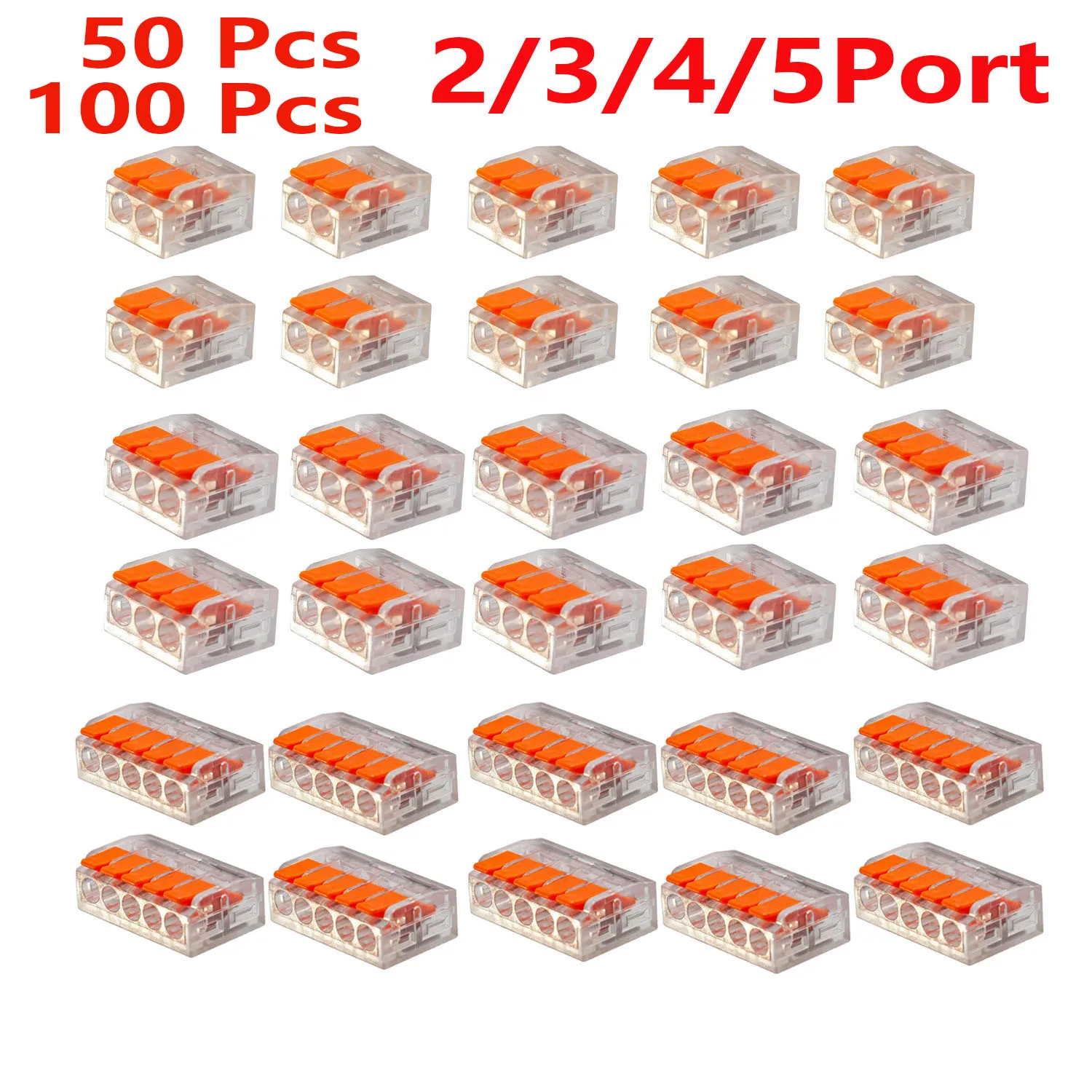
The visible construction of these quick connectors highlights transparent polycarbonate housings. This clear casing is not merely aesthetic; it serves a critical functional purpose. It allows for immediate visual verification of proper wire insertion, ensuring that the conductor is fully seated and stripped to the correct length. This transparency is a direct counterpoint to opaque wire nuts or crimp connectors, where improper connections can remain hidden, leading to intermittent faults or, more critically, fire hazards due to arcing.
The internal components, specifically the clamping mechanisms, appear to be constructed from tin-plated copper. Copper is a highly conductive material, crucial for minimizing resistance and heat generation at the connection point. The tin plating provides an additional layer of protection against oxidation and corrosion, which can degrade electrical conductivity over time. This material choice ensures a clean signal transmission and maintains the integrity of the electrical path, even in environments with fluctuating humidity or temperature.
Traditional methods often rely on the mechanical twist of dissimilar metals or the chemical bond of solder. Twist-on wire nuts, for example, create a connection through friction and deformation of the wire strands. This can be prone to loosening under vibration or thermal cycling. Soldered connections, while robust, require specialized tools, skill, and time, and can become brittle if not executed perfectly. These quick connectors, with their spring-loaded or lever-actuated clamping, offer a consistent, repeatable, and inspectable connection that bypasses these common drawbacks, providing superior long-term reliability.
The product is explicitly designed to accommodate a wide range of wire types and gauges. Specifications indicate compatibility with both flexible wires (24-11 AWG) and solid wires (24-9 AWG). This broad range makes the connectors highly versatile for various applications, from low-voltage control circuits to higher-current power distribution within residential and light commercial settings.
Flexible wires, often multi-stranded, are common in applications requiring movement or where vibration is a concern, such as appliance wiring or automotive electrical systems. Solid wires, typically single-strand, are prevalent in fixed installations like household wiring, offering rigidity and ease of routing. The ability to securely terminate both types of conductors with a single connector system simplifies inventory and reduces the complexity of wiring tasks. Many older connection methods are optimized for one wire type, forcing technicians to carry multiple solutions.
Unlike terminal blocks that often require specific ferrules for stranded wires to prevent fraying, or standard screw terminals that can damage fine strands, these lever-style connectors are engineered to grip both solid and stranded conductors firmly without causing damage. The internal clamping mechanism distributes pressure evenly, preventing cold flow or strand breakage, which are common failure modes in less sophisticated connectors. This ensures a stable and low-resistance connection for the life of the installation.
One of the most compelling advantages of these quick connectors is their ease of installation. The process involves simply stripping the wire to the specified length (0.4 inches or 10-12mm), lifting the orange lever, inserting the stripped conductor, and then pushing the lever back down. This tool-free operation significantly reduces installation time compared to crimping, soldering, or even twisting wire nuts, which often require pliers for proper tightening.
This simplified installation translates directly into labor cost savings for professionals and reduced frustration for DIY users. In scenarios where multiple connections need to be made, such as lighting installations or junction box wiring, the cumulative time savings can be substantial. The intuitive nature of the connection process also minimizes the potential for human error, a critical factor in electrical safety.
Furthermore, these connectors are designed for reusability. The levers allow for easy release and re-termination of wires, which is invaluable during troubleshooting, modifications, or system upgrades. Traditional methods like crimping or soldering are typically permanent; any changes require cutting wires and re-making connections, often wasting materials and adding significant time. The reusability aspect of these connectors offers a level of flexibility that is simply not available with many conventional wiring solutions, making them a more sustainable and adaptable choice for dynamic electrical systems.
The transparent housing and secure clamping mechanism contribute significantly to overall electrical safety. The visual confirmation of proper wire insertion helps prevent loose connections, which are a leading cause of electrical fires due to arcing and overheating. The insulated levers provide a barrier against accidental contact with live conductors, enhancing user safety during installation and subsequent maintenance.
Rated for 250V and 32A, these connectors are suitable for standard residential and light commercial electrical circuits. Adherence to these ratings is critical for safe operation. Using connectors within their specified voltage and current limits prevents overheating and potential component failure. The robust design, including high-strength shrapnel (likely referring to the spring-loaded contact mechanism) and insulated levers, underscores an engineering focus on safety and long-term performance.
Compared to bare twisted wires or poorly insulated connections, these quick connectors offer a superior level of insulation and protection. The compact, fully enclosed design minimizes exposed conductors, reducing the risk of short circuits or accidental contact. This makes them a safer choice for applications where space is tight or where multiple connections are in close proximity, providing peace of mind for both installers and end-users.
The availability of 2, 3, 4, and 5-port configurations provides immense versatility. This range allows users to select the exact number of connections needed for a specific circuit, optimizing space and material usage. A 2-port connector is ideal for extending a single wire, while a 5-port unit can serve as a compact junction for multiple branches from a main feed, simplifying complex wiring layouts.
This modularity contrasts sharply with fixed terminal blocks or the need to create multiple parallel connections with wire nuts. The ability to choose the precise port count means less wasted space in junction boxes and cleaner, more organized wiring runs. This is particularly beneficial in tight enclosures or behind wall plates where every millimeter counts, improving both aesthetics and accessibility for future servicing.
Consider a scenario where a lighting fixture needs to be installed, requiring connections for live, neutral, and ground wires, plus potentially a switch leg. A 3-port connector can handle the main feed, while a 2-port can extend the switch wire. For daisy-chaining multiple lights, 4 or 5-port connectors become invaluable, creating neat, secure splices without the bulk of multiple wire nuts or the permanence of soldered joints. This capability allows for more sophisticated and reliable electrical layouts.
These quick connectors represent a significant advancement in electrical wiring technology. They address common pain points associated with traditional methods: the time consumption of soldering, the potential for loose connections with wire nuts, and the lack of reusability in crimped terminals. By offering a fast, secure, and inspectable connection, they enhance both the efficiency and safety of electrical work.
From a cost perspective, while the initial unit cost might be slightly higher than basic wire nuts, the long-term value is undeniable. The time saved during installation, the reduced likelihood of call-backs for faulty connections, and the ability to reuse components during modifications all contribute to a lower total cost of ownership. This makes them an economically sound choice for projects of any scale.
Imagine completing an entire room's worth of lighting installations in a fraction of the time, with every connection visibly secure and easily modified if needed. Picture a troubleshooting scenario where a faulty connection can be quickly identified and rectified without cutting and re-stripping wires. These quick connectors empower users to achieve professional-grade electrical work with unprecedented ease and reliability, ensuring robust and lasting power distribution throughout any system.
Connection Integrity and Material Science
The visible construction of these quick connectors highlights transparent polycarbonate housings. This clear casing is not merely aesthetic; it serves a critical functional purpose. It allows for immediate visual verification of proper wire insertion, ensuring that the conductor is fully seated and stripped to the correct length. This transparency is a direct counterpoint to opaque wire nuts or crimp connectors, where improper connections can remain hidden, leading to intermittent faults or, more critically, fire hazards due to arcing.
The internal components, specifically the clamping mechanisms, appear to be constructed from tin-plated copper. Copper is a highly conductive material, crucial for minimizing resistance and heat generation at the connection point. The tin plating provides an additional layer of protection against oxidation and corrosion, which can degrade electrical conductivity over time. This material choice ensures a clean signal transmission and maintains the integrity of the electrical path, even in environments with fluctuating humidity or temperature.
Traditional methods often rely on the mechanical twist of dissimilar metals or the chemical bond of solder. Twist-on wire nuts, for example, create a connection through friction and deformation of the wire strands. This can be prone to loosening under vibration or thermal cycling. Soldered connections, while robust, require specialized tools, skill, and time, and can become brittle if not executed perfectly. These quick connectors, with their spring-loaded or lever-actuated clamping, offer a consistent, repeatable, and inspectable connection that bypasses these common drawbacks, providing superior long-term reliability.
Wire Compatibility and Gauge Range
The product is explicitly designed to accommodate a wide range of wire types and gauges. Specifications indicate compatibility with both flexible wires (24-11 AWG) and solid wires (24-9 AWG). This broad range makes the connectors highly versatile for various applications, from low-voltage control circuits to higher-current power distribution within residential and light commercial settings.
Flexible wires, often multi-stranded, are common in applications requiring movement or where vibration is a concern, such as appliance wiring or automotive electrical systems. Solid wires, typically single-strand, are prevalent in fixed installations like household wiring, offering rigidity and ease of routing. The ability to securely terminate both types of conductors with a single connector system simplifies inventory and reduces the complexity of wiring tasks. Many older connection methods are optimized for one wire type, forcing technicians to carry multiple solutions.
Unlike terminal blocks that often require specific ferrules for stranded wires to prevent fraying, or standard screw terminals that can damage fine strands, these lever-style connectors are engineered to grip both solid and stranded conductors firmly without causing damage. The internal clamping mechanism distributes pressure evenly, preventing cold flow or strand breakage, which are common failure modes in less sophisticated connectors. This ensures a stable and low-resistance connection for the life of the installation.
Installation Efficiency and Reusability
One of the most compelling advantages of these quick connectors is their ease of installation. The process involves simply stripping the wire to the specified length (0.4 inches or 10-12mm), lifting the orange lever, inserting the stripped conductor, and then pushing the lever back down. This tool-free operation significantly reduces installation time compared to crimping, soldering, or even twisting wire nuts, which often require pliers for proper tightening.
This simplified installation translates directly into labor cost savings for professionals and reduced frustration for DIY users. In scenarios where multiple connections need to be made, such as lighting installations or junction box wiring, the cumulative time savings can be substantial. The intuitive nature of the connection process also minimizes the potential for human error, a critical factor in electrical safety.
Furthermore, these connectors are designed for reusability. The levers allow for easy release and re-termination of wires, which is invaluable during troubleshooting, modifications, or system upgrades. Traditional methods like crimping or soldering are typically permanent; any changes require cutting wires and re-making connections, often wasting materials and adding significant time. The reusability aspect of these connectors offers a level of flexibility that is simply not available with many conventional wiring solutions, making them a more sustainable and adaptable choice for dynamic electrical systems.
Safety and Compliance Implications
The transparent housing and secure clamping mechanism contribute significantly to overall electrical safety. The visual confirmation of proper wire insertion helps prevent loose connections, which are a leading cause of electrical fires due to arcing and overheating. The insulated levers provide a barrier against accidental contact with live conductors, enhancing user safety during installation and subsequent maintenance.
Rated for 250V and 32A, these connectors are suitable for standard residential and light commercial electrical circuits. Adherence to these ratings is critical for safe operation. Using connectors within their specified voltage and current limits prevents overheating and potential component failure. The robust design, including high-strength shrapnel (likely referring to the spring-loaded contact mechanism) and insulated levers, underscores an engineering focus on safety and long-term performance.
Compared to bare twisted wires or poorly insulated connections, these quick connectors offer a superior level of insulation and protection. The compact, fully enclosed design minimizes exposed conductors, reducing the risk of short circuits or accidental contact. This makes them a safer choice for applications where space is tight or where multiple connections are in close proximity, providing peace of mind for both installers and end-users.
Versatility Across Applications
The availability of 2, 3, 4, and 5-port configurations provides immense versatility. This range allows users to select the exact number of connections needed for a specific circuit, optimizing space and material usage. A 2-port connector is ideal for extending a single wire, while a 5-port unit can serve as a compact junction for multiple branches from a main feed, simplifying complex wiring layouts.
This modularity contrasts sharply with fixed terminal blocks or the need to create multiple parallel connections with wire nuts. The ability to choose the precise port count means less wasted space in junction boxes and cleaner, more organized wiring runs. This is particularly beneficial in tight enclosures or behind wall plates where every millimeter counts, improving both aesthetics and accessibility for future servicing.
Consider a scenario where a lighting fixture needs to be installed, requiring connections for live, neutral, and ground wires, plus potentially a switch leg. A 3-port connector can handle the main feed, while a 2-port can extend the switch wire. For daisy-chaining multiple lights, 4 or 5-port connectors become invaluable, creating neat, secure splices without the bulk of multiple wire nuts or the permanence of soldered joints. This capability allows for more sophisticated and reliable electrical layouts.
The Value Proposition for Modern Wiring
These quick connectors represent a significant advancement in electrical wiring technology. They address common pain points associated with traditional methods: the time consumption of soldering, the potential for loose connections with wire nuts, and the lack of reusability in crimped terminals. By offering a fast, secure, and inspectable connection, they enhance both the efficiency and safety of electrical work.
From a cost perspective, while the initial unit cost might be slightly higher than basic wire nuts, the long-term value is undeniable. The time saved during installation, the reduced likelihood of call-backs for faulty connections, and the ability to reuse components during modifications all contribute to a lower total cost of ownership. This makes them an economically sound choice for projects of any scale.
Imagine completing an entire room's worth of lighting installations in a fraction of the time, with every connection visibly secure and easily modified if needed. Picture a troubleshooting scenario where a faulty connection can be quickly identified and rectified without cutting and re-stripping wires. These quick connectors empower users to achieve professional-grade electrical work with unprecedented ease and reliability, ensuring robust and lasting power distribution throughout any system.