EN XIXIAN Brass Heat-Set Threaded Inserts (M1-M8)
Official Store Deal
Expert Analysis Overview
Precision Threading for Polymer Assemblies
The EN XIXIAN Brass Heat-Set Threaded Inserts are a specialized Hardware solution engineered for creating robust, reusable threads within thermoplastic components. This product targets manufacturers and hobbyists alike who require reliable fastening points in plastic parts, particularly where repeated assembly and disassembly are anticipated. These inserts offer a significant upgrade over self-tapping screws directly into plastic, which are prone to stripping and material degradation over time. The careful design ensures a secure, high-strength connection.
Material Integrity and Durability
The inserts are crafted from brass, a material chosen for its excellent thermal conductivity, corrosion resistance, and machinability. Brass is a superior choice for heat-set applications because it readily conducts heat, allowing for rapid and consistent embedment into plastic without localized overheating or material stress. This thermal efficiency is crucial for maintaining the structural integrity of the surrounding polymer.
Unlike steel inserts, which can be less forgiving during the heat-setting process due to their lower thermal expansion and conductivity, brass provides a smoother installation. The material's inherent resistance to rust and oxidation also ensures the longevity of the threaded connection, even in environments with fluctuating humidity. This is a critical factor for electronic enclosures or outdoor equipment.
Compared to simple plastic bosses or self-tapping screws, brass inserts provide a significantly more durable and professional finish. The material's inherent properties mean the threads themselves are less likely to deform or wear out under repeated use. This translates to a longer service life for the assembled product, minimizing future maintenance or replacement costs. A small detail, but impactful.
Engineered for Secure Embedment
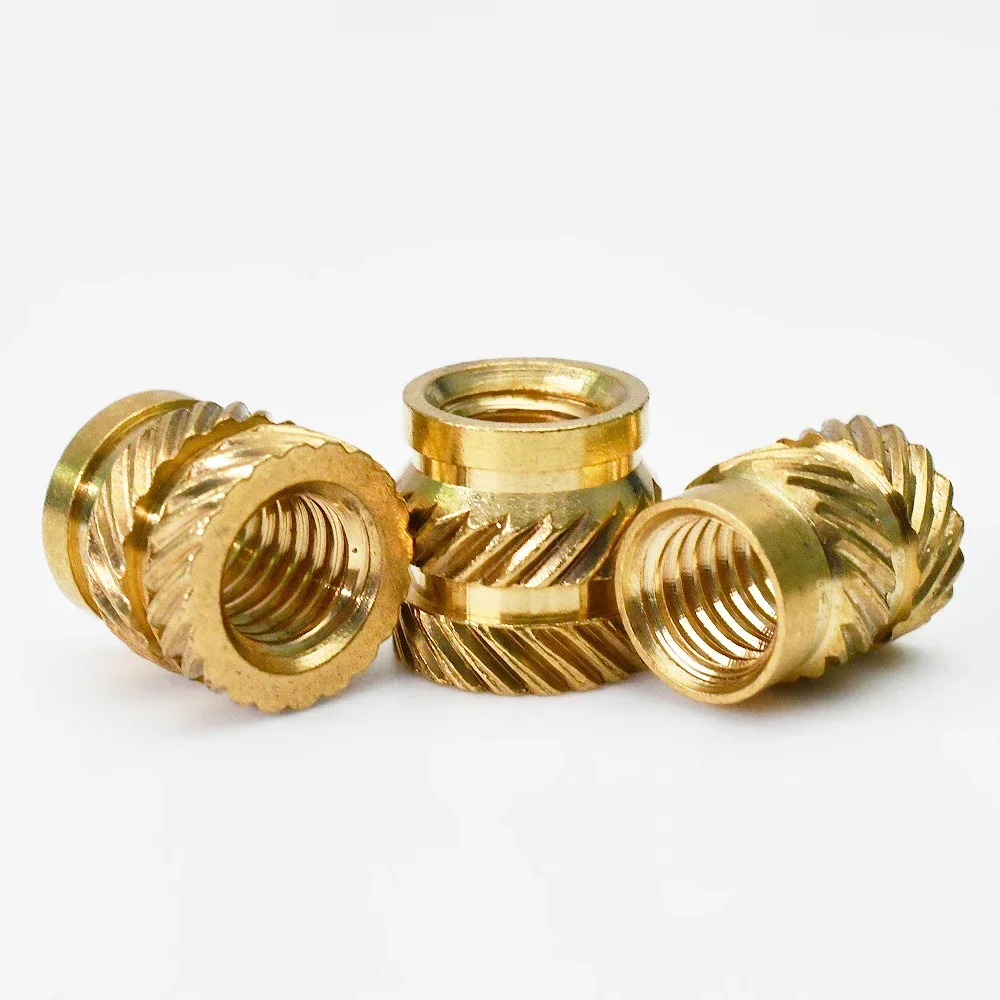
Central to these inserts' effectiveness is their knurled thread design, specifically optimized for heat injection molding and ultrasonic embedment processes. The diagonal knurling visible on the exterior surface creates a series of interlocking features when melted into plastic. This provides exceptional resistance against pull-out and torque-out forces, ensuring the fastener remains firmly anchored.
The geometry of the knurling is not arbitrary; it is designed to displace plastic material efficiently during insertion, allowing the molten polymer to flow into and around the grooves. This creates a mechanical interlock that is far stronger than a simple friction fit. The result is a thread that can withstand significant stress.
Standard threaded inserts often rely on simpler patterns or aggressive cutting features, which can stress or crack the surrounding plastic, especially in brittle materials. These brass inserts, by contrast, use a more controlled embedment method, distributing stress more evenly. This makes them suitable for delicate plastic components where material integrity is paramount. Precision matters here.
Versatile Sizing and Application Scope
This product range covers a comprehensive array of metric thread sizes, from M1 to M8. This wide selection ensures compatibility with a vast range of small to medium-sized plastic components and fastening requirements. From miniature electronics to more substantial enclosures, a suitable size is available.
The smaller sizes, such as M1 and M1.4, are particularly valuable for micro-electronics and intricate assemblies where space is at a premium. These tiny threads enable secure fastening in components that would otherwise be difficult to work with. Larger sizes like M6 and M8 are ideal for structural plastic parts, providing robust anchoring points for heavier loads or more demanding applications. Every size serves a purpose.
Visual examples provided illustrate their use in electronic plastic housings and router shells. This highlights their suitability for consumer electronics, network equipment, and other devices where plastic enclosures are common. The ability to create reliable threads in these contexts is invaluable for product serviceability and longevity. The applications are broad.
Installation Methodology: Hot Melt and Heat Injection
The primary installation method for these inserts involves hot melt or heat injection molding. This process utilizes heat to temporarily soften the surrounding thermoplastic, allowing the insert to be pressed into a pre-drilled or molded hole. As the plastic cools, it solidifies around the knurled features, creating a permanent, high-strength bond. This method offers superior performance compared to cold-pressed inserts, which can induce stress in the plastic.
Heat-setting provides a clean and precise installation. The controlled application of heat minimizes material deformation, ensuring the insert sits flush and correctly aligned within the component. This precision is difficult to achieve with other insertion methods. Consistency is key.
For those manufacturing in volume, these inserts integrate seamlessly into automated assembly lines using specialized heat-setting equipment. For smaller batches or prototyping, a simple soldering iron with a specialized tip can be used, making them accessible to hobbyists and small workshops. This adaptability enhances their overall utility. It's a straightforward process.
The Value Proposition in Cabinetry and Beyond
As a cabinet maker, the value of these brass inserts extends beyond typical electronic applications. Modern cabinetry often incorporates plastic components for drawer slides, lighting fixtures, or decorative elements. The need for reliable, reusable threads in these plastic parts is critical for both assembly and future maintenance. These inserts provide that dependability.
Consider a scenario where a custom lighting fixture needs to be mounted within a cabinet using a plastic bracket. Instead of relying on screws that could strip the plastic over time, heat-set brass inserts offer a permanent, robust threading solution. This ensures the fixture remains securely attached and can be easily removed for servicing without damaging the mounting point. This prevents costly repairs.
Furthermore, the consistent finish and clean embedment of these inserts contribute to the overall perceived quality of the finished product. A secure, well-engineered fastening point speaks volumes about the attention to detail in craftsmanship. This small component elevates the entire assembly. Quality is paramount.
Imagine the peace of mind knowing that every screw point in your plastic assemblies is reinforced with a durable brass thread. Envision projects where components can be repeatedly assembled and disassembled without fear of stripping delicate plastic. Picture the enhanced longevity and serviceability of your creations, leading to fewer warranty claims and higher customer satisfaction. These brass inserts provide the foundation for such reliable performance, making them an indispensable asset for any craftsman working with plastics. They ensure your work stands the test of time, delivering consistent performance and a professional finish that reflects true dedication to quality. The investment in these precision components pays dividends in durability and client trust, solidifying the integrity of every project you undertake. It is a smart choice for lasting quality.