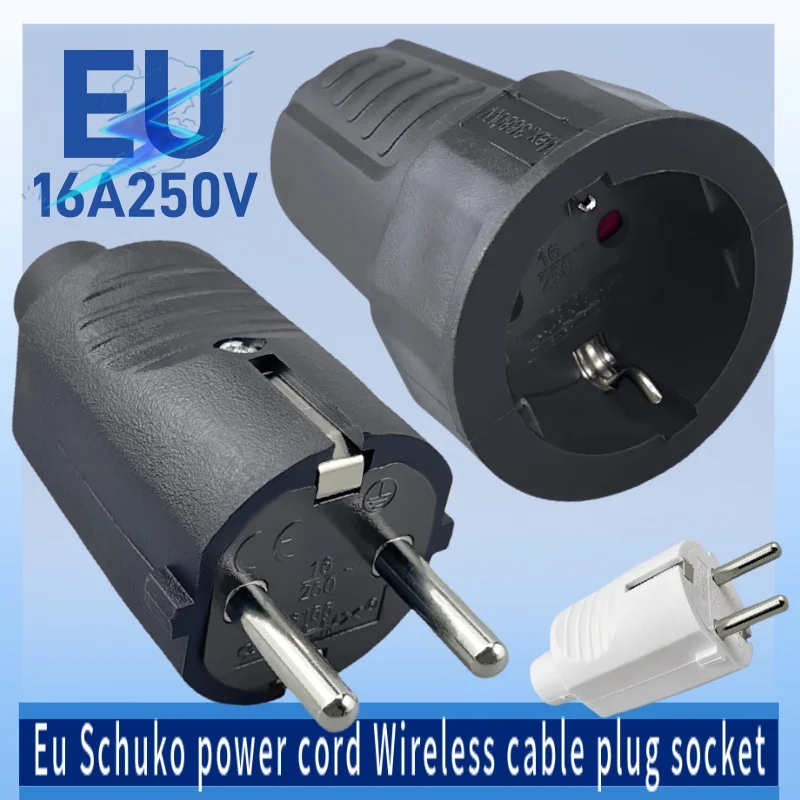
EU Schuko 16A Rewireable Power Plug and Socket Set
Official Store Deal
Expert Analysis Overview
The EU Schuko 16A Rewireable Plug and Socket is a robust electrical connector solution designed for reliable power transmission in European standard applications. This assembly-required component set offers a pragmatic approach to custom power cable creation or repair, prioritizing durability and electrical integrity over pre-fabricated convenience. Its construction and specifications indicate a focus on long-term performance in demanding environments, making it a staple for technicians and DIY enthusiasts alike.
The internal structure of both the plug and socket reveals a commitment to secure electrical connections. The plug features nickel-plated copper feet, a critical detail for sustained conductivity. These pins, with a standard 4.8mm outer diameter, resist corrosion and wear far better than untreated copper or brass alternatives. This material choice ensures a stable electrical path over years of use.
In practical scenarios, such as frequently connecting and disconnecting appliances, the nickel plating minimizes oxidation buildup. This directly translates to reduced resistance at the contact points, preventing heat generation and potential power loss. Sustained low resistance is vital.
Compared to cheaper, unplated pins found in many generic connectors, the nickel-plated copper offers superior longevity and consistent performance. This material upgrade mitigates common issues like intermittent power or premature connector failure, which often plague less robust designs.
The grounding mechanism is equally well-considered, featuring a nickel-plated grounding spring. This spring provides a resilient and low-impedance path to earth. A secure ground connection is non-negotiable for electrical safety.
The wear resistance of the nickel plating on the grounding spring ensures that this critical safety feature remains effective even after numerous mating cycles. Good toughness prevents deformation, maintaining consistent contact pressure. This design choice directly addresses the need for uninterrupted fault current dissipation, protecting both equipment and users.
Many standard plugs utilize simpler, less robust grounding contacts that can lose their spring tension or corrode over time. The enhanced material and design of this grounding spring offer a significant improvement in sustained safety performance.
Both the plug and socket housings are constructed from PVC material, specifically noted for its bidirectional flame retardant properties. This thermoplastic polymer is a common choice for electrical components due to its excellent insulating capabilities and mechanical strength. Its anti-aging characteristics are particularly beneficial.
This material choice implies a connector capable of withstanding environmental stressors such as UV exposure and temperature fluctuations without becoming brittle or degrading rapidly. The strong flexibility mentioned for the PVC housing is critical for resisting physical impacts and stress from cable bending, ensuring the integrity of the internal wiring. It will not crack easily.
Lower-grade plastics often become brittle with age or exposure to heat and sunlight, leading to housing failures that expose live terminals. The specified PVC, with its anti-aging and flame-retardant properties, positions this connector as a more durable alternative, reducing the risk of electrical hazards over time.
The product description highlights the PVC material's ability to endure 5000 vertical bends without breaking. This specification speaks directly to the mechanical resilience of the cable entry point. Such durability is crucial for applications where the cable might be frequently flexed or subjected to stress.
This level of flexibility and resistance to fatigue ensures that the cable's insulation and internal conductors remain protected at the point of entry into the plug or socket. Preventing strain on the internal wiring is paramount for both safety and operational lifespan. A robust strain relief is essential.
Many molded plugs, while convenient, often have rigid cable entries that can lead to wire fatigue and breakage if subjected to repeated bending. The design of this rewireable connector, coupled with the specified PVC flexibility, offers superior protection against such mechanical stresses, extending the life of the entire cable assembly.
The design of these connectors emphasizes ease of assembly, a key feature for custom wiring projects. The internal terminals are clearly marked for Live wire (L), Ground wire (E), and Zero wire (N), simplifying the wiring process. This clear labeling minimizes the chance of incorrect connections.
For an electronics repair technician, this straightforward internal layout means faster and more reliable assembly. The ability to press lines securely within the terminals ensures a solid mechanical and electrical connection, which is fundamental for preventing loose wires and intermittent faults. Proper wire stripping is necessary.
Unlike pre-molded plugs that offer no repairability, these assembly-type connectors provide the flexibility to choose specific cable lengths and types, or to repair damaged cables without replacing the entire appliance cord. This saves significant cost and reduces electronic waste, aligning with sustainable repair practices.
The wiring aperture is specified at 8mm, indicating compatibility with a range of standard power cables. This large caliber opening accommodates various cable thicknesses. Selecting the correct cable is important.
This generous aperture allows for the use of thicker, more robust cables that can handle higher current loads or offer increased mechanical protection. It provides flexibility for users to match the cable to the specific demands of their application, whether it's for a heavy-duty power tool or a standard household appliance. Cable selection impacts performance.
Many compact or generic plugs have restrictive cable entries, limiting the choice of cable and potentially compromising safety if an undersized cable is used for a high-power application. This connector's larger aperture supports a wider range of appropriate cable gauges, enhancing both safety and versatility.
Rated at 16A and 250V, these connectors are designed for significant power loads. This rating translates to a maximum power handling capacity of approximately 3500W (16A * 220V, typical European voltage). This capacity is suitable for most household and light industrial applications.
This high current and voltage rating means the connectors can safely power a wide array of appliances, from high-wattage kitchen equipment like ovens and kettles to power tools and workshop machinery. The robust internal contacts and housing materials are engineered to manage these electrical demands without overheating or degrading. Overloading circuits is dangerous.
Compared to lower-rated connectors (e.g., 10A or 13A), these 16A Schuko components offer greater headroom for power consumption, reducing the risk of thermal stress or premature failure when connected to demanding devices. This makes them a more versatile and safer choice for general-purpose high-power applications.
Adherence to the EU Schuko standard is a critical safety feature. The Schuko system (Schutz-Kontakt, meaning "protective contact") incorporates side-mounted earthing clips in the socket, which mate with corresponding contacts on the plug before the live pins engage. This ensures that the earth connection is established first. Safety is paramount.
This
Terminal Integrity Assessment
The internal structure of both the plug and socket reveals a commitment to secure electrical connections. The plug features nickel-plated copper feet, a critical detail for sustained conductivity. These pins, with a standard 4.8mm outer diameter, resist corrosion and wear far better than untreated copper or brass alternatives. This material choice ensures a stable electrical path over years of use.
In practical scenarios, such as frequently connecting and disconnecting appliances, the nickel plating minimizes oxidation buildup. This directly translates to reduced resistance at the contact points, preventing heat generation and potential power loss. Sustained low resistance is vital.
Compared to cheaper, unplated pins found in many generic connectors, the nickel-plated copper offers superior longevity and consistent performance. This material upgrade mitigates common issues like intermittent power or premature connector failure, which often plague less robust designs.
Grounding System Reliability
The grounding mechanism is equally well-considered, featuring a nickel-plated grounding spring. This spring provides a resilient and low-impedance path to earth. A secure ground connection is non-negotiable for electrical safety.
The wear resistance of the nickel plating on the grounding spring ensures that this critical safety feature remains effective even after numerous mating cycles. Good toughness prevents deformation, maintaining consistent contact pressure. This design choice directly addresses the need for uninterrupted fault current dissipation, protecting both equipment and users.
Many standard plugs utilize simpler, less robust grounding contacts that can lose their spring tension or corrode over time. The enhanced material and design of this grounding spring offer a significant improvement in sustained safety performance.
Material Science and Longevity
Both the plug and socket housings are constructed from PVC material, specifically noted for its bidirectional flame retardant properties. This thermoplastic polymer is a common choice for electrical components due to its excellent insulating capabilities and mechanical strength. Its anti-aging characteristics are particularly beneficial.
This material choice implies a connector capable of withstanding environmental stressors such as UV exposure and temperature fluctuations without becoming brittle or degrading rapidly. The strong flexibility mentioned for the PVC housing is critical for resisting physical impacts and stress from cable bending, ensuring the integrity of the internal wiring. It will not crack easily.
Lower-grade plastics often become brittle with age or exposure to heat and sunlight, leading to housing failures that expose live terminals. The specified PVC, with its anti-aging and flame-retardant properties, positions this connector as a more durable alternative, reducing the risk of electrical hazards over time.
Mechanical Endurance
The product description highlights the PVC material's ability to endure 5000 vertical bends without breaking. This specification speaks directly to the mechanical resilience of the cable entry point. Such durability is crucial for applications where the cable might be frequently flexed or subjected to stress.
This level of flexibility and resistance to fatigue ensures that the cable's insulation and internal conductors remain protected at the point of entry into the plug or socket. Preventing strain on the internal wiring is paramount for both safety and operational lifespan. A robust strain relief is essential.
Many molded plugs, while convenient, often have rigid cable entries that can lead to wire fatigue and breakage if subjected to repeated bending. The design of this rewireable connector, coupled with the specified PVC flexibility, offers superior protection against such mechanical stresses, extending the life of the entire cable assembly.
Installation Dynamics
The design of these connectors emphasizes ease of assembly, a key feature for custom wiring projects. The internal terminals are clearly marked for Live wire (L), Ground wire (E), and Zero wire (N), simplifying the wiring process. This clear labeling minimizes the chance of incorrect connections.
For an electronics repair technician, this straightforward internal layout means faster and more reliable assembly. The ability to press lines securely within the terminals ensures a solid mechanical and electrical connection, which is fundamental for preventing loose wires and intermittent faults. Proper wire stripping is necessary.
Unlike pre-molded plugs that offer no repairability, these assembly-type connectors provide the flexibility to choose specific cable lengths and types, or to repair damaged cables without replacing the entire appliance cord. This saves significant cost and reduces electronic waste, aligning with sustainable repair practices.
Wiring Aperture and Cable Compatibility
The wiring aperture is specified at 8mm, indicating compatibility with a range of standard power cables. This large caliber opening accommodates various cable thicknesses. Selecting the correct cable is important.
This generous aperture allows for the use of thicker, more robust cables that can handle higher current loads or offer increased mechanical protection. It provides flexibility for users to match the cable to the specific demands of their application, whether it's for a heavy-duty power tool or a standard household appliance. Cable selection impacts performance.
Many compact or generic plugs have restrictive cable entries, limiting the choice of cable and potentially compromising safety if an undersized cable is used for a high-power application. This connector's larger aperture supports a wider range of appropriate cable gauges, enhancing both safety and versatility.
Power Handling Capabilities
Rated at 16A and 250V, these connectors are designed for significant power loads. This rating translates to a maximum power handling capacity of approximately 3500W (16A * 220V, typical European voltage). This capacity is suitable for most household and light industrial applications.
This high current and voltage rating means the connectors can safely power a wide array of appliances, from high-wattage kitchen equipment like ovens and kettles to power tools and workshop machinery. The robust internal contacts and housing materials are engineered to manage these electrical demands without overheating or degrading. Overloading circuits is dangerous.
Compared to lower-rated connectors (e.g., 10A or 13A), these 16A Schuko components offer greater headroom for power consumption, reducing the risk of thermal stress or premature failure when connected to demanding devices. This makes them a more versatile and safer choice for general-purpose high-power applications.
Safety Protocols and Standards Adherence
Adherence to the EU Schuko standard is a critical safety feature. The Schuko system (Schutz-Kontakt, meaning "protective contact") incorporates side-mounted earthing clips in the socket, which mate with corresponding contacts on the plug before the live pins engage. This ensures that the earth connection is established first. Safety is paramount.
This