Excellux Zigbee 3-in-1 Human Presence Sensor
Official Store Deal
Expert Analysis Overview
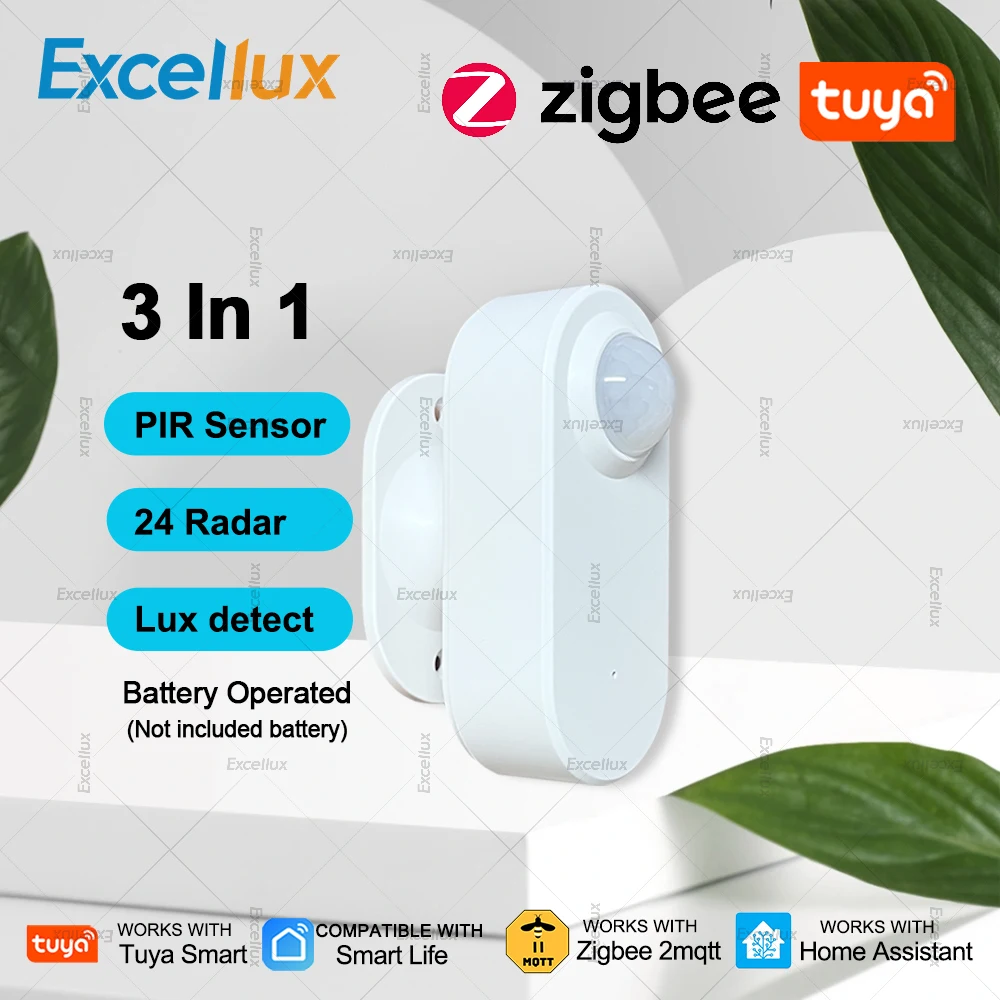
The Excellux Zigbee 3-in-1 Human Presence Sensor is a sophisticated environmental monitoring device specifically engineered for advanced smart home enthusiasts and integrators utilizing Zigbee 3.0 ecosystems. This sensor stands apart from conventional motion detectors by combining Passive Infrared (PIR), 24G Millimeter Wave Radar, and ambient Lux detection into a single, compact unit, offering a comprehensive and nuanced understanding of room occupancy and environmental conditions.
This device integrates three distinct sensing technologies, each contributing to a more accurate and reliable assessment of its environment. The primary detection methods are PIR, 24G Millimeter Wave Radar, and Lux detection. These combined inputs allow for a granular level of automation that single-function sensors cannot achieve.
Traditional PIR sensors excel at detecting movement. They register changes in infrared radiation caused by moving heat sources, such as people or pets. This makes them highly effective for initial motion triggers, initiating actions like turning on lights when someone enters a room. Their strength lies in their responsiveness to dynamic events.
However, PIR sensors have a notable limitation: they struggle with static presence. If an individual remains still, a standard PIR sensor will eventually report the room as empty, leading to undesirable outcomes like lights turning off unexpectedly. This sensor overcomes that. The 24G Millimeter Wave Radar technology is specifically designed to detect micro-movements, including subtle breathing patterns or shifts in posture. This capability ensures that the sensor maintains an 'occupied' status even when subjects are stationary, providing a truly intelligent presence detection.
Compared to basic motion sensors that solely rely on PIR, the integration of millimeter wave radar significantly enhances the user experience, preventing false negatives where a room appears unoccupied despite human presence. This dual-technology approach minimizes the common frustration of smart lights deactivating while one is still actively present but motionless, such as reading or working at a desk. The combined detection radius for PIR motion is up to 5 meters, while static presence detection via radar extends up to 3.5 meters, both within a 105-degree field of view.
Connectivity is paramount for any smart home device, and this sensor leverages the robust Zigbee 3.0 protocol. Zigbee is a mesh network technology known for its low power consumption, high reliability, and excellent scalability, making it ideal for large smart home deployments. The sensor's adherence to Zigbee 3.0 ensures broad compatibility with various Zigbee gateways and controllers.
For users deeply invested in Home Assistant, the sensor offers direct compatibility with Zigbee2MQTT (Z2M). This integration path is highly favored by advanced users for its local control capabilities, reduced reliance on cloud services, and extensive customization options. Z2M allows for granular control and exposes all sensor attributes, including PIR, radar presence, and lux values, directly to Home Assistant, enabling complex automation routines.
While a 'Tuya' version is also available, supporting Tuya Smart Life and Smart Life apps, it also maintains Zigbee2MQTT compatibility. This dual-path approach provides flexibility, allowing users to choose between a cloud-centric Tuya ecosystem or the more localized and privacy-focused Home Assistant via Z2M. The critical distinction is that the Z2M-specific version primarily supports Zigbee2MQTT in Home Assistant and does not explicitly support Tuya/Smart Life hubs, whereas the Tuya-branded version supports both. It's not suggested for use with ZHA (Zigbee Home Automation) due to potential compatibility nuances with the specific implementation of its advanced features.
Unlike many Wi-Fi-based sensors that can introduce latency and rely heavily on internet connectivity, the Zigbee 3.0 protocol ensures near-instantaneous response times for detection events. This low latency is crucial for time-sensitive automations, such as triggering lights or security alerts, where even a slight delay can degrade the user experience. The mesh networking capability also means that as more Zigbee devices are added, the network becomes stronger and more reliable, extending coverage throughout the home.
This sensor is designed for battery operation, offering flexibility in placement without the need for dedicated wiring. Battery-powered devices are often simpler to install. The absence of a power cord allows for discreet placement on walls or ceilings, blending into the home environment. However, users should note that batteries are not included, necessitating a separate purchase.
The wall-mounted design simplifies installation. Its compact form factor ensures it remains unobtrusive. Proper placement is essential to maximize detection accuracy and coverage, especially considering the 105-degree detection angle. Mounting it in a corner or strategically on a wall can provide optimal coverage for a room.
Installation involves simple mounting. The design suggests a straightforward process. This ease of installation contrasts with wired sensors that require electrical work, making it accessible for DIY smart home enthusiasts. The battery operation also provides resilience during power outages, as the sensor will continue to function independently of the main power supply, though its communication with the hub would still depend on the hub's power status.
The combined capabilities of PIR, radar, and lux detection unlock a wide array of advanced automation scenarios. For security, the sensor acts as a robust human presence detector. When the current status indicates 'no one,' any subsequent detection of presence through either PIR or millimeter wave radar can trigger immediate alerts via app notifications, providing an early warning system against intruders.
Beyond security, the sensor excels in comfort and energy management. The luminance detection, which collects light values every minute within a 0-3000 Lux range, allows for intelligent lighting control. For instance, lights can be set to turn on only when presence is detected *and* the ambient light level falls below a certain threshold, preventing unnecessary illumination during daylight hours. This saves energy. The sensor can also be integrated into routines that automatically adjust smart curtain positions based on both presence and natural light levels, optimizing comfort and energy efficiency.
Consider a scenario where the sensor is placed in a home office. When presence is detected, the lights turn on, and the smart thermostat adjusts to a comfortable temperature. If the user remains still for an extended period, the millimeter wave radar ensures the lights stay on. When the room becomes truly empty, indicated by no PIR or radar detection, the lights can be programmed to turn off, and the HVAC system can revert to an energy-saving mode. This level of automation is highly efficient.
This comprehensive environmental feedback allows for the creation of truly intelligent and responsive living spaces. The ability to differentiate between simple motion and sustained presence, coupled with ambient light data, provides the building blocks for sophisticated automation rules that adapt to actual human behavior rather than just fleeting movements. This granularity elevates the smart home experience from reactive to genuinely proactive, anticipating needs and optimizing conditions seamlessly.
For the Home Automation Engineer, this sensor represents a significant upgrade over basic motion detectors. Its triple-sensing technology provides a richer dataset for automation, reducing false positives and negatives that plague simpler systems. The explicit support for Zigbee2MQTT means that integrating it into a complex Home Assistant setup is streamlined, offering direct access to raw sensor data and enabling local control without cloud dependencies. This is crucial for privacy-conscious users and those who demand maximum reliability and minimal latency from their smart home infrastructure.
The cost-effectiveness of a 3-in-1 sensor also presents a compelling value proposition. Instead of purchasing separate PIR, presence, and lux sensors, this single unit consolidates functionality, simplifying installation and reducing overall system complexity. This consolidation also minimizes the number of Zigbee devices required, potentially freeing up network capacity for other components. The strategic integration of multiple sensors into one device streamlines the deployment process.
Imagine a home where lighting, climate, and security systems respond intuitively to your presence, not just your movement. Picture entering a room, and the lights gently brighten to the perfect level, knowing you are there and staying on as you settle in, all without a single button press. Envision your energy consumption optimized, with lights and heating adjusting intelligently based on actual occupancy and ambient light, rather than rigid schedules. This sensor is the silent, vigilant guardian of your automated sanctuary, providing the precise data needed to make your smart home truly intelligent and effortlessly responsive to your every need. It allows for a living space that anticipates your actions, enhances your comfort, and optimizes resource usage, creating an environment that is both technologically advanced and deeply intuitive.
Advanced Multi-Sensing Capabilities
This device integrates three distinct sensing technologies, each contributing to a more accurate and reliable assessment of its environment. The primary detection methods are PIR, 24G Millimeter Wave Radar, and Lux detection. These combined inputs allow for a granular level of automation that single-function sensors cannot achieve.
Traditional PIR sensors excel at detecting movement. They register changes in infrared radiation caused by moving heat sources, such as people or pets. This makes them highly effective for initial motion triggers, initiating actions like turning on lights when someone enters a room. Their strength lies in their responsiveness to dynamic events.
However, PIR sensors have a notable limitation: they struggle with static presence. If an individual remains still, a standard PIR sensor will eventually report the room as empty, leading to undesirable outcomes like lights turning off unexpectedly. This sensor overcomes that. The 24G Millimeter Wave Radar technology is specifically designed to detect micro-movements, including subtle breathing patterns or shifts in posture. This capability ensures that the sensor maintains an 'occupied' status even when subjects are stationary, providing a truly intelligent presence detection.
Compared to basic motion sensors that solely rely on PIR, the integration of millimeter wave radar significantly enhances the user experience, preventing false negatives where a room appears unoccupied despite human presence. This dual-technology approach minimizes the common frustration of smart lights deactivating while one is still actively present but motionless, such as reading or working at a desk. The combined detection radius for PIR motion is up to 5 meters, while static presence detection via radar extends up to 3.5 meters, both within a 105-degree field of view.
Seamless Zigbee 3.0 Integration
Connectivity is paramount for any smart home device, and this sensor leverages the robust Zigbee 3.0 protocol. Zigbee is a mesh network technology known for its low power consumption, high reliability, and excellent scalability, making it ideal for large smart home deployments. The sensor's adherence to Zigbee 3.0 ensures broad compatibility with various Zigbee gateways and controllers.
For users deeply invested in Home Assistant, the sensor offers direct compatibility with Zigbee2MQTT (Z2M). This integration path is highly favored by advanced users for its local control capabilities, reduced reliance on cloud services, and extensive customization options. Z2M allows for granular control and exposes all sensor attributes, including PIR, radar presence, and lux values, directly to Home Assistant, enabling complex automation routines.
While a 'Tuya' version is also available, supporting Tuya Smart Life and Smart Life apps, it also maintains Zigbee2MQTT compatibility. This dual-path approach provides flexibility, allowing users to choose between a cloud-centric Tuya ecosystem or the more localized and privacy-focused Home Assistant via Z2M. The critical distinction is that the Z2M-specific version primarily supports Zigbee2MQTT in Home Assistant and does not explicitly support Tuya/Smart Life hubs, whereas the Tuya-branded version supports both. It's not suggested for use with ZHA (Zigbee Home Automation) due to potential compatibility nuances with the specific implementation of its advanced features.
Unlike many Wi-Fi-based sensors that can introduce latency and rely heavily on internet connectivity, the Zigbee 3.0 protocol ensures near-instantaneous response times for detection events. This low latency is crucial for time-sensitive automations, such as triggering lights or security alerts, where even a slight delay can degrade the user experience. The mesh networking capability also means that as more Zigbee devices are added, the network becomes stronger and more reliable, extending coverage throughout the home.
Power Efficiency and Installation
This sensor is designed for battery operation, offering flexibility in placement without the need for dedicated wiring. Battery-powered devices are often simpler to install. The absence of a power cord allows for discreet placement on walls or ceilings, blending into the home environment. However, users should note that batteries are not included, necessitating a separate purchase.
The wall-mounted design simplifies installation. Its compact form factor ensures it remains unobtrusive. Proper placement is essential to maximize detection accuracy and coverage, especially considering the 105-degree detection angle. Mounting it in a corner or strategically on a wall can provide optimal coverage for a room.
Installation involves simple mounting. The design suggests a straightforward process. This ease of installation contrasts with wired sensors that require electrical work, making it accessible for DIY smart home enthusiasts. The battery operation also provides resilience during power outages, as the sensor will continue to function independently of the main power supply, though its communication with the hub would still depend on the hub's power status.
Practical Applications and Automation Potential
The combined capabilities of PIR, radar, and lux detection unlock a wide array of advanced automation scenarios. For security, the sensor acts as a robust human presence detector. When the current status indicates 'no one,' any subsequent detection of presence through either PIR or millimeter wave radar can trigger immediate alerts via app notifications, providing an early warning system against intruders.
Beyond security, the sensor excels in comfort and energy management. The luminance detection, which collects light values every minute within a 0-3000 Lux range, allows for intelligent lighting control. For instance, lights can be set to turn on only when presence is detected *and* the ambient light level falls below a certain threshold, preventing unnecessary illumination during daylight hours. This saves energy. The sensor can also be integrated into routines that automatically adjust smart curtain positions based on both presence and natural light levels, optimizing comfort and energy efficiency.
Consider a scenario where the sensor is placed in a home office. When presence is detected, the lights turn on, and the smart thermostat adjusts to a comfortable temperature. If the user remains still for an extended period, the millimeter wave radar ensures the lights stay on. When the room becomes truly empty, indicated by no PIR or radar detection, the lights can be programmed to turn off, and the HVAC system can revert to an energy-saving mode. This level of automation is highly efficient.
This comprehensive environmental feedback allows for the creation of truly intelligent and responsive living spaces. The ability to differentiate between simple motion and sustained presence, coupled with ambient light data, provides the building blocks for sophisticated automation rules that adapt to actual human behavior rather than just fleeting movements. This granularity elevates the smart home experience from reactive to genuinely proactive, anticipating needs and optimizing conditions seamlessly.
The Value Proposition for the Advanced Integrator
For the Home Automation Engineer, this sensor represents a significant upgrade over basic motion detectors. Its triple-sensing technology provides a richer dataset for automation, reducing false positives and negatives that plague simpler systems. The explicit support for Zigbee2MQTT means that integrating it into a complex Home Assistant setup is streamlined, offering direct access to raw sensor data and enabling local control without cloud dependencies. This is crucial for privacy-conscious users and those who demand maximum reliability and minimal latency from their smart home infrastructure.
The cost-effectiveness of a 3-in-1 sensor also presents a compelling value proposition. Instead of purchasing separate PIR, presence, and lux sensors, this single unit consolidates functionality, simplifying installation and reducing overall system complexity. This consolidation also minimizes the number of Zigbee devices required, potentially freeing up network capacity for other components. The strategic integration of multiple sensors into one device streamlines the deployment process.
Imagine a home where lighting, climate, and security systems respond intuitively to your presence, not just your movement. Picture entering a room, and the lights gently brighten to the perfect level, knowing you are there and staying on as you settle in, all without a single button press. Envision your energy consumption optimized, with lights and heating adjusting intelligently based on actual occupancy and ambient light, rather than rigid schedules. This sensor is the silent, vigilant guardian of your automated sanctuary, providing the precise data needed to make your smart home truly intelligent and effortlessly responsive to your every need. It allows for a living space that anticipates your actions, enhances your comfort, and optimizes resource usage, creating an environment that is both technologically advanced and deeply intuitive.