Flexible Split Corrugated Cable Conduit
Official Store Deal
Expert Analysis Overview
The Flexible Split Corrugated Cable Conduit is an essential cable management solution engineered for hobbyists and professionals seeking enhanced protection and organization for electrical wiring, particularly within solar energy systems. This polyethylene (PE) conduit, reinforced with steel wire braiding, offers a unique split design for unparalleled ease of installation, making it a superior alternative to traditional, cumbersome cable protection methods. Its robust construction ensures the longevity and efficiency of critical power lines, safeguarding against environmental stressors and mechanical damage.
This conduit utilizes a high-grade polyethylene (PE) material. Polyethylene is known for its excellent chemical resistance, flexibility, and electrical insulation properties, making it an ideal choice for protecting sensitive wiring in diverse applications.
When deployed in an outdoor solar array, the PE material withstands exposure to various weather conditions, from intense UV radiation to temperature fluctuations, without becoming brittle or degrading rapidly. This ensures that the crucial DC and AC wiring connecting solar panels to inverters and batteries remains intact and operational for decades, minimizing potential efficiency losses from damaged insulation.
Compared to rigid PVC conduits, which can crack under stress or extreme cold, this flexible PE conduit offers superior impact resistance and adaptability, bending around corners and obstacles with greater ease. Its inherent flexibility also reduces the stress points on cables during installation, a common issue with less forgiving materials.
Beyond the PE jacket, the conduit incorporates steel wire braiding. This internal reinforcement significantly enhances the conduit's mechanical strength, providing a robust shield against crushing, abrasion, and punctures.
Imagine a scenario where rodents might attempt to chew through exposed wires in an off-grid cabin setup. The steel braiding acts as a formidable barrier, preventing costly damage and potential system downtime. This added layer of protection is vital for maintaining the integrity of solar power systems, where uninterrupted operation is paramount.
Traditional corrugated conduits often lack this internal reinforcement, making them susceptible to collapse or severe damage from sharp impacts or heavy loads. The steel-braided design elevates this product above standard offerings, offering peace of mind in demanding environments.
One of the conduit's most compelling features is its innovative split design. This allows cables to be inserted laterally along the entire length of the conduit, eliminating the need to thread wires through a continuous tube.
This design dramatically simplifies the process of bundling and protecting existing cable runs or adding new wires to an already installed system. A simple cut with household shears opens the conduit, allowing for quick insertion of cables, then it snaps back to secure them. Installation is quick.
Consider an upgrade to a solar charge controller or the addition of a new string of PV panels. With a continuous conduit, all existing wires would need to be disconnected and re-threaded, a time-consuming and labor-intensive task. The split design bypasses this complexity entirely, saving significant time and effort for the solar hobbyist.
The conduit is designed for free cutting, allowing users to tailor lengths precisely to their project's requirements. Standard scissors or a utility knife can easily trim the material.
This adaptability ensures minimal waste and a clean, professional finish for any wiring project, from short runs connecting a micro-inverter to a longer stretch protecting cables along a roofline. The ability to customize length on-site ensures a perfect fit every time.
Unlike pre-cut lengths of rigid conduit that often require specific tools for modification, this flexible conduit offers unmatched convenience. Its user-friendly nature makes it accessible even for those new to electrical work, promoting safer and tidier installations.
Effective cable management is not merely about aesthetics; it is about safety, efficiency, and ease of maintenance. This conduit excels at organizing messy wires into a single, protected bundle.
Visually, a well-organized solar installation enhances the overall professionalism of the setup and simplifies future troubleshooting. Cluttered wires can lead to accidental disconnections, short circuits, or simply make it difficult to trace a fault. A tidy system prevents these issues.
When compared to using multiple zip ties or electrical tape, this conduit provides a far more durable and comprehensive solution. It encapsulates the entire bundle, offering uniform protection and a much cleaner appearance that blends seamlessly into most environments with its black finish.
The primary function of any conduit is protection, and this product delivers on multiple fronts. It shields cables from physical abrasion, impact, and the elements.
For solar applications, this means safeguarding DC power cables, which carry significant current, from UV degradation, moisture ingress, and the risk of accidental damage during maintenance. Protected cables maintain their insulation integrity, preventing current leakage and ensuring maximum power transfer from the panels to the load.
Without adequate protection, exposed cables can suffer from insulation breakdown, leading to reduced system efficiency, potential fire hazards, and premature component failure. This conduit acts as a critical line of defense, preserving the long-term performance and safety of the entire solar energy system.
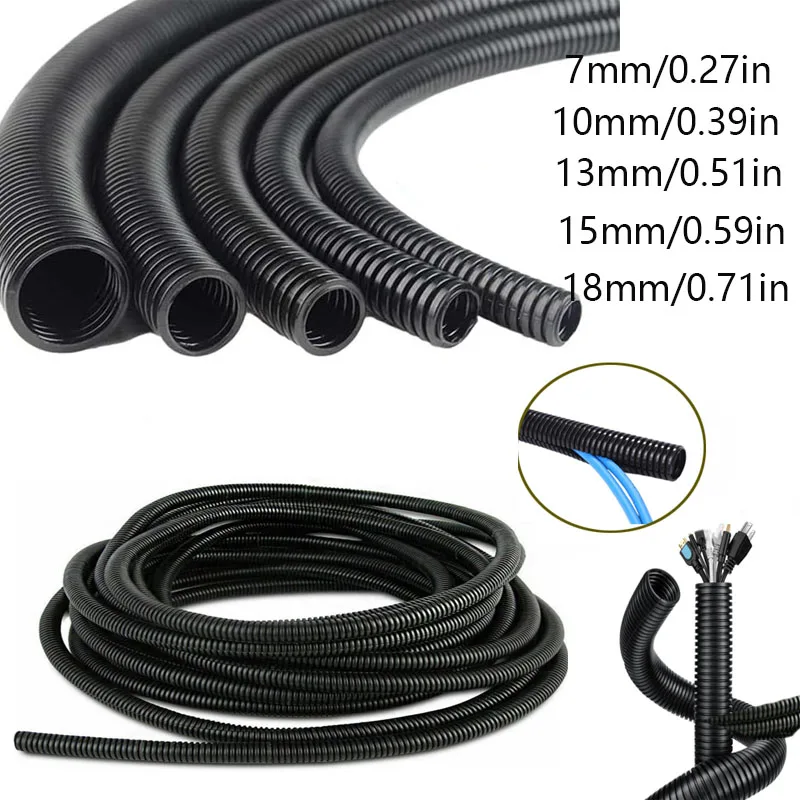
The conduit is available in a wide range of outer diameters, including 7mm, 10mm, 13mm, 15mm, 18mm, 21mm, 25mm, and 28mm, along with lengths of 1m, 3m, and 6m. This extensive selection ensures compatibility with various cable gauges and bundling requirements.
Whether protecting a single thin signal cable for a monitoring system or bundling multiple heavy-gauge power cables from a battery bank, there is an appropriate size available. This versatility makes it suitable for small DIY projects up to more complex residential solar installations. The right fit is always important.
Unlike generic cable sleeves that come in limited sizes, this product's comprehensive diameter range allows for precise selection, ensuring cables are neither too loose (allowing movement and abrasion) nor too tight (causing strain or difficulty in insertion). This attention to sizing optimizes both protection and ease of use.
For the solar energy enthusiast, integrating this conduit into a self-sustaining energy system offers tangible benefits. It directly contributes to system reliability and efficiency.
Protecting the wiring from physical damage and environmental exposure reduces the likelihood of resistance increases in the conductors, which can lead to efficiency losses. Every watt counts in a solar setup, and preventing even minor losses over long cable runs can significantly impact overall energy harvest.
This conduit seamlessly accommodates both DC and AC wiring. DC cables from solar panels to charge controllers and batteries, and AC output cables from inverters, can all be safely routed and protected. This ensures a consistent and robust pathway for power throughout the entire off-grid or grid-tied system, verifying compatibility with existing solar setups.
The initial investment in quality cable protection like this conduit translates into substantial long-term savings and enhanced system performance. It is a cost-effective measure against expensive repairs and premature component replacement.
By preventing damage to wiring, the conduit helps maintain the optimal conversion efficiency of the solar array, ensuring that the maximum amount of sunlight is converted into usable electricity. This directly impacts the return on investment for any solar project. Protection pays dividends.
Picture a solar panel installation where all wiring is neatly encased and protected, resisting years of sun, rain, and potential animal interference. The peace of mind and the consistent energy output provided by such a setup far outweigh the minimal cost of this essential protective conduit. It represents a smart, forward-thinking approach to sustainable energy management.
Material Integrity and Structural Resilience
This conduit utilizes a high-grade polyethylene (PE) material. Polyethylene is known for its excellent chemical resistance, flexibility, and electrical insulation properties, making it an ideal choice for protecting sensitive wiring in diverse applications.
When deployed in an outdoor solar array, the PE material withstands exposure to various weather conditions, from intense UV radiation to temperature fluctuations, without becoming brittle or degrading rapidly. This ensures that the crucial DC and AC wiring connecting solar panels to inverters and batteries remains intact and operational for decades, minimizing potential efficiency losses from damaged insulation.
Compared to rigid PVC conduits, which can crack under stress or extreme cold, this flexible PE conduit offers superior impact resistance and adaptability, bending around corners and obstacles with greater ease. Its inherent flexibility also reduces the stress points on cables during installation, a common issue with less forgiving materials.
The Strength of Steel Wire Braiding
Beyond the PE jacket, the conduit incorporates steel wire braiding. This internal reinforcement significantly enhances the conduit's mechanical strength, providing a robust shield against crushing, abrasion, and punctures.
Imagine a scenario where rodents might attempt to chew through exposed wires in an off-grid cabin setup. The steel braiding acts as a formidable barrier, preventing costly damage and potential system downtime. This added layer of protection is vital for maintaining the integrity of solar power systems, where uninterrupted operation is paramount.
Traditional corrugated conduits often lack this internal reinforcement, making them susceptible to collapse or severe damage from sharp impacts or heavy loads. The steel-braided design elevates this product above standard offerings, offering peace of mind in demanding environments.
Installation Ingenuity: The Split Design Advantage
One of the conduit's most compelling features is its innovative split design. This allows cables to be inserted laterally along the entire length of the conduit, eliminating the need to thread wires through a continuous tube.
This design dramatically simplifies the process of bundling and protecting existing cable runs or adding new wires to an already installed system. A simple cut with household shears opens the conduit, allowing for quick insertion of cables, then it snaps back to secure them. Installation is quick.
Consider an upgrade to a solar charge controller or the addition of a new string of PV panels. With a continuous conduit, all existing wires would need to be disconnected and re-threaded, a time-consuming and labor-intensive task. The split design bypasses this complexity entirely, saving significant time and effort for the solar hobbyist.
Free Cutting for Custom Applications
The conduit is designed for free cutting, allowing users to tailor lengths precisely to their project's requirements. Standard scissors or a utility knife can easily trim the material.
This adaptability ensures minimal waste and a clean, professional finish for any wiring project, from short runs connecting a micro-inverter to a longer stretch protecting cables along a roofline. The ability to customize length on-site ensures a perfect fit every time.
Unlike pre-cut lengths of rigid conduit that often require specific tools for modification, this flexible conduit offers unmatched convenience. Its user-friendly nature makes it accessible even for those new to electrical work, promoting safer and tidier installations.
Cable Management Mastery and Aesthetic Integration
Effective cable management is not merely about aesthetics; it is about safety, efficiency, and ease of maintenance. This conduit excels at organizing messy wires into a single, protected bundle.
Visually, a well-organized solar installation enhances the overall professionalism of the setup and simplifies future troubleshooting. Cluttered wires can lead to accidental disconnections, short circuits, or simply make it difficult to trace a fault. A tidy system prevents these issues.
When compared to using multiple zip ties or electrical tape, this conduit provides a far more durable and comprehensive solution. It encapsulates the entire bundle, offering uniform protection and a much cleaner appearance that blends seamlessly into most environments with its black finish.
Protecting Your Power Lines: Environmental and Mechanical Shielding
The primary function of any conduit is protection, and this product delivers on multiple fronts. It shields cables from physical abrasion, impact, and the elements.
For solar applications, this means safeguarding DC power cables, which carry significant current, from UV degradation, moisture ingress, and the risk of accidental damage during maintenance. Protected cables maintain their insulation integrity, preventing current leakage and ensuring maximum power transfer from the panels to the load.
Without adequate protection, exposed cables can suffer from insulation breakdown, leading to reduced system efficiency, potential fire hazards, and premature component failure. This conduit acts as a critical line of defense, preserving the long-term performance and safety of the entire solar energy system.
Versatility in Application: Sizing for Every Need
The conduit is available in a wide range of outer diameters, including 7mm, 10mm, 13mm, 15mm, 18mm, 21mm, 25mm, and 28mm, along with lengths of 1m, 3m, and 6m. This extensive selection ensures compatibility with various cable gauges and bundling requirements.
Whether protecting a single thin signal cable for a monitoring system or bundling multiple heavy-gauge power cables from a battery bank, there is an appropriate size available. This versatility makes it suitable for small DIY projects up to more complex residential solar installations. The right fit is always important.
Unlike generic cable sleeves that come in limited sizes, this product's comprehensive diameter range allows for precise selection, ensuring cables are neither too loose (allowing movement and abrasion) nor too tight (causing strain or difficulty in insertion). This attention to sizing optimizes both protection and ease of use.
Integrating with Solar System Architectures
For the solar energy enthusiast, integrating this conduit into a self-sustaining energy system offers tangible benefits. It directly contributes to system reliability and efficiency.
Protecting the wiring from physical damage and environmental exposure reduces the likelihood of resistance increases in the conductors, which can lead to efficiency losses. Every watt counts in a solar setup, and preventing even minor losses over long cable runs can significantly impact overall energy harvest.
This conduit seamlessly accommodates both DC and AC wiring. DC cables from solar panels to charge controllers and batteries, and AC output cables from inverters, can all be safely routed and protected. This ensures a consistent and robust pathway for power throughout the entire off-grid or grid-tied system, verifying compatibility with existing solar setups.
The Long-Term Value Proposition
The initial investment in quality cable protection like this conduit translates into substantial long-term savings and enhanced system performance. It is a cost-effective measure against expensive repairs and premature component replacement.
By preventing damage to wiring, the conduit helps maintain the optimal conversion efficiency of the solar array, ensuring that the maximum amount of sunlight is converted into usable electricity. This directly impacts the return on investment for any solar project. Protection pays dividends.
Picture a solar panel installation where all wiring is neatly encased and protected, resisting years of sun, rain, and potential animal interference. The peace of mind and the consistent energy output provided by such a setup far outweigh the minimal cost of this essential protective conduit. It represents a smart, forward-thinking approach to sustainable energy management.