Gerlangoo 2P Parallel DC Fuse Holder for Solar PV Systems
Official Store Deal
Expert Analysis Overview
Precision Overcurrent Protection for Photovoltaic Arrays
The Gerlangoo 2P Parallel DC Fuse Holder is a specialized overcurrent protection device engineered for high-voltage solar photovoltaic (PV) systems. This component is designed to safeguard critical DC circuits from damaging overcurrents, a fundamental requirement for the longevity and operational safety of any solar installation. Its dedicated DC rating and robust construction distinguish it from general-purpose AC fuse holders, ensuring reliable performance in the demanding environment of solar power generation. This is a critical safety component.
Overcurrent Protection Architecture
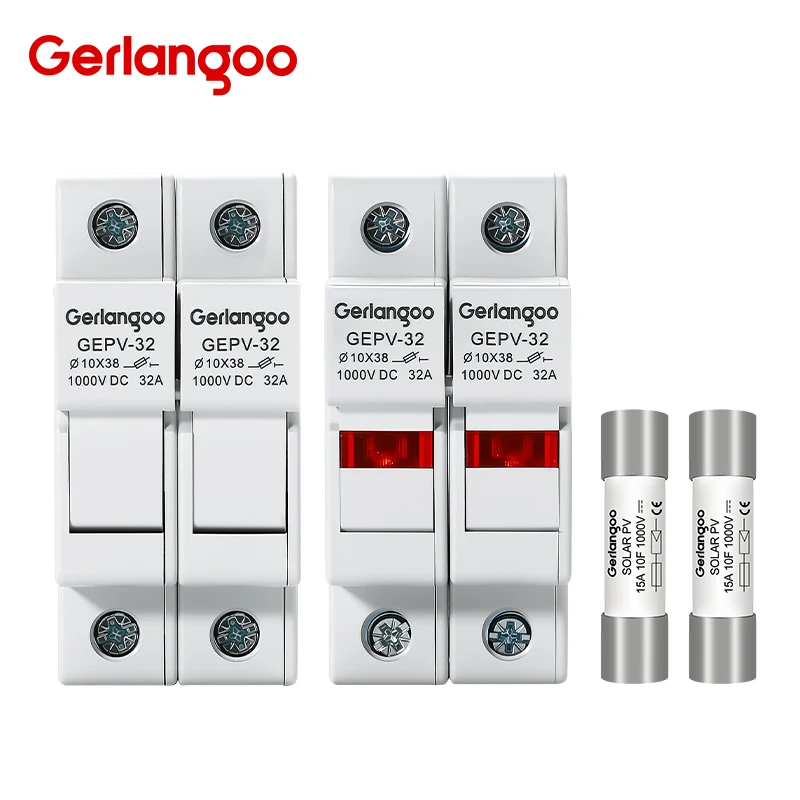
The visible design features a dual-pole (2P) configuration, indicating its capacity to protect two independent DC lines or a single bipolar DC circuit. Each pole accommodates a 10x38mm fuse, a standard size for PV applications, allowing for a range of current ratings from 6A to 32A. This modularity is essential for matching the fuse to the specific current demands of different solar strings or arrays, preventing both under-fusing (nuisance tripping) and over-fusing (inadequate protection). The clear labeling of "GEPV-32" and "1000V DC 32A" on the units confirms their high voltage and current handling capabilities, which are paramount for modern solar installations that often operate at elevated DC voltages to minimize transmission losses.
Unlike generic fuse blocks that might offer limited voltage tolerance or single-pole configurations, this Gerlangoo unit provides dedicated dual-pole protection. This design ensures that both positive and negative lines in a bipolar DC system can be simultaneously protected, a crucial aspect for maintaining system integrity and preventing ground faults. The visual indicators, likely for fuse status, further enhance operational awareness, allowing for quick identification of a blown fuse without requiring direct electrical testing. This saves valuable diagnostic time.
Standard electrical installations often rely on AC circuit breakers or fuses not rated for the unique characteristics of DC arcs. DC arcs are notoriously difficult to extinguish due to the lack of a natural zero-crossing point, making specialized DC-rated components indispensable. This fuse holder's explicit 1000V DC rating signifies its ability to safely interrupt high-voltage DC faults, a capability that generic AC-rated devices simply cannot guarantee. The robust housing material, appearing to be a high-grade thermoplastic, suggests good insulation properties and resistance to environmental factors commonly encountered in outdoor PV installations.
Terminal Integrity and Connection Security
Close examination of the images reveals screw terminals for wire connections, a common and generally reliable method for securing conductors in electrical systems. The terminals appear to be recessed within the housing, offering a degree of finger protection and reducing the risk of accidental contact with live parts. Proper torque application to these terminals is critical to ensure a low-resistance connection, which minimizes heat generation and prevents potential fire hazards. Loose connections are a significant cause of electrical failures.
Compared to push-in or spring-clamp terminals, screw terminals, when correctly installed, provide a highly secure and durable connection, particularly important in systems subject to vibration or thermal cycling, such as solar arrays. The visible wire entry points suggest compatibility with a range of wire gauges appropriate for the specified current ratings, likely up to 10 AWG or 6mm². Verifying the wire gauge accuracy for the intended current load is a non-negotiable safety practice. Undersized wiring can lead to dangerous overheating.
The quality of the terminal block material, while not explicitly stated, appears to be a robust metal alloy, likely copper or brass, which offers excellent conductivity and corrosion resistance. This is vital for maintaining low contact resistance over the lifespan of the installation, especially in outdoor or semi-outdoor environments where moisture and temperature fluctuations are common. Inferior terminal materials can degrade, leading to increased resistance, voltage drop, and localized heating, compromising system efficiency and safety. The design prioritizes secure electrical contact.
Installation Dynamics
The fuse holders are designed for DIN rail mounting, a universal standard in industrial and commercial electrical enclosures. This allows for neat, organized, and space-efficient installation within a combiner box or inverter enclosure. The modular nature of DIN rail components facilitates easy expansion or modification of the PV system, as additional fuse holders or other protective devices can be added or removed without extensive re-wiring. The side profile image clearly shows the DIN rail clip mechanism.
Unlike direct panel-mount solutions that require individual drilling and mounting, DIN rail compatibility streamlines the installation process, reducing labor time and ensuring a consistent, professional appearance. The ability to snap these units onto a standard rail simplifies system assembly. This standardized approach also aids in compliance with electrical codes that often mandate organized wiring and component placement within enclosures.
For optimal performance and safety, these fuse holders should be installed in an appropriate enclosure that provides protection from environmental elements such as direct sunlight, rain, and dust. While the units themselves appear robust, their operational environment significantly impacts their longevity and reliability. Proper ventilation within the enclosure is also important to dissipate any heat generated during normal operation or fault conditions, preventing thermal stress on the fuses and the holder itself. This ensures consistent operation.
Thermal Management Considerations
Fuses, by their nature, generate heat when current flows through them, especially when operating near their rated capacity. The design of this fuse holder, with its relatively open structure around the fuse elements (as seen when the fuse is inserted), suggests an attempt at passive thermal management. The materials used, particularly the housing, must be capable of withstanding elevated temperatures without degradation or becoming brittle over time. The red indicators on some units might also serve as visual thermal warnings or blown fuse indicators, though their primary function is likely the latter.
Compared to fully enclosed fuse designs, the visible access to the fuse elements might allow for better heat dissipation, preventing premature aging of the fuse or the holder. However, this also necessitates installation within a protective enclosure to prevent ingress of contaminants or accidental contact. The choice of 10x38mm fuses, which are relatively compact, means that the thermal mass is limited, requiring efficient heat transfer away from the fuse element to maintain its specified breaking characteristics. Proper sizing is key.
In high-current applications or environments with elevated ambient temperatures, careful consideration of fuse derating might be necessary. Electrical codes often require derating factors for continuous loads and high ambient temperatures to ensure that the fuse operates within its safe thermal limits. The robust construction implies a certain degree of thermal resilience, but system designers must account for cumulative heat effects within a confined enclosure. This prevents thermal runaway.
Longevity and Material Science
The visible plastic housing appears to be a high-quality, UV-stabilized material, crucial for components used in solar installations that are often exposed to sunlight. UV degradation can lead to embrittlement and cracking of plastics, compromising the mechanical integrity and insulation properties of the fuse holder. The smooth finish and consistent color across the units suggest good manufacturing quality control. Material selection directly impacts lifespan.
Unlike cheaper, general-purpose plastics that may become brittle or discolored after prolonged UV exposure, the apparent material choice here indicates a focus on durability for outdoor or semi-outdoor applications. This contributes to the overall reliability of the PV system, reducing the need for premature replacement of components. The metallic parts, such as the fuse contacts and screw terminals, must also be made from corrosion-resistant materials to ensure long-term electrical integrity. Corrosion increases resistance.
The mechanical latching mechanism for the fuse holder, which allows the fuse to be inserted and removed, appears sturdy. Repeated operation of this mechanism, for example during fuse replacement, should not lead to premature wear or failure. The overall fit and finish of the components suggest a product designed for industrial application rather than a consumer-grade item, emphasizing robustness and reliability under operational stress. This is built for demanding use.
System Integration Value
Integrating these specialized DC fuse holders into a solar PV system provides a critical layer of protection that extends beyond basic circuit breakers. Fuses offer very fast fault interruption, particularly for high-current short circuits, which can be devastating to sensitive solar equipment like inverters and solar panels. Their ability to isolate a faulty string quickly minimizes damage to other parts of the array and ensures the overall system's safety and operational continuity. This is a proactive safety measure.
Compared to relying solely on inverter-integrated protection, external fuse holders offer granular protection at the string level, allowing for easier fault isolation and maintenance. If a single string develops a fault, only that string's fuse will blow, leaving the rest of the array operational. This modular protection strategy enhances system uptime and simplifies troubleshooting, reducing the overall cost of ownership through improved reliability and maintainability. It protects your investment.
For installers and system owners, investing in dedicated, high-quality DC fuse holders like the Gerlangoo GEPV-32 means building a system that meets stringent safety standards and offers long-term reliability. The explicit ratings and robust construction provide confidence in the system's ability to withstand electrical anomalies, protecting both personnel and valuable equipment. Imagine the peace of mind knowing your solar investment is safeguarded by components specifically designed for its unique electrical demands, ensuring continuous, safe energy generation for years to come.