GEYA EU DIN Rail Modular Power Socket
Official Store Deal
Expert Analysis Overview
The GEYA EU DIN Rail Modular Socket is a foundational, purpose-built power delivery solution for structured electrical installations, catering to both industrial and advanced residential automation environments. This component is not a smart device itself, but rather a critical enabler for integrating traditional appliances or non-smart devices into a centralized control panel, providing robust power access where it's most needed. Its design emphasizes reliability and ease of integration within standardized DIN rail enclosures, making it a distinct upgrade from ad-hoc wiring solutions.
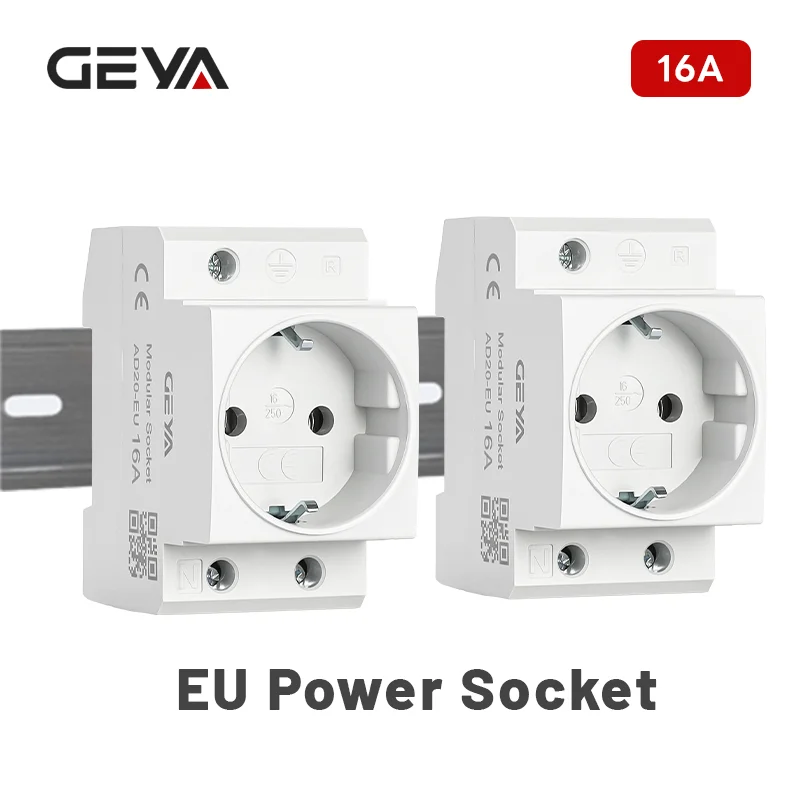
Visual inspection reveals a compact, modular form factor designed explicitly for 35mm DIN rail mounting. This white, plastic-encased unit presents a standard EU Type F (Schuko) outlet, rated for 16A. The visible material implies a flame-retardant shell, a crucial safety feature for any electrical component. Two such sockets are depicted in the primary image, illustrating their stackable nature within a panel.
For a Home Automation Engineer, this DIN rail integration is paramount. It allows for a clean, organized electrical panel where power is distributed systematically. Imagine a scenario where a dedicated server, a network switch, or a specialized automation controller needs a constant, reliable power source within the same enclosure as circuit breakers and smart relays. This socket provides that direct, secure connection point without resorting to external power strips or unsightly cable management.
Unlike standard wall outlets that occupy prime wall space and often require separate conduit runs, this modular socket integrates directly into the electrical infrastructure. It consolidates power delivery within a dedicated enclosure, simplifying troubleshooting and maintenance. This is a space-efficient design.
The product's internal wiring terminals are clearly labeled: Live (L), Neutral (N), and Earth (PE). The image highlights a "Sealed Terminal Block," suggesting secure wire retention and protection against accidental contact or loosening. A rated current of 16A indicates substantial power handling capability, suitable for a wide range of devices from small microcontrollers to more demanding industrial equipment. The product grounding is a visible and essential safety feature, ensuring fault currents are safely diverted.
This robust electrical specification translates directly into system stability. When integrating critical components into a Home Assistant setup, power delivery must be unwavering. Devices drawing up to 16 amps, such as specific motor controllers, larger power supplies for extensive sensor networks, or even small heating elements, can be powered directly from this socket. This minimizes the risk of overloading circuits or experiencing intermittent power issues that could disrupt automation routines.
Compared to generic unrated outlets, this GEYA unit provides explicit current ratings and clear terminal labeling. This adherence to electrical standards ensures that the connected load remains within safe operational parameters, preventing overheating or potential fire hazards. The sealed terminal block also offers a higher degree of protection against environmental factors like dust ingress, which is common in industrial or workshop settings.
While this GEYA socket lacks inherent smart capabilities like Wi-Fi or Zigbee connectivity, its value lies in enabling smart systems. It serves as the reliable power foundation for devices that *will be* controlled by external smart modules. For instance, a smart relay or a contactor, also mounted on the DIN rail, can switch power to this socket, effectively making the connected appliance 'smart.' This approach ensures local control is maintained through the external smart module, minimizing response delay as the control logic resides within the panel.
Consider an advanced Home Assistant deployment. A user might have a DIN rail-mounted ESP32 or Raspberry Pi controlling various aspects of their home. This socket provides the necessary 220V AC power for such a controller, or for a power supply that then feeds low-voltage devices. The absence of integrated smart features means zero protocol overhead or potential latency from the socket itself. Power is simply delivered. The intelligence comes from the surrounding components.
Unlike all-in-one smart plugs that can introduce their own network dependencies and potential points of failure, this modular socket offers a more granular and resilient approach. It separates the power delivery function from the smart control function. This allows for greater flexibility in choosing smart modules and ensures that power remains available even if the smart control system experiences a temporary glitch. This is pure power delivery.
The installation process is highlighted as straightforward: "Easy installation with one push and one pull." This refers to the standard 35mm buckle mechanism on the rear of the unit, allowing it to snap securely onto a DIN rail. The image clearly shows the bottom clip, designed for this quick attachment and detachment. This modularity means positions can be arbitrarily coordinated within the panel, offering flexibility in layout.
For an installer or DIY enthusiast, this ease of installation significantly reduces setup time. There is no need for specialized tools or complex mounting procedures. The socket simply clips into place, ready for wiring. This quick deployment is particularly beneficial in larger installations where multiple power points are required across various panels.
Compared to traditional hardwired outlets that require screwing into back boxes and meticulous alignment, the DIN rail system offers unparalleled speed and adaptability. If a configuration needs to change, the socket can be unclipped and repositioned in moments. This modularity is a core advantage.
Several safety features are evident. The "Flame Retardant Shell" is explicitly mentioned, indicating the plastic housing is designed to resist ignition and spread of fire. The "Sealed Terminal Block" protects against accidental contact with live wires, a critical safety measure. Furthermore, the explicit labeling of ground, neutral, and live terminals, along with "Product Grounding," underscores a commitment to electrical safety standards. This is a robust safety profile.
In any electrical installation, safety cannot be overstated. A flame-retardant enclosure provides a crucial layer of protection in the event of an internal fault or external heat source. The sealed terminals prevent stray wires or fingers from making contact with energized conductors, mitigating the risk of electric shock. Proper grounding is fundamental to protecting both equipment and personnel from dangerous voltages during a fault condition.
Unlike cheaper, uncertified components that may cut corners on material quality or terminal protection, this GEYA socket appears to adhere to recognized safety benchmarks. The visible certifications (implied by the "CE" marking often associated with such products, though not explicitly detailed in the provided text, it's a common standard for EU products) provide an additional layer of assurance regarding its compliance with European safety directives. Safety is paramount.
Investing in DIN rail components like this socket contributes to the overall longevity and maintainability of an electrical system. The structured nature of DIN rail installations means better airflow, easier identification of components, and simplified upgrades or replacements down the line. While the initial cost of a DIN rail setup might be slightly higher than a purely ad-hoc approach, the long-term benefits in terms of reliability, safety, and ease of management represent a significant return on investment.
For a Home Automation Engineer, the value extends beyond just power delivery. It's about creating a professional-grade, scalable infrastructure. Future expansion of a smart home system becomes significantly simpler when components are neatly arranged and powered within a dedicated panel. Adding new smart relays, sensors, or controllers is a matter of clipping them onto the rail and making the necessary connections, rather than tearing into walls or adding more unsightly external boxes.
This approach contrasts sharply with relying on multiple wall warts and extension cords, which can create fire hazards, clutter, and make troubleshooting a nightmare. The GEYA DIN rail socket integrates seamlessly into a system designed for durability and ease of service. It's an investment in the system's future.
This GEYA EU DIN Rail Modular Socket serves as an essential building block for any sophisticated electrical or automation panel. Its robust design, clear safety features, and straightforward installation make it an excellent choice for providing reliable power to critical components. Imagine the satisfaction of a perfectly organized electrical cabinet, where every wire is neatly routed, every component securely mounted, and every device reliably powered, all contributing to a seamless and responsive smart home or industrial control system. This is the foundation upon which truly intelligent environments are built.
Architecting Power Distribution
Visual inspection reveals a compact, modular form factor designed explicitly for 35mm DIN rail mounting. This white, plastic-encased unit presents a standard EU Type F (Schuko) outlet, rated for 16A. The visible material implies a flame-retardant shell, a crucial safety feature for any electrical component. Two such sockets are depicted in the primary image, illustrating their stackable nature within a panel.
For a Home Automation Engineer, this DIN rail integration is paramount. It allows for a clean, organized electrical panel where power is distributed systematically. Imagine a scenario where a dedicated server, a network switch, or a specialized automation controller needs a constant, reliable power source within the same enclosure as circuit breakers and smart relays. This socket provides that direct, secure connection point without resorting to external power strips or unsightly cable management.
Unlike standard wall outlets that occupy prime wall space and often require separate conduit runs, this modular socket integrates directly into the electrical infrastructure. It consolidates power delivery within a dedicated enclosure, simplifying troubleshooting and maintenance. This is a space-efficient design.
Engineering for Reliability
The product's internal wiring terminals are clearly labeled: Live (L), Neutral (N), and Earth (PE). The image highlights a "Sealed Terminal Block," suggesting secure wire retention and protection against accidental contact or loosening. A rated current of 16A indicates substantial power handling capability, suitable for a wide range of devices from small microcontrollers to more demanding industrial equipment. The product grounding is a visible and essential safety feature, ensuring fault currents are safely diverted.
This robust electrical specification translates directly into system stability. When integrating critical components into a Home Assistant setup, power delivery must be unwavering. Devices drawing up to 16 amps, such as specific motor controllers, larger power supplies for extensive sensor networks, or even small heating elements, can be powered directly from this socket. This minimizes the risk of overloading circuits or experiencing intermittent power issues that could disrupt automation routines.
Compared to generic unrated outlets, this GEYA unit provides explicit current ratings and clear terminal labeling. This adherence to electrical standards ensures that the connected load remains within safe operational parameters, preventing overheating or potential fire hazards. The sealed terminal block also offers a higher degree of protection against environmental factors like dust ingress, which is common in industrial or workshop settings.
Integration in the Smart Ecosystem
While this GEYA socket lacks inherent smart capabilities like Wi-Fi or Zigbee connectivity, its value lies in enabling smart systems. It serves as the reliable power foundation for devices that *will be* controlled by external smart modules. For instance, a smart relay or a contactor, also mounted on the DIN rail, can switch power to this socket, effectively making the connected appliance 'smart.' This approach ensures local control is maintained through the external smart module, minimizing response delay as the control logic resides within the panel.
Consider an advanced Home Assistant deployment. A user might have a DIN rail-mounted ESP32 or Raspberry Pi controlling various aspects of their home. This socket provides the necessary 220V AC power for such a controller, or for a power supply that then feeds low-voltage devices. The absence of integrated smart features means zero protocol overhead or potential latency from the socket itself. Power is simply delivered. The intelligence comes from the surrounding components.
Unlike all-in-one smart plugs that can introduce their own network dependencies and potential points of failure, this modular socket offers a more granular and resilient approach. It separates the power delivery function from the smart control function. This allows for greater flexibility in choosing smart modules and ensures that power remains available even if the smart control system experiences a temporary glitch. This is pure power delivery.
Installation Dynamics
The installation process is highlighted as straightforward: "Easy installation with one push and one pull." This refers to the standard 35mm buckle mechanism on the rear of the unit, allowing it to snap securely onto a DIN rail. The image clearly shows the bottom clip, designed for this quick attachment and detachment. This modularity means positions can be arbitrarily coordinated within the panel, offering flexibility in layout.
For an installer or DIY enthusiast, this ease of installation significantly reduces setup time. There is no need for specialized tools or complex mounting procedures. The socket simply clips into place, ready for wiring. This quick deployment is particularly beneficial in larger installations where multiple power points are required across various panels.
Compared to traditional hardwired outlets that require screwing into back boxes and meticulous alignment, the DIN rail system offers unparalleled speed and adaptability. If a configuration needs to change, the socket can be unclipped and repositioned in moments. This modularity is a core advantage.
Safety Protocols
Several safety features are evident. The "Flame Retardant Shell" is explicitly mentioned, indicating the plastic housing is designed to resist ignition and spread of fire. The "Sealed Terminal Block" protects against accidental contact with live wires, a critical safety measure. Furthermore, the explicit labeling of ground, neutral, and live terminals, along with "Product Grounding," underscores a commitment to electrical safety standards. This is a robust safety profile.
In any electrical installation, safety cannot be overstated. A flame-retardant enclosure provides a crucial layer of protection in the event of an internal fault or external heat source. The sealed terminals prevent stray wires or fingers from making contact with energized conductors, mitigating the risk of electric shock. Proper grounding is fundamental to protecting both equipment and personnel from dangerous voltages during a fault condition.
Unlike cheaper, uncertified components that may cut corners on material quality or terminal protection, this GEYA socket appears to adhere to recognized safety benchmarks. The visible certifications (implied by the "CE" marking often associated with such products, though not explicitly detailed in the provided text, it's a common standard for EU products) provide an additional layer of assurance regarding its compliance with European safety directives. Safety is paramount.
The Long-Term Value Proposition
Investing in DIN rail components like this socket contributes to the overall longevity and maintainability of an electrical system. The structured nature of DIN rail installations means better airflow, easier identification of components, and simplified upgrades or replacements down the line. While the initial cost of a DIN rail setup might be slightly higher than a purely ad-hoc approach, the long-term benefits in terms of reliability, safety, and ease of management represent a significant return on investment.
For a Home Automation Engineer, the value extends beyond just power delivery. It's about creating a professional-grade, scalable infrastructure. Future expansion of a smart home system becomes significantly simpler when components are neatly arranged and powered within a dedicated panel. Adding new smart relays, sensors, or controllers is a matter of clipping them onto the rail and making the necessary connections, rather than tearing into walls or adding more unsightly external boxes.
This approach contrasts sharply with relying on multiple wall warts and extension cords, which can create fire hazards, clutter, and make troubleshooting a nightmare. The GEYA DIN rail socket integrates seamlessly into a system designed for durability and ease of service. It's an investment in the system's future.
Final Considerations for the Automation Enthusiast
This GEYA EU DIN Rail Modular Socket serves as an essential building block for any sophisticated electrical or automation panel. Its robust design, clear safety features, and straightforward installation make it an excellent choice for providing reliable power to critical components. Imagine the satisfaction of a perfectly organized electrical cabinet, where every wire is neatly routed, every component securely mounted, and every device reliably powered, all contributing to a seamless and responsive smart home or industrial control system. This is the foundation upon which truly intelligent environments are built.