GT2 Aluminum Timing Pulleys for 3D Printers
Official Store Deal
Expert Analysis Overview
The GT2 Timing Aluminum Pulleys are precision-engineered motion control components crucial for accurate power transmission in 3D printers and light CNC applications. Their design directly addresses common issues of backlash and inconsistent movement, often encountered with lesser quality components. These pulleys represent a critical upgrade for anyone serious about the fidelity and reliability of their additive manufacturing or automated projects.
These pulleys feature the widely adopted GT2 tooth profile. This profile is specifically engineered to minimize backlash, a common culprit behind print artifacts like ghosting and ringing. The precise engagement between the pulley teeth and the GT2 timing belt ensures that every step of the stepper motor translates directly into linear motion, without any lost movement or slop.
For a 3D printer, this translates into significantly improved print quality. Imagine a scenario where intricate details and sharp corners are rendered with unwavering accuracy. This is the direct result of a drive system free from play, allowing for exact positioning of the print head. The system achieves high positional accuracy.
Unlike generic or 3D-printed plastic pulleys, which can deform under load or wear quickly, the GT2 aluminum design maintains its exact tooth profile over extended operational periods. This consistency is paramount for repeatable results, especially in long print jobs or continuous production cycles. A stable mechanical foundation is provided.
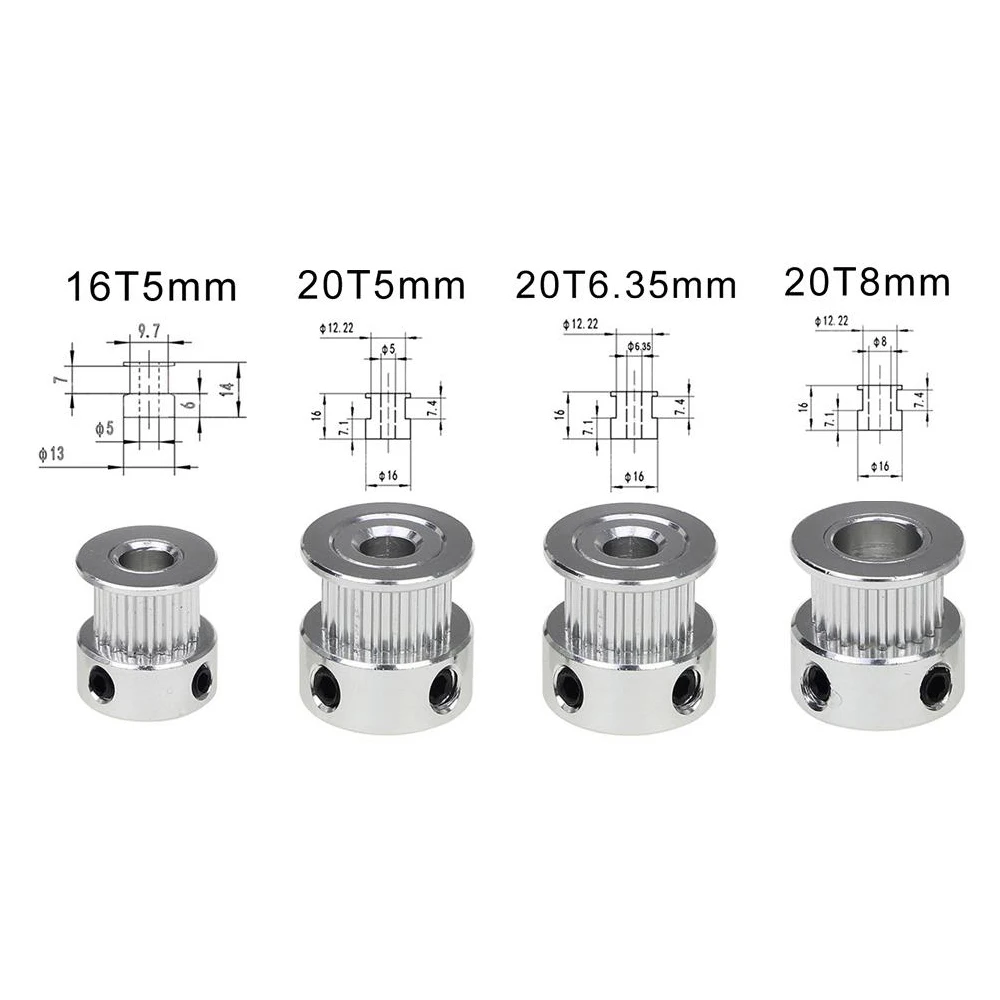
Available in 16-tooth and 20-tooth configurations, these pulleys offer flexibility in configuring motion systems. The tooth count directly influences the linear resolution per motor revolution. A 16-tooth pulley, for instance, provides a different step-per-millimeter value than a 20-tooth pulley when paired with the same belt pitch.
Selecting the appropriate tooth count allows engineers and hobbyists to fine-tune their machine's kinematics. If high speed is prioritized, a larger tooth count might be chosen, while a smaller tooth count can enhance resolution for extremely detailed work. This choice impacts overall machine performance.
This adaptability contrasts sharply with fixed-ratio systems, offering a level of control over motion parameters that is invaluable for custom machine builds. It provides an avenue for optimizing performance for specific application requirements. Flexibility is a key advantage.
Constructed from aluminum alloy, these timing pulleys exhibit excellent durability and a premium feel. Aluminum is chosen for its high strength-to-weight ratio, corrosion resistance, and superior heat dissipation properties. The visible machining quality suggests a component built for demanding environments.
The use of aluminum ensures that the pulleys can withstand the constant friction and forces exerted by the timing belt without deforming or wearing prematurely. This material choice is critical for maintaining the tight tolerances required for precision motion. It provides long-term reliability.
Compared to injection-molded plastic pulleys, which often suffer from inconsistencies in dimension and can degrade under UV light or temperature fluctuations, these aluminum pulleys offer a robust and stable platform. They don't flex under load. The finish is consistent.
The pulleys are offered with multiple bore diameters: 5mm, 6.35mm, and 8mm. These sizes cater to the most common stepper motor shaft diameters found in 3D printers and small CNC machines. Proper bore selection is essential for a secure fit.
A precise fit between the pulley bore and the motor shaft is fundamental to preventing slippage and ensuring accurate power transfer. The inclusion of dual set screws provides an additional layer of security, clamping the pulley firmly to the shaft. This prevents rotational play.
This range of bore options eliminates the need for adapters or modifications, simplifying the assembly process compared to products with limited bore choices. It streamlines integration into existing or new setups. Compatibility is broad.
The design of these GT2 pulleys prioritizes ease of integration into various motion systems. Their standardized GT2 profile and common bore sizes make them a drop-in replacement or an ideal component for new builds. Installation is straightforward.
For those constructing a new 3D printer or upgrading an existing one, the availability of different tooth counts and bore sizes means fewer compromises in design. This flexibility allows for an optimized mechanical setup from the outset. Design choices are expanded.
Unlike proprietary motion components that lock users into specific ecosystems, these open-standard GT2 pulleys offer universal compatibility with GT2-6mm open timing belts. This makes them a versatile choice for a wide array of projects. They are highly adaptable.
The initial investment in quality aluminum timing pulleys, while potentially slightly higher than plastic alternatives, pays dividends in the long run. Their durability and consistent performance reduce the need for frequent replacements or recalibrations. This saves both time and material.
Considering the frustration and material waste associated with failed prints due to motion system inaccuracies, the value proposition of these pulleys becomes clear. They contribute directly to a higher success rate for prints, enhancing overall productivity. Print failures are reduced.
This long-term perspective positions these pulleys not just as components, but as an investment in the reliability and precision of your entire 3D printing or CNC operation. They offer a strong return on investment through improved output quality and reduced maintenance. Performance is sustained.
Imagine the satisfaction of consistently producing intricate parts with smooth surfaces and accurate dimensions, knowing that every component in your motion system is performing optimally. The precision of your machine will be undeniable, allowing you to tackle more ambitious projects with confidence and achieve professional-grade results every time. Your creations will reflect true craftsmanship.
Precision in Motion: The Heart of Linear Actuation
These pulleys feature the widely adopted GT2 tooth profile. This profile is specifically engineered to minimize backlash, a common culprit behind print artifacts like ghosting and ringing. The precise engagement between the pulley teeth and the GT2 timing belt ensures that every step of the stepper motor translates directly into linear motion, without any lost movement or slop.
For a 3D printer, this translates into significantly improved print quality. Imagine a scenario where intricate details and sharp corners are rendered with unwavering accuracy. This is the direct result of a drive system free from play, allowing for exact positioning of the print head. The system achieves high positional accuracy.
Unlike generic or 3D-printed plastic pulleys, which can deform under load or wear quickly, the GT2 aluminum design maintains its exact tooth profile over extended operational periods. This consistency is paramount for repeatable results, especially in long print jobs or continuous production cycles. A stable mechanical foundation is provided.
Tooth Count and Resolution
Available in 16-tooth and 20-tooth configurations, these pulleys offer flexibility in configuring motion systems. The tooth count directly influences the linear resolution per motor revolution. A 16-tooth pulley, for instance, provides a different step-per-millimeter value than a 20-tooth pulley when paired with the same belt pitch.
Selecting the appropriate tooth count allows engineers and hobbyists to fine-tune their machine's kinematics. If high speed is prioritized, a larger tooth count might be chosen, while a smaller tooth count can enhance resolution for extremely detailed work. This choice impacts overall machine performance.
This adaptability contrasts sharply with fixed-ratio systems, offering a level of control over motion parameters that is invaluable for custom machine builds. It provides an avenue for optimizing performance for specific application requirements. Flexibility is a key advantage.
Crafted for Endurance: Materiality and Build
Constructed from aluminum alloy, these timing pulleys exhibit excellent durability and a premium feel. Aluminum is chosen for its high strength-to-weight ratio, corrosion resistance, and superior heat dissipation properties. The visible machining quality suggests a component built for demanding environments.
The use of aluminum ensures that the pulleys can withstand the constant friction and forces exerted by the timing belt without deforming or wearing prematurely. This material choice is critical for maintaining the tight tolerances required for precision motion. It provides long-term reliability.
Compared to injection-molded plastic pulleys, which often suffer from inconsistencies in dimension and can degrade under UV light or temperature fluctuations, these aluminum pulleys offer a robust and stable platform. They don't flex under load. The finish is consistent.
Bore Size and Shaft Integration
The pulleys are offered with multiple bore diameters: 5mm, 6.35mm, and 8mm. These sizes cater to the most common stepper motor shaft diameters found in 3D printers and small CNC machines. Proper bore selection is essential for a secure fit.
A precise fit between the pulley bore and the motor shaft is fundamental to preventing slippage and ensuring accurate power transfer. The inclusion of dual set screws provides an additional layer of security, clamping the pulley firmly to the shaft. This prevents rotational play.
This range of bore options eliminates the need for adapters or modifications, simplifying the assembly process compared to products with limited bore choices. It streamlines integration into existing or new setups. Compatibility is broad.
Integration and Adaptability: Fitting into Your Workflow
The design of these GT2 pulleys prioritizes ease of integration into various motion systems. Their standardized GT2 profile and common bore sizes make them a drop-in replacement or an ideal component for new builds. Installation is straightforward.
For those constructing a new 3D printer or upgrading an existing one, the availability of different tooth counts and bore sizes means fewer compromises in design. This flexibility allows for an optimized mechanical setup from the outset. Design choices are expanded.
Unlike proprietary motion components that lock users into specific ecosystems, these open-standard GT2 pulleys offer universal compatibility with GT2-6mm open timing belts. This makes them a versatile choice for a wide array of projects. They are highly adaptable.
Beyond the Build Plate: Long-Term Value
The initial investment in quality aluminum timing pulleys, while potentially slightly higher than plastic alternatives, pays dividends in the long run. Their durability and consistent performance reduce the need for frequent replacements or recalibrations. This saves both time and material.
Considering the frustration and material waste associated with failed prints due to motion system inaccuracies, the value proposition of these pulleys becomes clear. They contribute directly to a higher success rate for prints, enhancing overall productivity. Print failures are reduced.
This long-term perspective positions these pulleys not just as components, but as an investment in the reliability and precision of your entire 3D printing or CNC operation. They offer a strong return on investment through improved output quality and reduced maintenance. Performance is sustained.
Imagine the satisfaction of consistently producing intricate parts with smooth surfaces and accurate dimensions, knowing that every component in your motion system is performing optimally. The precision of your machine will be undeniable, allowing you to tackle more ambitious projects with confidence and achieve professional-grade results every time. Your creations will reflect true craftsmanship.