Heat Shrink Insulated Butt Connectors
Official Store Deal
Expert Analysis Overview
Precision Connections: The Anatomy of a Reliable Splice
Heat Shrink Insulated Butt Connectors are critical components in modern electrical work, offering a superior method for joining wires compared to traditional crimps or soldering alone. These are not merely basic connectors; they represent a significant upgrade in connection integrity, particularly in environments demanding resilience against moisture and vibration. The engineering behind these terminals focuses on creating a connection that is both electrically sound and environmentally sealed, a dual benefit often overlooked in standard wiring practices. A robust electrical system relies on every junction performing flawlessly.
The Core Engineering: Material Science and Insulation
The construction of these butt connectors begins with a seamless copper barrel. This design choice is fundamental. Unlike seamed barrels that can introduce points of weakness or increased resistance, a seamless barrel ensures uniform conductivity and mechanical strength across the splice. Copper, known for its excellent electrical conductivity, forms the heart of the connection, minimizing voltage drop and heat generation. It's a small detail, but it matters.
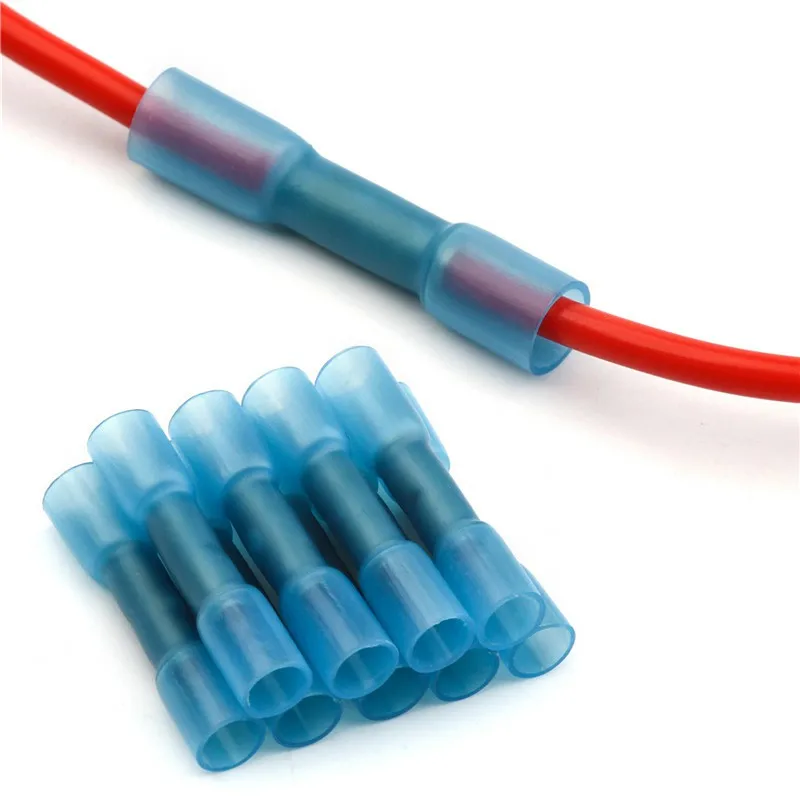
Encasing this conductive core is a dual-wall polyolefin tubing. The outer layer provides robust insulation and abrasion resistance, protecting the connection from physical damage and short circuits. The inner wall, however, is where the true innovation lies: it is lined with a hot-melt adhesive. When heat is applied, this adhesive melts and flows, filling any voids around the wire strands and creating a hermetic seal. This effectively prevents moisture, dust, and corrosive agents from reaching the electrical connection. Such meticulous material selection ensures long-term reliability.
Compared to basic vinyl or nylon insulated crimps, which offer minimal environmental protection, the heat shrink design with adhesive lining provides a vastly superior barrier. Standard crimps often rely solely on the crimp itself for mechanical and electrical integrity, leaving the connection vulnerable to environmental degradation over time. This product elevates the standard for durable electrical repairs.
Connection Integrity: Crimp Performance and Waterproof Seal
Achieving a reliable electrical connection involves two primary factors: the mechanical crimp and the environmental seal. The copper barrel is designed to be crimped onto the stripped wire ends, creating a cold weld that ensures maximum surface contact between the wire and the connector. A proper crimp is essential. The translucent nature of the polyolefin sleeve allows for visual inspection of the crimp, a crucial advantage. This transparency enables technicians to verify that the wire is fully inserted and that the crimp tool has compressed the barrel correctly, preventing common failure points such as loose strands or insufficient contact.
Once the crimp is verified, the application of heat activates the shrink process. The polyolefin tubing shrinks to a fraction of its original diameter, tightly compressing around the wire insulation. Simultaneously, the internal adhesive melts and flows, encapsulating the crimped connection and the exposed wire ends. This creates a waterproof and airtight seal, effectively preventing ingress of moisture, which is a leading cause of corrosion and electrical failure in exposed wiring. Imagine a boat's bilge pump wiring, constantly exposed to damp conditions; a connection made with these terminals will withstand such an environment far better than a non-sealed alternative.
This method dramatically reduces the risk of intermittent connections or complete circuit failure, issues frequently encountered with unsealed splices in automotive, marine, or outdoor lighting applications. The ability to visually confirm the crimp before shrinking provides an additional layer of quality assurance that simpler connectors cannot offer. It is a significant advantage for critical systems.
Thermal Dynamics: Heat Shrink Application and Proper Technique
The effectiveness of these connectors hinges on the correct application of heat. A heat gun is the recommended tool for this process, providing controlled, even heat distribution. While a lighter or torch might seem like a quick alternative, they often lead to uneven shrinking, scorching of the insulation, or insufficient melting of the adhesive, compromising the seal. Even heat is key. The goal is to apply heat uniformly around the connector until the tubing shrinks tightly and the adhesive visibly oozes from the ends, indicating a complete seal.
Proper technique involves moving the heat gun slowly and consistently along the connector, ensuring all sides receive adequate heat. Overheating can damage the wire insulation or the connector itself, while underheating will result in a weak seal and potential moisture ingress. The visual cue of the adhesive flowing out confirms that the internal sealant has activated and formed a complete barrier. This visual feedback is invaluable for ensuring a robust connection.
Compared to soldering, which requires skill, flux, and often additional insulation like electrical tape or separate heat shrink tubing, these connectors offer a more consistent and often faster method for creating sealed connections. Soldering can also create a rigid point in the wire, making it susceptible to fatigue breakage, whereas a properly crimped and shrunk connection maintains some flexibility. The ease of use is a major benefit.
Gauge Versatility: AWG Ranges and Applications
These butt connectors are designed to accommodate a range of wire gauges, typically indicated by color coding: red for AWG 22-18, blue for AWG 16-14, and yellow for AWG 12-10. This color-coding system is an industry standard, simplifying selection and reducing the chance of using an incorrect size. Using the correct gauge connector is paramount for both electrical performance and mechanical integrity. An undersized connector may not adequately crimp the wire, leading to a loose connection and resistance. An oversized connector will fail to provide a secure crimp and seal.
The versatility across these common AWG ranges makes these connectors suitable for a wide array of applications. The red connectors are ideal for low-current circuits found in automotive accessory wiring, small electronics, or alarm systems. Blue connectors handle moderate current loads, common in marine electronics, trailer wiring, or household appliance repairs. Yellow connectors are designed for higher current applications, such as main power feeds, inverter connections, or heavy-duty automotive circuits. This broad compatibility means fewer specialized parts are needed.
This multi-gauge capability positions these connectors as a go-to solution for technicians and DIY enthusiasts alike, eliminating the need to stock numerous single-gauge specific connectors. It streamlines inventory and ensures the right connector is always on hand for common repair and installation tasks. The convenience factor is undeniable.
Longevity in Harsh Environments: Durability Considerations
The primary advantage of heat shrink butt connectors with adhesive is their superior durability in challenging environments. The sealed connection protects against moisture, which can lead to oxidation and corrosion of copper wires, increasing resistance and eventually causing circuit failure. It also guards against exposure to chemicals, oils, and fuels, which can degrade standard PVC insulation over time. This protection extends the operational life of the electrical connection significantly.
Beyond chemical and moisture resistance, the heat shrink tubing provides enhanced strain relief. The tight compression around the wire insulation helps to prevent wires from pulling out of the crimp due to vibration or tension. This is particularly important in mobile applications like vehicles, boats, or industrial machinery where constant movement can stress connections. A secure connection prevents costly repairs.
Unlike connections relying on electrical tape, which can unravel, lose adhesion, or degrade under temperature fluctuations, these heat shrink connectors form a permanent, resilient barrier. The integrated nature of the insulation and seal means fewer points of failure and a more robust overall repair. This translates directly into reduced maintenance and increased system reliability, a crucial factor for any critical electrical system.
The Cost-Benefit Equation: Value Proposition
While the initial per-unit cost of heat shrink butt connectors might be slightly higher than basic uninsulated or vinyl-insulated crimps, their long-term value proposition is compelling. The cost of a failed electrical connection can far outweigh the minor savings on cheaper connectors. Imagine the expense of diagnosing an intermittent fault in a complex wiring harness, or the safety implications of a corroded brake light connection. These connectors prevent such scenarios.
By providing a reliable, waterproof, and mechanically strong connection, these terminals reduce the likelihood of future repairs, saving time, labor, and the cost of replacement parts. For professional installers, this means fewer call-backs and enhanced client satisfaction. For DIY users, it means confidence in their work and avoiding frustrating re-dos. The investment pays off quickly.
Furthermore, the enhanced safety aspect cannot be overstated. A properly insulated and sealed connection reduces the risk of short circuits, electrical fires, and accidental contact with live wires. This peace of mind is an invaluable return on investment. The overall efficiency and reliability they bring to any electrical project make them an economical choice in the long run.
Installation Nuances: Best Practices
Successful installation requires attention to detail. First, ensure the wires are stripped to the correct length, typically matching the length of the metal barrel within the connector. Too short, and the crimp is weak; too long, and exposed wire could short. Second, use a ratcheting crimping tool designed for insulated terminals. These tools ensure consistent, factory-grade crimps by requiring a full cycle before releasing, preventing partial or weak crimps. A good crimp is paramount.
After crimping, position the connector centrally over the splice. Apply heat from the center outwards, rotating the connector to ensure even shrinkage. Observe the tubing as it shrinks and the adhesive as it flows. A small bead of adhesive should be visible at both ends of the connector, confirming a complete seal. Allow the connector to cool completely before stressing the connection. This ensures the adhesive sets properly.
Finally, perform a gentle tug test on both wires to confirm mechanical integrity. A properly crimped and shrunk connection will resist moderate pulling. This simple step can identify a weak crimp before it causes problems down the line. Adhering to these best practices ensures the full benefits of these advanced connectors are realized.
The Professional's Edge: Why These Over Alternatives
For professionals in automotive, marine, or industrial electrical fields, these heat shrink butt connectors are not just an option; they are often a necessity. They provide a level of reliability and environmental protection that standard crimps or even soldered connections without additional sealing cannot match. The ability to quickly create a robust, sealed connection saves valuable time on the job site. Time is money.
Consider the reputation of a technician or shop. Using high-quality, sealed connectors reflects a commitment to durable, professional-grade work. It minimizes the chances of warranty claims or customer dissatisfaction due to premature electrical failures. This product helps maintain high standards.
Unlike traditional methods that might require multiple steps – crimping, then taping, then applying separate heat shrink – these connectors integrate insulation and sealing into a single, efficient component. This streamlines the repair process, making it faster and more consistent. The integrated design simplifies complex tasks.
Conclusion: Wiring with Confidence
Imagine completing an intricate wiring project, knowing every connection is not just electrically sound, but also impervious to the elements. Picture your vehicle's auxiliary lights functioning flawlessly through heavy rain, or your boat's navigation system remaining operational despite constant exposure to saltwater spray. Envision the satisfaction of a repair that stands the test of time, free from the worries of corrosion or intermittent faults. These heat shrink insulated butt connectors deliver that confidence, transforming potentially vulnerable splices into durable, long-lasting junctions. They are an essential upgrade for anyone serious about the integrity and longevity of their electrical systems, ensuring your circuits perform reliably for years to come.