HH52P HH53P HH54P Miniature Electromagnetic Control Relays
Official Store Deal
Expert Analysis Overview
Precision Switching for Industrial Control
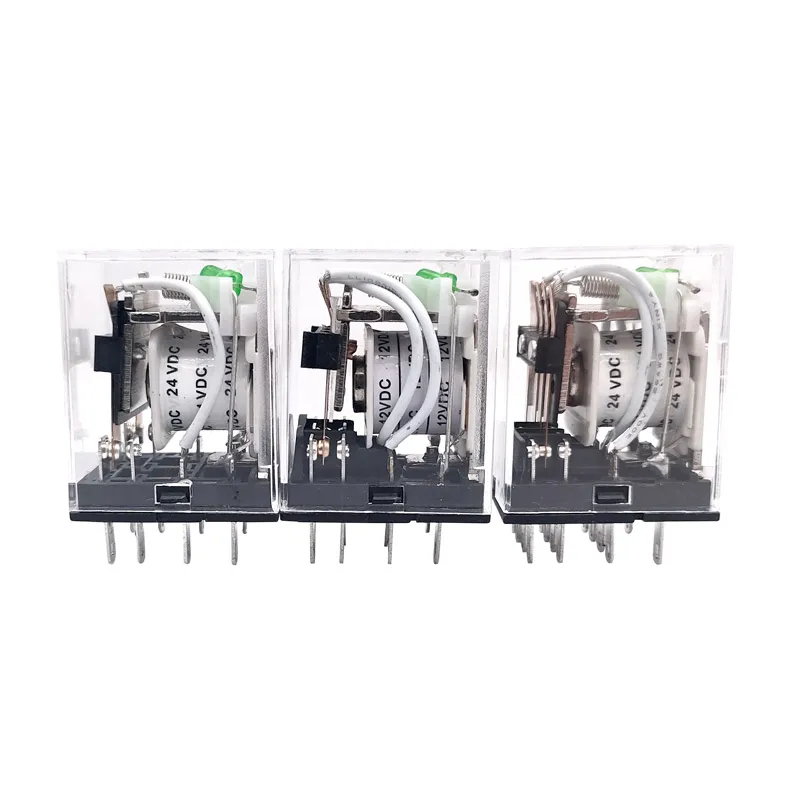
The HH52P, HH53P, and HH54P series of miniature electromagnetic relays represent a foundational component for robust industrial control systems, specifically engineered for precise signal switching and circuit isolation. These devices are critical for applications demanding reliable control over various electrical loads, from motor starters to lighting circuits. Their compact design allows for integration into crowded control panels without compromising performance. This series offers a significant upgrade over basic mechanical switches by providing electrical isolation between the control circuit and the load circuit, enhancing safety and system longevity. The visible construction suggests a focus on functional clarity and straightforward installation.
Coil Voltage Versatility
These relays are available with multiple coil voltage options, including DC 6V, 12V, 24V, and AC 220V. This broad range ensures compatibility with diverse power supply configurations commonly found in automation and control environments. Selecting the correct coil voltage is paramount for proper operation. An incorrect voltage can lead to coil overheating or insufficient magnetic force, preventing proper contact closure. The coil voltage dictates the control signal required to energize the relay. This flexibility allows engineers to integrate these relays into existing systems without extensive power supply modifications.
Unlike single-voltage relays, this series provides options for both low-voltage DC control and standard AC line voltage control. This adaptability is crucial for systems that might interface with different control logic levels or power distribution schemes. For instance, a 24V DC coil is ideal for PLC outputs, while a 220V AC coil suits direct control from mains power. This versatility minimizes the need for external voltage conversion components, simplifying system design. Proper voltage matching prevents premature component failure.
Contact Configuration and Load Management
The HH52P, HH53P, and HH54P designations refer to their contact configurations: HH52P typically indicates a DPDT (Double Pole Double Throw) setup, HH53P a 3PDT (Triple Pole Double Throw), and HH54P a 4PDT (Quadruple Pole Double Throw). These multiple contact sets allow for simultaneous switching of several independent circuits or complex control logic. Each contact set can handle a specific current and voltage rating, which must be carefully observed to prevent overloading. Overloading contacts can cause arcing, welding, and ultimately, relay failure. The number of poles directly impacts the complexity of the circuits that can be controlled.
For example, a 4PDT relay can switch four separate circuits with a single control signal. This capability is invaluable in applications requiring synchronized control of multiple outputs. The visible contact points appear robust, suggesting a reasonable current carrying capacity for miniature relays. Verifying the actual contact ratings against the load requirements is a critical step in system design. This ensures operational safety and extends the lifespan of the relay. Proper load management is essential.
Compared to simpler SPDT (Single Pole Double Throw) relays, the HH5xP series offers significantly increased control flexibility. This allows for more intricate interlocking, sequencing, and feedback loops within an automation system. The ability to switch multiple lines simultaneously reduces component count and wiring complexity, leading to more streamlined and reliable control panels. This multi-pole design is a clear advantage for complex control tasks.
Visual Indication and Enclosure Integrity
Many variants of these relays include an integrated LED indicator, as suggested by the product title. This LED provides immediate visual feedback on the coil's energized state, simplifying troubleshooting and system diagnostics. A glowing LED confirms that the control signal is present and the coil is active. This feature is invaluable during commissioning and maintenance. It quickly identifies control circuit issues.
The transparent housing, clearly visible in the product images, offers a distinct advantage. It allows for visual inspection of the internal components, including the coil, contacts, and armature movement. This transparency aids in identifying potential issues such as contact wear, debris accumulation, or mechanical binding without disassembling the unit. It provides a quick health check. This level of visibility is not always present in opaque relay designs.
Unlike fully enclosed relays, the transparent case allows for a rapid assessment of the relay's mechanical state. This can be particularly useful in high-density control panels where quick fault identification is crucial to minimize downtime. The clear casing also helps in verifying proper contact operation during manual testing. This design choice prioritizes ease of inspection and maintenance. The visual feedback is immediate.
Terminal Quality and Mounting
The relays feature standard plug-in terminals, designed for insertion into compatible relay sockets. This modular design facilitates easy installation, replacement, and maintenance. The terminals themselves appear to be constructed from a conductive alloy, likely copper or brass, ensuring good electrical conductivity. Secure terminal connections are vital for preventing resistance buildup and localized heating. Loose connections can lead to intermittent operation or even fire hazards. Proper seating in the socket is crucial.
The quality of the terminal pins directly impacts the long-term reliability of the connection. Visible pins appear straight and uniform, indicating good manufacturing consistency. When installing, ensuring the pins are clean and free from oxidation is important for optimal contact. The plug-in design also means that a faulty relay can be swapped out quickly without rewiring, significantly reducing maintenance time. This modularity is a key benefit.
Compared to screw-terminal relays, the plug-in design offers faster installation and replacement. While screw terminals provide a more permanent connection, the plug-in format is preferred in applications where frequent component changes or rapid troubleshooting are anticipated. The compatibility with standard relay bases makes these units highly interchangeable. This simplifies inventory management. The connection is secure.
Safety and Compliance Considerations
As a Certified Electrician, the primary concern with any electrical component is safety. These miniature relays, while designed for control applications, must be installed and operated within their specified voltage and current limits. Exceeding these ratings can lead to overheating, insulation breakdown, and potential fire hazards. Proper wire gauge selection for both the coil and contact circuits is non-negotiable. The wire must be rated to safely carry the maximum expected current. This prevents dangerous thermal events.
Ensuring compliance with local electrical codes and safety standards (e.g., UL, CE) is also critical. While the product images do not explicitly show certification marks, it is the responsibility of the installer to verify these for the specific application. The transparent housing, while beneficial for inspection, does not imply suitability for harsh environments without additional protective enclosures. Always verify environmental ratings. Electrical safety is paramount.
Unlike generic, uncertified components, reputable relays undergo rigorous testing to ensure their performance and safety under various conditions. While these relays offer a cost-effective solution, it is imperative to confirm their suitability for the intended environment and load. Proper grounding and circuit protection, such as fuses or circuit breakers, must always be implemented upstream of the relay. This safeguards both the equipment and personnel. Never compromise on safety standards.
Value Proposition and Application
These miniature electromagnetic relays offer a compelling value proposition for a wide array of control applications. Their low cost, combined with versatile voltage options and multiple contact configurations, makes them an attractive choice for both industrial automation and hobbyist projects. They provide an economical means to achieve complex switching logic and circuit isolation. The transparent design adds practical value for diagnostics. This is a cost-effective solution.
Consider their use in HVAC systems for controlling fan motors or compressor contactors, in security systems for alarm triggers, or in DIY projects for home automation. Their ability to handle both AC and DC loads, within their specified limits, makes them highly adaptable. The modular plug-in design further enhances their appeal by simplifying installation and maintenance. They are truly versatile components.
Imagine a control panel where every relay's status is instantly visible, simplifying troubleshooting and reducing downtime. Picture a system where complex interlocking logic is achieved with reliable, easily replaceable components. These relays empower engineers and enthusiasts to build robust, maintainable electrical control systems with confidence, ensuring smooth and safe operation for years to come. The efficiency gains are substantial.