High-Strength Carbon Steel Hex Socket Screws
Official Store Deal
Expert Analysis Overview
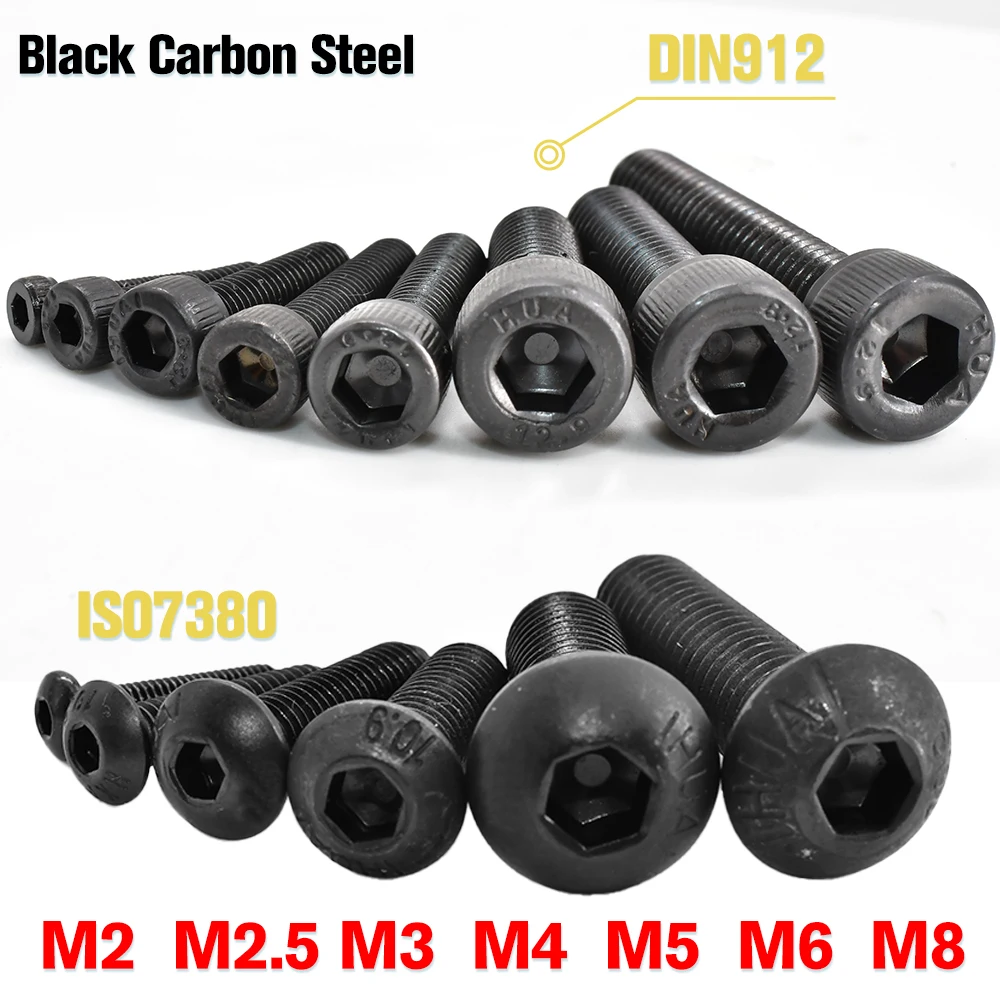
The High-Strength Carbon Steel Hex Socket Screws are a critical fastening solution for any serious cabinet maker or mechanical assembly professional, offering exceptional tensile strength and reliable installation. This collection of fasteners, encompassing both DIN912 hex socket cap heads and ISO7380 hex socket button heads, represents a significant upgrade over standard Hardware, providing the foundational integrity necessary for durable constructions. Its robust nature is immediately apparent.
Central to the superior performance of these fasteners is their construction from black carbon steel, available in property classes G10.9 and G12.9. These designations are not merely arbitrary numbers; they signify the ultimate tensile strength and yield strength of the material, critical metrics for any load-bearing application where failure is not an option. For instance, a G12.9 screw boasts a minimum tensile strength of 1220 MPa (megapascals) and a yield strength of 1100 MPa. This far exceeds the performance envelope of common Grade 8.8 bolts found in many general hardware stores, which typically offer 800 MPa tensile and 640 MPa yield strength. This strength is paramount. Understanding these grades is vital for selecting the appropriate fastener for the intended load.
In the demanding environment of a professional workshop, this translates directly to profound peace of mind. Imagine securing a heavy cabinet carcass, installing substantial drawer slides, or fastening critical structural elements within a commercial fixture. Unlike fasteners made from softer, lower-grade steel that might strip under the high torque required for a secure joint, or shear under the dynamic loads of daily use, these carbon steel screws maintain their integrity. They ensure the joint remains solid and true, resisting the forces that lead to loosening or catastrophic failure. The material's inherent hardness and carefully controlled microstructure resist deformation, even when subjected to significant stress over extended periods. This prevents costly rework and warranty claims.
Compared to the ubiquitous stainless steel fasteners often chosen primarily for their corrosion resistance, these carbon steel variants, particularly at G10.9 and G12.9, offer a dramatically higher shear and tensile strength. While stainless steel excels in preventing rust, it frequently sacrifices ultimate mechanical strength, making it less suitable for high-stress applications. For scenarios where structural integrity and load-bearing capacity are paramount—such as securing heavy machinery components, assembling robust jigs, or constructing furniture designed for heavy use—the superior mechanical properties of these carbon steel screws provide a distinct advantage. They are the preferred choice for demanding tasks where strength cannot be compromised. Stainless steel has its place, but not everywhere.
The detailed dimension tables presented with these fasteners confirm the precision engineering applied to their manufacturing, particularly concerning thread diameter, pitch, and head dimensions. Consistency in these measurements is non-negotiable for achieving reliable and repeatable fastening results. The tight tolerances indicated for parameters like 'dk' (head diameter) and 'k' (head height) ensure a uniform fit and finish across every screw in a batch, a hallmark of quality production. This attention to detail is essential for professional-grade work. Every dimension matters.
When assembling intricate joinery, installing precision hardware, or working with materials that have tight clearances, the accuracy of these threads becomes immediately evident. The screws engage smoothly and consistently, without the gritty feel, binding, or excessive resistance often associated with poorly manufactured fasteners. This precise engagement minimizes the risk of cross-threading, a common and frustrating issue that can permanently damage both the screw and the receiving material, leading to compromised structural integrity and wasted components. A clean thread is a strong thread, and these provide exactly that. It's about seamless installation.
This level of dimensional accuracy significantly surpasses that of generic, unbranded screws where variations in thread pitch, root diameter, or crest diameter can lead to loose connections, stripped holes, or an inability to achieve proper torque. Such inconsistencies force a cabinet maker to often pre-test fasteners, sort through batches, or even discard a percentage of screws, leading to inefficiency and increased material costs. With these precision-machined screws, the expectation is a reliable, consistent fit every single time, reducing waste, improving assembly efficiency, and ultimately contributing to a higher quality final product. It ensures consistent performance, project after project. You expect it to work.
The strategic choice of a hex socket drive for both the DIN912 cap head and ISO7380 button head screws is a deliberate design decision that prioritizes maximum performance and reliability during installation. Unlike traditional Phillips or slotted drives, which are notoriously prone to cam-out under high torque, the hexagonal recess provides a full six points of contact for the hex key or driver bit. This design maximizes torque transfer from the tool to the fastener, allowing for superior tightening without risking damage to the screw head. Stripping is less likely. This is a significant ergonomic and practical benefit.
Consider the scenario of driving a long screw into dense, unforgiving hardwood, or tightening a fastener in a confined space where leverage is limited. With a Phillips head, the bit might slip out multiple times, not only marring the screw head but potentially damaging the surrounding workpiece and frustrating the assembler. The hex socket, however, allows for consistent, direct force application, enabling the screw to be driven fully and securely to its intended torque specification without slippage or damage. This is particularly beneficial in high-volume production environments where speed and reliability are paramount, or for critical structural connections where a tight, uncompromised fit is absolutely necessary for safety and longevity. The engagement is solid and dependable, every single time. It just works.
This superior torque transmission mechanism contrasts sharply with traditional drive types, which, while convenient for low-torque, non-critical applications, simply cannot match the hex socket's ability to withstand significant rotational force without deforming. For the professional cabinet maker or machinist, this means fewer stripped heads, less frustration, reduced tool wear, and ultimately, a more secure and aesthetically pleasing final product. It represents a significant operational advantage that directly impacts project quality and efficiency. The tool bites deep, holding firm. This design is a clear indicator of a fastener built for serious work.
The black carbon steel finish offers a compelling dual benefit: enhanced surface corrosion resistance and a visually discreet aesthetic. The dark coating, typically a black oxide or similar chemical conversion treatment, provides a robust barrier against common environmental factors that could lead to rust and degradation of the underlying steel. This protective layer is crucial for the long-term integrity and appearance of the fastener, especially in environments where humidity or occasional moisture exposure is a concern. This layer adds vital protection. It's more than just color.
For furniture construction and mechanical assemblies, the black finish integrates seamlessly with dark wood tones, contemporary metal hardware, or modern industrial designs, rendering the fasteners significantly less conspicuous than bright zinc-plated or raw stainless steel alternatives. This allows the screw to recede into the background, letting the craftsmanship and design of the piece take center stage, rather than drawing attention to the fastening points. The visual impact is subtle and sophisticated. Imagine a sleek, minimalist credenza or a high-tech equipment enclosure where every exposed fastener is meant to blend rather than stand out; these screws achieve that desired aesthetic with effortless ease, contributing to a clean, professional appearance. This is crucial for high-end work.
While this black finish does not offer the same extreme corrosion resistance as specialized marine-grade stainless steel or heavily galvanized fasteners, it provides ample protection for a vast majority of indoor applications and moderately humid environments. It significantly outperforms bare steel, which would quickly succumb to oxidation. This protective layer prevents the unsightly rust stains that can bleed onto wood or other materials over time, preserving both the aesthetic and material integrity of the finished product. This is a practical consideration that extends the lifespan and visual appeal of any assembled item. It keeps things looking good for longer. The finish is a thoughtful addition.
The availability of both DIN912 hex socket cap head and ISO7380 hex socket button head screws within this product offering provides crucial versatility for a broad range of applications. The cap head, characterized by its cylindrical profile and taller height, is engineered for maximum clamping force and robust engagement. It is ideal for heavy-duty applications where the head can sit proud, or more commonly, be recessed into a counterbored hole to achieve a flush finish. Its robust nature is undeniable, making it a workhorse fastener. This design maximizes material around the socket.
The button head, conversely, features a lower, domed, and wider profile. This makes it particularly suitable for applications where a more aesthetically pleasing, less obtrusive finish is desired, or where vertical clearance is limited, preventing the use of a taller cap head. While offering slightly less overall clamping force than a cap head of the same nominal diameter due to its lower profile, its wider bearing surface can be advantageous on softer materials. This wider surface distributes the load more effectively, helping to prevent pull-through or crushing of the material. A smooth profile is often preferred for exposed surfaces. It offers a cleaner look.
This dual-head offering empowers the cabinet maker and mechanical assembler to select the optimal fastener for each specific joint and aesthetic requirement. For structural elements demanding maximum strength and resilience against shear forces, the cap head excels. For visible connections on finished surfaces, or in areas where a snag-free profile is beneficial, the button head provides a cleaner, more refined look. This flexibility ensures that both structural integrity and aesthetic harmony are achieved in the final assembly, without requiring compromises in either aspect. Different needs, different heads, but consistent quality across both. This versatility is a true asset.
The extensive range of available thread diameters, from M2 up to M8 (and even M10, M12, M16 for the DIN912 standard), ensures these fasteners are suitable for an incredibly broad spectrum of projects. This comprehensive sizing means a cabinet maker can rely on a single, trusted source for high-quality fasteners, whether working on delicate hardware installation, intricate jig assembly, or robust structural joinery for large furniture pieces. Every size is covered, from the minuscule to the substantial. This simplifies inventory management.
This wide availability eliminates the common frustration of needing to source different fastener types or materials from multiple suppliers for various project scales. For instance, the smaller M2 or M2.5 screws are perfectly suited for attaching miniature hinges, securing delicate electronic components within a cabinet, or fastening decorative elements where precision is paramount. Conversely, the larger M6 or M8 screws provide the necessary strength and engagement for securing heavy table legs, structural cabinet frames, or mounting machinery components that experience significant stress. Project requirements vary widely, and this range accommodates them all. It's about having the right tool for the job.
Compared to limited-selection hardware kits that often force compromises, this broad metric range provides the professional with the precise dimensions required for truly accurate and strong work, avoiding the need for makeshift solutions or adapting fasteners that are not quite right. It streamlines the procurement process, reduces the likelihood of project delays due to incorrect parts, and ensures that the right fastener is always on hand for the task at hand. This comprehensive sizing is a testament to the product's utility and value for the professional. It enhances operational efficiency significantly. No more hunting for odd sizes.
Ultimately, these high-strength carbon steel hex socket screws are more than just simple fasteners; they are precision-engineered components designed to provide superior performance, unwavering strength, and lasting longevity in the most demanding applications. The combination of high-grade material (G10.9/G12.9), meticulously precise threading, robust hex socket drive systems, and a protective, aesthetically pleasing black finish makes them an indispensable asset for any professional seeking to build structures that not only look exceptional but also endure the rigors of time and use. Investing in quality fasteners is not merely an expense; it is a fundamental investment in the integrity, safety, and reputation of the finished product itself. Imagine the profound satisfaction of presenting a meticulously crafted piece of furniture or a robust mechanical assembly, knowing that every joint is held with unwavering strength, built to withstand years of active use without a single failure. The subtle black heads blend seamlessly into the design, their presence felt only in the unwavering stability and structural confidence they provide. This is the undeniable hallmark of true craftsmanship, consistently supported and reinforced by the absolute reliability of the right hardware.
The Unyielding Core: Material Science and Strength Ratings
Central to the superior performance of these fasteners is their construction from black carbon steel, available in property classes G10.9 and G12.9. These designations are not merely arbitrary numbers; they signify the ultimate tensile strength and yield strength of the material, critical metrics for any load-bearing application where failure is not an option. For instance, a G12.9 screw boasts a minimum tensile strength of 1220 MPa (megapascals) and a yield strength of 1100 MPa. This far exceeds the performance envelope of common Grade 8.8 bolts found in many general hardware stores, which typically offer 800 MPa tensile and 640 MPa yield strength. This strength is paramount. Understanding these grades is vital for selecting the appropriate fastener for the intended load.
In the demanding environment of a professional workshop, this translates directly to profound peace of mind. Imagine securing a heavy cabinet carcass, installing substantial drawer slides, or fastening critical structural elements within a commercial fixture. Unlike fasteners made from softer, lower-grade steel that might strip under the high torque required for a secure joint, or shear under the dynamic loads of daily use, these carbon steel screws maintain their integrity. They ensure the joint remains solid and true, resisting the forces that lead to loosening or catastrophic failure. The material's inherent hardness and carefully controlled microstructure resist deformation, even when subjected to significant stress over extended periods. This prevents costly rework and warranty claims.
Compared to the ubiquitous stainless steel fasteners often chosen primarily for their corrosion resistance, these carbon steel variants, particularly at G10.9 and G12.9, offer a dramatically higher shear and tensile strength. While stainless steel excels in preventing rust, it frequently sacrifices ultimate mechanical strength, making it less suitable for high-stress applications. For scenarios where structural integrity and load-bearing capacity are paramount—such as securing heavy machinery components, assembling robust jigs, or constructing furniture designed for heavy use—the superior mechanical properties of these carbon steel screws provide a distinct advantage. They are the preferred choice for demanding tasks where strength cannot be compromised. Stainless steel has its place, but not everywhere.
Engineered Precision: The Art of Thread Engagement
The detailed dimension tables presented with these fasteners confirm the precision engineering applied to their manufacturing, particularly concerning thread diameter, pitch, and head dimensions. Consistency in these measurements is non-negotiable for achieving reliable and repeatable fastening results. The tight tolerances indicated for parameters like 'dk' (head diameter) and 'k' (head height) ensure a uniform fit and finish across every screw in a batch, a hallmark of quality production. This attention to detail is essential for professional-grade work. Every dimension matters.
When assembling intricate joinery, installing precision hardware, or working with materials that have tight clearances, the accuracy of these threads becomes immediately evident. The screws engage smoothly and consistently, without the gritty feel, binding, or excessive resistance often associated with poorly manufactured fasteners. This precise engagement minimizes the risk of cross-threading, a common and frustrating issue that can permanently damage both the screw and the receiving material, leading to compromised structural integrity and wasted components. A clean thread is a strong thread, and these provide exactly that. It's about seamless installation.
This level of dimensional accuracy significantly surpasses that of generic, unbranded screws where variations in thread pitch, root diameter, or crest diameter can lead to loose connections, stripped holes, or an inability to achieve proper torque. Such inconsistencies force a cabinet maker to often pre-test fasteners, sort through batches, or even discard a percentage of screws, leading to inefficiency and increased material costs. With these precision-machined screws, the expectation is a reliable, consistent fit every single time, reducing waste, improving assembly efficiency, and ultimately contributing to a higher quality final product. It ensures consistent performance, project after project. You expect it to work.
The Unwavering Grip: Hex Socket Drive System
The strategic choice of a hex socket drive for both the DIN912 cap head and ISO7380 button head screws is a deliberate design decision that prioritizes maximum performance and reliability during installation. Unlike traditional Phillips or slotted drives, which are notoriously prone to cam-out under high torque, the hexagonal recess provides a full six points of contact for the hex key or driver bit. This design maximizes torque transfer from the tool to the fastener, allowing for superior tightening without risking damage to the screw head. Stripping is less likely. This is a significant ergonomic and practical benefit.
Consider the scenario of driving a long screw into dense, unforgiving hardwood, or tightening a fastener in a confined space where leverage is limited. With a Phillips head, the bit might slip out multiple times, not only marring the screw head but potentially damaging the surrounding workpiece and frustrating the assembler. The hex socket, however, allows for consistent, direct force application, enabling the screw to be driven fully and securely to its intended torque specification without slippage or damage. This is particularly beneficial in high-volume production environments where speed and reliability are paramount, or for critical structural connections where a tight, uncompromised fit is absolutely necessary for safety and longevity. The engagement is solid and dependable, every single time. It just works.
This superior torque transmission mechanism contrasts sharply with traditional drive types, which, while convenient for low-torque, non-critical applications, simply cannot match the hex socket's ability to withstand significant rotational force without deforming. For the professional cabinet maker or machinist, this means fewer stripped heads, less frustration, reduced tool wear, and ultimately, a more secure and aesthetically pleasing final product. It represents a significant operational advantage that directly impacts project quality and efficiency. The tool bites deep, holding firm. This design is a clear indicator of a fastener built for serious work.
The Subtle Shield: Aesthetic and Protective Finish
The black carbon steel finish offers a compelling dual benefit: enhanced surface corrosion resistance and a visually discreet aesthetic. The dark coating, typically a black oxide or similar chemical conversion treatment, provides a robust barrier against common environmental factors that could lead to rust and degradation of the underlying steel. This protective layer is crucial for the long-term integrity and appearance of the fastener, especially in environments where humidity or occasional moisture exposure is a concern. This layer adds vital protection. It's more than just color.
For furniture construction and mechanical assemblies, the black finish integrates seamlessly with dark wood tones, contemporary metal hardware, or modern industrial designs, rendering the fasteners significantly less conspicuous than bright zinc-plated or raw stainless steel alternatives. This allows the screw to recede into the background, letting the craftsmanship and design of the piece take center stage, rather than drawing attention to the fastening points. The visual impact is subtle and sophisticated. Imagine a sleek, minimalist credenza or a high-tech equipment enclosure where every exposed fastener is meant to blend rather than stand out; these screws achieve that desired aesthetic with effortless ease, contributing to a clean, professional appearance. This is crucial for high-end work.
While this black finish does not offer the same extreme corrosion resistance as specialized marine-grade stainless steel or heavily galvanized fasteners, it provides ample protection for a vast majority of indoor applications and moderately humid environments. It significantly outperforms bare steel, which would quickly succumb to oxidation. This protective layer prevents the unsightly rust stains that can bleed onto wood or other materials over time, preserving both the aesthetic and material integrity of the finished product. This is a practical consideration that extends the lifespan and visual appeal of any assembled item. It keeps things looking good for longer. The finish is a thoughtful addition.
Adaptability in Form: Cap Head versus Button Head Dynamics
The availability of both DIN912 hex socket cap head and ISO7380 hex socket button head screws within this product offering provides crucial versatility for a broad range of applications. The cap head, characterized by its cylindrical profile and taller height, is engineered for maximum clamping force and robust engagement. It is ideal for heavy-duty applications where the head can sit proud, or more commonly, be recessed into a counterbored hole to achieve a flush finish. Its robust nature is undeniable, making it a workhorse fastener. This design maximizes material around the socket.
The button head, conversely, features a lower, domed, and wider profile. This makes it particularly suitable for applications where a more aesthetically pleasing, less obtrusive finish is desired, or where vertical clearance is limited, preventing the use of a taller cap head. While offering slightly less overall clamping force than a cap head of the same nominal diameter due to its lower profile, its wider bearing surface can be advantageous on softer materials. This wider surface distributes the load more effectively, helping to prevent pull-through or crushing of the material. A smooth profile is often preferred for exposed surfaces. It offers a cleaner look.
This dual-head offering empowers the cabinet maker and mechanical assembler to select the optimal fastener for each specific joint and aesthetic requirement. For structural elements demanding maximum strength and resilience against shear forces, the cap head excels. For visible connections on finished surfaces, or in areas where a snag-free profile is beneficial, the button head provides a cleaner, more refined look. This flexibility ensures that both structural integrity and aesthetic harmony are achieved in the final assembly, without requiring compromises in either aspect. Different needs, different heads, but consistent quality across both. This versatility is a true asset.
The Spectrum of Scale: Comprehensive Sizing for Every Project
The extensive range of available thread diameters, from M2 up to M8 (and even M10, M12, M16 for the DIN912 standard), ensures these fasteners are suitable for an incredibly broad spectrum of projects. This comprehensive sizing means a cabinet maker can rely on a single, trusted source for high-quality fasteners, whether working on delicate hardware installation, intricate jig assembly, or robust structural joinery for large furniture pieces. Every size is covered, from the minuscule to the substantial. This simplifies inventory management.
This wide availability eliminates the common frustration of needing to source different fastener types or materials from multiple suppliers for various project scales. For instance, the smaller M2 or M2.5 screws are perfectly suited for attaching miniature hinges, securing delicate electronic components within a cabinet, or fastening decorative elements where precision is paramount. Conversely, the larger M6 or M8 screws provide the necessary strength and engagement for securing heavy table legs, structural cabinet frames, or mounting machinery components that experience significant stress. Project requirements vary widely, and this range accommodates them all. It's about having the right tool for the job.
Compared to limited-selection hardware kits that often force compromises, this broad metric range provides the professional with the precise dimensions required for truly accurate and strong work, avoiding the need for makeshift solutions or adapting fasteners that are not quite right. It streamlines the procurement process, reduces the likelihood of project delays due to incorrect parts, and ensures that the right fastener is always on hand for the task at hand. This comprehensive sizing is a testament to the product's utility and value for the professional. It enhances operational efficiency significantly. No more hunting for odd sizes.
Final Assessment: The Professional's Indispensable Choice
Ultimately, these high-strength carbon steel hex socket screws are more than just simple fasteners; they are precision-engineered components designed to provide superior performance, unwavering strength, and lasting longevity in the most demanding applications. The combination of high-grade material (G10.9/G12.9), meticulously precise threading, robust hex socket drive systems, and a protective, aesthetically pleasing black finish makes them an indispensable asset for any professional seeking to build structures that not only look exceptional but also endure the rigors of time and use. Investing in quality fasteners is not merely an expense; it is a fundamental investment in the integrity, safety, and reputation of the finished product itself. Imagine the profound satisfaction of presenting a meticulously crafted piece of furniture or a robust mechanical assembly, knowing that every joint is held with unwavering strength, built to withstand years of active use without a single failure. The subtle black heads blend seamlessly into the design, their presence felt only in the unwavering stability and structural confidence they provide. This is the undeniable hallmark of true craftsmanship, consistently supported and reinforced by the absolute reliability of the right hardware.