HUI KE HK19F DPDT Mini Power Relays (10-Pack)
Official Store Deal
Expert Analysis Overview
The HUI KE HK19F DPDT Mini Power Relay is a critical electromechanical switching component designed for printed circuit board (PCB) integration in low-power control applications. This relay series, offered in a convenient 10-pack, provides reliable double-pole double-throw (DPDT) switching capability across various common DC coil voltages, making it suitable for a broad spectrum of electronic projects and industrial control systems. Its compact form factor and standardized pinout facilitate straightforward integration into new designs or as a replacement part.
These HK19F relays are engineered for precise control. They offer a robust solution for isolating control circuits from load circuits. The DPDT configuration allows for versatile switching operations. This means two separate circuits can be controlled simultaneously. Each pole includes both a normally open (NO) and a normally closed (NC) contact, providing flexibility in circuit design. This dual-contact arrangement is essential for applications requiring both make and break functionality within a single relay.
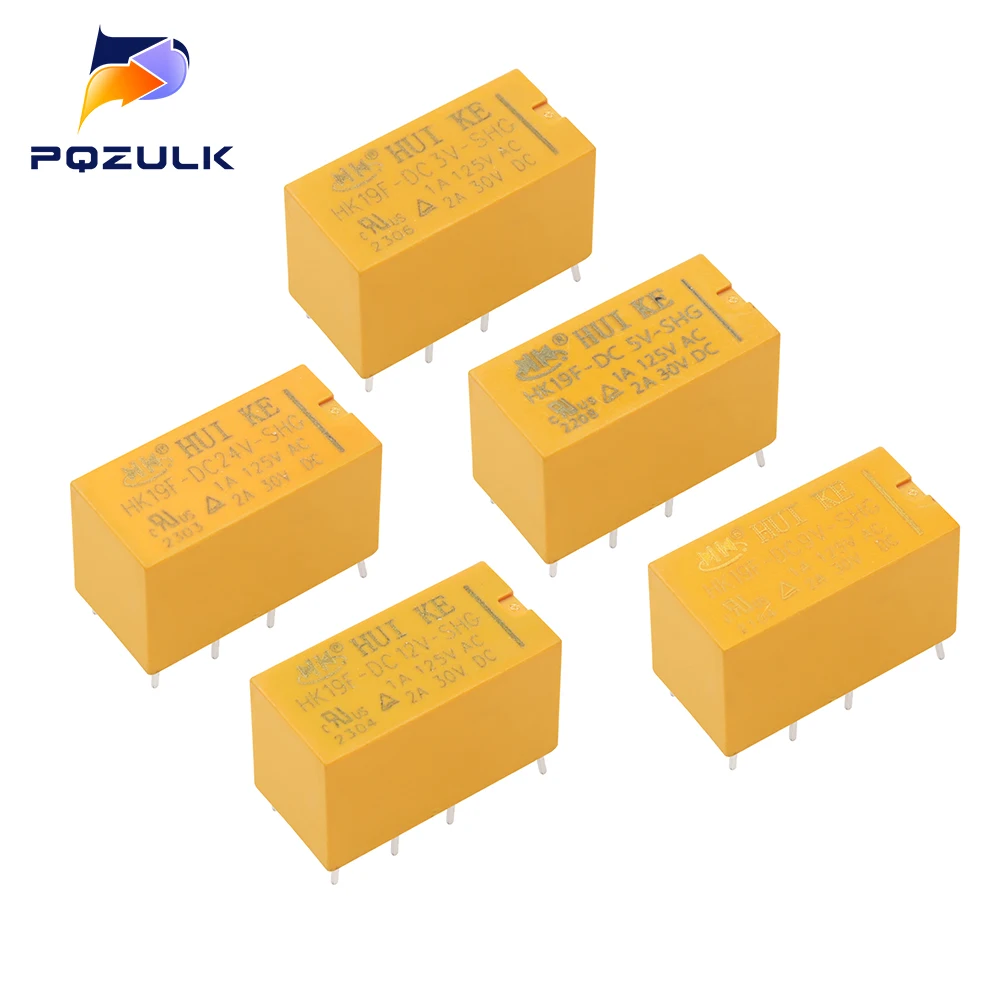
The visible construction indicates a sealed, rectangular housing. This protects internal components from environmental contaminants. Such sealing is crucial for maintaining long-term operational integrity, especially in environments where dust or moisture could compromise performance. Unlike open-frame relays, these units minimize the risk of contact contamination, which can lead to intermittent operation or premature failure. This design choice extends the operational lifespan of the device.
This particular offering includes relays with coil voltage options spanning 3V DC, 5V DC, 9V DC, 12V DC, and 24V DC. This wide range ensures compatibility with most standard low-voltage control systems. Engineers can select the precise voltage required for their specific microcontroller or control logic. This eliminates the need for external voltage conversion circuitry in many cases. The availability of multiple coil voltages in a single product line simplifies procurement and inventory management for designers working on diverse projects.
Each relay is rated for 1A at 125V AC and 2A at 30V DC. These ratings define the maximum current and voltage that the contacts can safely switch. Adhering to these specifications is paramount for preventing contact welding or premature degradation. Overloading contacts can lead to dangerous overheating and potential fire hazards. Proper load matching ensures the relay operates within its intended electrical limits, safeguarding both the relay and the connected equipment. Always verify load requirements before installation.
The visible yellow casing suggests a durable plastic enclosure. This material choice typically offers good electrical insulation properties. The casing protects the internal coil and contact mechanisms from physical damage. The underside view of one relay clearly shows eight metallic pins, arranged for through-hole mounting. These pins are crucial for establishing reliable electrical connections to the PCB. The quality of these terminals directly impacts the long-term reliability of the soldered joint.
Terminal quality is a significant concern for any PCB-mounted component. Poorly formed or plated pins can lead to cold solder joints or increased contact resistance over time. The visible pins appear to be of a standard, robust construction, suitable for automated or manual soldering processes. Unlike relays with flimsy, easily bent pins, these appear designed for secure insertion and retention in a PCB. This reduces the likelihood of connection failures due to vibration or thermal cycling. A secure connection is vital for consistent circuit operation.
The presence of the "SU" marking, often associated with Chinese safety certifications like CQC or a local equivalent to UL/CSA, indicates that the manufacturer has submitted these relays for testing against recognized electrical safety standards. While not explicitly UL or CE, such markings suggest a commitment to basic safety protocols. Users should always verify the specific certification details if the application demands strict international compliance. This is especially true for commercial or industrial deployments.
Understanding the insulation ratings is critical for preventing electrical fires. The relay's internal construction provides isolation between the coil and the contacts, as well as between different contact sets. This isolation prevents high-voltage loads from affecting low-voltage control circuits. Proper insulation ensures that fault conditions in one part of the circuit do not propagate to others. This enhances overall system safety and reliability. Always respect the specified voltage and current limits.
These mini power relays are ideal for a multitude of applications where compact, reliable switching is needed. Consider their use in home automation systems, where they can switch lights or appliances based on sensor inputs. They are also well-suited for industrial control panels, managing signals between PLCs and actuators. Hobbyists frequently employ such relays in Arduino or Raspberry Pi projects to control higher power loads. Their small footprint allows for high-density PCB layouts.
In a scenario where a microcontroller needs to activate a 120V AC lamp, a 5V DC HK19F relay can provide the necessary isolation and switching capability. The microcontroller's low-current 5V output energizes the relay coil, which in turn closes the contacts to power the lamp. This protects the sensitive microcontroller from the higher voltage and current of the AC load. Without such a relay, direct connection would damage the microcontroller. This capability allows for safe interfacing between disparate voltage domains.
Compared to solid-state relays (SSRs), these electromechanical relays offer true galvanic isolation between the control and load circuits. This means there is no electrical connection whatsoever when the contacts are open. SSRs, while faster and silent, can sometimes exhibit leakage current or require more complex heat management. For applications where absolute isolation is paramount or where switching speed is not the primary concern, the HK19F series provides a straightforward and cost-effective solution. They are a proven technology.
Investing in a 10-pack of these relays offers significant long-term value for developers and maintenance professionals. Having multiple units on hand ensures continuity for prototyping, production, or repair. The cost-per-unit is considerably lower when purchased in bulk, representing an efficient procurement strategy. This approach minimizes downtime by providing immediate replacements for failed components. It is a practical choice for ongoing projects.
Imagine designing a custom control board for an automated irrigation system. You need to switch multiple solenoid valves, each requiring a different DC voltage. With this assortment of HK19F relays, you can integrate the precise coil voltage for each control signal directly onto your PCB, simplifying the overall design and reducing component count. The system will operate reliably, activating valves with precision, ensuring your plants receive the right amount of water. This capability allows for robust and adaptable system architecture.
Proper installation and maintenance are key to maximizing the lifespan of these relays. Ensure correct coil polarity for DC versions, although most small relays are non-polarized. Avoid exceeding the specified contact ratings. Regular inspection of solder joints can prevent intermittent failures. In environments with significant vibration, consider additional mechanical securing for the PCB. These simple steps ensure consistent operation. The longevity of the relay directly impacts the reliability of the entire system.
For any electrical professional or advanced hobbyist, these HUI KE HK19F DPDT mini power relays represent a foundational component for reliable circuit control. Their compact size, versatile voltage options, and clear electrical ratings make them an indispensable part of any electronics toolkit. They provide the necessary isolation and switching capability for a wide array of applications, from simple automation to complex industrial controls. This is a solid choice for dependable switching.
Consider the peace of mind that comes with knowing your control circuits are safely isolated from your power loads. The ability to quickly prototype and deploy solutions with readily available, standardized components streamlines development cycles. These relays empower you to build robust, safe, and efficient electrical systems, ensuring your projects function exactly as intended for years to come. They are a cornerstone of reliable electrical design.
Precision Switching for Modern Circuits
These HK19F relays are engineered for precise control. They offer a robust solution for isolating control circuits from load circuits. The DPDT configuration allows for versatile switching operations. This means two separate circuits can be controlled simultaneously. Each pole includes both a normally open (NO) and a normally closed (NC) contact, providing flexibility in circuit design. This dual-contact arrangement is essential for applications requiring both make and break functionality within a single relay.
The visible construction indicates a sealed, rectangular housing. This protects internal components from environmental contaminants. Such sealing is crucial for maintaining long-term operational integrity, especially in environments where dust or moisture could compromise performance. Unlike open-frame relays, these units minimize the risk of contact contamination, which can lead to intermittent operation or premature failure. This design choice extends the operational lifespan of the device.
Operational Versatility Across DC Voltages
This particular offering includes relays with coil voltage options spanning 3V DC, 5V DC, 9V DC, 12V DC, and 24V DC. This wide range ensures compatibility with most standard low-voltage control systems. Engineers can select the precise voltage required for their specific microcontroller or control logic. This eliminates the need for external voltage conversion circuitry in many cases. The availability of multiple coil voltages in a single product line simplifies procurement and inventory management for designers working on diverse projects.
Each relay is rated for 1A at 125V AC and 2A at 30V DC. These ratings define the maximum current and voltage that the contacts can safely switch. Adhering to these specifications is paramount for preventing contact welding or premature degradation. Overloading contacts can lead to dangerous overheating and potential fire hazards. Proper load matching ensures the relay operates within its intended electrical limits, safeguarding both the relay and the connected equipment. Always verify load requirements before installation.
Robust Construction and Terminal Integrity
The visible yellow casing suggests a durable plastic enclosure. This material choice typically offers good electrical insulation properties. The casing protects the internal coil and contact mechanisms from physical damage. The underside view of one relay clearly shows eight metallic pins, arranged for through-hole mounting. These pins are crucial for establishing reliable electrical connections to the PCB. The quality of these terminals directly impacts the long-term reliability of the soldered joint.
Terminal quality is a significant concern for any PCB-mounted component. Poorly formed or plated pins can lead to cold solder joints or increased contact resistance over time. The visible pins appear to be of a standard, robust construction, suitable for automated or manual soldering processes. Unlike relays with flimsy, easily bent pins, these appear designed for secure insertion and retention in a PCB. This reduces the likelihood of connection failures due to vibration or thermal cycling. A secure connection is vital for consistent circuit operation.
Safety Compliance and Electrical Standards
The presence of the "SU" marking, often associated with Chinese safety certifications like CQC or a local equivalent to UL/CSA, indicates that the manufacturer has submitted these relays for testing against recognized electrical safety standards. While not explicitly UL or CE, such markings suggest a commitment to basic safety protocols. Users should always verify the specific certification details if the application demands strict international compliance. This is especially true for commercial or industrial deployments.
Understanding the insulation ratings is critical for preventing electrical fires. The relay's internal construction provides isolation between the coil and the contacts, as well as between different contact sets. This isolation prevents high-voltage loads from affecting low-voltage control circuits. Proper insulation ensures that fault conditions in one part of the circuit do not propagate to others. This enhances overall system safety and reliability. Always respect the specified voltage and current limits.
Integration and Application Scenarios
These mini power relays are ideal for a multitude of applications where compact, reliable switching is needed. Consider their use in home automation systems, where they can switch lights or appliances based on sensor inputs. They are also well-suited for industrial control panels, managing signals between PLCs and actuators. Hobbyists frequently employ such relays in Arduino or Raspberry Pi projects to control higher power loads. Their small footprint allows for high-density PCB layouts.
In a scenario where a microcontroller needs to activate a 120V AC lamp, a 5V DC HK19F relay can provide the necessary isolation and switching capability. The microcontroller's low-current 5V output energizes the relay coil, which in turn closes the contacts to power the lamp. This protects the sensitive microcontroller from the higher voltage and current of the AC load. Without such a relay, direct connection would damage the microcontroller. This capability allows for safe interfacing between disparate voltage domains.
Compared to solid-state relays (SSRs), these electromechanical relays offer true galvanic isolation between the control and load circuits. This means there is no electrical connection whatsoever when the contacts are open. SSRs, while faster and silent, can sometimes exhibit leakage current or require more complex heat management. For applications where absolute isolation is paramount or where switching speed is not the primary concern, the HK19F series provides a straightforward and cost-effective solution. They are a proven technology.
Long-Term Value and System Reliability
Investing in a 10-pack of these relays offers significant long-term value for developers and maintenance professionals. Having multiple units on hand ensures continuity for prototyping, production, or repair. The cost-per-unit is considerably lower when purchased in bulk, representing an efficient procurement strategy. This approach minimizes downtime by providing immediate replacements for failed components. It is a practical choice for ongoing projects.
Imagine designing a custom control board for an automated irrigation system. You need to switch multiple solenoid valves, each requiring a different DC voltage. With this assortment of HK19F relays, you can integrate the precise coil voltage for each control signal directly onto your PCB, simplifying the overall design and reducing component count. The system will operate reliably, activating valves with precision, ensuring your plants receive the right amount of water. This capability allows for robust and adaptable system architecture.
Maintaining Optimal Performance
Proper installation and maintenance are key to maximizing the lifespan of these relays. Ensure correct coil polarity for DC versions, although most small relays are non-polarized. Avoid exceeding the specified contact ratings. Regular inspection of solder joints can prevent intermittent failures. In environments with significant vibration, consider additional mechanical securing for the PCB. These simple steps ensure consistent operation. The longevity of the relay directly impacts the reliability of the entire system.
The Electrical Professional's Choice
For any electrical professional or advanced hobbyist, these HUI KE HK19F DPDT mini power relays represent a foundational component for reliable circuit control. Their compact size, versatile voltage options, and clear electrical ratings make them an indispensable part of any electronics toolkit. They provide the necessary isolation and switching capability for a wide array of applications, from simple automation to complex industrial controls. This is a solid choice for dependable switching.
Consider the peace of mind that comes with knowing your control circuits are safely isolated from your power loads. The ability to quickly prototype and deploy solutions with readily available, standardized components streamlines development cycles. These relays empower you to build robust, safe, and efficient electrical systems, ensuring your projects function exactly as intended for years to come. They are a cornerstone of reliable electrical design.