Insulated Closed End Crimp Connectors
Official Store Deal
Expert Analysis Overview
Securing the Solar Circuit: Foundation of Reliable Power
The Insulated Closed End Crimp Connectors are an essential, often overlooked, component for any solar energy enthusiast aiming for secure, efficient, and durable electrical connections in DC systems. For those building or maintaining photovoltaic arrays, the integrity of every wire junction directly translates to system performance and safety. These small, yet critical, components ensure that the precious direct current generated by solar panels flows unimpeded to charge controllers, batteries, and inverters. A robust connection is paramount. Without proper attention to wiring, even the most advanced solar panels can underperform, leading to frustrating efficiency losses and potential hazards.
Unlike traditional twist-on wire nuts, these crimp caps offer a superior mechanical connection. Twist-on connectors can loosen over time due to vibration or thermal expansion and contraction, common occurrences in outdoor solar installations. Crimp connections, by contrast, create a cold weld between the wire strands and the connector, providing a gas-tight seal that resists corrosion and maintains consistent conductivity. This distinction is vital for long-term reliability in environments where consistent power delivery is non-negotiable. Every watt counts.
Consider a scenario where a solar array is deployed in a remote location, perhaps powering an off-grid cabin or a monitoring station. The cost of a service call to diagnose and repair a faulty connection can quickly overshadow the initial investment in quality components. These crimp connectors mitigate such risks by providing a connection that, once properly installed, is designed to last the lifetime of the wiring itself. They are a proactive measure against future system failures. This approach aligns perfectly with the ethos of sustainable energy.
Precision in Every Connection: Gauge Compatibility and Material Science
These connectors arrive in a convenient assortment, catering to the most common wire gauges encountered in solar DC wiring: 22-16 AWG, 16-14 AWG, and 12-10 AWG. Understanding American Wire Gauge (AWG) is fundamental for solar hobbyists. AWG is a standardized system for denoting wire diameter, where a smaller AWG number indicates a larger wire diameter. Larger wires can carry more current with less resistance, which is crucial for minimizing voltage drop in solar circuits, especially over longer runs or for higher current applications. Selecting the correct gauge for each segment of a solar system, from panel outputs to battery banks, directly impacts efficiency.
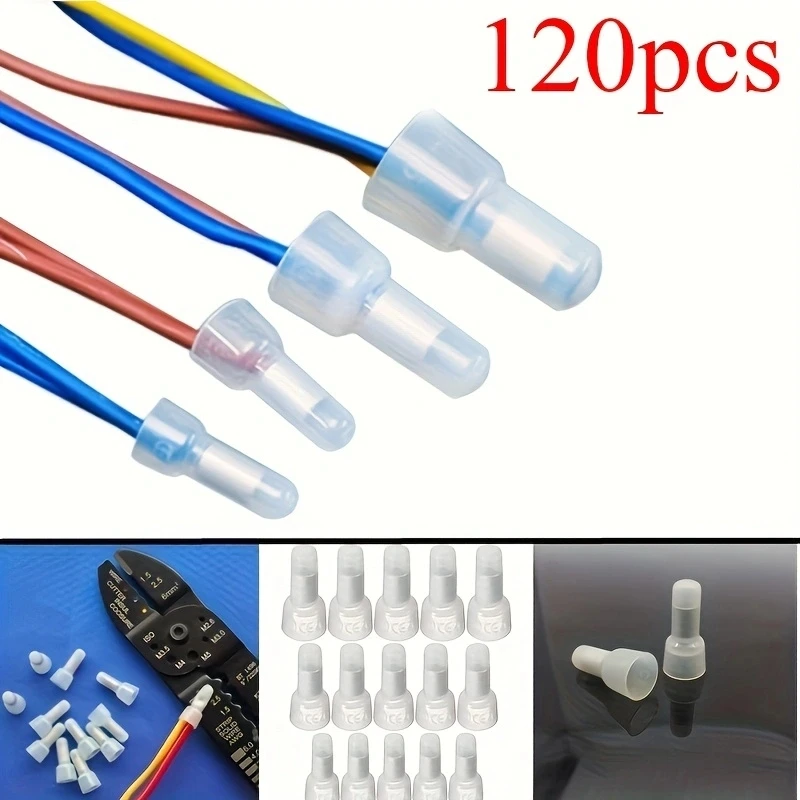
The translucent white nylon housing of these crimp caps offers a significant practical advantage. It allows for immediate visual verification of the wire insertion depth. This transparency ensures that the conductor is fully seated within the metal crimp barrel before the crimping action, preventing partial connections that could lead to resistance and heat buildup. The mold precision of the plastic is evident; the caps feel solid, not flimsy. A clear view confirms proper engagement. This simple feature drastically reduces installation errors, a common pitfall for even experienced DIYers.
Nylon, as the insulating material, provides excellent dielectric strength and resistance to abrasion. It offers good temperature stability, which is important for solar systems that experience significant temperature swings between day and night, or seasonal changes. While not explicitly UV-rated for direct, prolonged sunlight exposure, the material's inherent properties make it suitable for use within junction boxes, conduits, or other protected enclosures in a solar setup. Its flexibility also aids in accommodating wire movement without cracking.
The Backbone of DC Integration: Preventing Efficiency Losses
In any DC electrical system, especially those operating at lower voltages like many solar arrays, even minor resistance at connection points can translate into measurable power losses. This phenomenon, known as voltage drop, directly reduces the energy available to charge batteries or power loads. Poorly made connections generate heat, which is simply wasted energy. These closed-end crimp connectors are engineered to create a low-resistance pathway, ensuring that the maximum possible current reaches its destination. They preserve every electron.
Compared to soldering, which can be time-consuming and prone to "cold" joints if not performed correctly, crimping offers a faster, more consistent, and often more reliable connection in the field. Soldered joints can also be brittle and susceptible to vibration-induced fatigue, which is a concern in systems exposed to the elements or mechanical stress. The mechanical integrity of a properly crimped connection is superior in resisting such forces. This makes them ideal for mobile solar applications too.
Imagine a scenario where a small off-grid cabin relies on solar power for essential lighting and refrigeration. A cumulative 5% efficiency loss across multiple poor connections might seem minor, but over a day, week, or year, this equates to significant wasted energy and reduced battery life. This directly impacts the usable power budget. Utilizing high-quality crimp connectors ensures that the system operates closer to its theoretical maximum, providing more reliable power when it is needed most. They maximize energy harvest.
Crafting Resilient Power Paths: Durability and Environmental Considerations
The durability of electrical components in a solar energy system is paramount, especially when considering the lifespan of solar panels themselves, which can exceed 25 years. These crimp connectors are designed to offer a long-lasting solution for internal wiring connections. Their robust construction resists common forms of degradation that plague lesser quality terminals. They are built for endurance.
While the translucent nylon offers good general protection, it is crucial to understand its limitations for direct outdoor exposure. For connections located outside of weather-sealed enclosures, additional layers of protection, such as marine-grade heat shrink tubing with adhesive lining, are highly recommended. This creates a truly waterproof and UV-resistant seal, vital for preventing moisture ingress and material degradation from sunlight. This extra step ensures longevity.
The compact form factor of these connectors is another benefit for solar installations. Solar junction boxes and combiner boxes often have limited space, and bulky connections can make wiring difficult and increase the risk of accidental contact between terminals. These slim, closed-end caps allow for neat, organized wiring, which not only improves aesthetics but also facilitates troubleshooting and maintenance. Space efficiency is key. They fit snugly.
Installation: A Firm Grip on Power
Proper installation is key to unlocking the full benefits of these crimp connectors. The process begins with accurate wire stripping. The insulation must be removed cleanly, exposing enough copper conductor to fully seat within the connector's metal barrel, but not so much that bare wire extends beyond the cap after crimping. Precision stripping prevents issues. This attention to detail ensures maximum contact area and a strong mechanical bond.
The choice of crimping tool is equally critical. While basic crimpers can get the job done, a high-quality ratcheting crimping tool specifically designed for insulated terminals provides consistent, repeatable crimps. These tools ensure that the correct amount of pressure is applied, deforming the metal barrel around the wire strands to create a gas-tight connection without over-stressing the material. The image clearly shows such a tool. A good crimper is an investment. Without it, the integrity of the connection is compromised, potentially leading to intermittent faults or increased resistance.
After crimping, a simple but effective test involves gently tugging on each wire. If the wire pulls out, the crimp was insufficient, and the connection must be redone with a new connector. This verification step is non-negotiable for critical solar circuits. The translucent housing aids in this post-crimp inspection, allowing a visual check for any stray strands or incomplete wire seating. This visual confirmation provides peace of mind. It ensures reliability.
The Economic Advantage of Reliability: Value for the Solar Enthusiast
For a solar energy hobbyist, the initial cost of components can add up quickly. However, focusing solely on the lowest upfront price for critical items like wire connectors can be a false economy. The 120-piece assortment offered here represents significant value. This bulk purchase ensures that a variety of common gauge connections can be made without repeated trips to the Hardware store, saving both time and fuel. This kit is a practical investment.
The long-term value proposition of these connectors extends beyond mere convenience. By preventing common wiring faults such as loose connections, corrosion, and short circuits, they contribute directly to the longevity and consistent output of the entire solar system. Avoiding system downtime or component damage due to poor wiring saves far more in the long run than the modest cost of these connectors. They protect your investment. This is a smart financial decision for any DIY solar project.
Consider the cost-per-use over the lifespan of a solar array. A single, properly installed crimp connector, costing mere cents, can safeguard hundreds or thousands of dollars worth of solar panels, charge controllers, and batteries. This perspective shifts the focus from the "sticker price" to the "return on investment" in system reliability. It's an investment in peace of mind. For those committed to self-sustaining energy, this value is undeniable.
Beyond the Basics: Enhancing Your Off-Grid Potential
These closed-end crimp connectors are not just for simple wiring tasks; they enable more complex and scalable solar energy systems. When designing a system with multiple solar panels, these connectors are invaluable for creating parallel or series connections within combiner boxes. They facilitate the neat bundling of wires, ensuring that each string or array section is properly terminated and insulated. This organization is crucial.
For off-grid applications, where every component must perform flawlessly under challenging conditions, the reliability offered by these crimp connections is particularly important. Imagine building a portable solar generator or a robust backup power system for emergencies. The ability to create durable, vibration-resistant connections means the system can withstand transportation and operate reliably when needed most. They empower portable power. Their compact size also allows for tighter packing of components, optimizing space in enclosures.
Furthermore, these connectors simplify troubleshooting. With clearly defined and insulated connection points, tracing wires and identifying potential issues becomes a much more straightforward process compared to a tangled mess of uninsulated or poorly connected wires. This clarity saves time. A well-organized and properly terminated wiring harness is a hallmark of a professional and reliable solar installation, even if it is a hobbyist project.
Powering Your Vision
Imagine the satisfaction of a perfectly operating solar array, silently generating clean energy, knowing that every connection, down to the smallest wire splice, is secure and optimized. Picture your off-grid cabin bathed in reliable light, or your RV powered by a consistently performing solar setup, all thanks to the foundational integrity provided by these essential components. These insulated closed-end crimp connectors are more than just simple terminals; they are the silent guardians of your solar system's efficiency and longevity. They enable your energy independence. Investing in such fundamental reliability ensures that your solar aspirations are not just dreams, but a tangible, sustained reality.