Insulated Piggyback Spade Terminal Assortment
Official Store Deal
Expert Analysis Overview
Ensuring Secure Electrical Junctions
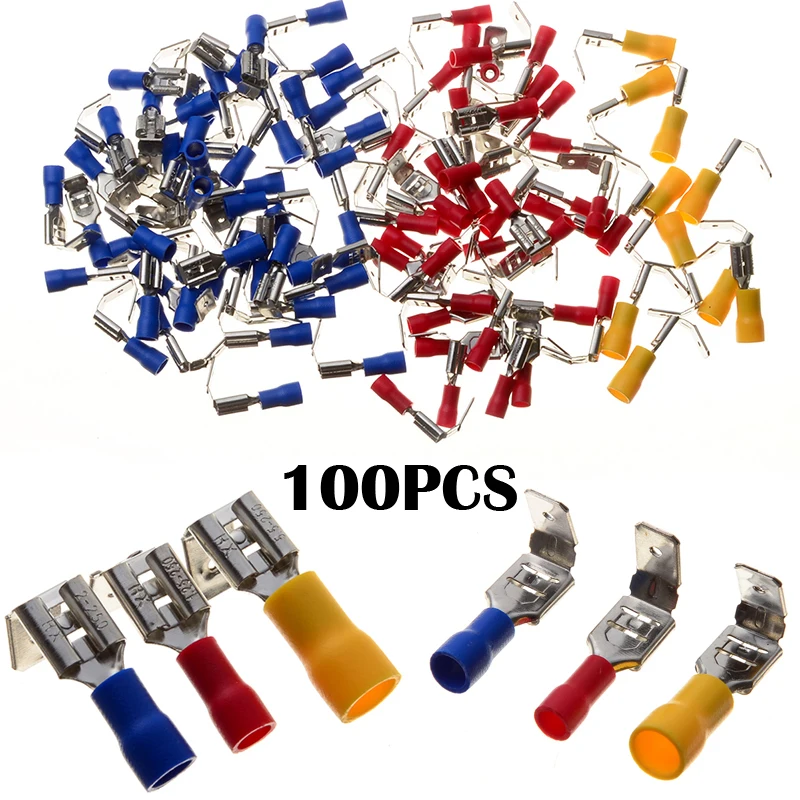
The Insulated Piggyback Spade Terminal Assortment is a practical collection of electrical connectors designed for efficient and secure branching of circuits in low-voltage applications. This set, comprising 100 pieces, offers a standardized solution for connecting wires ranging from 10 to 22 American Wire Gauge (AWG), identifiable by their distinct red, blue, and yellow insulation colors. The primary function of these piggyback spade terminals is to allow for a pass-through connection, where a male spade terminal can be inserted into the female end, while simultaneously providing an additional female spade connection on the back. This design is particularly useful for creating parallel connections or adding accessories to an existing circuit without cutting and splicing wires extensively. The visible materials imply a standard construction suitable for general electrical work.
Proper selection of the terminal based on wire gauge is critical for maintaining circuit integrity and preventing electrical hazards. The color-coding system, a widely recognized industry standard, simplifies this selection process. Red terminals typically accommodate 22-18 AWG, blue terminals are for 16-14 AWG, and yellow terminals are designed for the heavier 12-10 AWG wires. This visual cue significantly reduces the chance of misapplication, which could lead to loose connections or insufficient current carrying capacity. Each terminal is engineered to create a robust mechanical and electrical bond when properly crimped.
Compared to uninsulated terminals, the integrated insulation on these connectors offers a significant safety advantage. The PVC insulation, visible in the product images, serves to protect against accidental short circuits and provides a degree of environmental protection for the connection point. This is a crucial upgrade from basic uninsulated terminals, which require separate heat shrink tubing or electrical tape for isolation, adding extra steps and potential points of failure. The pre-insulated design streamlines the installation process, making it more efficient for electricians and DIY enthusiasts alike.
Material Integrity and Conductivity
The conductive element of these terminals is typically electro-tinned copper, a material chosen for its excellent electrical conductivity and resistance to corrosion. While not explicitly stated, this is the industry standard for quality crimp terminals, ensuring efficient current flow and longevity of the connection. The tin plating further enhances corrosion resistance, which is vital for maintaining a stable electrical connection over time, especially in environments with varying humidity or temperature. A stable connection prevents resistance buildup.
In practical use, the quality of the conductive material directly impacts the terminal's ability to carry current without excessive heat generation. Inferior materials can lead to increased resistance, causing the terminal to heat up under load, which can degrade the insulation and potentially lead to electrical failure or fire. The visible metallic sheen suggests a clean, well-formed conductor, indicative of a reliable component. This attention to material science ensures the terminal performs as expected under its rated conditions.
Standard alternatives often use brass or lower-grade copper alloys, which may offer reduced conductivity or corrosion resistance. The implied use of electro-tinned copper positions these terminals as a more reliable option for critical connections. This material choice contributes to the overall safety and performance of the electrical system. It is a foundational aspect of terminal design.
Insulation Performance and Safety Protocols
The PVC insulation visible on these terminals provides effective electrical isolation for the crimped connection. PVC is a common and cost-effective insulating material, offering good dielectric strength and resistance to abrasion. The insulation extends beyond the crimp barrel, covering the wire entry point and the terminal body, which minimizes the risk of accidental contact with live conductors. This design is fundamental for preventing electrical shocks and short circuits in accessible wiring.
For a certified electrician, the integrity of the insulation is paramount. While PVC is suitable for many indoor and protected applications, its temperature range and chemical resistance are not as broad as more advanced materials like nylon or heat-shrink polyolefin. Users should consider the operating environment carefully. In a scenario where the terminals might be exposed to extreme heat, direct sunlight, or harsh chemicals, alternative insulation types might be necessary. However, for typical automotive, marine (protected areas), or household low-voltage wiring, PVC performs adequately.
Compared to higher-grade insulation materials, PVC offers a balance of performance and cost. It is a standard choice for general-purpose insulated terminals. The visible insulation appears robust and well-formed, suggesting a consistent manufacturing process. This consistency is important for reliable insulation performance across the entire batch of 100 pieces. Proper insulation prevents current leakage.
Application Versatility in Circuitry
The piggyback design of these spade terminals offers unique versatility in circuit design. It allows for the creation of a parallel connection without the need for additional wire splicing or the use of multi-tap connectors. This is particularly advantageous in automotive wiring, where accessories often need to be added to existing circuits, or in control panels where multiple devices share a common power source. The ability to 'piggyback' off an existing connection simplifies wiring layouts and reduces installation time.
Consider a scenario where a new auxiliary light needs to be powered from an existing switched circuit. Instead of cutting the original wire and adding a new splice, a piggyback terminal can be crimped onto the new light's wire, and then inserted into the existing female spade connection. The original male spade can then be re-inserted into the back of the piggyback terminal, maintaining the original connection while adding the new one. This method preserves the integrity of the original wiring. It is a clean solution.
This versatility contrasts with standard male or female spade terminals, which only allow for a single point-to-point connection. The piggyback feature effectively doubles the connection capability at a single point, making these terminals an efficient choice for expanding or modifying electrical systems. Their design is a time-saver for complex wiring tasks. This functionality is a key differentiator.
Installation Best Practices for Reliability
Achieving a reliable connection with crimp terminals hinges on proper installation techniques. The most critical aspect is using the correct crimping tool. A high-quality, ratcheting crimping tool designed for insulated terminals ensures consistent and optimal crimp pressure, creating a gas-tight connection between the wire and the terminal. This prevents oxidation and ensures maximum conductivity. An improper crimp is a common failure point.
Before crimping, the wire must be stripped to the correct length, exposing enough conductor to fully enter the crimp barrel without insulation being caught under the crimp, and without excessive bare wire protruding. The wire strands should be twisted tightly to ensure all strands are captured. Once crimped, a gentle tug test should be performed to verify the mechanical strength of the connection. The wire should not pull out of the terminal. This simple test confirms a secure bond.
Unlike soldering, which requires heat and can make future modifications more difficult, crimping provides a mechanically strong and electrically sound connection that is relatively easy to install and, if necessary, remove. However, the quality of the crimp is entirely dependent on the tool and technique. Relying on pliers or incorrect crimpers will inevitably lead to unreliable connections and potential safety hazards. Investing in a proper crimping tool is essential for anyone regularly using these terminals.
Long-Term Durability and Maintenance Considerations
The long-term durability of these terminals is influenced by the quality of the materials and the installation environment. The electro-tinned copper conductor provides good resistance to oxidation, which is a primary cause of increased resistance and connection failure over time. The PVC insulation, while not impervious to all environmental factors, offers a protective barrier against moisture and dust in typical applications. Regular inspection of connections, especially in critical circuits, is a prudent maintenance practice.
In environments subject to vibration, such as in vehicles or machinery, the mechanical integrity of the crimp is crucial. While a properly crimped terminal is robust, excessive vibration can eventually lead to metal fatigue or insulation wear. For such applications, additional strain relief, such as cable ties or specialized mounting, may be necessary to prolong the life of the connection. Proactive measures prevent premature failure.
Compared to soldered connections, crimped terminals are generally more resistant to vibration-induced fatigue, provided the crimp is correctly executed. However, soldered connections can offer superior environmental sealing if properly encapsulated. The choice between crimp and solder often depends on the specific application requirements and the installer's expertise. For general-purpose, insulated connections, these crimp terminals offer a durable and reliable solution when installed correctly. They are designed for sustained performance.
Conclusion: Powering Your Projects with Confidence
This assortment of insulated piggyback spade terminals provides a foundational component for any electrical professional or enthusiast. The standardized color-coding, robust material choices, and versatile piggyback design ensure that users can create reliable and safe electrical connections across a broad range of applications. By adhering to proper installation techniques and understanding the capabilities of these terminals, electrical systems can be built or modified with confidence, ensuring long-term stability and operational safety. Imagine the efficiency gained when expanding a vehicle's accessory wiring or tidying up a control panel, knowing each connection is secure and properly insulated. This set empowers precise and safe circuit management, allowing for seamless integration of new components and dependable performance for years to come.