Insulated Quick Disconnect Spade Connectors (16-14 AWG, 50 Pairs)
Official Store Deal
Expert Analysis Overview
Precision Interconnection for Renewable Energy Systems
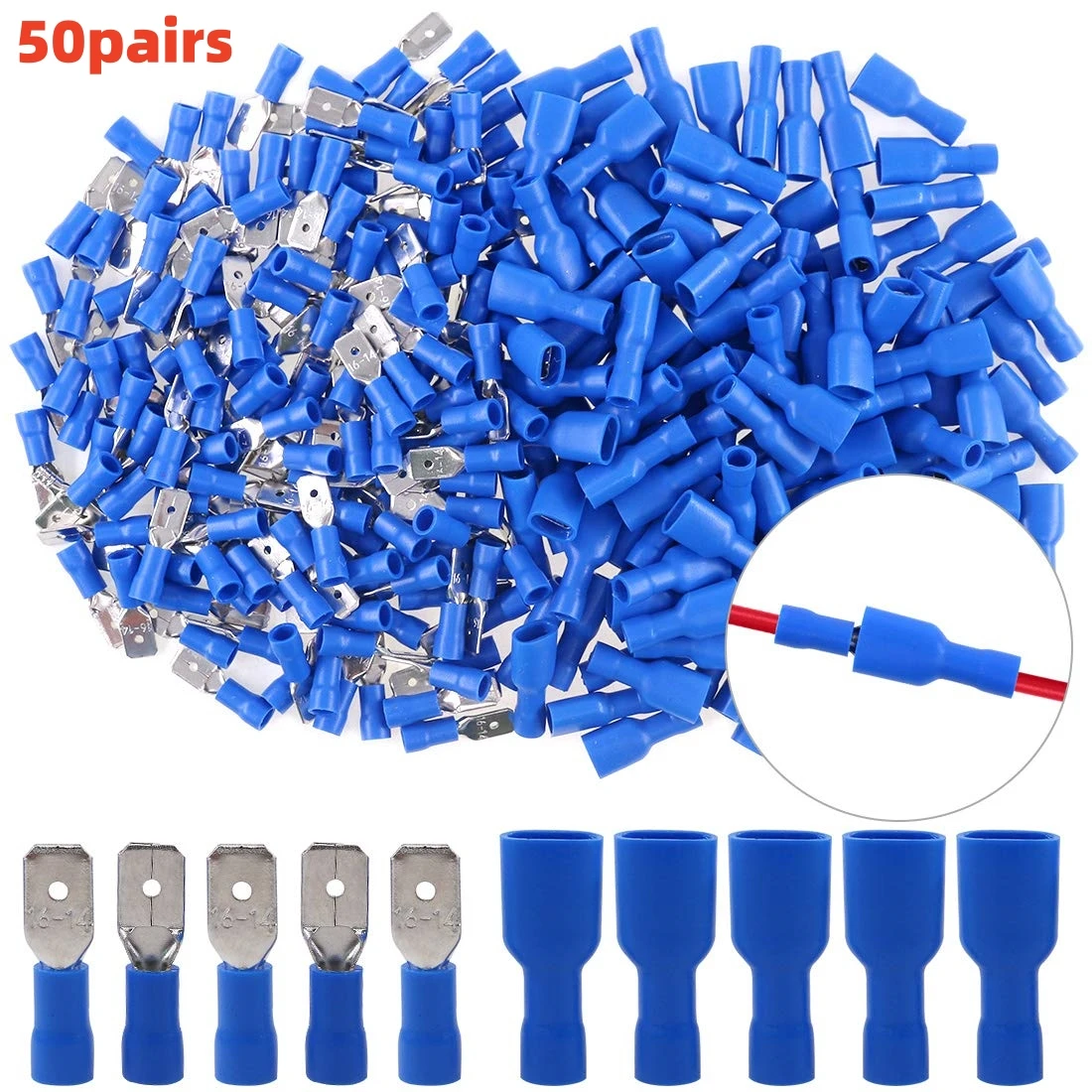
Insulated Quick Disconnect Spade Connectors, specifically the 16-14 AWG variant, are a fundamental component engineered for reliable and efficient electrical connections within various systems, particularly those found in solar energy applications. This set, comprising 50 pairs of male and female terminals, is designed for rapid assembly and disassembly, crucial for maintenance or modular system expansion. The blue insulation signifies compatibility with specific wire gauges, ensuring proper current handling and safety.
The Foundation of Reliable DC Power
These spade connectors are more than simple wire joiners; they represent a critical interface for DC power distribution in off-grid and small-scale solar installations. Their design facilitates a secure mechanical and electrical connection, which is paramount for minimizing resistance and maximizing power transfer from solar panels to charge controllers, batteries, or DC loads. A stable connection prevents energy loss.
Unlike inferior connection methods that can degrade under environmental stress, these insulated terminals provide a layer of protection against accidental short circuits and moisture ingress. This insulation is vital for maintaining system integrity in outdoor or semi-exposed environments typical of solar setups. The robust construction ensures longevity.
Their primary function is to create a secure, yet easily separable, electrical junction. This capability is invaluable for solar hobbyists who frequently reconfigure their systems or perform diagnostic checks. The quick disconnect feature saves considerable time.
Engineering for Optimal Solar Integration
The specified 16-14 AWG wire range is particularly relevant for many solar energy applications, accommodating the typical current loads found in 12V or 24V DC systems. This gauge range is common for connecting individual solar panels, charge controllers, and smaller inverters. Proper wire sizing is essential for efficiency.
These connectors are rated for a maximum current of 27A. This current capacity is a critical specification for solar applications, as exceeding it can lead to overheating, increased resistance, and potential fire hazards. System designers must always match component ratings to expected load profiles.
The insulated housing, visible in the product imagery, is a key safety feature. It prevents accidental contact with live terminals, protecting both the user and the system from electrical faults. Safety is a non-negotiable aspect of any electrical installation.
Installation and Durability Considerations
Installation of these crimp terminals requires a suitable crimping tool, which creates a gas-tight connection between the wire and the terminal. This method is superior to soldering for many applications, offering better vibration resistance and mechanical strength. A proper crimp ensures long-term reliability.
The metal spade terminals, likely constructed from tinned copper or brass, offer excellent conductivity and corrosion resistance. These material choices are important for maintaining low resistance over the lifespan of the connection, especially in environments with fluctuating temperatures and humidity. Material quality directly impacts performance.
When integrated into a solar array, these connectors contribute to the overall resilience of the system. They provide a predictable and repeatable connection point, unlike twisted wire connections that can loosen or corrode. Consistency is key in renewable energy.
Efficiency and Off-Grid Potential
For solar energy hobbyists focused on building self-sustaining energy systems, the efficiency of every component matters. High-quality connectors like these minimize voltage drop and power loss across the connection points. Every millivolt saved contributes to overall system output.
These quick disconnects are particularly beneficial for off-grid setups where modularity and ease of maintenance are paramount. Imagine needing to temporarily disconnect a battery bank for service or isolating a specific solar panel for troubleshooting. These connectors simplify such tasks.
Their compatibility with common DC voltages and currents makes them a versatile choice for various off-grid projects, from powering small cabins to RV electrical systems. They offer a standardized, reliable interface. This standardization streamlines future upgrades.
Strategic Value for the Solar Enthusiast
The provision of 50 pairs in a single package offers significant value for solar enthusiasts who often undertake multiple projects or require spare parts for future expansions. Purchasing in bulk reduces the per-unit cost and ensures a ready supply. This bulk quantity supports ongoing projects.
Unlike individual terminals purchased piecemeal, this set provides a consistent quality and type of connector, ensuring uniformity across a project. Consistency in components leads to more predictable system performance. This consistency is a mark of professional installation.
The convenience of quick disconnects cannot be overstated in a dynamic solar setup. It allows for rapid reconfiguration without the need for cutting and re-stripping wires. This flexibility is a major advantage for experimental or evolving systems.
Mitigating Efficiency Losses
Calculating efficiency losses in a solar system often involves accounting for resistance at every connection point. Poor quality connectors can introduce significant resistance, leading to heat generation and wasted energy. These insulated spade connectors, when properly crimped, offer minimal resistance.
Their design helps ensure a secure, low-resistance pathway for current flow. This is crucial for maximizing the energy harvested from solar panels and delivering it effectively to loads or storage. Every component plays a role in system efficiency.
For hobbyists keen on optimizing their solar array's output, investing in reliable connectors is a small but impactful decision. It prevents incremental losses that can add up over a system's lifetime. Small gains accumulate to significant improvements.
Verifying Compatibility with Existing Solar Setups
Before integrating these connectors, users must verify their compatibility with existing solar setups, specifically regarding wire gauge and current requirements. The 16-14 AWG range covers many common solar wiring scenarios, but larger systems may require heavier gauge wire and higher-rated terminals. Always cross-reference specifications.
These connectors are ideal for DC circuits, which form the backbone of most solar power systems before any inversion to AC. Their robust design ensures they can withstand the typical electrical demands of such circuits. They are a staple in DC wiring.
Their standard spade terminal design ensures broad compatibility with many existing electrical components, such as fuse blocks, relays, and switches commonly used in solar installations. This widespread compatibility simplifies system design and component sourcing. It reduces integration headaches.
Imagine the satisfaction of a solar power system running smoothly, every connection secure and efficient, free from the common pitfalls of loose or corroded wiring. These insulated quick disconnect spade connectors provide that foundational reliability, allowing you to focus on the bigger picture of energy independence and sustainable living. They contribute to a system that performs consistently, day in and day out, ensuring your efforts in renewable energy are truly rewarded.