Insulated Ring Crimp Wire Connectors (22-10 AWG)
Official Store Deal
Expert Analysis Overview
The Foundation of Secure Electrical Connections
Insulated ring crimp wire connectors are critical components for establishing reliable and safe electrical terminations. These particular terminals, spanning 22-10 AWG, are engineered for robust performance in demanding environments. They provide a mechanically sound and electrically conductive interface, essential for preventing loose connections and potential arcing. The design prioritizes both conductivity and insulation integrity.
Material Science for Lasting Performance
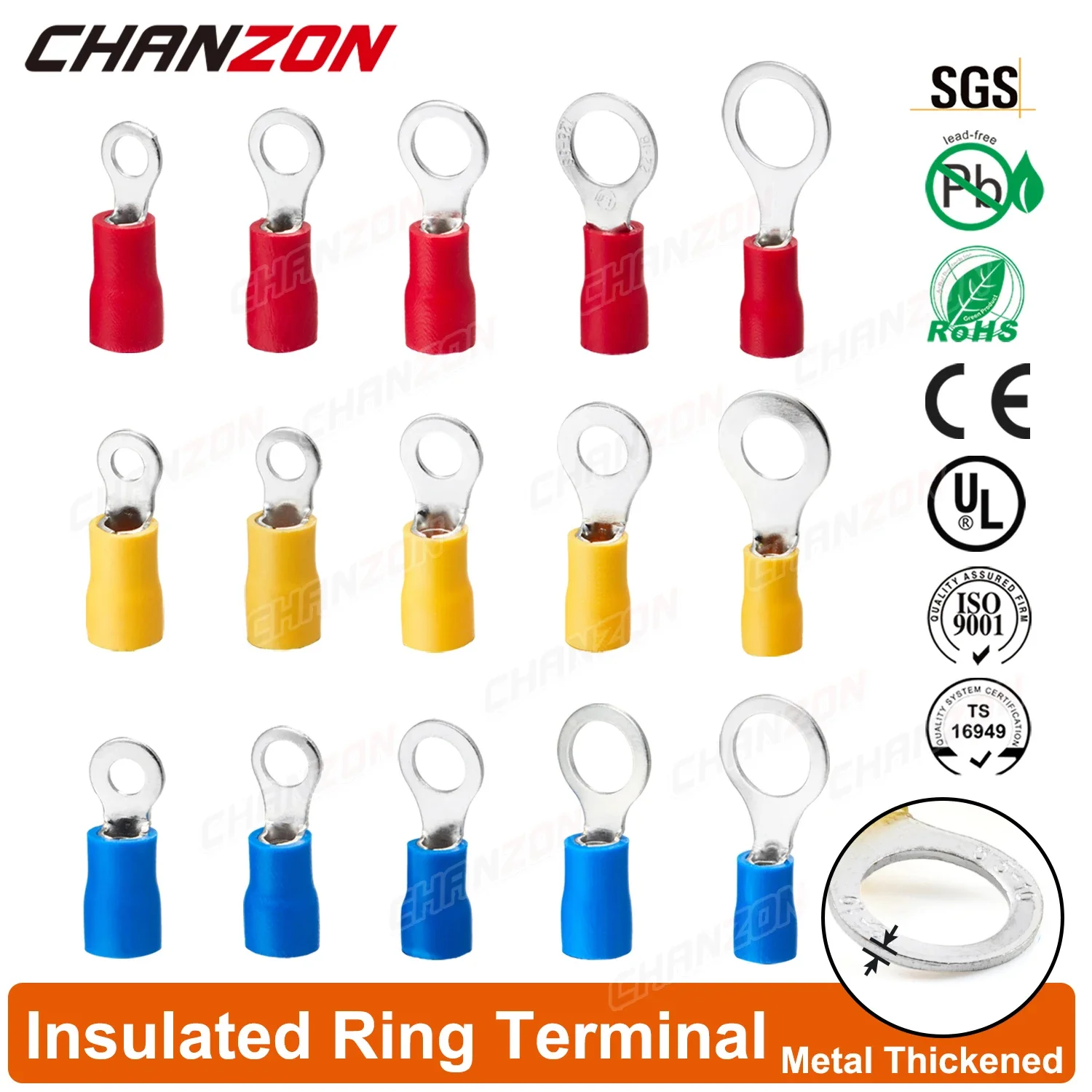
These terminals feature a core of pure copper tin plating. This material choice is not arbitrary; copper offers superior electrical conductivity, minimizing resistance and heat generation. The tin plating serves a crucial role, protecting the copper from oxidation and corrosion, which are common culprits behind connection failures. This dual-layer construction ensures long-term electrical stability. The metal is thickened. This enhances durability and crimp strength.
Compared to terminals made from brass or those with thinner plating, the pure copper tin-plated construction provides a significant upgrade in both conductivity and corrosion resistance. Brass, while conductive, exhibits higher resistance than copper, leading to greater heat dissipation under load. Thinner plating simply offers less protection against environmental degradation, shortening the lifespan of the connection. This robust material choice directly translates to a more durable and safer electrical system.
Precision in Conduction: Wire Gauge and Amperage Management
This assortment covers a wide range of wire gauges: 22-16 AWG (Red), 16-14 AWG (Blue), and 12-10 AWG (Yellow). Each color-coded terminal corresponds to a specific wire size, simplifying selection and ensuring proper application. The precise sizing is paramount for maintaining optimal current flow and preventing thermal overload. Incorrect gauge matching can lead to dangerous situations.
Matching the wire gauge to the terminal is not merely a suggestion; it is a fundamental safety requirement. A terminal too small for the wire will not properly accommodate all strands, leading to a weak connection and increased resistance. Conversely, a terminal too large will not achieve a secure crimp, resulting in a loose connection prone to vibration damage and arcing. Proper gauge selection ensures the full current-carrying capacity of the wire is maintained through the terminal, preventing localized heating.
Generic terminals often lack the precise internal dimensions or consistent material thickness required for a truly gas-tight crimp across the specified gauge range. This product's adherence to industry-standard color coding and sizing ensures that when a 12 AWG wire is inserted into a yellow terminal, the fit is correct. This prevents the common issue of undersized or oversized crimps that compromise electrical integrity and safety.
The Shield of Safety: Insulation and Certifications
The terminals are equipped with insulated sleeves, clearly visible in red, blue, and yellow. This insulation provides a critical barrier against accidental short circuits and electrical shock. The presence of UL, CE, RoHS, ISO 9001, and SGS certifications indicates adherence to stringent international safety and quality standards. These marks are not just labels; they represent rigorous testing and compliance.
Proper insulation is non-negotiable in any electrical installation. It isolates live conductors, preventing unintended contact with other components or personnel. The robust PVC or nylon insulation on these terminals offers excellent dielectric strength, resisting breakdown even under moderate stress. This ensures that once crimped, the connection remains electrically isolated and safe to handle, reducing the risk of electrical hazards.
Many uncertified or generic terminals may use inferior insulation materials that degrade quickly under heat or environmental exposure. Such degradation can lead to exposed conductors, creating a significant fire or shock hazard. The visible certifications on these terminals provide assurance that the insulation meets recognized performance criteria, offering a layer of protection that cheaper alternatives often forgo. This is a critical distinction for professional applications.
The Art of Secure Crimping: Installation and Reliability
Achieving a secure connection with these ring terminals requires a proper crimping tool. The process involves stripping the wire, inserting it fully into the terminal barrel, and then firmly crimping the connection. A well-executed crimp creates a cold weld between the wire and the terminal, ensuring maximum conductivity and mechanical strength. This is a simple, effective method.
When a wire is correctly stripped and inserted, the crimping tool applies uniform pressure, deforming both the terminal barrel and the wire strands. This deformation creates a gas-tight seal, preventing oxygen and moisture from reaching the copper, which would otherwise lead to corrosion and increased resistance. The result is a connection that is highly resistant to vibration, pull-out forces, and environmental factors, maintaining its integrity over time.
Compared to soldering, which can create brittle connections susceptible to vibration fatigue, or twist-on connectors that may loosen over time, a properly crimped insulated ring terminal offers superior long-term reliability for many applications. The mechanical bond of a crimp is designed to withstand dynamic stresses, making it ideal for automotive, marine, and industrial settings where vibrations are common. This method provides a professional and enduring termination.
Versatility in Application: Broad Utility
The ring terminal design is inherently versatile, allowing for secure attachment to screw terminals, studs, or bolts. Their availability in various sizes within the 22-10 AWG range makes them suitable for a multitude of electrical tasks. From small signal wires to heavier power circuits, these terminals adapt readily. They are a staple in any electrician's kit.
These connectors find extensive use across diverse sectors. In automotive applications, they secure battery connections, accessory wiring, and ground points. For marine environments, their corrosion resistance is particularly valuable for bilge pumps and navigation lights. Industrial control panels rely on them for robust power and signal distribution. Even in home electrical projects, they provide a professional and safe way to terminate wires to circuit breakers or ground buses.
Unlike spade terminals, which can sometimes slip off if the screw loosens, the closed-loop design of ring terminals provides a captive connection. Once installed, they remain securely in place, even if the fastening bolt or stud experiences minor loosening. This inherent security makes them preferable in applications where reliability and resistance to accidental disconnection are paramount, offering peace of mind in critical circuits.
The Professional's Choice for Enduring Connections
These insulated ring crimp wire connectors represent a commitment to electrical safety and long-term reliability. The robust construction, precise gauge compatibility, and comprehensive safety certifications ensure that every connection made is not just functional, but also secure and compliant. Imagine completing an electrical installation with the confidence that every termination is engineered to withstand the test of time and environmental challenges. Picture a wiring harness where each connection is a fortress against corrosion and vibration, ensuring uninterrupted power and signal flow. This is the capability these terminals provide, allowing for professional-grade results that prevent costly failures and enhance overall system integrity.