Javino 5V 1A Micro USB 18650 Lithium Battery Charger Module with Protection
Official Store Deal
Expert Analysis Overview
The Javino 5V 1A Micro USB 18650 Lithium Battery Charger Module is a compact, integrated power management solution for single-cell lithium-ion batteries, specifically engineered for hobbyists and DIY electronics enthusiasts requiring reliable charging and discharge protection. This small circuit board provides essential safeguards, preventing common battery failures and extending cell lifespan. Its design prioritizes both functionality and safety, a critical consideration for any electrical project.
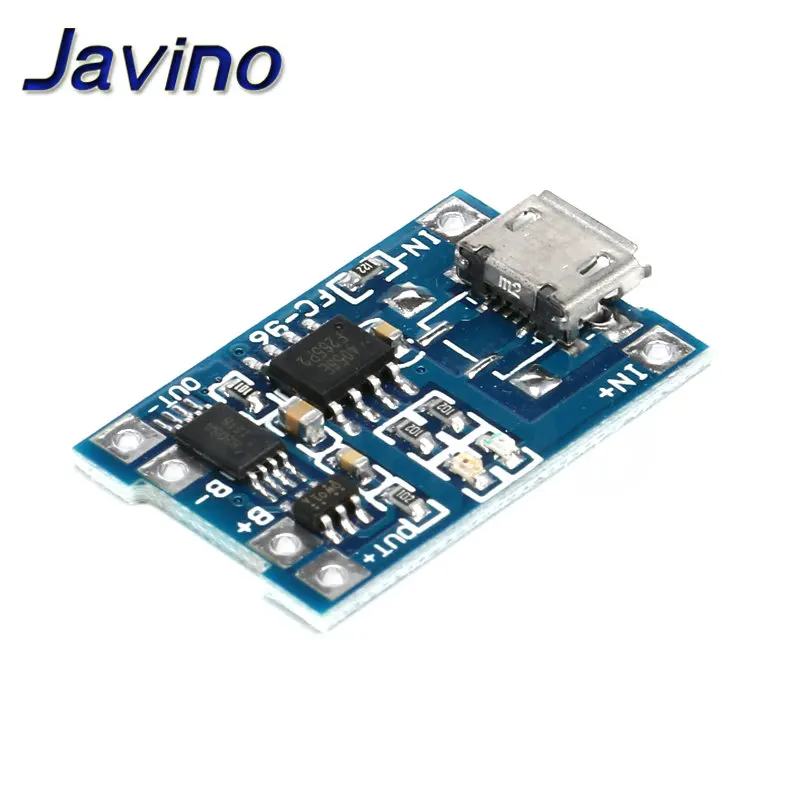
The module's charging capability is centered around a linear charging integrated circuit, commonly the TP4056 or a compatible variant. This IC manages the constant current/constant voltage (CC/CV) charging profile, which is the industry standard for safely replenishing lithium-ion cells. The visible components on the blue PCB indicate a well-defined power path. Input power is supplied via a Micro USB port or dedicated IN+/INsolder pads, offering flexibility in power sourcing.
This architecture ensures a controlled charging process. The 1A charging current is suitable for a wide range of 18650 cells, balancing charge speed with thermal management. It prevents overcurrent conditions during the charging phase. The module automatically terminates charging once the battery reaches its full voltage, typically 4.2V, safeguarding against overcharging.
Unlike rudimentary charging circuits that might rely on simple resistors, this dedicated IC provides precise voltage and current regulation. This precision is paramount for lithium-ion battery health. It offers a more consistent and safer charging experience compared to unregulated power sources.
Beyond charging, a key feature of this module is its integrated battery protection circuit. This typically involves a DW01A protection IC coupled with a dual MOSFET (e.g., FS8205A). These components actively monitor the battery's voltage and current, providing crucial safeguards against common hazards. Overcharge protection prevents the battery voltage from exceeding safe limits, which can lead to thermal runaway and fire.
The protection circuit also includes over-discharge protection. This prevents the battery voltage from dropping below a critical threshold, usually around 2.5V. Deep discharge can permanently damage lithium-ion cells, reducing their capacity and cycle life. This module actively disconnects the load if the voltage falls too low.
Furthermore, short-circuit protection is a vital safety feature. If the output terminals are accidentally shorted, the protection circuit quickly cuts off power, preventing excessive current draw and potential damage to the battery or module. This immediate response is crucial for preventing electrical fires. The visible traces and component layout suggest a robust implementation of these protective functions.
Connectivity is straightforward, featuring clearly labeled solder pads for battery input (B+/B-) and load output (OUT+/OUT-). The Micro USB port provides a convenient and widely available input method for 5V power sources. This simplifies integration into various projects, from portable power banks to embedded systems.
LED indicators provide visual feedback on the charging status. Typically, a red LED illuminates during the charging process, and a blue or green LED indicates that the battery is fully charged. This visual cue is simple yet effective. It allows users to quickly ascertain the battery's state without needing additional monitoring equipment.
These indicators are a significant improvement over modules lacking visual feedback. They eliminate guesswork, ensuring users know precisely when a battery is ready for use or requires charging. This enhances user convenience and contributes to safer operation by preventing premature disconnection or prolonged charging.
The module's compact dimensions, approximately 27.9mm by 17.4mm, make it suitable for space-constrained applications. The small footprint allows for easy integration into custom enclosures or existing circuit boards. The surface-mount components are neatly arranged, indicating a professional manufacturing process.
Its small size is a distinct advantage for portable electronics. Projects like wearable devices, small robots, or custom IoT sensors benefit immensely from such a compact power management solution. It minimizes the overall device size and weight. This design choice directly impacts the practicality of many DIY endeavors.
Compared to larger, through-hole component boards, this module's compact, surface-mount design offers superior integration possibilities. It reduces the need for extensive wiring and allows for more streamlined product designs. This efficiency in space utilization is a hallmark of modern electronic component design.
As a Certified Electrician, the emphasis on safety cannot be overstated. When working with lithium-ion batteries and charging modules, adherence to proper wiring practices is critical. The module's 1A charging current necessitates appropriate wire gauges for all connections, particularly for the battery and load. Undersized wires can lead to resistive heating, posing a fire risk.
Terminal quality is also a significant factor. The solder pads on this module appear to be adequately sized for the rated current. Proper soldering techniques are essential to ensure secure, low-resistance connections. Cold solder joints or inadequate wire stripping can compromise the circuit's integrity and lead to intermittent operation or dangerous heating.
Preventing electrical fires is paramount. The integrated protection features are a strong defense, but they are not a substitute for careful assembly and operation. Always verify polarity before connecting batteries. Incorrect polarity can instantly damage the module and potentially lead to battery failure or thermal events. This module provides a foundational layer of safety, but user diligence remains indispensable.
At its price point, this charging and protection module offers exceptional value. It consolidates multiple essential functions into a single, affordable component, making advanced battery management accessible to a broader audience. The cost-effectiveness allows for widespread adoption in educational projects, prototyping, and small-scale manufacturing.
This module significantly reduces the complexity and component count for battery-powered projects. Instead of sourcing and integrating separate charging ICs, protection circuits, and associated passive components, users can deploy a single, pre-assembled board. This saves design time and reduces potential points of failure. It streamlines the development process considerably.
Imagine powering a custom portable speaker or a remote weather station with confidence, knowing the 18650 battery is being charged safely and protected from over-discharge. This module provides that peace of mind, allowing creators to focus on their project's core functionality rather than worrying about battery management intricacies. The ability to reliably power projects with readily available 18650 cells opens up a vast array of possibilities for innovation and practical applications. This module is an enabler for countless battery-powered creations, ensuring longevity and operational stability for your devices.
Core Charging Architecture
The module's charging capability is centered around a linear charging integrated circuit, commonly the TP4056 or a compatible variant. This IC manages the constant current/constant voltage (CC/CV) charging profile, which is the industry standard for safely replenishing lithium-ion cells. The visible components on the blue PCB indicate a well-defined power path. Input power is supplied via a Micro USB port or dedicated IN+/IN
This architecture ensures a controlled charging process. The 1A charging current is suitable for a wide range of 18650 cells, balancing charge speed with thermal management. It prevents overcurrent conditions during the charging phase. The module automatically terminates charging once the battery reaches its full voltage, typically 4.2V, safeguarding against overcharging.
Unlike rudimentary charging circuits that might rely on simple resistors, this dedicated IC provides precise voltage and current regulation. This precision is paramount for lithium-ion battery health. It offers a more consistent and safer charging experience compared to unregulated power sources.
Integrated Battery Protection
Beyond charging, a key feature of this module is its integrated battery protection circuit. This typically involves a DW01A protection IC coupled with a dual MOSFET (e.g., FS8205A). These components actively monitor the battery's voltage and current, providing crucial safeguards against common hazards. Overcharge protection prevents the battery voltage from exceeding safe limits, which can lead to thermal runaway and fire.
The protection circuit also includes over-discharge protection. This prevents the battery voltage from dropping below a critical threshold, usually around 2.5V. Deep discharge can permanently damage lithium-ion cells, reducing their capacity and cycle life. This module actively disconnects the load if the voltage falls too low.
Furthermore, short-circuit protection is a vital safety feature. If the output terminals are accidentally shorted, the protection circuit quickly cuts off power, preventing excessive current draw and potential damage to the battery or module. This immediate response is crucial for preventing electrical fires. The visible traces and component layout suggest a robust implementation of these protective functions.
Connectivity and Indicators
Connectivity is straightforward, featuring clearly labeled solder pads for battery input (B+/B-) and load output (OUT+/OUT-). The Micro USB port provides a convenient and widely available input method for 5V power sources. This simplifies integration into various projects, from portable power banks to embedded systems.
LED indicators provide visual feedback on the charging status. Typically, a red LED illuminates during the charging process, and a blue or green LED indicates that the battery is fully charged. This visual cue is simple yet effective. It allows users to quickly ascertain the battery's state without needing additional monitoring equipment.
These indicators are a significant improvement over modules lacking visual feedback. They eliminate guesswork, ensuring users know precisely when a battery is ready for use or requires charging. This enhances user convenience and contributes to safer operation by preventing premature disconnection or prolonged charging.
Physical Design and Integration
The module's compact dimensions, approximately 27.9mm by 17.4mm, make it suitable for space-constrained applications. The small footprint allows for easy integration into custom enclosures or existing circuit boards. The surface-mount components are neatly arranged, indicating a professional manufacturing process.
Its small size is a distinct advantage for portable electronics. Projects like wearable devices, small robots, or custom IoT sensors benefit immensely from such a compact power management solution. It minimizes the overall device size and weight. This design choice directly impacts the practicality of many DIY endeavors.
Compared to larger, through-hole component boards, this module's compact, surface-mount design offers superior integration possibilities. It reduces the need for extensive wiring and allows for more streamlined product designs. This efficiency in space utilization is a hallmark of modern electronic component design.
Electrical Safety and Best Practices
As a Certified Electrician, the emphasis on safety cannot be overstated. When working with lithium-ion batteries and charging modules, adherence to proper wiring practices is critical. The module's 1A charging current necessitates appropriate wire gauges for all connections, particularly for the battery and load. Undersized wires can lead to resistive heating, posing a fire risk.
Terminal quality is also a significant factor. The solder pads on this module appear to be adequately sized for the rated current. Proper soldering techniques are essential to ensure secure, low-resistance connections. Cold solder joints or inadequate wire stripping can compromise the circuit's integrity and lead to intermittent operation or dangerous heating.
Preventing electrical fires is paramount. The integrated protection features are a strong defense, but they are not a substitute for careful assembly and operation. Always verify polarity before connecting batteries. Incorrect polarity can instantly damage the module and potentially lead to battery failure or thermal events. This module provides a foundational layer of safety, but user diligence remains indispensable.
Value Proposition and Application
At its price point, this charging and protection module offers exceptional value. It consolidates multiple essential functions into a single, affordable component, making advanced battery management accessible to a broader audience. The cost-effectiveness allows for widespread adoption in educational projects, prototyping, and small-scale manufacturing.
This module significantly reduces the complexity and component count for battery-powered projects. Instead of sourcing and integrating separate charging ICs, protection circuits, and associated passive components, users can deploy a single, pre-assembled board. This saves design time and reduces potential points of failure. It streamlines the development process considerably.
Imagine powering a custom portable speaker or a remote weather station with confidence, knowing the 18650 battery is being charged safely and protected from over-discharge. This module provides that peace of mind, allowing creators to focus on their project's core functionality rather than worrying about battery management intricacies. The ability to reliably power projects with readily available 18650 cells opens up a vast array of possibilities for innovation and practical applications. This module is an enabler for countless battery-powered creations, ensuring longevity and operational stability for your devices.