Jinger XT90 Anti-Spark High-Current Battery Connectors
Official Store Deal
Expert Analysis Overview
High-Current DC Power Integration Systems
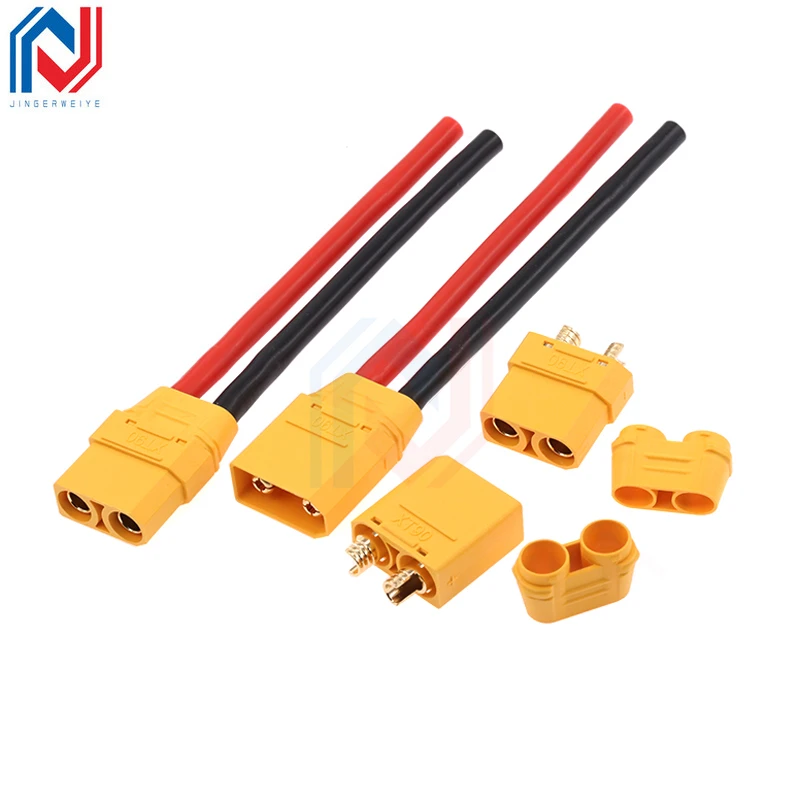
The Jinger XT90 and XT90-S Connector series is a high-amperage electrical termination system designed for high-drain lithium polymer applications where standard connectors fail under thermal stress. These units prioritize circuit integrity by utilizing high-purity gold-plated brass internals housed in temperature-resistant nylon. Low-quality alternatives often lead to melted housings or catastrophic electrical fires during peak draws. These components eliminate those risks through precision engineering. These connectors ensure a secure mechanical lock while maintaining minimal internal resistance. This is safety equipment first, and a convenience item second.
Managing the High-Voltage Spark Gap
High-voltage battery packs often create a visible and audible arc when connected to an Electronic Speed Controller. This spark occurs because of the rapid charging of capacitors. Over time, these arcs pit the gold plating on standard connectors. This increases resistance. The XT90-S variant solves this. It incorporates a small internal resistor. This resistor allows for a pre-charge state during the first few millimeters of engagement. The result is a silent, arc-free connection. It preserves the lifespan of the terminal plating. It prevents carbon buildup. Metal-on-metal contact remains pristine. This design choice is mandatory for 6S to 12S lithium setups. It saves the electronics from surge damage.
Material Science and Thermal Management
The yellow housing is made from high-temperature nylon 66. This material maintains its structural shape even when soldering at high temperatures. Cheaper plastics deform or soften during the assembly process. This causes pin misalignment. Misalignment leads to poor contact surface area. Poor surface area causes heat. It is a dangerous cycle. These Jinger units resist that degradation. The pins are gold-plated brass. Gold is used not for its conductivity, which is lower than copper, but for its oxidation resistance. Exposed copper oxidizes rapidly in humid environments. Green corrosion increases resistance. High resistance leads to voltage sag. These connectors prevent that. They stay clean. Power delivery remains consistent over hundreds of cycles. The friction fit is calibrated to prevent accidental disconnection. It requires a firm pull to separate. This is vital for high-vibration environments like drones or heavy RC machinery.
Termination Engineering and Wire Interface
Each connector comes pre-fitted with high-strand-count silicone wire. The 10AWG gauge is sized correctly for the rated current. Thinner wires would act as a bottleneck. These wires use fine copper strands for maximum flexibility. Silicone insulation is superior to PVC. It does not melt during high-current bursts. It does not crack in freezing temperatures. The solder joints are protected by custom-molded end caps. This eliminates the need for messy heat shrink tubing in some configurations. The caps provide a clean mechanical strain relief. They prevent the wire from flexing at the solder point. Solder is brittle. Continuous vibration can snap a wire if it lacks relief. These caps solve that. The plug orientation is keyed. It is physically impossible to plug them in backward. Reverse polarity is the primary cause of ESC failure. This mechanical fail-safe is mandatory for field use.
Performance Under Peak Load
Standard XT60 connectors are rated for 60 amps. These XT90 units handle a continuous 90-amp load. Peak bursts can exceed 120 amps without housing failure. Thermal imaging reveals even heat distribution across the terminal surface. This indicates high contact pressure. If the pressure was low, hot spots would form. Hot spots are the precursor to fire. The internal bullet connectors have multiple contact points. They expand slightly when inserted to ensure a tight fit. This maximizes the surface area for electron flow. It reduces the voltage drop across the connector. Lower voltage drop means more power reaches the motor. It means more flight time. It means a cooler-running system. Safety is found in the margins. These connectors provide those margins.
Field Reliability and Environmental Resistance
The matte texture on the housing serves a functional purpose. It provides grip when hands are sweaty or cold. Smooth plastics are hard to pull apart. This often leads to users pulling on the wires. Pulling wires is a safety hazard. The grooved sides of these connectors encourage correct handling. The fitment remains consistent across different batches. This is a sign of high-quality molds. Inconsistent molds lead to some plugs being too loose. Others are too tight. These maintain a standard tolerance. This consistency allows for seamless integration across a fleet of vehicles. The gold plating is thick enough to withstand repeated insertion cycles. It does not flake off. Flaking metal causes shorts. These stay intact.
Imagine the peace of mind during a high-speed pass or a heavy lift. The electrical system remains silent and cool. The connection stays locked despite the g-forces and vibration. Power flows without interruption from the battery to the drivetrain. You will never deal with blackened terminals or melted plastic again. Your expensive lithium packs are protected by a interface that respects the laws of physics. Reliability becomes the new standard for your gear.