KF128 2.54mm Pitch PCB Screw Terminal Block
Official Store Deal
Expert Analysis Overview
Precision Engineering for Secure PCB Connections
The KF128 2.54mm Pitch PCB Screw Terminal Block is a critical component for electronics enthusiasts and professional engineers requiring secure, reliable, and safely rated wire-to-board connections in compact applications. This series of terminal blocks, available in configurations from 2-pin to 16-pin, offers a robust solution for integrating discrete wiring into printed circuit board designs, ensuring both mechanical stability and electrical integrity. Its design prioritizes ease of use and adherence to fundamental electrical safety standards, making it an indispensable choice for prototyping, small-scale production, and repair work where space is at a premium.Unlike generic, unrated terminal blocks that often compromise on material quality, the KF128 series utilizes UL94V-0 rated PA66 housing to ensure superior flame retardancy and mechanical stability. This material choice is not merely a specification; it is a fundamental safety feature, preventing the propagation of fire in the event of an electrical fault. The precise 2.54mm (0.1") pitch ensures compatibility with standard breadboards and perfboards, simplifying layout and integration into existing projects. Connections remain secure.
Material Integrity and Flame Retardancy
The housing material, PA66, is a polyamide (nylon) known for its excellent mechanical strength, rigidity, and thermal stability. The UL94V-0 rating is particularly significant, indicating that the material self-extinguishes within 10 seconds on a vertical part and drips of flaming material are not permitted. This is a crucial safety standard for any component handling electrical current, especially in enclosed spaces or applications where fire risk must be minimized. Imagine a scenario where a short circuit occurs; a non-rated plastic could ignite and spread flames, whereas this material is engineered to contain such an event.Compared to cheaper, non-rated plastics, the PA66 UL94V-0 housing provides a substantial upgrade in safety and durability. It resists deformation under moderate heat and offers good insulation properties, preventing accidental contact between live terminals and external elements. This attention to material science directly translates into a safer and more reliable end product for any electronic assembly. The investment in quality materials pays dividends in long-term operational safety.
Electrical Performance and Current Handling
These terminal blocks are rated for 150V and 6A, specifications that define their operational limits and suitability for various low-voltage, low-current applications. The 150V rating indicates the maximum voltage differential that can be safely applied across the terminals without risking insulation breakdown. The 6A current rating specifies the maximum continuous current that can pass through each terminal without causing excessive heat buildup or degradation of the connection. Exceeding these ratings can lead to overheating, component damage, or even fire.When designing a circuit, understanding these limits is paramount. For instance, if a circuit draws 8A, using these 6A-rated terminals would be a critical error, leading to potential failure. The specified wire range of 26-18AWG further refines their application. This range ensures that common small-gauge wires used in signal and low-power applications can be securely terminated. Using wires outside this range, particularly thinner ones, can result in poor contact and increased resistance, leading to heat generation. Proper wire gauge selection is essential.
Compared to larger, higher-current terminal blocks, the KF128 series is optimized for space-constrained environments where power requirements are modest. This specialization allows for a compact footprint without sacrificing the integrity of the electrical connection within its specified operating parameters. It is a precise tool for a specific job, not a universal solution for all power levels.
Installation and Connection Reliability
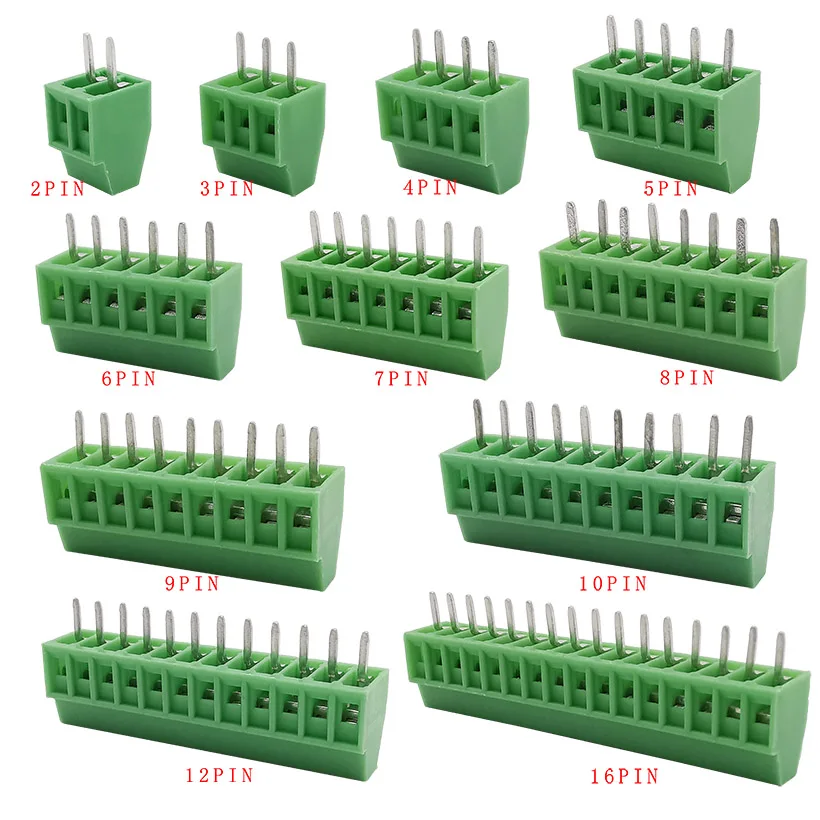
The screw terminal mechanism provides a robust and re-workable connection for stranded or solid core wires. Each terminal features a metal cage clamp that, when tightened by a small screw, firmly grips the inserted wire. This mechanical connection is superior to solder joints for applications requiring frequent wire changes or where field servicing is anticipated. The screw-down action ensures consistent contact pressure, minimizing resistance and preventing intermittent connections that can plague poorly secured wires.Installation is straightforward. Wires are stripped to the appropriate length, inserted into the terminal opening, and secured by turning the screw. The 2.54mm pitch allows for easy integration onto standard prototype Boards, making it ideal for hobbyists developing new circuits or engineers building custom control panels. The clear visual indication of pin count (2P, 3P, etc.) on the product images simplifies selection and ensures the correct component is chosen for the specific wiring harness. This ease of use reduces assembly time.
In contrast to crimp connectors that require specialized tools and are often single-use, these screw terminals offer flexibility and simplicity. They are particularly advantageous in educational settings or for rapid prototyping where circuit modifications are common. The reliability of the screw connection, when properly tightened, rivals that of more complex termination methods within its current and voltage limits.
Durability and Long-Term Performance
The robust construction, stemming from the PA66 housing and sturdy metal contacts, contributes significantly to the long-term durability of these terminal blocks. They are designed to withstand repeated insertions and removals of wires, a common requirement in development and maintenance cycles. The green color, a common standard for such components, provides good visibility against typical PCB substrates, aiding in assembly and inspection. The compact form factor also means less physical stress on the PCB itself.Environmental factors such as moderate temperature fluctuations and humidity are well-tolerated by the PA66 material, ensuring consistent performance over time. While not designed for extreme industrial environments, they are perfectly suited for indoor electronic devices, control systems, and educational projects. The precision molding visible in the product images suggests a consistent manufacturing process, which is critical for reliable electrical components. Consistent quality is evident.
Compared to cheaper alternatives that might use brittle plastics or inferior metal alloys, the KF128 series offers a significantly extended operational lifespan. This translates to fewer failures in the field, reduced maintenance costs, and greater overall system reliability. For projects where long-term stability is a requirement, these terminal blocks represent a sound engineering choice.
Value Proposition and Application Versatility
The KF128 terminal blocks offer exceptional value, balancing cost-effectiveness with critical safety and performance attributes. Their availability in various pin counts (2P to 16P) provides versatility for a wide array of applications, from simple power connections to multi-channel signal routing. This modularity allows designers to select the exact number of terminals needed, optimizing board space and minimizing component waste. The small footprint is a major advantage.These connectors are ideal for applications such as embedded systems, DIY electronics projects, custom sensor interfaces, LED lighting controls, and small power distribution boards. Their ease of integration and reliable performance make them a go-to choice for anyone building or repairing electronic circuits. The ability to quickly connect and disconnect wires without soldering is a significant time-saver, particularly during the debugging phase of a project.
Considering the potential costs associated with unreliable connections—from troubleshooting time to component damage or even safety hazards—the investment in these properly rated terminal blocks is minimal compared to the peace of mind and operational stability they provide. They are not just connectors; they are foundational elements for safe and functional electronic designs. Imagine completing a complex project, confident that every wire connection is secure and compliant, knowing that the integrity of your circuit is maintained by components engineered for reliability and safety.