KSD301/KSD302 Bimetallic Thermostat
Official Store Deal
Expert Analysis Overview
Precision Thermal Regulation: The KSD301/KSD302 Bimetallic Thermostat
The KSD301/KSD302 Bimetallic Thermostat is a critical safety and control component engineered for precise thermal management in electrical systems. This device is aimed at manufacturers and repair technicians requiring reliable, fixed-point temperature switching to prevent overheating or maintain specific operational temperatures. Its robust design ensures consistent performance.
At its operational core lies the bimetallic disc. This component is a composite of two distinct metals, each possessing a different coefficient of thermal expansion. When subjected to a temperature increase, these metals expand at varying rates, causing the disc to deform or "snap" into an inverted position. This physical deformation is not gradual; it is a rapid, decisive action. This snap-action mechanism is paramount. It ensures that the electrical contacts inside the thermostat either open or close almost instantaneously, depending on whether it is a Normally Closed (KSD301) or Normally Open (KSD302) variant. This rapid switching minimizes arcing across the contacts, which is a common cause of premature failure in slower-acting switches. Reduced arcing extends the operational lifespan significantly. Compared to older, slower-acting thermal switches that might exhibit contact chatter or prolonged arcing, this snap-action design offers superior reliability and durability.
The KSD301 variant, designated as Normally Closed (NC), maintains its electrical contacts in a closed state when the ambient temperature is below its specified set point. As the temperature rises and reaches this predetermined threshold, the bimetallic disc snaps, forcing the contacts to open. This breaks the electrical circuit. This configuration is ideal for over-temperature protection, where the goal is to cut power to a heating element or motor once a dangerous temperature is reached. Conversely, the KSD302 model operates as Normally Open (NO). Its contacts remain open below the set temperature. Upon reaching the set point, the disc snaps, closing the contacts and completing the circuit. This is useful for applications where a circuit needs to be activated only when a certain temperature is achieved, such as turning on a cooling fan or an indicator light. Understanding this fundamental difference is crucial for correct application. Incorrect selection could lead to system malfunction or safety hazards.
Unyielding Construction and Electrical Integrity
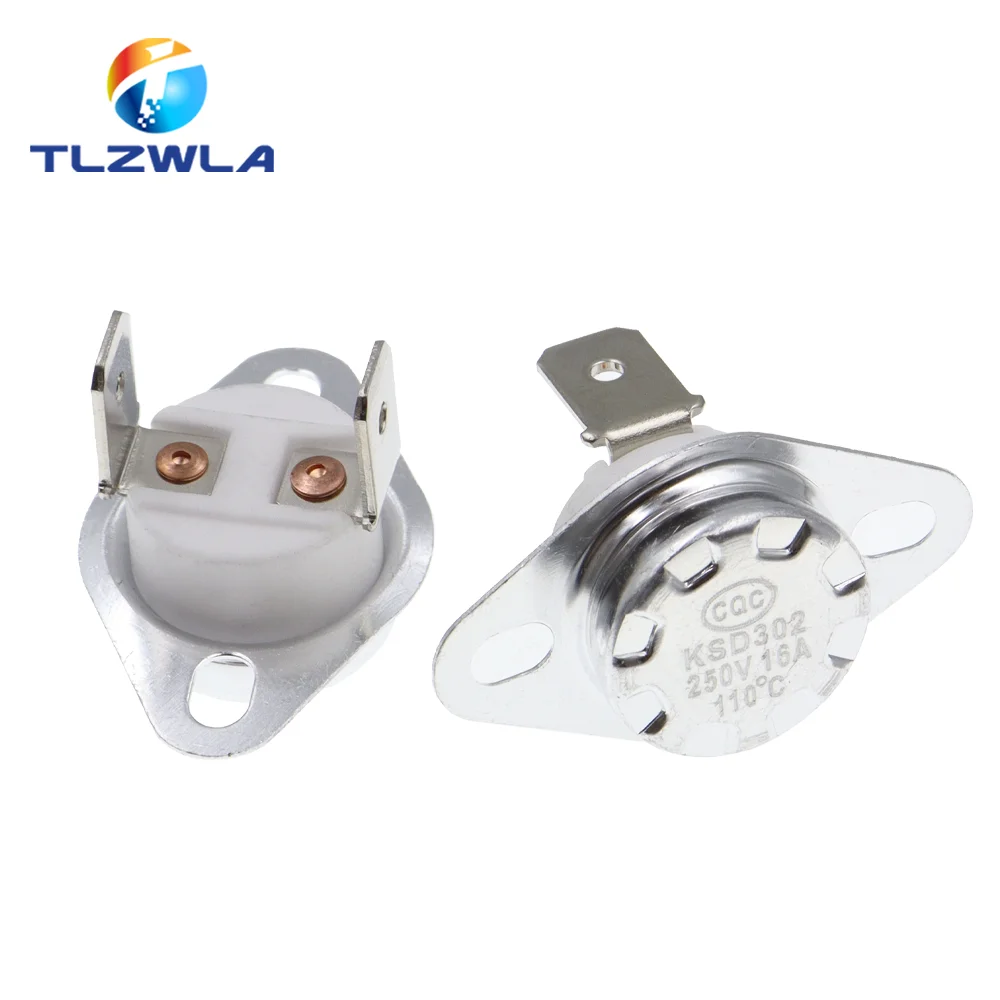
The physical construction of these thermostats speaks directly to their intended use in demanding thermal environments. A ceramic base forms the foundation. Ceramic is chosen for its exceptional thermal stability and superior electrical insulation properties, especially at elevated temperatures. Unlike plastic alternatives that can soften, deform, or even melt under sustained heat, the ceramic base maintains its structural integrity and dielectric strength. This is a critical safety feature. It prevents electrical leakage paths and ensures the thermostat remains functional even when exposed to the upper limits of its operating range. The robust ceramic resists thermal shock.
Encasing the bimetallic disc and contact mechanism is a metal cap. This cap serves multiple functions: it provides mechanical protection for the delicate internal components, shields them from dust and debris, and, crucially, facilitates efficient heat transfer to the bimetallic disc. The metal construction ensures that the disc accurately senses the temperature of the surface or medium it is monitoring. The cap is typically made from a conductive metal, often stainless steel or an aluminum alloy, chosen for its corrosion resistance and thermal conductivity. This ensures the thermostat responds quickly to temperature changes. Without effective heat transfer, the bimetallic element would react sluggishly, compromising the precision of the temperature control.
Electrical connections are made via quick-connect spade terminals. These terminals are designed for ease of installation and secure electrical contact. The 6.3mm width is a common standard, ensuring compatibility with widely available connectors and wiring harnesses. The quality of these terminals is paramount for maintaining low contact resistance and preventing localized heating at the connection point. Poor quality terminals can lead to voltage drops, increased power consumption, and, in severe cases, fire hazards due to excessive heat generation. The terminals appear robust, indicating a secure crimp or weld to the internal contacts. This attention to terminal quality directly addresses a common frustration with generic electrical components: unreliable connections.
Robust Electrical Capacity and Diverse Applications
These KSD301/KSD302 thermostats are rated for 16 Amperes at 250 Volts AC. This substantial rating signifies their capability to handle significant electrical loads, making them suitable for a wide array of Household Appliances and light industrial equipment. Many common heating elements, motors, and power supplies fall within this current and voltage envelope. The 16A rating is particularly important. It allows direct switching of many resistive loads without the need for an intermediate relay, simplifying circuit design and reducing overall component count and cost. This directly translates to a more efficient and potentially more reliable system.
The versatility extends to the available operating temperature range, spanning from 40°C to 180°C, with specific fixed set points like 45°C, 55°C, 60°C, 65°C, 70°C, 75°C, 80°C, and 85°C. This broad selection allows for precise thermal calibration tailored to specific application requirements. For instance, a coffee maker might require a 90°C thermostat to maintain brewing temperature, while an electric oven might need a 150°C thermostat for over-temperature protection. The fixed nature of these set points means that once installed, the thermostat will consistently activate at its designated temperature. This consistency is vital for both product performance and user safety. It removes guesswork from thermal management.
Consider a scenario where a domestic water heater requires over-temperature protection. A KSD301 (NC) set at 85°C would interrupt the heating element circuit if the water temperature exceeds this safe limit, preventing scalding and potential damage to the appliance. Alternatively, in a small industrial incubator, a KSD302 (NO) set at 40°C could activate a warning light or a small fan once the desired incubation temperature is reached. The ability to choose between normally open and normally closed contacts, combined with a wide range of precise temperature set points, makes these thermostats highly adaptable. This adaptability is a key differentiator. It allows engineers to integrate these components into diverse designs without extensive circuit modifications.
Secure Mounting and Essential Safety Considerations
Installation of the KSD301/KSD302 thermostat is facilitated by its flanged design with two screw holes. This mounting method ensures a secure and stable attachment to the heat source or the surface being monitored. A firm mechanical connection is crucial for accurate temperature sensing. If the thermostat is loosely mounted, an air gap can form between its metal cap and the heat source, leading to inaccurate temperature readings and delayed switching. This could compromise the safety function. Proper mounting ensures direct thermal contact.
When integrating these thermostats into an electrical system, adherence to safety protocols is non-negotiable. The wire gauge accuracy for connecting to the 16A 250V terminals must be meticulously verified. Using undersized wiring for a 16A load can lead to excessive heat generation in the wires, insulation degradation, and ultimately, a significant fire risk. A certified electrician would typically recommend a minimum of 14 AWG (2.5mm²) copper wire for continuous 16A loads, though local electrical codes may specify even larger gauges depending on conduit fill and ambient temperature. Always consult local codes.
Furthermore, the terminal quality and connection integrity are paramount. The spade terminals must be securely connected to appropriate female quick-connect terminals, ensuring a tight fit with minimal resistance. Loose connections can generate localized heat, leading to premature failure of the connection or even the thermostat itself. The visual inspection of the terminals reveals a clean, unoxidized surface, suggesting good conductivity. However, the installer must ensure the mating connector is equally robust. Preventing electrical fires and ensuring safety standard compliance are the primary drivers behind these stringent requirements. This component plays a direct role in preventing thermal runaway.
Engineered Longevity and Economic Advantage
The design and material choices of the KSD301/KSD302 series contribute directly to its extended operational lifespan. With a specified life cycle of 50,000 operations, these thermostats are built for durability in applications requiring frequent switching. This high cycle count is a direct result of the snap-action bimetallic disc, which minimizes contact wear, and the robust ceramic and metal construction that resists environmental degradation. A longer lifespan reduces maintenance frequency. This translates to lower operational costs over the product's lifetime.
From an economic perspective, the value proposition of these thermostats extends beyond their initial purchase price. The cost-per-use becomes exceptionally low due to their reliability and longevity. Investing in a high-quality thermal switch like this prevents costly equipment damage that could result from overheating. Imagine a scenario where a critical industrial heating process relies on a cheap, unreliable thermostat. A failure could lead to product spoilage, equipment breakdown, and significant downtime. This is a substantial financial risk. A reliable thermostat acts as an inexpensive insurance policy.
Compared to more complex electronic temperature sensors and controllers, these bimetallic thermostats offer a simpler, more direct solution for fixed-point temperature control. They do not require external power supplies, complex programming, or calibration. Their purely mechanical operation makes them inherently robust against electromagnetic interference (EMI) and voltage fluctuations that can plague electronic counterparts. This simplicity is a strength. It reduces potential points of failure and simplifies troubleshooting. For applications where a simple ON/OFF temperature switch is sufficient, the KSD301/KSD302 provides an elegant and highly effective solution. It is a workhorse component.
Performance Benchmarks and Assured Quality
Beyond the basic ratings, specific performance metrics underscore the quality of these thermostats. The contact resistance is specified at ≤ 50mΩ. This low resistance ensures minimal power loss across the contacts when the circuit is closed, contributing to energy efficiency and reducing heat generation at the switch itself. High contact resistance can lead to significant voltage drops and localized heating, which can degrade the contacts over time. Maintaining low resistance is crucial.
Insulation resistance is rated at ≥ 100MΩ at DC500V. This high value confirms the excellent dielectric properties of the ceramic base and internal insulation, preventing current leakage between the live parts and the mounting flange or other grounded components. This is a fundamental safety requirement for any electrical component. A robust insulation system protects against electrical shock. The dielectric strength of 1500V AC for 1 minute further validates the insulation's ability to withstand transient voltage spikes without breakdown. These specifications are not merely numbers; they represent a commitment to electrical safety and operational integrity.
The visual presentation of the product, including the clear markings on the metal cap (e.g., "KSD302 250V 16A 110°C"), indicates a level of manufacturing precision and adherence to labeling standards. Such markings are essential for proper identification and installation. They confirm the specific model, voltage, current, and temperature set point. This transparency is a hallmark of quality. It allows installers to quickly verify the correct component is being used. This attention to detail instills confidence.
Elevating Thermal Control: A Definitive Upgrade
Unlike generic, unrated thermal switches that often employ flimsy plastic housings and questionable contact materials, this KSD301/KSD302 series thermostat utilizes a ceramic base and robust metal cap to ensure superior thermal stability and electrical isolation. This construction directly addresses the common failure points of cheaper alternatives, which can deform or short circuit under operational heat. The upgrade is clear.
The snap-action bimetallic disc is another significant upgrade. Unlike slower, less decisive thermal elements that can cause prolonged arcing and rapid contact degradation, this mechanism ensures immediate circuit interruption or completion. This precision extends the life of both the thermostat and the appliance it protects. It prevents unnecessary wear. This translates to fewer replacements and reduced maintenance.
Imagine the peace of mind that comes with knowing your critical appliances are protected by a reliable thermal switch. Picture a busy commercial kitchen where an electric deep fryer's safety depends on precise over-temperature cut-off. This thermostat ensures that the fryer will not exceed its safe operating temperature, preventing oil fires and protecting staff. The consistent performance means less worry about equipment failure. This component provides a layer of security.
Consider a home workshop with a powerful electric heater. The KSD301 thermostat, acting as a failsafe, will automatically disconnect power if the heater's internal temperature becomes dangerously high, safeguarding against potential fire hazards. This proactive protection is invaluable. It allows users to operate their equipment with confidence, knowing that a critical safety mechanism is actively monitoring conditions. This is more than just a component; it is an integral part of a safe electrical system. This KSD301/KSD302 bimetallic thermostat represents a foundational component for any system requiring dependable thermal management. Its robust construction, precise operation, and high electrical ratings ensure long-term reliability and safety. For those who prioritize the integrity and longevity of their electrical equipment, this thermostat offers a compelling solution. It is a smart investment.