KSD301 Temperature Switch Thermostat Sensor
Official Store Deal
Expert Analysis Overview
Precision Thermal Guardianship for Family Intelligence Systems
The KSD301 Temperature Switch is a foundational thermal control component critical for maintaining precise environmental conditions within a family intelligence system. Its industrial-grade design ensures consistent operation, a non-negotiable aspect for parental peace of mind. This device offers a robust, mechanical solution for temperature monitoring, essential for any home aiming for enhanced safety and operational reliability.Core Thermal Sensing Mechanics
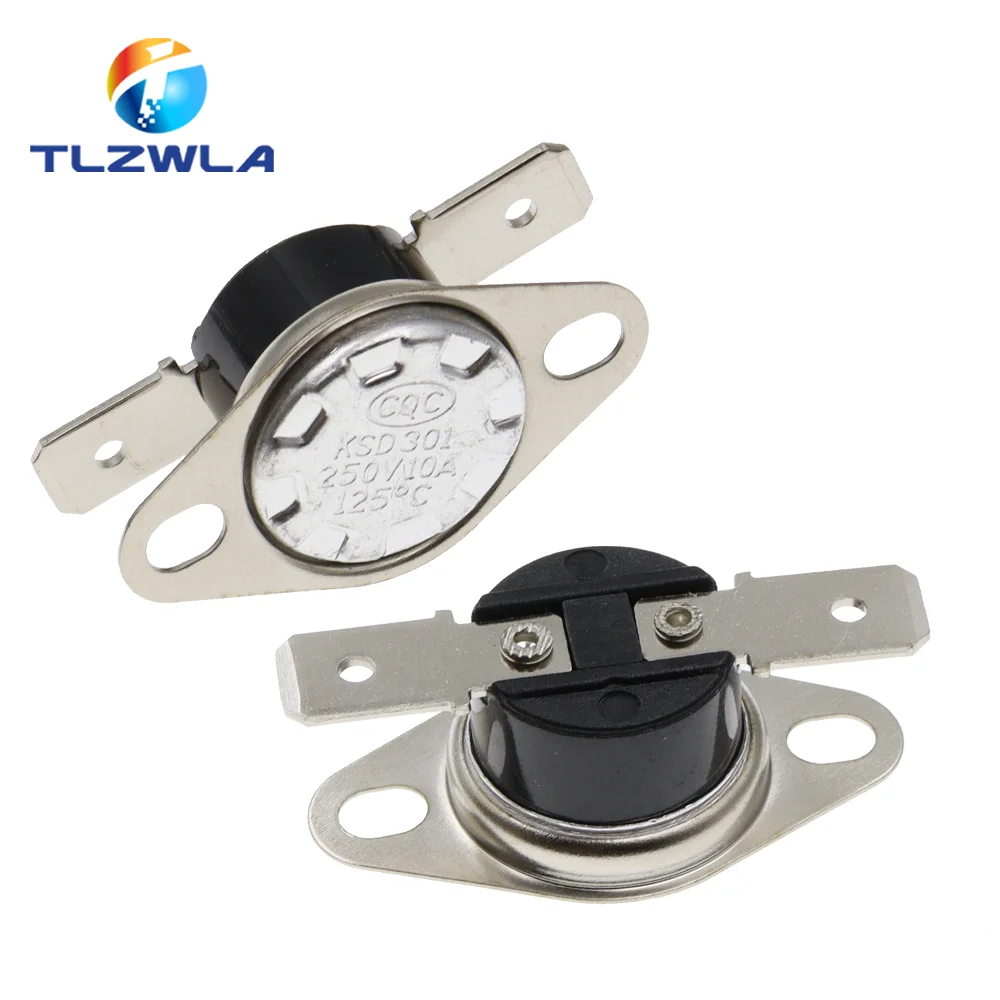
Visible in the product imagery, the KSD301 features a distinct metallic cap, indicative of its bimetallic disc mechanism. This design relies on two different metals bonded together, which expand and contract at varying rates when exposed to temperature changes. The Bakelite housing provides crucial electrical insulation. Specific temperature ratings, such as 50, 60, or 65 degrees Celsius, are clearly marked on the cap, denoting the precise point at which the switch actuates.This bimetallic principle provides accurate, repeatable switching actions. When the ambient temperature reaches the predetermined set point, the bimetallic disc snaps, changing the state of the electrical contacts. This ensures critical appliances or environmental controls respond precisely to temperature changes, whether it is activating a cooling fan or deactivating an overheating element. The response is immediate and purely mechanical.
Compared to cheaper, less reliable thermal fuses or basic thermistors, the KSD301 offers a significant upgrade. Thermal fuses are single-use devices, requiring replacement after activation. Basic thermistors often require complex electronic circuits for interpretation and control. The KSD301, conversely, provides a direct, robust, and repeatable switching action, making it a superior choice for ongoing system integrity where reliability is paramount.
Configurational Adaptability for Enhanced Safety Protocols
The KSD301 is available in both Normally Open (NO) and Normally Closed (NC) configurations, a crucial distinction for system design. A Normally Open switch means the circuit is open (no current flows) at normal temperatures and closes when the set temperature is reached. A Normally Closed switch means the circuit is closed (current flows) at normal temperatures and opens when the set temperature is reached. This flexibility is a key advantage.This dual functionality allows for seamless integration into diverse safety protocols. For instance, a Normally Open switch can activate an exhaust fan in a utility room if a water heater begins to overheat, preventing excessive heat buildup. Conversely, a Normally Closed switch can cut power to a space heater if its internal temperature exceeds a safe threshold, preventing fire hazards. The ability to choose the appropriate contact type simplifies circuit design and enhances protective measures.
Generic thermal sensors often lack this crucial dual functionality, forcing engineers or DIY enthusiasts to implement workarounds or compromise on system design. The KSD301's inherent versatility allows for tailored protective circuits, ensuring that the response to temperature anomalies is exactly as intended. This adaptability is critical for custom home automation or security projects.
Resilience in the Home Environment
With a 10A 250V rating, this temperature switch is designed to handle substantial electrical loads. The visible Bakelite construction further reinforces its durability. Bakelite is a thermosetting plastic known for its excellent electrical insulation properties and high heat resistance, making it an ideal material for components exposed to varying temperatures and electrical currents.This robust electrical rating means the KSD301 can directly manage significant loads, such as controlling a water heater's element, a small HVAC component, or a powerful exhaust fan, without necessarily needing intermediary relays for lower power applications. The Bakelite housing ensures that the electrical contacts remain isolated and protected, even under thermal stress. This is a durable component.
Unlike many components designed for light-duty electronics, which might quickly fail under household power demands, the KSD301 handles real-world household electricity. This capability reduces the number of components in a safety circuit, thereby minimizing potential points of failure. For a security-conscious parent, fewer failure points mean greater system reliability and peace of mind.
Effortless Integration and Long-Term Serviceability
The images clearly show standardized mounting tabs with screw holes and common 6.3mm (0.25in) terminal sizes. The overall body diameter is approximately 32mm (1.26in), and the height is around 16mm (0.63in). These dimensions are consistent across various KSD301 models, ensuring broad compatibility.Standardized dimensions simplify installation into existing enclosures or custom projects. The common terminal size means wiring is straightforward, utilizing widely available spade connectors. This ease of installation reduces the complexity and time required to integrate these switches into a family intelligence system, making it accessible for competent DIYers.
Proprietary sensors often complicate repairs or upgrades due to unique form factors or specialized connectors. The KSD301's universal design, however, ensures long-term serviceability. Should a switch ever need replacement, finding a compatible part is simple, ensuring the continuous operation of critical safety systems without extensive downtime or sourcing difficulties.
The Unseen Value of Proactive, Mechanical Protection
At its core, the KSD301 is a simple, mechanical device. It operates without complex electronics, software, or network connectivity. This mechanical simplicity is a profound advantage in critical safety applications. It just works.Its mechanical operation means there is no software to update, no batteries to replace, and minimal susceptibility to electromagnetic interference that can plague more complex smart sensors. The switch simply changes state when its temperature threshold is met, providing a reliable, predictable response every time. This inherent reliability is invaluable for systems designed to protect a family.
While smart sensors offer advanced features like remote monitoring and intricate automation, they also introduce complexity and potential failure points related to network connectivity, power supply, or software glitches. For core safety functions, a robust mechanical switch like the KSD301 often outperforms, providing a dependable, 'set-and-forget' layer of protection that doesn't rely on external factors to function correctly.
Imagine a home where critical systems operate with an underlying layer of unwavering thermal protection. The KSD301 ensures that heating elements don't dangerously overheat, and cooling systems activate precisely when needed. This foundational reliability provides a quiet confidence, allowing focus on family life rather than constant system vigilance. This component is a silent guardian, working tirelessly to maintain a safe and stable environment for those who matter most.