KSD9700 Bimetal Disc Temperature Switches for Thermal Protection
Official Store Deal
Expert Analysis Overview
The KSD9700 Bimetal Disc Temperature Switch is a critical thermal safety component, offering precise temperature control for safeguarding sensitive electronics within solar energy systems and other electrical applications. This series of thermal fuses provides a robust mechanism for over-temperature protection, essential for maintaining the longevity and efficiency of various electrical circuits. Its design focuses on reliable operation, making it a staple for hobbyists and professionals alike who prioritize system integrity. These switches are more than simple circuit breakers; they are proactive guardians against thermal runaway.
The KSD9700 series offers a wide operational temperature range, typically from 40 to 150 degrees Celsius. This broad spectrum allows for highly specific thermal management strategies across diverse solar applications. Accurate temperature thresholds are paramount.
Consider a battery bank in an off-grid solar setup. Overcharging or excessive discharge can lead to internal heating, potentially damaging the cells or, in extreme cases, causing thermal events. A KSD9700 switch, strategically placed to monitor battery temperature, can disconnect the charging circuit if a predefined threshold, say 60°C, is exceeded. This prevents irreversible damage and extends battery lifespan. The system gains a vital layer of protection.
Unlike generic thermal cutoffs that might offer only a single, fixed temperature point, the KSD9700's varied range allows for nuanced control. This adaptability means a single component family can address multiple thermal protection needs within a complex solar array, from charge controllers to inverter enclosures. It ensures components operate within their optimal thermal window.
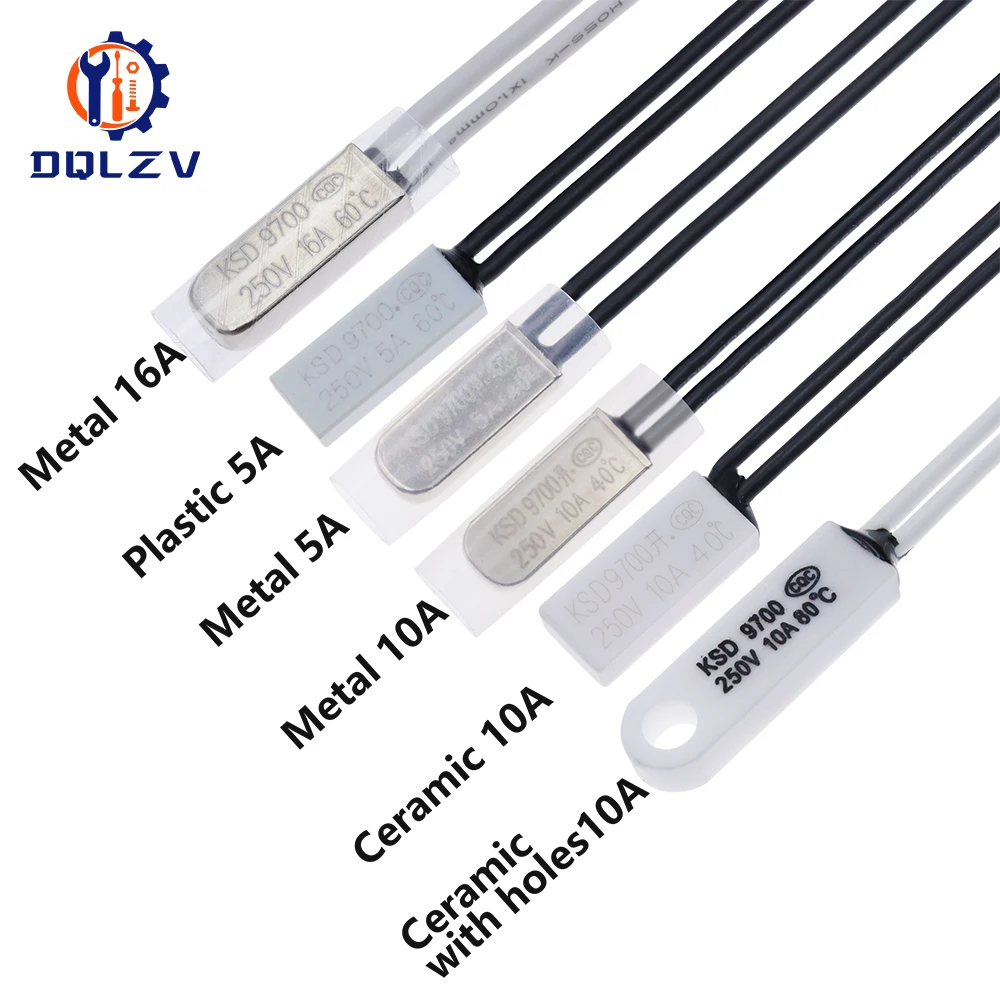
These bimetal disc switches are available with various current ratings, including 5A, 10A, and 16A at 250V. This versatility dictates their suitability for different parts of a solar energy system. Matching the switch's current rating to the circuit's maximum anticipated load is fundamental for reliable operation.
For smaller DC loads, such as powering LED lighting or low-power sensors directly from a 12V or 24V solar battery, a 5A switch might be perfectly adequate. This protects individual components from localized overheating. It's a simple, effective safeguard.
However, when integrating these switches into circuits involving larger inverters or charge controllers that handle substantial power flows, the 10A or 16A variants become necessary. These higher ratings accommodate the increased current draw, ensuring the thermal switch itself does not become a bottleneck or a point of failure under normal operating conditions. Proper selection prevents nuisance trips. The switch must handle the full load.
The KSD9700 switches are offered with different casing materials, including metal, plastic, and ceramic. Each material provides distinct advantages regarding heat dissipation, insulation, and environmental resistance, crucial factors for outdoor or semi-outdoor solar installations. Material choice impacts longevity.
Metal-cased versions, often featuring an insulating rubber sleeve, offer excellent thermal conductivity, allowing the bimetal disc to react quickly to ambient temperature changes. This rapid response is vital for fast-acting protection. Metal casings also provide a degree of mechanical robustness. They resist physical impact.
Plastic-cased units, while potentially offering less direct thermal coupling, provide inherent electrical insulation, simplifying installation in certain applications where direct contact with conductive surfaces is a concern. These are often suitable for less demanding thermal environments. Insulation is a key benefit. Ceramic-cased switches, particularly those with mounting holes, combine good thermal stability with superior electrical insulation and high-temperature resistance, making them ideal for applications where the switch itself might be exposed to higher ambient temperatures or require more secure mounting. They offer enhanced durability.
For solar energy hobbyists building self-sustaining energy systems, the KSD9700 switches are instrumental in achieving high reliability and preventing costly equipment failures. They contribute directly to system uptime. Their simplicity is a strength.
Imagine an off-grid cabin where a solar charge controller is working hard to replenish batteries. If the controller's heatsink becomes clogged with dust or its internal components begin to overheat due to sustained high load, a strategically placed KSD9700 switch can detect this anomaly. By interrupting the power flow, it prevents the controller from burning out, saving the expense of a replacement and ensuring continued power supply once the issue is addressed. This proactive measure is invaluable.
These switches are passive devices, requiring no external power for their operation, which further enhances their reliability in off-grid scenarios where every watt counts. Their mechanical action ensures a definitive break or make in the circuit. They operate independently. This contrasts with active electronic monitoring systems that consume power and can fail due to software glitches or power fluctuations. The KSD9700 offers a hardware-level safety net, a fundamental building block for resilient solar power infrastructure.
While the KSD9700 switches themselves introduce negligible efficiency losses due to their direct contact design, their proper selection and integration are critical for overall system efficiency. An improperly rated switch can cause unnecessary interruptions. Selection impacts performance.
When verifying compatibility with existing solar setups, consider the voltage and current ratings of the circuit where the switch will be installed. A 250V rating makes these switches suitable for both lower voltage DC solar circuits and higher voltage AC inverter outputs, provided the current rating is respected. For DC applications, ensure the switch is rated for DC current, as AC ratings do not always translate directly to DC breaking capacity. Always check the datasheet.
Furthermore, the choice between Normally Closed (NC) and Normally Open (NO) configurations is crucial. An NC switch maintains continuity until the temperature limit is reached, breaking the circuit upon overheating. An NO switch maintains an open circuit until the temperature limit is reached, closing the circuit upon overheating. This could activate a fan or an alarm. Understanding this distinction is vital for designing appropriate safety and control logic. The correct configuration is essential.
While offering robust protection, these bimetal switches are single-point temperature detectors. They react to the temperature at their immediate location, not necessarily the overall thermal state of a larger component. This localized sensing can be a minor trade-off. Careful placement mitigates this.
Their mechanical switching action, while reliable, means they are not designed for rapid, high-frequency switching cycles. They are intended for fault protection, not continuous temperature regulation like a thermostat. This distinction is important for application design. They are safety devices, not regulators.
For solar hobbyists focused on building durable, self-sustaining energy systems, the KSD9700 bimetal disc temperature switch is an indispensable tool. It provides a simple, effective, and economical means of protecting valuable components from thermal damage. These switches enhance the longevity and safety of any solar installation, from small portable setups to comprehensive off-grid homes. Integrating these devices ensures peace of mind, knowing your solar investment is shielded against unforeseen thermal events, allowing for uninterrupted power generation and storage. Your system will operate more reliably. Investing in these small components yields significant returns in system stability and component lifespan.
Precision Thermal Management for Solar Systems
The KSD9700 series offers a wide operational temperature range, typically from 40 to 150 degrees Celsius. This broad spectrum allows for highly specific thermal management strategies across diverse solar applications. Accurate temperature thresholds are paramount.
Consider a battery bank in an off-grid solar setup. Overcharging or excessive discharge can lead to internal heating, potentially damaging the cells or, in extreme cases, causing thermal events. A KSD9700 switch, strategically placed to monitor battery temperature, can disconnect the charging circuit if a predefined threshold, say 60°C, is exceeded. This prevents irreversible damage and extends battery lifespan. The system gains a vital layer of protection.
Unlike generic thermal cutoffs that might offer only a single, fixed temperature point, the KSD9700's varied range allows for nuanced control. This adaptability means a single component family can address multiple thermal protection needs within a complex solar array, from charge controllers to inverter enclosures. It ensures components operate within their optimal thermal window.
Current Handling Capabilities and System Integration
These bimetal disc switches are available with various current ratings, including 5A, 10A, and 16A at 250V. This versatility dictates their suitability for different parts of a solar energy system. Matching the switch's current rating to the circuit's maximum anticipated load is fundamental for reliable operation.
For smaller DC loads, such as powering LED lighting or low-power sensors directly from a 12V or 24V solar battery, a 5A switch might be perfectly adequate. This protects individual components from localized overheating. It's a simple, effective safeguard.
However, when integrating these switches into circuits involving larger inverters or charge controllers that handle substantial power flows, the 10A or 16A variants become necessary. These higher ratings accommodate the increased current draw, ensuring the thermal switch itself does not become a bottleneck or a point of failure under normal operating conditions. Proper selection prevents nuisance trips. The switch must handle the full load.
Material Science and Durability in Harsh Environments
The KSD9700 switches are offered with different casing materials, including metal, plastic, and ceramic. Each material provides distinct advantages regarding heat dissipation, insulation, and environmental resistance, crucial factors for outdoor or semi-outdoor solar installations. Material choice impacts longevity.
Metal-cased versions, often featuring an insulating rubber sleeve, offer excellent thermal conductivity, allowing the bimetal disc to react quickly to ambient temperature changes. This rapid response is vital for fast-acting protection. Metal casings also provide a degree of mechanical robustness. They resist physical impact.
Plastic-cased units, while potentially offering less direct thermal coupling, provide inherent electrical insulation, simplifying installation in certain applications where direct contact with conductive surfaces is a concern. These are often suitable for less demanding thermal environments. Insulation is a key benefit. Ceramic-cased switches, particularly those with mounting holes, combine good thermal stability with superior electrical insulation and high-temperature resistance, making them ideal for applications where the switch itself might be exposed to higher ambient temperatures or require more secure mounting. They offer enhanced durability.
Enhancing Off-Grid Potential and Reliability
For solar energy hobbyists building self-sustaining energy systems, the KSD9700 switches are instrumental in achieving high reliability and preventing costly equipment failures. They contribute directly to system uptime. Their simplicity is a strength.
Imagine an off-grid cabin where a solar charge controller is working hard to replenish batteries. If the controller's heatsink becomes clogged with dust or its internal components begin to overheat due to sustained high load, a strategically placed KSD9700 switch can detect this anomaly. By interrupting the power flow, it prevents the controller from burning out, saving the expense of a replacement and ensuring continued power supply once the issue is addressed. This proactive measure is invaluable.
These switches are passive devices, requiring no external power for their operation, which further enhances their reliability in off-grid scenarios where every watt counts. Their mechanical action ensures a definitive break or make in the circuit. They operate independently. This contrasts with active electronic monitoring systems that consume power and can fail due to software glitches or power fluctuations. The KSD9700 offers a hardware-level safety net, a fundamental building block for resilient solar power infrastructure.
Calculating Efficiency Losses and Verifying Compatibility
While the KSD9700 switches themselves introduce negligible efficiency losses due to their direct contact design, their proper selection and integration are critical for overall system efficiency. An improperly rated switch can cause unnecessary interruptions. Selection impacts performance.
When verifying compatibility with existing solar setups, consider the voltage and current ratings of the circuit where the switch will be installed. A 250V rating makes these switches suitable for both lower voltage DC solar circuits and higher voltage AC inverter outputs, provided the current rating is respected. For DC applications, ensure the switch is rated for DC current, as AC ratings do not always translate directly to DC breaking capacity. Always check the datasheet.
Furthermore, the choice between Normally Closed (NC) and Normally Open (NO) configurations is crucial. An NC switch maintains continuity until the temperature limit is reached, breaking the circuit upon overheating. An NO switch maintains an open circuit until the temperature limit is reached, closing the circuit upon overheating. This could activate a fan or an alarm. Understanding this distinction is vital for designing appropriate safety and control logic. The correct configuration is essential.
Strategic Transparency: Understanding Trade-offs
While offering robust protection, these bimetal switches are single-point temperature detectors. They react to the temperature at their immediate location, not necessarily the overall thermal state of a larger component. This localized sensing can be a minor trade-off. Careful placement mitigates this.
Their mechanical switching action, while reliable, means they are not designed for rapid, high-frequency switching cycles. They are intended for fault protection, not continuous temperature regulation like a thermostat. This distinction is important for application design. They are safety devices, not regulators.
For solar hobbyists focused on building durable, self-sustaining energy systems, the KSD9700 bimetal disc temperature switch is an indispensable tool. It provides a simple, effective, and economical means of protecting valuable components from thermal damage. These switches enhance the longevity and safety of any solar installation, from small portable setups to comprehensive off-grid homes. Integrating these devices ensures peace of mind, knowing your solar investment is shielded against unforeseen thermal events, allowing for uninterrupted power generation and storage. Your system will operate more reliably. Investing in these small components yields significant returns in system stability and component lifespan.