L298N Dual H-Bridge Motor Driver Module
Official Store Deal
Expert Analysis Overview
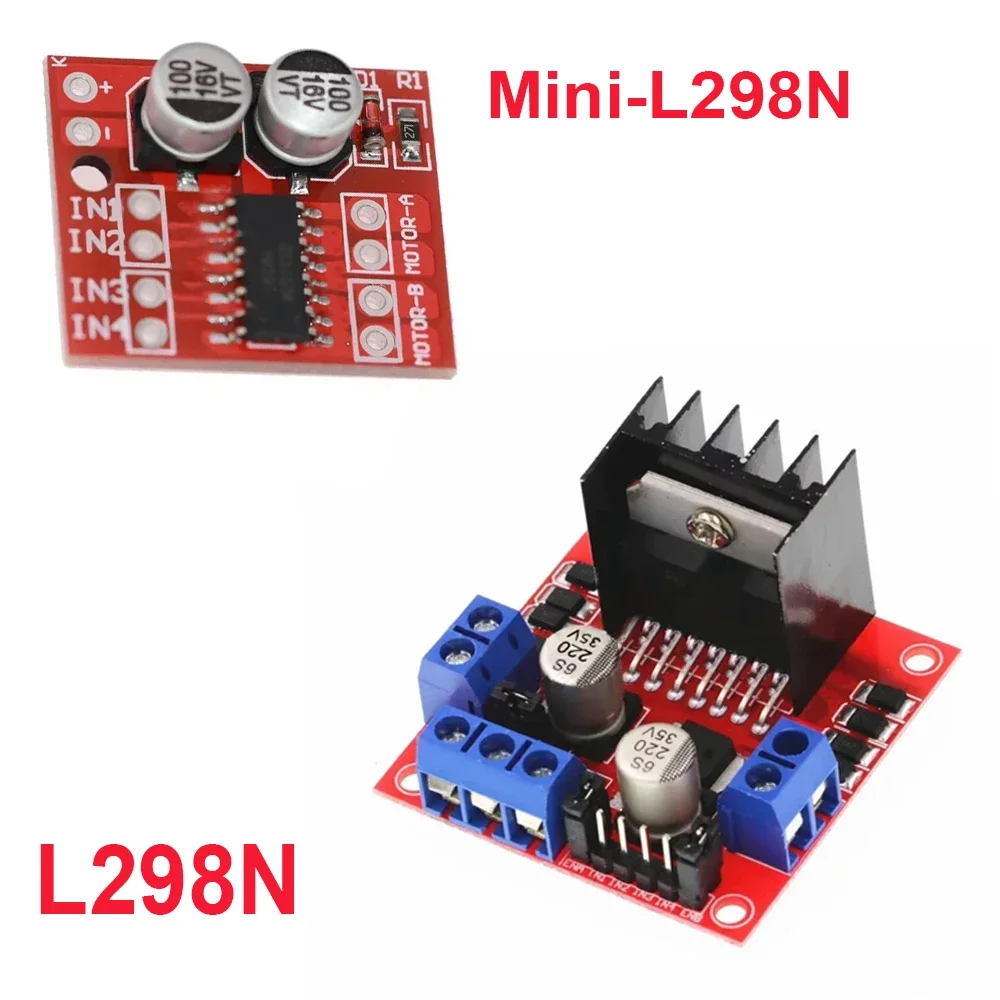
The L298N Dual H-Bridge Motor Driver Module is a foundational power control unit for hobbyists and engineers building robust DC and stepper motor applications. This module, visible with its distinctive red PCB and integrated heatsink, provides a straightforward and cost-effective method for managing motor direction and speed, which is particularly valuable in solar energy projects requiring precise movement, such as solar panel tracking systems or small-scale robotic platforms. Its design prioritizes accessibility and functionality for those integrating electromechanical components into their renewable energy setups.
The L298N chip, a dual H-bridge driver, forms the heart of this module. An H-bridge is an electronic circuit that enables a voltage to be applied across a load in either direction, which is crucial for controlling the direction of DC motors or the winding sequence of stepper motors. The visible L298N integrated circuit is designed to handle significant current for its class, making it suitable for a wide array of small to medium-sized motors commonly found in hobbyist projects.
This architecture translates directly into versatile motor control. For instance, in a solar tracking application, one H-bridge can control a motor for horizontal alignment, while the second manages vertical positioning. This dual capability simplifies system design, reducing the need for multiple discrete driver circuits. Unlike simpler transistor arrays that offer limited current or single-direction control, the L298N provides full bidirectional control with current capabilities up to 2A per bridge, allowing for more complex and responsive mechanical actions.
Compared to modern MOSFET-based drivers, the L298N, utilizing bipolar junction transistors (BJTs) internally, exhibits a slightly higher voltage drop across its output stages. This inherent characteristic means a portion of the input power is dissipated as heat rather than being delivered to the motor. However, for many solar hobbyist applications where precise current regulation or ultra-high efficiency isn't the absolute paramount, this trade-off is often acceptable, especially given the module's lower cost and robust nature. It is a workhorse for many.
Visible on the module are several key components that support the L298N IC's operation. Large electrolytic capacitors, typically rated around 220µF at 35V, are prominently featured. These capacitors serve a critical role in filtering and stabilizing the input voltage supplied to the motor driver. They help to smooth out power fluctuations, which is vital for consistent motor performance and to protect the L298N chip from sudden voltage spikes or dips, particularly when motors start or stop, drawing transient currents.
The presence of these substantial capacitors ensures a cleaner power delivery to the motors. In a solar-powered system, where the input voltage might fluctuate due to varying solar irradiance or battery discharge, this voltage stabilization is invaluable. It helps maintain predictable motor behavior, preventing erratic movements that could compromise the accuracy of a solar tracker. Without adequate capacitance, motor operation can become unstable, leading to unreliable system performance.
Many entry-level motor drivers omit such robust input capacitance, relying on the user to add external components. This integrated design is a distinct advantage, offering a more complete and ready-to-use solution right out of the box. It minimizes external component count and simplifies wiring for the end-user, making it more appealing for rapid prototyping and educational purposes. Simplicity is key for adoption.
An essential feature for sustained operation is the integrated black heatsink, securely fastened to the L298N chip. This heatsink is designed to dissipate the heat generated by the L298N IC during operation, especially when driving motors at higher currents or for extended periods. The L298N, being a BJT-based driver, inherently generates more heat than its MOSFET counterparts due to its internal voltage drop.
Effective heat dissipation is crucial for the longevity and reliability of the module. Without adequate cooling, the L298N chip can overheat, leading to thermal shutdown or permanent damage. For solar applications where devices might operate outdoors in varying ambient temperatures, this integrated thermal management is a significant benefit. It prevents premature failure.
Compared to bare L298N chips or modules without heatsinks, this integrated solution provides a much safer and more reliable operating envelope. While extreme continuous loads might still necessitate additional active cooling, the standard heatsink handles typical hobbyist loads effectively. This pre-installed thermal solution saves users the effort of sourcing and attaching a heatsink themselves, streamlining project assembly.
The module features multiple terminal blocks and pin headers for easy connection. Blue screw terminals are provided for motor power input (VCC and GND) and for connecting the two motors (OUT1/OUT2 for Motor A, OUT3/OUT4 for Motor B). These terminals offer secure and robust connections, which are important for applications that might experience vibration or movement, such as mobile robots or tracking systems. The screw terminals ensure solid electrical contact.
Control signals are typically provided via standard pin headers, allowing direct connection to microcontrollers like Arduino, ESP32, or Raspberry Pi. Four input pins (IN1-IN4) control the direction of the two motors, while two enable pins (ENA, ENB) allow for Pulse Width Modulation (PWM) to control motor speed. This standard interface makes it highly compatible with popular development platforms, simplifying programming and integration into complex control algorithms.
In a solar energy context, this ease of integration is paramount. A microcontroller can read data from light sensors to determine the optimal angle for solar panels, then send precise control signals to the L298N module to adjust the panel's position. This creates an automated solar tracking system, maximizing energy harvest throughout the day. The module's straightforward digital control makes it an ideal candidate for such intelligent energy solutions. It enables smart automation.
At a price point typically under $5, this L298N module represents an exceptional value for money. Its low cost makes it highly accessible for students, hobbyists, and educators looking to experiment with motor control without a significant financial outlay. This affordability allows for iterative design and experimentation, which is fundamental to learning and innovation in electronics and robotics. Learning becomes more accessible.
For those building self-sustaining energy systems, the ability to reliably control motors for tasks like solar panel orientation, small pump actuation for water circulation, or even simple robotic clean-up functions around a solar array is invaluable. The L298N provides this capability without adding substantial cost to the overall project budget. Its robust nature, despite being an older technology, means it can withstand some of the rigors of outdoor or experimental environments.
Unlike more expensive, specialized motor drivers that might offer higher efficiency or advanced feedback mechanisms, the L298N focuses on fundamental, reliable control. This makes it an excellent choice for projects where the primary goal is functional motor movement and directional control, rather than absolute peak efficiency or complex closed-loop positioning that might be overkill for the application. It provides essential functionality.
This module excels in scenarios where a balance of cost, ease of use, and sufficient power delivery is required. Imagine a small, autonomous robot designed to clear dust from solar panels, or a simple sun-tracking mechanism for a portable solar charger. The L298N provides the necessary motor control to bring these eco-friendly innovations to life. Its simplicity ensures quick deployment and troubleshooting, allowing innovators to focus on the broader system design rather than intricate driver details. This empowers creators to build efficient, self-reliant energy solutions, making their solar projects more dynamic and effective. The satisfaction of seeing a solar panel precisely follow the sun, powered by your own design, is a profound reward for any solar energy hobbyist. This module makes such achievements attainable, fostering a deeper engagement with renewable technology and practical engineering principles.
Driving Dynamics: Core Control Architecture
The L298N chip, a dual H-bridge driver, forms the heart of this module. An H-bridge is an electronic circuit that enables a voltage to be applied across a load in either direction, which is crucial for controlling the direction of DC motors or the winding sequence of stepper motors. The visible L298N integrated circuit is designed to handle significant current for its class, making it suitable for a wide array of small to medium-sized motors commonly found in hobbyist projects.
This architecture translates directly into versatile motor control. For instance, in a solar tracking application, one H-bridge can control a motor for horizontal alignment, while the second manages vertical positioning. This dual capability simplifies system design, reducing the need for multiple discrete driver circuits. Unlike simpler transistor arrays that offer limited current or single-direction control, the L298N provides full bidirectional control with current capabilities up to 2A per bridge, allowing for more complex and responsive mechanical actions.
Compared to modern MOSFET-based drivers, the L298N, utilizing bipolar junction transistors (BJTs) internally, exhibits a slightly higher voltage drop across its output stages. This inherent characteristic means a portion of the input power is dissipated as heat rather than being delivered to the motor. However, for many solar hobbyist applications where precise current regulation or ultra-high efficiency isn't the absolute paramount, this trade-off is often acceptable, especially given the module's lower cost and robust nature. It is a workhorse for many.
Component Integrity: Power Management and Thermal Design
Visible on the module are several key components that support the L298N IC's operation. Large electrolytic capacitors, typically rated around 220µF at 35V, are prominently featured. These capacitors serve a critical role in filtering and stabilizing the input voltage supplied to the motor driver. They help to smooth out power fluctuations, which is vital for consistent motor performance and to protect the L298N chip from sudden voltage spikes or dips, particularly when motors start or stop, drawing transient currents.
The presence of these substantial capacitors ensures a cleaner power delivery to the motors. In a solar-powered system, where the input voltage might fluctuate due to varying solar irradiance or battery discharge, this voltage stabilization is invaluable. It helps maintain predictable motor behavior, preventing erratic movements that could compromise the accuracy of a solar tracker. Without adequate capacitance, motor operation can become unstable, leading to unreliable system performance.
Many entry-level motor drivers omit such robust input capacitance, relying on the user to add external components. This integrated design is a distinct advantage, offering a more complete and ready-to-use solution right out of the box. It minimizes external component count and simplifies wiring for the end-user, making it more appealing for rapid prototyping and educational purposes. Simplicity is key for adoption.
An essential feature for sustained operation is the integrated black heatsink, securely fastened to the L298N chip. This heatsink is designed to dissipate the heat generated by the L298N IC during operation, especially when driving motors at higher currents or for extended periods. The L298N, being a BJT-based driver, inherently generates more heat than its MOSFET counterparts due to its internal voltage drop.
Effective heat dissipation is crucial for the longevity and reliability of the module. Without adequate cooling, the L298N chip can overheat, leading to thermal shutdown or permanent damage. For solar applications where devices might operate outdoors in varying ambient temperatures, this integrated thermal management is a significant benefit. It prevents premature failure.
Compared to bare L298N chips or modules without heatsinks, this integrated solution provides a much safer and more reliable operating envelope. While extreme continuous loads might still necessitate additional active cooling, the standard heatsink handles typical hobbyist loads effectively. This pre-installed thermal solution saves users the effort of sourcing and attaching a heatsink themselves, streamlining project assembly.
Interfacing and Integration with Renewable Systems
The module features multiple terminal blocks and pin headers for easy connection. Blue screw terminals are provided for motor power input (VCC and GND) and for connecting the two motors (OUT1/OUT2 for Motor A, OUT3/OUT4 for Motor B). These terminals offer secure and robust connections, which are important for applications that might experience vibration or movement, such as mobile robots or tracking systems. The screw terminals ensure solid electrical contact.
Control signals are typically provided via standard pin headers, allowing direct connection to microcontrollers like Arduino, ESP32, or Raspberry Pi. Four input pins (IN1-IN4) control the direction of the two motors, while two enable pins (ENA, ENB) allow for Pulse Width Modulation (PWM) to control motor speed. This standard interface makes it highly compatible with popular development platforms, simplifying programming and integration into complex control algorithms.
In a solar energy context, this ease of integration is paramount. A microcontroller can read data from light sensors to determine the optimal angle for solar panels, then send precise control signals to the L298N module to adjust the panel's position. This creates an automated solar tracking system, maximizing energy harvest throughout the day. The module's straightforward digital control makes it an ideal candidate for such intelligent energy solutions. It enables smart automation.
Value Proposition and Project Suitability
At a price point typically under $5, this L298N module represents an exceptional value for money. Its low cost makes it highly accessible for students, hobbyists, and educators looking to experiment with motor control without a significant financial outlay. This affordability allows for iterative design and experimentation, which is fundamental to learning and innovation in electronics and robotics. Learning becomes more accessible.
For those building self-sustaining energy systems, the ability to reliably control motors for tasks like solar panel orientation, small pump actuation for water circulation, or even simple robotic clean-up functions around a solar array is invaluable. The L298N provides this capability without adding substantial cost to the overall project budget. Its robust nature, despite being an older technology, means it can withstand some of the rigors of outdoor or experimental environments.
Unlike more expensive, specialized motor drivers that might offer higher efficiency or advanced feedback mechanisms, the L298N focuses on fundamental, reliable control. This makes it an excellent choice for projects where the primary goal is functional motor movement and directional control, rather than absolute peak efficiency or complex closed-loop positioning that might be overkill for the application. It provides essential functionality.
This module excels in scenarios where a balance of cost, ease of use, and sufficient power delivery is required. Imagine a small, autonomous robot designed to clear dust from solar panels, or a simple sun-tracking mechanism for a portable solar charger. The L298N provides the necessary motor control to bring these eco-friendly innovations to life. Its simplicity ensures quick deployment and troubleshooting, allowing innovators to focus on the broader system design rather than intricate driver details. This empowers creators to build efficient, self-reliant energy solutions, making their solar projects more dynamic and effective. The satisfaction of seeing a solar panel precisely follow the sun, powered by your own design, is a profound reward for any solar energy hobbyist. This module makes such achievements attainable, fostering a deeper engagement with renewable technology and practical engineering principles.