Lever-Operated Quick Wire Connectors
Official Store Deal
Expert Analysis Overview
The Lever-Operated Quick Wire Connectors are a critical component for secure, rapid electrical terminations, specifically engineered for low-voltage and residential applications where space and installation speed are paramount. This design represents a significant advancement over traditional methods, prioritizing both safety and efficiency in electrical work.
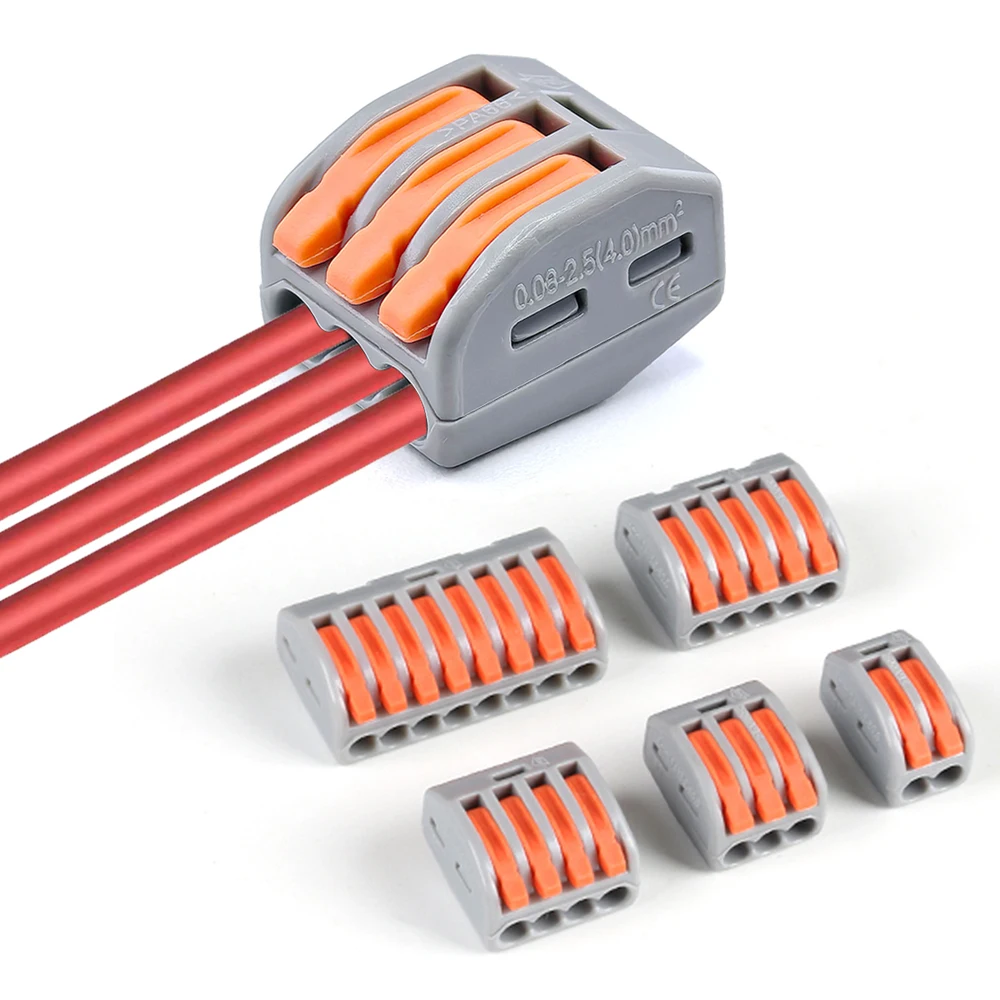
These connectors feature a housing constructed from PA66 nylon, a material renowned for its excellent electrical insulation properties and high thermal stability. The internal mechanism utilizes a robust cage spring clamp, ensuring a consistent and firm grip on conductors. Each unit is precisely molded, exhibiting clean lines and tight tolerances, which is immediately apparent upon inspection. The tactile feedback of the levers confirms a secure engagement.
Compared to older screw-terminal blocks, the lever-operated design eliminates the need for specialized tools beyond a wire stripper. This simplifies the toolkit required for installations. The consistent clamping force provided by the spring mechanism mitigates the risk of loose connections that can plague screw terminals if not torqued correctly. A firm connection is vital.
Imagine a scenario where dozens of connections are required in a tight junction box. The compact form factor of these connectors, combined with their tool-free operation, drastically reduces installation time and physical strain. The clear visual indication of the lever position provides immediate confirmation of a properly secured wire, a critical safety check often absent in less sophisticated connectors.
Installation with these connectors follows a straightforward three-step process, designed for maximum efficiency and minimal error. First, the wire insulation is stripped to a precise length, typically 3/8 inch (10mm), as indicated by markings on the connector itself. This exact stripping length is crucial for preventing exposed conductors and ensuring full contact within the terminal. Second, the orange operating lever is pushed upwards, opening the clamping unit. Finally, the stripped conductor is inserted fully into the port, and the lever is pressed down firmly to secure the connection. It's that simple.
This push-in, lever-actuated system significantly reduces the time spent on each connection compared to twisting wire nuts or tightening screw terminals. For electricians working on large-scale residential projects or repetitive tasks, the cumulative time savings are substantial. The visual confirmation of the lever being fully depressed provides an immediate assurance of proper termination, reducing the need for continuity testing on every single connection.
Unlike traditional methods that can be prone to installer fatigue or inconsistent application, these connectors offer a repeatable, high-quality connection every time. The design inherently minimizes the potential for human error, which is a significant factor in long-term electrical system reliability. Consistent connections are paramount.
The material composition, specifically the PA66 housing, grants these connectors excellent thermal resilience, as visually suggested by the imagery depicting fire resistance. This material is inherently flame-retardant and can withstand elevated temperatures without deforming or compromising its insulating properties. This is a critical safety feature, especially in scenarios where electrical loads might generate heat.
These connectors are designed to meet stringent electrical safety standards, typically aligning with requirements for UL (Underwriters Laboratories) or CE (Conformité Européenne) certification, although specific markings should always be verified on the product itself. The ability to safely handle currents up to 32A and voltages up to 400V makes them suitable for a wide range of common electrical circuits. Overheating is a major concern.
Compared to generic, unrated connectors, the specified current and voltage ratings provide a clear operational envelope, ensuring that the connector will perform reliably within its intended application. This adherence to safety specifications is not merely a recommendation; it is a fundamental requirement for preventing electrical fires and ensuring the long-term integrity of an electrical installation. The robust construction minimizes the risk of arc faults.
These connectors demonstrate impressive versatility, accommodating a broad spectrum of wire types and gauges. They are rated for solid and stranded conductors ranging from 0.08 to 2.5mm² (approximately 28-14 AWG) and flexible conductors from 0.08 to 4.0mm² (approximately 28-12 AWG). This wide compatibility means a single type of connector can be used for various wiring tasks, simplifying inventory and reducing complexity on the job site.
Understanding the difference between conductor types is essential. Solid wires are single strands, often used in fixed installations. Stranded wires consist of multiple smaller strands twisted together, offering greater flexibility. Flexible wires, sometimes called fine-stranded, have even more, finer strands, making them highly pliable. The cage clamp mechanism is engineered to securely grip all these variations without damaging the conductor.
This adaptability is a significant advantage over connectors that are specific to only one wire type. For instance, some traditional push-in connectors struggle with fine-stranded or flexible wires, leading to unreliable connections. These lever-operated units provide a universal solution, ensuring a secure termination regardless of the conductor's construction. This flexibility is a key benefit.
The initial investment in high-quality connectors like these translates into significant long-term value through enhanced reliability and reduced maintenance. The secure, vibration-resistant connections minimize the likelihood of intermittent faults or complete circuit failures, which can be costly and time-consuming to diagnose and repair. Durability is a core aspect.
Consider the cost of a service call to troubleshoot a loose connection versus the slightly higher upfront cost of a premium connector. The return on investment in terms of reduced callbacks and increased system uptime is substantial. Furthermore, the ability to easily disconnect and reconnect wires for future modifications or troubleshooting adds another layer of practical value, unlike crimped or soldered connections.
These connectors are designed for longevity, maintaining their electrical and mechanical integrity over extended periods, even under fluctuating environmental conditions. This contributes to the overall safety and stability of the electrical system, providing peace of mind for both the installer and the end-user. They are built to last.
Imagine completing an electrical installation with the confidence that every connection is not only secure but also compliant with the highest safety standards. Picture the efficiency gained on every project, allowing for more tasks to be completed with greater precision. These connectors empower electricians to deliver superior workmanship, ensuring reliable and safe electrical systems for years to come. The peace of mind is invaluable.
Precision Engineering for Reliable Connections
These connectors feature a housing constructed from PA66 nylon, a material renowned for its excellent electrical insulation properties and high thermal stability. The internal mechanism utilizes a robust cage spring clamp, ensuring a consistent and firm grip on conductors. Each unit is precisely molded, exhibiting clean lines and tight tolerances, which is immediately apparent upon inspection. The tactile feedback of the levers confirms a secure engagement.
Compared to older screw-terminal blocks, the lever-operated design eliminates the need for specialized tools beyond a wire stripper. This simplifies the toolkit required for installations. The consistent clamping force provided by the spring mechanism mitigates the risk of loose connections that can plague screw terminals if not torqued correctly. A firm connection is vital.
Imagine a scenario where dozens of connections are required in a tight junction box. The compact form factor of these connectors, combined with their tool-free operation, drastically reduces installation time and physical strain. The clear visual indication of the lever position provides immediate confirmation of a properly secured wire, a critical safety check often absent in less sophisticated connectors.
Streamlined Installation Workflow
Installation with these connectors follows a straightforward three-step process, designed for maximum efficiency and minimal error. First, the wire insulation is stripped to a precise length, typically 3/8 inch (10mm), as indicated by markings on the connector itself. This exact stripping length is crucial for preventing exposed conductors and ensuring full contact within the terminal. Second, the orange operating lever is pushed upwards, opening the clamping unit. Finally, the stripped conductor is inserted fully into the port, and the lever is pressed down firmly to secure the connection. It's that simple.
This push-in, lever-actuated system significantly reduces the time spent on each connection compared to twisting wire nuts or tightening screw terminals. For electricians working on large-scale residential projects or repetitive tasks, the cumulative time savings are substantial. The visual confirmation of the lever being fully depressed provides an immediate assurance of proper termination, reducing the need for continuity testing on every single connection.
Unlike traditional methods that can be prone to installer fatigue or inconsistent application, these connectors offer a repeatable, high-quality connection every time. The design inherently minimizes the potential for human error, which is a significant factor in long-term electrical system reliability. Consistent connections are paramount.
Thermal Resilience and Safety Compliance
The material composition, specifically the PA66 housing, grants these connectors excellent thermal resilience, as visually suggested by the imagery depicting fire resistance. This material is inherently flame-retardant and can withstand elevated temperatures without deforming or compromising its insulating properties. This is a critical safety feature, especially in scenarios where electrical loads might generate heat.
These connectors are designed to meet stringent electrical safety standards, typically aligning with requirements for UL (Underwriters Laboratories) or CE (Conformité Européenne) certification, although specific markings should always be verified on the product itself. The ability to safely handle currents up to 32A and voltages up to 400V makes them suitable for a wide range of common electrical circuits. Overheating is a major concern.
Compared to generic, unrated connectors, the specified current and voltage ratings provide a clear operational envelope, ensuring that the connector will perform reliably within its intended application. This adherence to safety specifications is not merely a recommendation; it is a fundamental requirement for preventing electrical fires and ensuring the long-term integrity of an electrical installation. The robust construction minimizes the risk of arc faults.
Versatility Across Conductor Types
These connectors demonstrate impressive versatility, accommodating a broad spectrum of wire types and gauges. They are rated for solid and stranded conductors ranging from 0.08 to 2.5mm² (approximately 28-14 AWG) and flexible conductors from 0.08 to 4.0mm² (approximately 28-12 AWG). This wide compatibility means a single type of connector can be used for various wiring tasks, simplifying inventory and reducing complexity on the job site.
Understanding the difference between conductor types is essential. Solid wires are single strands, often used in fixed installations. Stranded wires consist of multiple smaller strands twisted together, offering greater flexibility. Flexible wires, sometimes called fine-stranded, have even more, finer strands, making them highly pliable. The cage clamp mechanism is engineered to securely grip all these variations without damaging the conductor.
This adaptability is a significant advantage over connectors that are specific to only one wire type. For instance, some traditional push-in connectors struggle with fine-stranded or flexible wires, leading to unreliable connections. These lever-operated units provide a universal solution, ensuring a secure termination regardless of the conductor's construction. This flexibility is a key benefit.
Long-Term Value in Electrical Systems
The initial investment in high-quality connectors like these translates into significant long-term value through enhanced reliability and reduced maintenance. The secure, vibration-resistant connections minimize the likelihood of intermittent faults or complete circuit failures, which can be costly and time-consuming to diagnose and repair. Durability is a core aspect.
Consider the cost of a service call to troubleshoot a loose connection versus the slightly higher upfront cost of a premium connector. The return on investment in terms of reduced callbacks and increased system uptime is substantial. Furthermore, the ability to easily disconnect and reconnect wires for future modifications or troubleshooting adds another layer of practical value, unlike crimped or soldered connections.
These connectors are designed for longevity, maintaining their electrical and mechanical integrity over extended periods, even under fluctuating environmental conditions. This contributes to the overall safety and stability of the electrical system, providing peace of mind for both the installer and the end-user. They are built to last.
Imagine completing an electrical installation with the confidence that every connection is not only secure but also compliant with the highest safety standards. Picture the efficiency gained on every project, allowing for more tasks to be completed with greater precision. These connectors empower electricians to deliver superior workmanship, ensuring reliable and safe electrical systems for years to come. The peace of mind is invaluable.