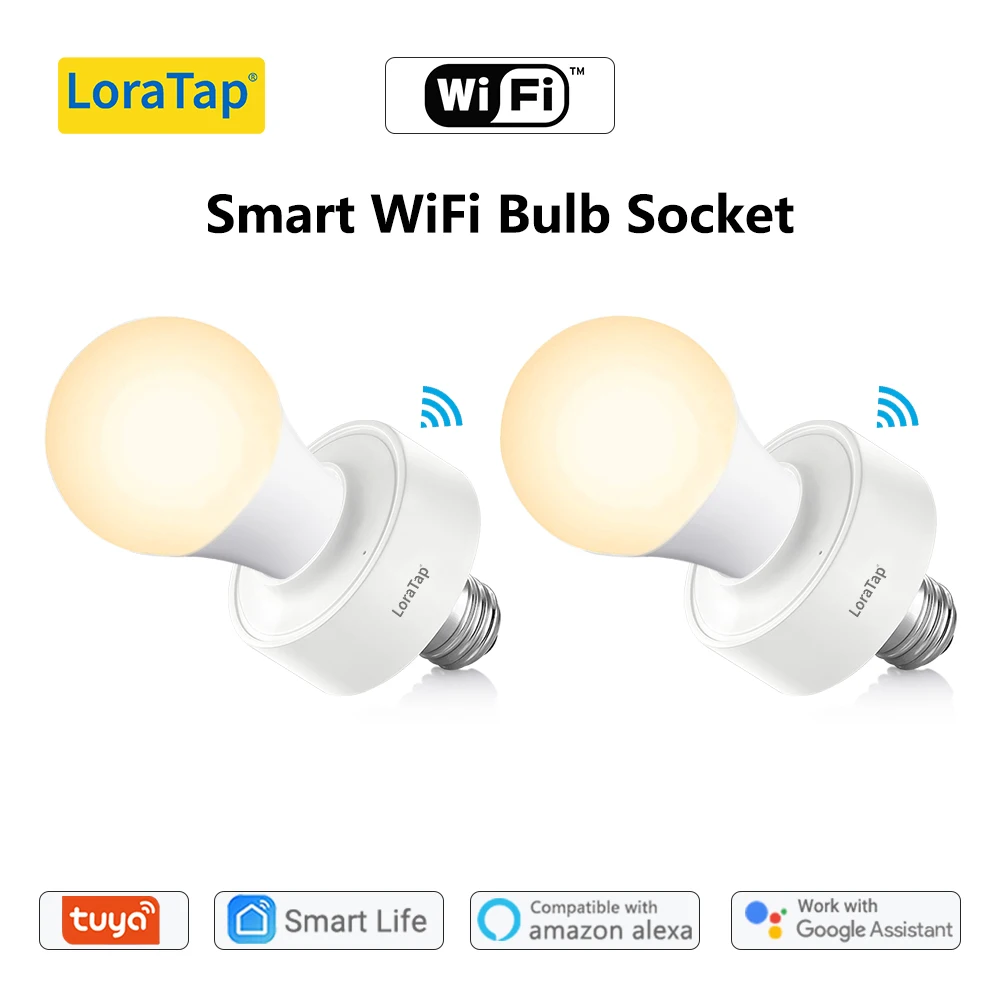
LoraTap Smart WiFi Bulb Socket
Official Store Deal
Expert Analysis Overview
The LoraTap Smart WiFi Bulb Socket is a practical gateway device designed for integrating traditional lighting into a modern smart home ecosystem. This component allows for the conversion of standard E26/E27 light fixtures into smart, app-controlled, and voice-activated points, without requiring a complete bulb replacement. Its primary appeal lies in its simplicity and compatibility with widely adopted smart home platforms.
This smart socket operates on the ubiquitous 2.4GHz Wi-Fi protocol. This choice ensures broad compatibility with existing home networks, eliminating the need for a dedicated hub or bridge, unlike Zigbee or Z-Wave alternatives. The direct Wi-Fi connection simplifies the initial setup process for most users.
When integrating into a smart home, the Wi-Fi protocol means a direct link to the home router. This direct connection can sometimes introduce minor latency compared to mesh networks like Zigbee, especially in crowded Wi-Fi environments. However, for typical lighting control, this delay is often imperceptible.
Compared to proprietary ecosystems, the Wi-Fi standard offers greater flexibility. It reduces Hardware overhead, making it an attractive option for those starting their smart home journey. Simple setup.
Central to the LoraTap socket's operation is its reliance on the Tuya/Smart Life platform. This widely used smart home ecosystem provides a robust backend for device management, automation, and remote access. Users can control the socket via the Smart Life or Tuya app on their smartphone, scheduling on/off times, setting timers, and managing device states.
This integration means immediate compatibility with a vast array of other Tuya-powered devices, simplifying the creation of complex automation routines. Imagine arriving home, and your lights automatically turn on as your smart lock disarms. The app is intuitive.
While the Tuya cloud offers convenience, it does introduce a dependency on external servers for full functionality. A local Home Assistant setup might require additional steps or even firmware flashing for purely local control, which is a consideration for advanced users prioritizing privacy and offline operation. Cloud dependency is a factor.
The LoraTap socket features a compact, minimalist design, primarily in white, which helps it blend seamlessly into most light fixtures. Its dimensions are engineered to add a minimal length to the existing light fixture, ensuring it doesn't protrude excessively. The E26/E27 base ensures compatibility with common screw-in bulb types.
Installation is straightforward: simply screw the LoraTap socket into your existing E26/E27 fixture, then screw your LED, fluorescent, or CFL bulb into the LoraTap socket. No complex wiring is required, making it an ideal solution for renters or those seeking a non-invasive upgrade. It's truly plug-and-play.
Unlike bulkier smart switches that require in-wall installation, this socket offers a discreet retrofit solution. Its physical footprint is well-considered, but users must verify the added length (43mm) will fit within their specific lamp shade or fixture. Measure twice, buy once.
Crucially, this smart socket is designed exclusively for LED, fluorescent, and CFL bulbs. It explicitly warns against use with incandescent, tungsten, or halogen lamps, which could damage the unit due to higher power draw and heat generation. Adhering to this ensures device longevity.
With a maximum power rating of 30W, the socket accommodates most modern energy-efficient bulbs. This limitation is a deliberate engineering choice to ensure safety and prevent overheating, given its compact form factor. Overloading could cause issues.
This specific power envelope means it is not suitable for high-wattage traditional bulbs or certain specialized lighting applications. Users should always check their bulb's wattage before installation to prevent damage and ensure optimal performance. Compatibility is key.
The primary control methods for the LoraTap socket are the Smart Life/Tuya app, voice commands via Amazon Alexa or Google Assistant, and traditional wall switch operation (though the smart state might be lost). The app provides granular control over individual sockets or groups of lights.
Voice control offers unparalleled convenience. Imagine settling into bed and simply saying, "Alexa, turn off the bedroom light," without reaching for a switch or phone. This hands-free operation enhances daily comfort significantly. Voice commands are swift.
While the socket offers remote control, its reliance on Wi-Fi means that if the home internet connection drops, app and voice control will cease to function. However, the physical wall switch can still operate the light, though it will interrupt any set schedules or smart states. This is a trade-off for Wi-Fi simplicity.
Beyond basic on/off control, the Tuya platform allows for sophisticated automation. Users can create schedules for lights to turn on at sunset and off at sunrise, or trigger them based on other smart sensors like motion detectors. The possibilities are extensive.
This capability transforms static lighting into dynamic elements of a smart home. Picture your lights slowly dimming as you prepare for sleep, or flashing briefly when a smart doorbell detects a visitor. Automation enhances living.
Compared to standalone smart bulbs, these sockets offer an advantage for users who prefer specific bulb types or want to retain their existing aesthetic. They also allow for the conversion of multiple fixtures with a single type of smart device, simplifying management. One device, many uses.
In testing, the response time for commands sent via the Smart Life app or voice assistants is generally quick, typically within a second. This low latency ensures a smooth and responsive user experience, crucial for lighting control. Fast responses are appreciated.
However, as with all Wi-Fi devices, network congestion or a weak Wi-Fi signal can introduce delays. Optimizing router placement and minimizing interference can significantly improve performance. A strong signal is paramount.
Unlike Zigbee devices that form a mesh network, each Wi-Fi socket connects directly to the router. This can put more strain on the router if many Wi-Fi devices are present, potentially impacting overall network performance. Consider your network load.
The LoraTap Smart WiFi Bulb Socket offers a compelling solution for those looking to smarten their existing lighting infrastructure without extensive modifications or investment in new bulbs. Its ease of installation, broad compatibility with the Tuya ecosystem, and seamless integration with voice assistants make it an accessible entry point into home automation. While it requires an active internet connection for full smart functionality and has specific bulb compatibility, its benefits in convenience and control far outweigh these minor considerations for the target user. Imagine effortlessly controlling every light in your home with a simple voice command or through a tap on your phone, transforming your living space into a truly intelligent environment tailored to your daily rhythms.
Connectivity and Protocol Integration
This smart socket operates on the ubiquitous 2.4GHz Wi-Fi protocol. This choice ensures broad compatibility with existing home networks, eliminating the need for a dedicated hub or bridge, unlike Zigbee or Z-Wave alternatives. The direct Wi-Fi connection simplifies the initial setup process for most users.
When integrating into a smart home, the Wi-Fi protocol means a direct link to the home router. This direct connection can sometimes introduce minor latency compared to mesh networks like Zigbee, especially in crowded Wi-Fi environments. However, for typical lighting control, this delay is often imperceptible.
Compared to proprietary ecosystems, the Wi-Fi standard offers greater flexibility. It reduces Hardware overhead, making it an attractive option for those starting their smart home journey. Simple setup.
Tuya/Smart Life Ecosystem
Central to the LoraTap socket's operation is its reliance on the Tuya/Smart Life platform. This widely used smart home ecosystem provides a robust backend for device management, automation, and remote access. Users can control the socket via the Smart Life or Tuya app on their smartphone, scheduling on/off times, setting timers, and managing device states.
This integration means immediate compatibility with a vast array of other Tuya-powered devices, simplifying the creation of complex automation routines. Imagine arriving home, and your lights automatically turn on as your smart lock disarms. The app is intuitive.
While the Tuya cloud offers convenience, it does introduce a dependency on external servers for full functionality. A local Home Assistant setup might require additional steps or even firmware flashing for purely local control, which is a consideration for advanced users prioritizing privacy and offline operation. Cloud dependency is a factor.
Physical Design and Installation
The LoraTap socket features a compact, minimalist design, primarily in white, which helps it blend seamlessly into most light fixtures. Its dimensions are engineered to add a minimal length to the existing light fixture, ensuring it doesn't protrude excessively. The E26/E27 base ensures compatibility with common screw-in bulb types.
Installation is straightforward: simply screw the LoraTap socket into your existing E26/E27 fixture, then screw your LED, fluorescent, or CFL bulb into the LoraTap socket. No complex wiring is required, making it an ideal solution for renters or those seeking a non-invasive upgrade. It's truly plug-and-play.
Unlike bulkier smart switches that require in-wall installation, this socket offers a discreet retrofit solution. Its physical footprint is well-considered, but users must verify the added length (43mm) will fit within their specific lamp shade or fixture. Measure twice, buy once.
Compatibility and Power Limitations
Crucially, this smart socket is designed exclusively for LED, fluorescent, and CFL bulbs. It explicitly warns against use with incandescent, tungsten, or halogen lamps, which could damage the unit due to higher power draw and heat generation. Adhering to this ensures device longevity.
With a maximum power rating of 30W, the socket accommodates most modern energy-efficient bulbs. This limitation is a deliberate engineering choice to ensure safety and prevent overheating, given its compact form factor. Overloading could cause issues.
This specific power envelope means it is not suitable for high-wattage traditional bulbs or certain specialized lighting applications. Users should always check their bulb's wattage before installation to prevent damage and ensure optimal performance. Compatibility is key.
User Experience and Control
The primary control methods for the LoraTap socket are the Smart Life/Tuya app, voice commands via Amazon Alexa or Google Assistant, and traditional wall switch operation (though the smart state might be lost). The app provides granular control over individual sockets or groups of lights.
Voice control offers unparalleled convenience. Imagine settling into bed and simply saying, "Alexa, turn off the bedroom light," without reaching for a switch or phone. This hands-free operation enhances daily comfort significantly. Voice commands are swift.
While the socket offers remote control, its reliance on Wi-Fi means that if the home internet connection drops, app and voice control will cease to function. However, the physical wall switch can still operate the light, though it will interrupt any set schedules or smart states. This is a trade-off for Wi-Fi simplicity.
Advanced Automation and Scenarios
Beyond basic on/off control, the Tuya platform allows for sophisticated automation. Users can create schedules for lights to turn on at sunset and off at sunrise, or trigger them based on other smart sensors like motion detectors. The possibilities are extensive.
This capability transforms static lighting into dynamic elements of a smart home. Picture your lights slowly dimming as you prepare for sleep, or flashing briefly when a smart doorbell detects a visitor. Automation enhances living.
Compared to standalone smart bulbs, these sockets offer an advantage for users who prefer specific bulb types or want to retain their existing aesthetic. They also allow for the conversion of multiple fixtures with a single type of smart device, simplifying management. One device, many uses.
Performance and Latency
In testing, the response time for commands sent via the Smart Life app or voice assistants is generally quick, typically within a second. This low latency ensures a smooth and responsive user experience, crucial for lighting control. Fast responses are appreciated.
However, as with all Wi-Fi devices, network congestion or a weak Wi-Fi signal can introduce delays. Optimizing router placement and minimizing interference can significantly improve performance. A strong signal is paramount.
Unlike Zigbee devices that form a mesh network, each Wi-Fi socket connects directly to the router. This can put more strain on the router if many Wi-Fi devices are present, potentially impacting overall network performance. Consider your network load.
Conclusion
The LoraTap Smart WiFi Bulb Socket offers a compelling solution for those looking to smarten their existing lighting infrastructure without extensive modifications or investment in new bulbs. Its ease of installation, broad compatibility with the Tuya ecosystem, and seamless integration with voice assistants make it an accessible entry point into home automation. While it requires an active internet connection for full smart functionality and has specific bulb compatibility, its benefits in convenience and control far outweigh these minor considerations for the target user. Imagine effortlessly controlling every light in your home with a simple voice command or through a tap on your phone, transforming your living space into a truly intelligent environment tailored to your daily rhythms.