M3 Brass Insert Nuts for 3D Printer Plastic Cases
Official Store Deal
Expert Analysis Overview
M3 Brass Insert Nuts are a critical fastening solution designed to provide robust, reusable threads in thermoplastic components, a significant upgrade over direct screw-into-plastic methods which compromise long-term structural integrity. This bulk offering targets users requiring a dependable, high-volume solution for creating durable threaded connections in 3D printed parts and molded plastic enclosures. The inherent design addresses the common failure points associated with plastic threads, ensuring a more secure and serviceable assembly. This is not merely a fastener; it is an enhancement to the structural integrity of plastic components.
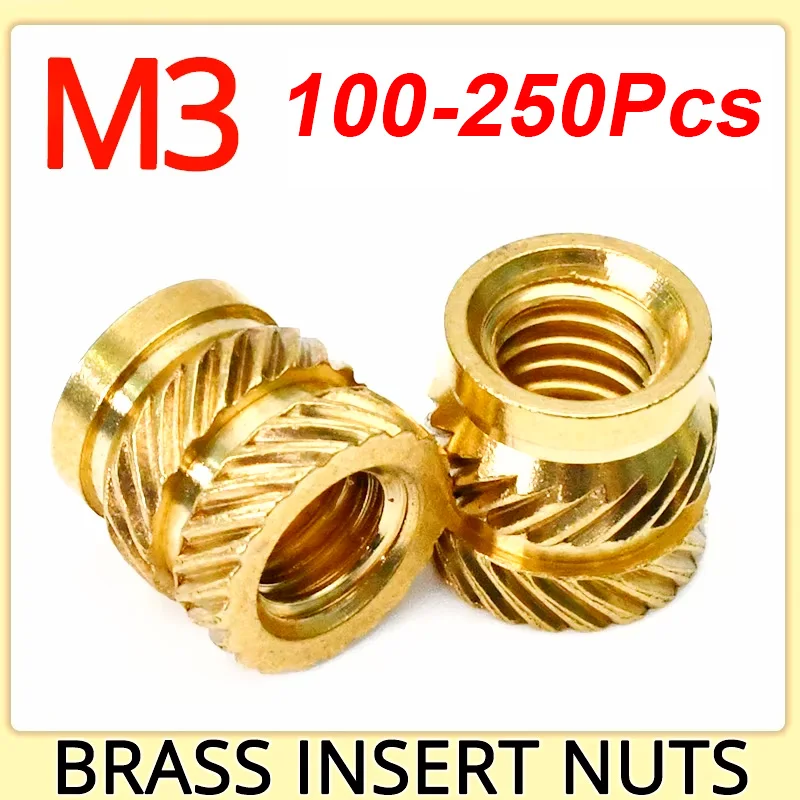
The visible inserts are constructed from brass, a material chosen for its specific properties that are highly advantageous in this application. Brass offers excellent thermal conductivity, which is crucial for the heat-embedment process, allowing for efficient and uniform heat transfer during installation. This ensures the plastic melts consistently around the knurling, creating a strong bond.
Beyond its thermal properties, brass exhibits good corrosion resistance, making these inserts suitable for environments where moisture might be a factor, though they are primarily intended for internal plastic applications. The material's inherent ductility also contributes to its ability to form a secure, non-galling thread with steel screws, preventing wear on the fastener itself. The choice of brass over other metals like steel is deliberate, balancing ease of installation with sufficient strength for the intended purpose.
Compared to hardened steel inserts, brass provides a more forgiving installation process, reducing the risk of cracking or deforming the surrounding plastic during embedment. While steel might offer superior ultimate tensile strength, brass provides more than adequate shear and pull-out resistance for plastic applications, especially when considering the limitations of the plastic itself. This material selection represents an optimized balance for plastic component integration.
The exterior of these M3 brass inserts features a distinctive knurled pattern. This pattern is not merely decorative; it is engineered to maximize the surface area for mechanical interlock with the molten plastic during the heat-embedment process. The diagonal and straight knurls visible on the surface are designed to resist both pull-out forces and rotational torque once the plastic cools and solidifies around them.
When heated and pressed into a pre-drilled hole, the molten plastic flows into these intricate grooves, effectively encapsulating the insert. This creates a mechanical bond that is significantly stronger than a simple friction fit. The specific geometry of the knurling, with its alternating patterns, ensures multi-directional resistance, making the threaded connection remarkably stable under various stresses. This is a crucial detail for long-term reliability.
In contrast to smooth-sided inserts or those with less aggressive knurling, the design observed here suggests a superior grip. A less effective knurl pattern would lead to premature failure, where the insert either pulls out under tension or spins freely when a screw is tightened. The robust knurling visible in the product images indicates a design focused on maximizing the integrity of the plastic-metal interface, a key factor in the longevity of any assembled product.
The primary method for installing these brass inserts is heat embedment, often referred to as 'hot melt' or 'heat-set'. This process involves heating the insert to a temperature sufficient to melt the surrounding plastic, then pressing it into a pre-drilled hole. The molten plastic then flows into the knurled grooves, and upon cooling, forms a strong, permanent bond. This method is highly effective for creating durable threads in thermoplastics.
For optimal results, a soldering iron with a specialized tip or a dedicated heat-set insert press is typically employed. The controlled application of heat ensures that the plastic melts evenly without excessive degradation, and the insert is seated squarely and to the correct depth. Precision in this step is paramount for achieving the advertised pull-out and torque resistance. Improper heating can lead to a weak bond or damage to the plastic component.
Compared to cold-press or ultrasonic insertion methods, heat embedment offers a more forgiving and often stronger bond for hobbyist and small-batch manufacturing. Cold-press inserts rely on the plastic's elasticity, which can induce stress and potential cracking, especially in brittle materials. Ultrasonic welding, while fast and strong, requires specialized and expensive equipment. Heat embedment strikes a practical balance, offering excellent performance with relatively accessible tools, making it ideal for 3D printing enthusiasts and small-scale production.
One of the most significant advantages of using brass inserts is the enhanced durability and reusability they bring to plastic assemblies. Direct threading into plastic, particularly in 3D printed parts, is notoriously prone to stripping after only a few cycles of fastening and unfastening. This often renders the entire component unusable, leading to costly reprints or replacements.
These brass inserts fundamentally solve this problem by providing a metallic thread. A metallic thread can withstand repeated tightening and loosening of screws without degradation, maintaining its integrity over hundreds, if not thousands, of cycles. This is crucial for products that require periodic maintenance, upgrades, or disassembly for access to internal components. The long-term reliability is a key selling point.
Unlike the inherent weakness of plastic threads, which can fail under minimal torque or vibration, the brass insert creates a robust anchor. This translates directly into a more reliable and serviceable end product, extending the lifespan of the plastic components significantly. The initial investment in these inserts is quickly recouped by avoiding the frustration and expense of stripped threads and failed assemblies, offering a substantial return on investment in terms of product longevity and user satisfaction.
This bulk pack of M3 brass inserts is particularly well-suited for applications in 3D printing, custom electronics enclosures, robotics, and other projects involving plastic components where strong, reusable threads are essential. The M3 size is a common standard, making these inserts compatible with a vast array of screws and hardware. The availability in quantities of 100-250 pieces ensures that users have an ample supply for multiple projects or larger production runs.
For individuals or small businesses engaged in rapid prototyping or custom product development, these inserts streamline the assembly process and enhance product quality. They eliminate the need for over-engineered plastic bosses to compensate for weak threads, allowing for more compact and efficient designs. The ability to create professional-grade threaded connections in plastic elevates the perceived quality and functional reliability of any project.
Considering the cost of failed prints, wasted time, and the frustration of unreliable assemblies, the price point for this quantity of M3 brass inserts represents exceptional value. It is an investment in the long-term integrity and serviceability of plastic components. The capability these inserts provide—transforming flimsy plastic threads into robust, metallic anchors—is indispensable for anyone serious about the durability and professionalism of their plastic-based creations.
The designation "M3" refers to the metric thread size of the insert. This means the internal diameter of the thread is approximately 3 millimeters, and it is designed to accept M3 screws. The M3 standard is one of the most common and versatile sizes in electronics, small machinery, and general prototyping, making these inserts widely applicable across numerous projects. Understanding this standard is crucial for proper component selection.
The precision of the M3 thread is vital for ensuring a secure and reliable connection with mating screws. A well-formed thread minimizes play and maximizes the contact area between the screw and the insert, distributing stress evenly. This precision is a hallmark of quality fasteners and directly impacts the longevity of the assembly. The visual inspection of the internal threads in the images suggests a clean and consistent cut, which is indicative of good manufacturing practices.
Compared to larger or smaller metric threads, M3 strikes an excellent balance between strength and size for many plastic applications. Larger threads might require thicker plastic walls, while smaller threads might not offer sufficient strength. The M3 size is often the optimal choice for securing PCBs, mounting small motors, or assembling enclosure panels without requiring excessive material thickness in the plastic part itself. This makes it a highly efficient and practical choice for designers and makers.
The operational longevity of any threaded connection is paramount, particularly in components that experience frequent assembly, disassembly, or vibration. These brass inserts are engineered to significantly extend the lifespan of such connections in plastic parts. The metallic nature of the thread inherently resists the wear and tear that rapidly degrades plastic threads.
In scenarios where a plastic enclosure needs to be opened repeatedly for battery changes, component upgrades, or maintenance, direct plastic threads would quickly strip. The brass insert, however, provides a durable interface that can withstand hundreds of fastening cycles without showing significant signs of wear. This translates to a product that remains functional and serviceable for a much longer period.
Unlike assemblies relying solely on plastic's inherent material properties for threading, which are susceptible to creep, fatigue, and environmental degradation, the brass insert offers a stable and consistent fastening point. This resistance to wear and tear ensures that the structural integrity of the assembly is maintained over time, preventing loosening of components and potential failures. The long-term reliability offered by these inserts is a direct benefit to the end-user, ensuring their projects remain robust and functional.
These M3 brass insert nuts represent a fundamental upgrade for anyone working with 3D printed or molded plastic components. They transform the inherent weakness of plastic threads into robust, reusable metallic anchors, ensuring the longevity and serviceability of your projects. Imagine the confidence of knowing your enclosures will remain securely fastened, your PCBs will stay firmly mounted, and your designs will withstand the test of time and repeated use. This investment in quality fasteners is an investment in the durability and professional finish of every plastic assembly you create, eliminating the frustration of stripped threads and unreliable connections forever.
The Foundation of Fastening Integrity: Material and Design
The visible inserts are constructed from brass, a material chosen for its specific properties that are highly advantageous in this application. Brass offers excellent thermal conductivity, which is crucial for the heat-embedment process, allowing for efficient and uniform heat transfer during installation. This ensures the plastic melts consistently around the knurling, creating a strong bond.
Beyond its thermal properties, brass exhibits good corrosion resistance, making these inserts suitable for environments where moisture might be a factor, though they are primarily intended for internal plastic applications. The material's inherent ductility also contributes to its ability to form a secure, non-galling thread with steel screws, preventing wear on the fastener itself. The choice of brass over other metals like steel is deliberate, balancing ease of installation with sufficient strength for the intended purpose.
Compared to hardened steel inserts, brass provides a more forgiving installation process, reducing the risk of cracking or deforming the surrounding plastic during embedment. While steel might offer superior ultimate tensile strength, brass provides more than adequate shear and pull-out resistance for plastic applications, especially when considering the limitations of the plastic itself. This material selection represents an optimized balance for plastic component integration.
The Knurled Grip: Preventing Pull-Out and Rotation
The exterior of these M3 brass inserts features a distinctive knurled pattern. This pattern is not merely decorative; it is engineered to maximize the surface area for mechanical interlock with the molten plastic during the heat-embedment process. The diagonal and straight knurls visible on the surface are designed to resist both pull-out forces and rotational torque once the plastic cools and solidifies around them.
When heated and pressed into a pre-drilled hole, the molten plastic flows into these intricate grooves, effectively encapsulating the insert. This creates a mechanical bond that is significantly stronger than a simple friction fit. The specific geometry of the knurling, with its alternating patterns, ensures multi-directional resistance, making the threaded connection remarkably stable under various stresses. This is a crucial detail for long-term reliability.
In contrast to smooth-sided inserts or those with less aggressive knurling, the design observed here suggests a superior grip. A less effective knurl pattern would lead to premature failure, where the insert either pulls out under tension or spins freely when a screw is tightened. The robust knurling visible in the product images indicates a design focused on maximizing the integrity of the plastic-metal interface, a key factor in the longevity of any assembled product.
Securing the Connection: The Embedment Process
The primary method for installing these brass inserts is heat embedment, often referred to as 'hot melt' or 'heat-set'. This process involves heating the insert to a temperature sufficient to melt the surrounding plastic, then pressing it into a pre-drilled hole. The molten plastic then flows into the knurled grooves, and upon cooling, forms a strong, permanent bond. This method is highly effective for creating durable threads in thermoplastics.
For optimal results, a soldering iron with a specialized tip or a dedicated heat-set insert press is typically employed. The controlled application of heat ensures that the plastic melts evenly without excessive degradation, and the insert is seated squarely and to the correct depth. Precision in this step is paramount for achieving the advertised pull-out and torque resistance. Improper heating can lead to a weak bond or damage to the plastic component.
Compared to cold-press or ultrasonic insertion methods, heat embedment offers a more forgiving and often stronger bond for hobbyist and small-batch manufacturing. Cold-press inserts rely on the plastic's elasticity, which can induce stress and potential cracking, especially in brittle materials. Ultrasonic welding, while fast and strong, requires specialized and expensive equipment. Heat embedment strikes a practical balance, offering excellent performance with relatively accessible tools, making it ideal for 3D printing enthusiasts and small-scale production.
Durability and Reusability: A Long-Term Investment
One of the most significant advantages of using brass inserts is the enhanced durability and reusability they bring to plastic assemblies. Direct threading into plastic, particularly in 3D printed parts, is notoriously prone to stripping after only a few cycles of fastening and unfastening. This often renders the entire component unusable, leading to costly reprints or replacements.
These brass inserts fundamentally solve this problem by providing a metallic thread. A metallic thread can withstand repeated tightening and loosening of screws without degradation, maintaining its integrity over hundreds, if not thousands, of cycles. This is crucial for products that require periodic maintenance, upgrades, or disassembly for access to internal components. The long-term reliability is a key selling point.
Unlike the inherent weakness of plastic threads, which can fail under minimal torque or vibration, the brass insert creates a robust anchor. This translates directly into a more reliable and serviceable end product, extending the lifespan of the plastic components significantly. The initial investment in these inserts is quickly recouped by avoiding the frustration and expense of stripped threads and failed assemblies, offering a substantial return on investment in terms of product longevity and user satisfaction.
Practical Applications and Value Proposition
This bulk pack of M3 brass inserts is particularly well-suited for applications in 3D printing, custom electronics enclosures, robotics, and other projects involving plastic components where strong, reusable threads are essential. The M3 size is a common standard, making these inserts compatible with a vast array of screws and hardware. The availability in quantities of 100-250 pieces ensures that users have an ample supply for multiple projects or larger production runs.
For individuals or small businesses engaged in rapid prototyping or custom product development, these inserts streamline the assembly process and enhance product quality. They eliminate the need for over-engineered plastic bosses to compensate for weak threads, allowing for more compact and efficient designs. The ability to create professional-grade threaded connections in plastic elevates the perceived quality and functional reliability of any project.
Considering the cost of failed prints, wasted time, and the frustration of unreliable assemblies, the price point for this quantity of M3 brass inserts represents exceptional value. It is an investment in the long-term integrity and serviceability of plastic components. The capability these inserts provide—transforming flimsy plastic threads into robust, metallic anchors—is indispensable for anyone serious about the durability and professionalism of their plastic-based creations.
Precision in Fastening: The M3 Standard
The designation "M3" refers to the metric thread size of the insert. This means the internal diameter of the thread is approximately 3 millimeters, and it is designed to accept M3 screws. The M3 standard is one of the most common and versatile sizes in electronics, small machinery, and general prototyping, making these inserts widely applicable across numerous projects. Understanding this standard is crucial for proper component selection.
The precision of the M3 thread is vital for ensuring a secure and reliable connection with mating screws. A well-formed thread minimizes play and maximizes the contact area between the screw and the insert, distributing stress evenly. This precision is a hallmark of quality fasteners and directly impacts the longevity of the assembly. The visual inspection of the internal threads in the images suggests a clean and consistent cut, which is indicative of good manufacturing practices.
Compared to larger or smaller metric threads, M3 strikes an excellent balance between strength and size for many plastic applications. Larger threads might require thicker plastic walls, while smaller threads might not offer sufficient strength. The M3 size is often the optimal choice for securing PCBs, mounting small motors, or assembling enclosure panels without requiring excessive material thickness in the plastic part itself. This makes it a highly efficient and practical choice for designers and makers.
Operational Longevity: Resisting Wear and Tear
The operational longevity of any threaded connection is paramount, particularly in components that experience frequent assembly, disassembly, or vibration. These brass inserts are engineered to significantly extend the lifespan of such connections in plastic parts. The metallic nature of the thread inherently resists the wear and tear that rapidly degrades plastic threads.
In scenarios where a plastic enclosure needs to be opened repeatedly for battery changes, component upgrades, or maintenance, direct plastic threads would quickly strip. The brass insert, however, provides a durable interface that can withstand hundreds of fastening cycles without showing significant signs of wear. This translates to a product that remains functional and serviceable for a much longer period.
Unlike assemblies relying solely on plastic's inherent material properties for threading, which are susceptible to creep, fatigue, and environmental degradation, the brass insert offers a stable and consistent fastening point. This resistance to wear and tear ensures that the structural integrity of the assembly is maintained over time, preventing loosening of components and potential failures. The long-term reliability offered by these inserts is a direct benefit to the end-user, ensuring their projects remain robust and functional.
The Ultimate Upgrade for Plastic Assemblies
These M3 brass insert nuts represent a fundamental upgrade for anyone working with 3D printed or molded plastic components. They transform the inherent weakness of plastic threads into robust, reusable metallic anchors, ensuring the longevity and serviceability of your projects. Imagine the confidence of knowing your enclosures will remain securely fastened, your PCBs will stay firmly mounted, and your designs will withstand the test of time and repeated use. This investment in quality fasteners is an investment in the durability and professional finish of every plastic assembly you create, eliminating the frustration of stripped threads and unreliable connections forever.