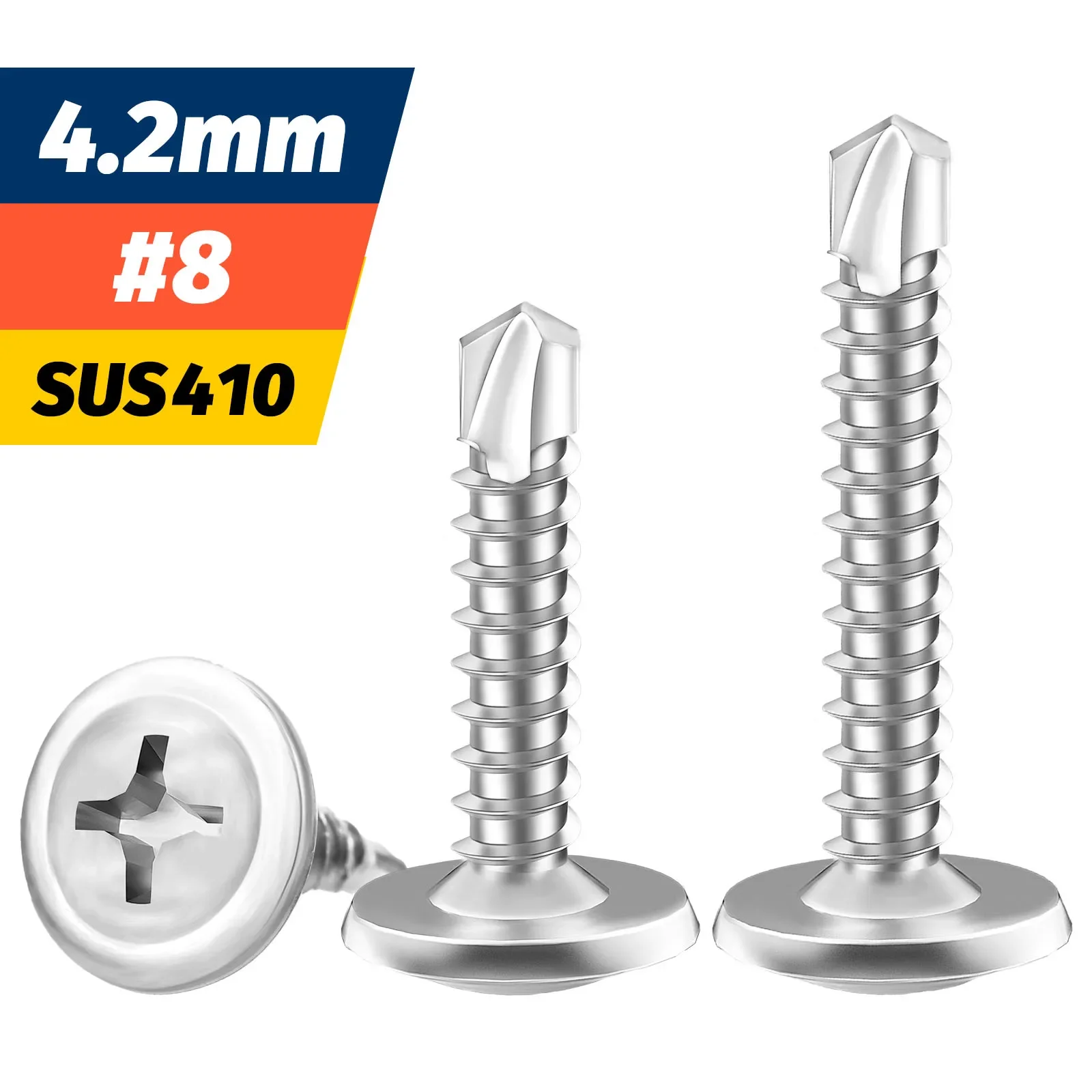
M4.2 #8 410 Stainless Steel Truss Head Self-Tapping Screws
Official Store Deal
Expert Analysis Overview
The M4.2 #8 410 Stainless Steel Truss Head Self-Tapping Screws are an essential, high-strength fastening solution designed for professionals and serious DIY enthusiasts tackling sheet metal and light gauge steel projects where durability and corrosion resistance are paramount. These fasteners represent a significant upgrade over conventional options, offering both the strength required for demanding applications and the longevity critical for restoration work. Their precise engineering ensures a secure fit, minimizing the potential for structural compromise in delicate or aged materials, providing peace of mind for projects intended to last.
In practical application, the martensitic structure of 410 stainless steel resists the common failure points associated with lesser materials, such as shearing under load or thread stripping during tightening. Imagine attempting to secure a critical panel onto a vintage vehicle chassis, or perhaps repairing a weathered metal roof on an historic outbuilding; the inherent strength of these fasteners ensures they grip firmly and resist premature failure. Components remain firmly attached, resisting loosening from vibration, thermal expansion and contraction, or other environmental stresses that can plague less robust Hardware. This material choice is a foundation of lasting repairs.
Unlike softer steel alloys or those merely coated with zinc or cadmium for superficial corrosion resistance, 410 stainless steel offers its protective qualities through its very composition. This means that incidental scratches, surface abrasions, or minor wear and tear do not compromise its anti-rust properties, a crucial factor in outdoor installations, marine environments, or other moisture-prone settings. The material itself is the shield. This provides a genuine, deep-seated material solution, rather than a transient surface treatment, aligning perfectly with the principles of authentic restoration where longevity is paramount.
This self-drilling capability translates directly to significant time savings and increased efficiency on the job site. Picture a scenario where dozens, or even hundreds, of fasteners are required for a large-scale fabrication or restoration project; the advertised three-second self-drilling performance, rigorously tested on 2.5mm steel plate, drastically reduces overall installation time. Each screw goes in quickly. This efficiency minimizes labor costs and accelerates project completion, making it an invaluable asset for professionals.
Compared to standard self-tapping screws, which often require a separate pre-drilled hole or struggle with thicker gauges of metal, these specialized fasteners streamline the entire process. They provide a cleaner, more controlled entry, reducing metal deformation and burring around the fastening point, which is particularly vital when working with older, potentially brittle sheet metal. This is a clear upgrade.
This expansive head design actively prevents damage to the surface of the material being fastened, a critical consideration in both new construction and delicate restoration work. Consider securing thin sheet metal panels, attaching insulation to soft substrates, or fastening components to composite materials; the truss head minimizes the risk of crushing, tearing, or creating unsightly indentations. It provides a reliable grip.
Traditional screws with smaller heads concentrate stress into a very localized area, often leading to material fatigue, tearing, or even outright failure, especially in aged or thinner gauge metals. The truss head mitigates this localized stress, ensuring a more stable and aesthetically pleasing finish, which is crucial for period-correct restorations where material preservation and visual integrity are key. This design is smart.
This superior corrosion resistance ensures that these fasteners will not prematurely degrade, develop unsightly rust streaks, or stain surrounding materials, even when exposed to harsh weather conditions, high humidity, or certain chemical agents. Imagine securing metal flashing on an antique roof or reinforcing components on a marine vessel; these screws will maintain their structural integrity and appearance for decades without compromise. They defy rust.
Unlike galvanized or other coated screws that rely on a sacrificial surface layer which can be scratched, chipped, or worn away over time, the protection offered by 410 stainless steel is intrinsic and permeates the entire material. This makes them a far more reliable and durable choice for long-term outdoor installations or in environments where moisture is a constant and unavoidable threat. This is true endurance.
The consistent #8 diameter ensures a snug and reliable fit with standard Phillips drive bits, minimizing the dreaded phenomenon of cam-out and preserving the integrity of the screw head during installation. This precision in manufacturing facilitates highly efficient work, even when operating in challenging or awkward positions where visibility might be limited. Every screw fits.
This comprehensive range of lengths, from a compact 1/2 inch for thin overlays to a more substantial 1-1/4 inches for thicker assemblies, covers a broad spectrum of fastening needs. This variety eliminates the need for compromises, ensuring that the correct fastener length is always available for optimal thread engagement and maximum holding power in diverse projects. It offers flexibility.
This reliable drive type ensures efficient transfer of rotational force from the driver to the fastener, allowing for quick, secure, and confident fastening without stripping the screw head or damaging the drive recess. Picture working in tight overhead spaces or awkward angles where visibility is poor; the dependable engagement prevents frustration, rework, and potential injury. It’s a solid connection.
Compared to older slotted drives which are notoriously prone to cam-out, or less common drive types requiring specialized and potentially hard-to-find bits, the Phillips drive is universally accessible and intuitive. This widespread compatibility simplifies tool selection for any project, ensuring continuity and reducing delays. This is an industry standard.
This inherent durability is paramount for restoration projects where the ultimate goal is to create repairs that will endure for another century, mirroring the original craftsmanship. Fasteners must withstand continuous environmental stressors, material expansion and contraction cycles, and the relentless passage of time without succumbing to failure. These screws deliver lasting security.
Where inferior fasteners might corrode, shear, or become brittle over time, thereby compromising the structural integrity of a meticulous restoration, these 410 stainless steel screws maintain their robust form. This ensures that the significant effort and resources invested in a historical renovation or critical fabrication remain secure and sound for many decades to come. They withstand the test.
For visible applications, the natural metallic sheen of stainless steel can blend seamlessly with a variety of metal surfaces, from aged galvanized steel to polished aluminum or even painted finishes. The minimal projection of the head ensures it does not detract from the overall lines or historical accuracy of a restored piece, maintaining visual harmony. It appears clean.
Unlike brightly plated or painted screws that can chip, peel, or wear away over time, revealing dissimilar and potentially corrosive metals beneath, the consistent appearance of solid stainless steel ensures a uniform look even with age and environmental exposure. This aesthetic consistency is invaluable in maintaining the visual integrity of any lasting restoration project. This is a lasting finish.
The long-term savings derived from avoiding rust-related failures, compromised structural integrity, and the associated labor costs far outweigh any initial cost difference when compared to cheaper, less durable alternatives. Imagine the significant labor and material expense of replacing rusted fasteners after only a few years due to poor material choice; these screws prevent that costly scenario. They offer true value.
This unwavering focus on durable, reliable fastening ensures that the considerable time, skill, and resources spent on restoration or construction projects are thoroughly protected. The peace of mind that comes from knowing critical connections are secure, corrosion-resistant, and built to last is invaluable, particularly for projects designed for enduring legacy. This secures your work.
Picture your next metal fabrication or restoration project, executed with unwavering confidence and precise results. The secure, corrosion-resistant fastenings will stand the test of time, blending seamlessly with the structure while providing unwavering support. No more concerns about unsightly rust streaks, loosening connections, or premature component failure; just the profound satisfaction of a job done right, built to endure for generations.
Material Integrity: The 410 Stainless Steel Advantage
These screws are forged from 410 stainless steel, a martensitic grade renowned for its exceptional hardness and strength, particularly after specific heat treatment processes. This specific alloy composition provides a robust metallurgical backbone for the fastener, allowing it to withstand significant torsional forces during the critical installation phase and, crucially, maintain its structural integrity over an extended service life. The inherent properties of 410 SS mean it is engineered for mechanical stress.In practical application, the martensitic structure of 410 stainless steel resists the common failure points associated with lesser materials, such as shearing under load or thread stripping during tightening. Imagine attempting to secure a critical panel onto a vintage vehicle chassis, or perhaps repairing a weathered metal roof on an historic outbuilding; the inherent strength of these fasteners ensures they grip firmly and resist premature failure. Components remain firmly attached, resisting loosening from vibration, thermal expansion and contraction, or other environmental stresses that can plague less robust Hardware. This material choice is a foundation of lasting repairs.
Unlike softer steel alloys or those merely coated with zinc or cadmium for superficial corrosion resistance, 410 stainless steel offers its protective qualities through its very composition. This means that incidental scratches, surface abrasions, or minor wear and tear do not compromise its anti-rust properties, a crucial factor in outdoor installations, marine environments, or other moisture-prone settings. The material itself is the shield. This provides a genuine, deep-seated material solution, rather than a transient surface treatment, aligning perfectly with the principles of authentic restoration where longevity is paramount.
Precision Drilling: Engineered for Efficiency
Each screw features a sharp, self-drilling point, meticulously engineered to penetrate sheet metal efficiently without the need for a pre-drilled pilot hole in many applications. This specialized tip design, often referred to as a drill bit point, effectively creates its own pathway through the material, integrating two steps into one seamless operation. It is fast.This self-drilling capability translates directly to significant time savings and increased efficiency on the job site. Picture a scenario where dozens, or even hundreds, of fasteners are required for a large-scale fabrication or restoration project; the advertised three-second self-drilling performance, rigorously tested on 2.5mm steel plate, drastically reduces overall installation time. Each screw goes in quickly. This efficiency minimizes labor costs and accelerates project completion, making it an invaluable asset for professionals.
Compared to standard self-tapping screws, which often require a separate pre-drilled hole or struggle with thicker gauges of metal, these specialized fasteners streamline the entire process. They provide a cleaner, more controlled entry, reducing metal deformation and burring around the fastening point, which is particularly vital when working with older, potentially brittle sheet metal. This is a clear upgrade.
The Truss Head: Enhanced Bearing Surface
The truss head design is a defining characteristic of these fasteners, offering a significantly larger bearing surface compared to traditional pan or flat heads. This broad, low-profile dome distributes the clamping force over a wider area of the material, making it exceptionally well-suited for securing thin materials without causing distortion, dimpling, or premature pull-through. Its shape is distinctive.This expansive head design actively prevents damage to the surface of the material being fastened, a critical consideration in both new construction and delicate restoration work. Consider securing thin sheet metal panels, attaching insulation to soft substrates, or fastening components to composite materials; the truss head minimizes the risk of crushing, tearing, or creating unsightly indentations. It provides a reliable grip.
Traditional screws with smaller heads concentrate stress into a very localized area, often leading to material fatigue, tearing, or even outright failure, especially in aged or thinner gauge metals. The truss head mitigates this localized stress, ensuring a more stable and aesthetically pleasing finish, which is crucial for period-correct restorations where material preservation and visual integrity are key. This design is smart.
Corrosion Resistance: Longevity for Restoration
The anti-rust protection inherent in 410 stainless steel is a cornerstone of this product's utility, particularly for restoration specialists and those working in exposed environments. Stainless steel, by its nature, forms a passive chromium oxide layer on its surface when exposed to oxygen, which actively resists oxidation and corrosion, protecting the underlying metal. This layer is self-repairing.This superior corrosion resistance ensures that these fasteners will not prematurely degrade, develop unsightly rust streaks, or stain surrounding materials, even when exposed to harsh weather conditions, high humidity, or certain chemical agents. Imagine securing metal flashing on an antique roof or reinforcing components on a marine vessel; these screws will maintain their structural integrity and appearance for decades without compromise. They defy rust.
Unlike galvanized or other coated screws that rely on a sacrificial surface layer which can be scratched, chipped, or worn away over time, the protection offered by 410 stainless steel is intrinsic and permeates the entire material. This makes them a far more reliable and durable choice for long-term outdoor installations or in environments where moisture is a constant and unavoidable threat. This is true endurance.
Dimensional Precision: Consistent Performance
These fasteners are available in multiple lengths—specifically 13mm (1/2"), 16mm (5/8"), 19mm (3/4"), 25mm (1"), and 32mm (1-1/4")—while maintaining a consistent #8 (4.2mm) diameter. This range offers exceptional versatility for various applications, allowing for precise fastener selection based on the specific thickness of the materials being joined and the depth of engagement required. Selection is critical.The consistent #8 diameter ensures a snug and reliable fit with standard Phillips drive bits, minimizing the dreaded phenomenon of cam-out and preserving the integrity of the screw head during installation. This precision in manufacturing facilitates highly efficient work, even when operating in challenging or awkward positions where visibility might be limited. Every screw fits.
This comprehensive range of lengths, from a compact 1/2 inch for thin overlays to a more substantial 1-1/4 inches for thicker assemblies, covers a broad spectrum of fastening needs. This variety eliminates the need for compromises, ensuring that the correct fastener length is always available for optimal thread engagement and maximum holding power in diverse projects. It offers flexibility.
Phillips Truss Head Drive: Secure Engagement
The Phillips truss head drive provides a robust and widely recognized interface for torque application, making these screws exceptionally user-friendly. The cruciform recess allows for positive and deep bit engagement, significantly reducing the likelihood of slippage, known as cam-out, and simplifying the installation process, especially when utilizing power tools. It grips well.This reliable drive type ensures efficient transfer of rotational force from the driver to the fastener, allowing for quick, secure, and confident fastening without stripping the screw head or damaging the drive recess. Picture working in tight overhead spaces or awkward angles where visibility is poor; the dependable engagement prevents frustration, rework, and potential injury. It’s a solid connection.
Compared to older slotted drives which are notoriously prone to cam-out, or less common drive types requiring specialized and potentially hard-to-find bits, the Phillips drive is universally accessible and intuitive. This widespread compatibility simplifies tool selection for any project, ensuring continuity and reducing delays. This is an industry standard.
Durability in Harsh Environments: A Restoration Imperative
The overall high-strength construction of these screws means they are built to last, providing an enduring solution for demanding applications. The synergistic combination of 410 stainless steel, with its inherent hardness, and precise manufacturing techniques results in a fastener that actively resists bending, breaking, and stripping under normal operational stresses. Strength is key.This inherent durability is paramount for restoration projects where the ultimate goal is to create repairs that will endure for another century, mirroring the original craftsmanship. Fasteners must withstand continuous environmental stressors, material expansion and contraction cycles, and the relentless passage of time without succumbing to failure. These screws deliver lasting security.
Where inferior fasteners might corrode, shear, or become brittle over time, thereby compromising the structural integrity of a meticulous restoration, these 410 stainless steel screws maintain their robust form. This ensures that the significant effort and resources invested in a historical renovation or critical fabrication remain secure and sound for many decades to come. They withstand the test.
Aesthetic Integration: Understated Utility
While primarily functional, the silver finish inherent to stainless steel offers a clean, understated, and timeless aesthetic. The truss head's low-profile design also contributes to a less obtrusive appearance once installed, allowing the fastener to blend into the background rather than drawing undue attention. Its look is subtle.For visible applications, the natural metallic sheen of stainless steel can blend seamlessly with a variety of metal surfaces, from aged galvanized steel to polished aluminum or even painted finishes. The minimal projection of the head ensures it does not detract from the overall lines or historical accuracy of a restored piece, maintaining visual harmony. It appears clean.
Unlike brightly plated or painted screws that can chip, peel, or wear away over time, revealing dissimilar and potentially corrosive metals beneath, the consistent appearance of solid stainless steel ensures a uniform look even with age and environmental exposure. This aesthetic consistency is invaluable in maintaining the visual integrity of any lasting restoration project. This is a lasting finish.
Value Proposition: Long-Term Investment
Investing in these 410 stainless steel self-tapping screws is an investment in the longevity, reliability, and structural integrity of any metal fastening project. The superior materials and meticulous manufacturing prevent premature failure, significantly reducing the need for costly rework, unexpected repairs, or premature component replacement down the line. Durability pays dividends.The long-term savings derived from avoiding rust-related failures, compromised structural integrity, and the associated labor costs far outweigh any initial cost difference when compared to cheaper, less durable alternatives. Imagine the significant labor and material expense of replacing rusted fasteners after only a few years due to poor material choice; these screws prevent that costly scenario. They offer true value.
This unwavering focus on durable, reliable fastening ensures that the considerable time, skill, and resources spent on restoration or construction projects are thoroughly protected. The peace of mind that comes from knowing critical connections are secure, corrosion-resistant, and built to last is invaluable, particularly for projects designed for enduring legacy. This secures your work.
Picture your next metal fabrication or restoration project, executed with unwavering confidence and precise results. The secure, corrosion-resistant fastenings will stand the test of time, blending seamlessly with the structure while providing unwavering support. No more concerns about unsightly rust streaks, loosening connections, or premature component failure; just the profound satisfaction of a job done right, built to endure for generations.