Metal Button Switch Wire Harness Connectors
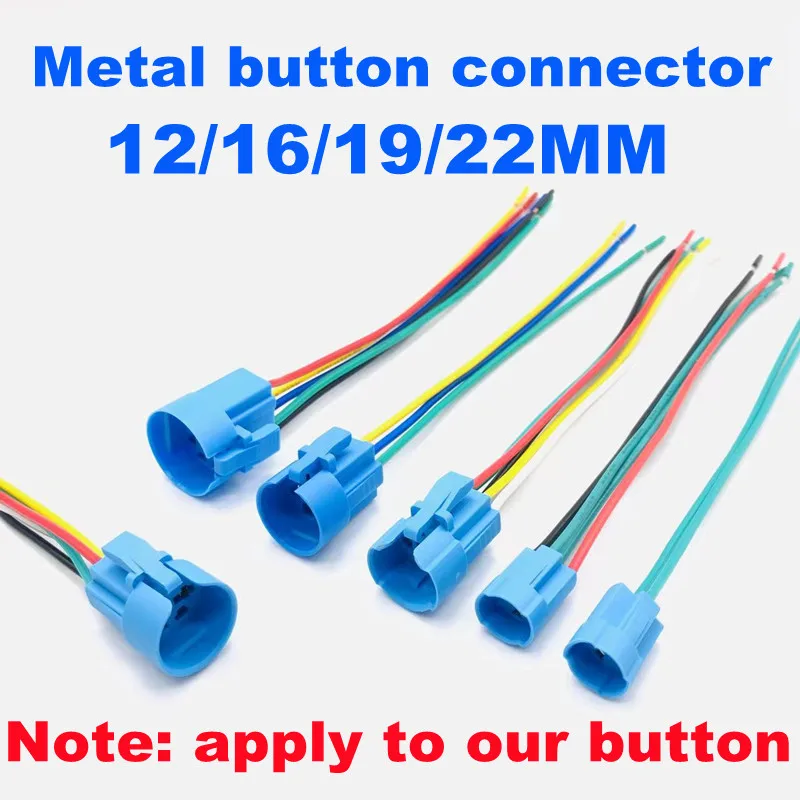
Official Store Deal
Expert Analysis Overview
Precision Wiring for Advanced Control Interfaces
The Metal Button Switch Wire Harness Connectors are essential components for any home automation engineer or electronics enthusiast focused on building reliable, low-latency physical input systems. These pre-wired connectors, available for 12mm, 16mm, 19mm, and 22mm metal button switches, eliminate the complexities of manual wiring. They offer a streamlined plug-and-play solution for integrating tactile controls into sophisticated smart home setups, industrial control panels, or custom DIY projects.
Streamlined Wiring Integration
These connectors are designed to simplify the often-tedious process of wiring momentary or latching metal push buttons. The product line includes options for 2, 3, 4, or 5 lines, catering to a wide array of button functionalities, including basic on/off, NO/NC contacts, and integrated LED indicators. This variety ensures compatibility.
Each connector arrives pre-wired with a standard 150mm length of color-coded wire. This significantly reduces assembly time. It also minimizes the potential for wiring errors inherent in manual crimping or soldering processes.
Unlike generic loose wires that demand meticulous soldering or unreliable crimp terminals, these harnesses provide a secure, standardized connection. This approach drastically cuts down on labor. It enhances the overall reliability of the control interface, a critical factor in any robust automation system.
Architecting Robust Control Interfaces
The visible sturdy plastic construction of the connector bodies suggests a design intended for durability. This robust build complements the metal button switches they are designed to accompany, creating resilient user interfaces.
Such an architecture is invaluable for smart home applications where physical buttons might be exposed to frequent use or located in high-traffic areas. They ensure consistent performance. This translates to a more dependable and satisfying user experience, especially for critical functions like emergency stops or lighting controls.
Compared to purely software-driven touch interfaces or less durable plastic button assemblies, these hardwired connectors facilitate a tactile, responsive, and long-lasting physical interaction. Users gain immediate feedback. This makes them ideal for environments requiring high reliability and a definitive physical action, rather than a mere tap.
Optimizing Latency and Reliability
Direct hardwired connections, as facilitated by these harnesses, are paramount for minimizing input latency. The 150mm wire length provides sufficient reach for most panel installations while keeping signal paths short.
In home automation, particularly for actions like triggering lights, locking doors, or activating security systems, every millisecond counts. These connectors ensure that the signal from the button reaches the microcontroller or relay board with minimal delay. This is crucial for responsive systems.
This direct electrical pathway offers a significant performance advantage over wireless button solutions, which can introduce unpredictable delays due to network congestion, signal interference, or battery life. For critical automations where immediate action is required, hardwired inputs via these connectors are the superior choice.
Scalability and Customization Potential
The availability of connectors across four common button diameters (12mm, 16mm, 19mm, 22mm) and with varying wire counts provides exceptional flexibility. This range supports diverse project requirements.
Whether an application calls for a simple two-wire momentary switch or a more complex five-wire illuminated latching button, there is a suitable connector. This modularity simplifies component selection. It allows for greater creative freedom in designing custom control panels.
This broad compatibility means integrators can standardize their wiring practices across different button types and sizes within a single project or across multiple installations. It facilitates easier future upgrades. It also simplifies the expansion of existing control systems without needing to reinvent the wiring scheme each time.
Simplified Installation and Maintainability
The plug-and-play nature of these connectors drastically streamlines the installation process. No specialized tools are required beyond basic wire stripping and connection to a terminal block or microcontroller pins. This saves valuable time.
This ease of installation also translates directly into simplified troubleshooting and maintenance. If a button needs to be replaced or a wiring configuration adjusted, the connector can be easily unplugged and reconnected. This reduces downtime.
Unlike permanent soldered connections, which often require desoldering and resoldering, these connectors allow for quick and non-destructive modifications. This is a significant advantage for iterative development. It also helps in long-term system upkeep, making repairs less labor-intensive.
Value Proposition for the Integrator
At an individual unit price point of approximately $0.56, these connectors represent a highly cost-effective solution. The initial investment is minimal. However, the value extends far beyond the sticker price.
The time saved on wiring, the enhanced reliability of connections, and the simplified maintenance all contribute to a significant return on investment for any project. These small components prevent costly rework. They ensure project stability.
By ensuring robust and reliable physical interfaces, these connectors are an investment in the overall quality and longevity of any home automation or electronics project. They contribute to user satisfaction. They secure the performance of critical control functions for years to come.
Imagine a home automation system where every button press is met with instantaneous, reliable action. Visualize custom control panels that seamlessly integrate into your environment, offering intuitive and consistent command over your smart devices. These pre-wired button connectors pave the way for such a reality, transforming complex wiring tasks into straightforward plug-and-play operations. They empower you to build, expand, and maintain sophisticated control interfaces with confidence, ensuring your smart home responds precisely when and how you need it to, without compromise.