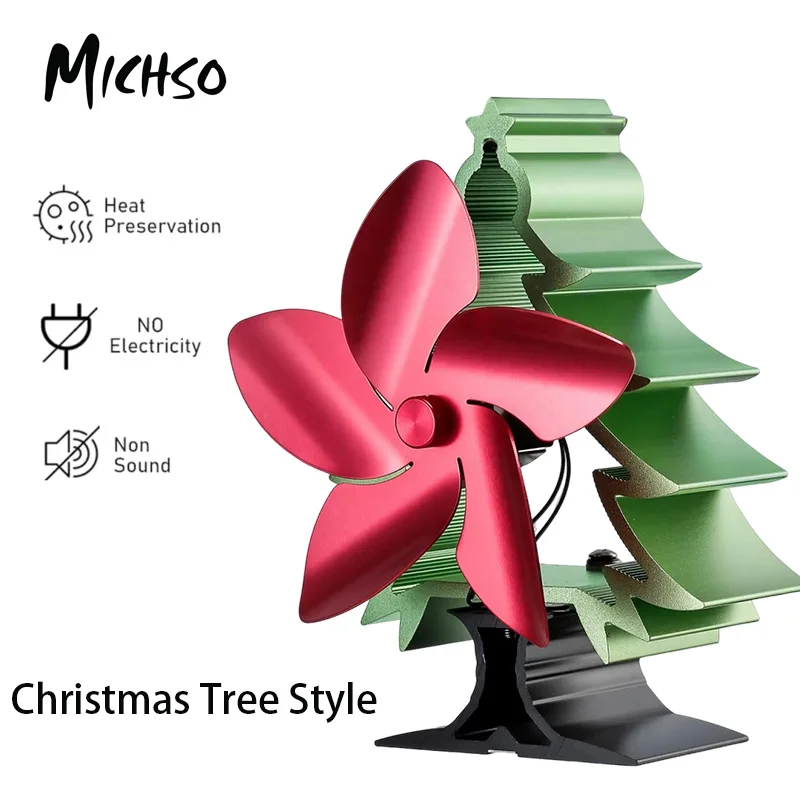
MICHSO 5-Blade Christmas Tree Heat-Powered Stove Fan
Official Store Deal
Expert Analysis Overview
Maximizing Thermal Output: The MICHSO 5-Blade Christmas Tree Heat-Powered Stove Fan
The MICHSO 5-Blade Christmas Tree Heat-Powered Stove Fan is a clever, non-electric thermal distribution device designed for homeowners seeking to maximize the efficiency of their wood-burning stoves and fireplaces. This unit represents a significant upgrade over passive heat radiation, actively circulating warmth throughout the living space. Its operation is entirely self-sufficient.At its core, the fan utilizes a thermoelectric module, often referred to as a Peltier device, to convert a temperature differential into electrical energy. This module sits at the base of the fan, drawing heat from the stove's surface. The cooler air above the fan creates the necessary temperature gradient, allowing the module to generate enough power to spin the blades. This ingenious design means zero reliance on external power sources or batteries, a critical advantage during power outages or for off-grid living.
When placed correctly on a heated stove, the fan begins to rotate as the surface temperature rises. The gentle, consistent airflow generated by the five blades pushes warm air away from the immediate vicinity of the stove and into the room. This prevents heat from simply rising to the ceiling and accumulating there, instead distributing it more effectively at occupant level. The difference in room temperature uniformity is noticeable.
Compared to a stove operating without any fan, or even with a basic electric fan, this heat-powered unit offers a distinct benefit in terms of energy independence. Traditional electric fans consume power, adding to utility bills, while this device operates at no additional cost beyond the fuel for the stove. It is a smart investment for long-term savings.
Aesthetic Integration and Build Quality
The visual appeal of this stove fan is immediately striking, departing from the utilitarian designs often found in this category. The Christmas tree aesthetic, with its green finned body and vibrant red blades, allows it to blend seamlessly into festive decor or add a whimsical touch to a rustic hearth. The design is not merely decorative; it serves a functional purpose.Constructed from anodized aluminum, the fan exhibits a premium feel and robust durability. The anodizing process creates a hard, corrosion-resistant surface that also contributes to efficient heat transfer. This material choice ensures the fan can withstand the high temperatures associated with stove operation without warping or degrading over time. The finish is smooth to the touch.
When positioned on a hearth, the fan's unique silhouette becomes a conversation piece. Its silent operation ensures that the visual charm is not undermined by distracting noise. The overall impression is one of thoughtful design, where form and function are equally prioritized. It looks good.
Unlike many generic stove fans that prioritize pure functionality, this model integrates a decorative element. The Christmas tree shape and vibrant red blades offer a distinct personality, making it an attractive addition rather than just a piece of equipment. This attention to design detail elevates the product.
Operational Dynamics and Airflow
The 5-blade configuration is a key feature, engineered to optimize air displacement. While heat-powered fans are not designed to create a powerful gust, the five blades work in concert to move a significant volume of air gently but consistently. This subtle airflow is crucial for effective heat distribution without creating drafts.This fan starts up quickly. The low starting temperature means it begins circulating air soon after the stove is lit, maximizing the duration of its operation. The blades rotate smoothly, indicating precise balancing and minimal friction within the internal mechanism. The air movement is gentle, yet pervasive.
The fan's primary function is to create a convection current, pushing the warm air horizontally across the room. This action helps to break up the stratification of air, where hot air rises and cold air settles. The result is a more uniform temperature throughout the living space, eliminating uncomfortable cold pockets. This is a subtle but effective process.
Compared to models with fewer blades, a 5-blade design typically offers a slightly higher CFM (Cubic Feet per Minute) rating, meaning it can move more air. While specific CFM figures are not provided, the increased blade surface area inherently contributes to more efficient air circulation at lower rotational speeds. This translates to better heat spread.
Energy Independence and Cost Savings
The most compelling aspect of this stove fan is its complete energy independence. It requires no external power source, no batteries, and no charging. This fundamental design choice translates directly into tangible cost savings for the user. There are no ongoing electricity costs associated with its operation.Imagine a winter evening when a power outage strikes. While electric fans would cease to function, this heat-powered unit continues to operate, silently distributing warmth from the wood stove. This provides not only comfort but also a sense of security during unpredictable events. It offers peace of mind.
Over the lifespan of the product, the absence of electricity consumption represents a significant return on investment. The initial purchase price is the only cost. This makes it an environmentally friendly choice, reducing reliance on grid electricity and lowering a household's carbon footprint. It is a truly sustainable option.
Unlike electric fans that contribute to a household's energy consumption, this fan actively reduces the need for other heating methods by making the existing wood stove more efficient. This passive energy harvesting is a smart approach to home heating, aligning with principles of energy conservation. It saves money.
Durability and Maintenance Profile
The choice of anodized aluminum for the fan's construction is a testament to its intended durability. This material is known for its strength, corrosion resistance, and ability to withstand high temperatures without degradation. The robust build suggests a long operational life, even under consistent use in a heated environment.Maintenance requirements for this fan are minimal. With no complex electrical components or batteries to replace, the primary upkeep involves simply keeping the blades and body free of dust and debris. A soft cloth is usually sufficient for cleaning. This simplicity ensures hassle-free ownership.
The self-regulating nature of the thermoelectric module means there are no user adjustments required. The fan automatically speeds up or slows down based on the stove's temperature, preventing overheating and extending the lifespan of the internal components. It manages itself.
Compared to fans with exposed wiring or plastic components, the all-metal construction of this unit offers superior longevity and resilience. The absence of moving parts beyond the rotating blades also reduces potential points of failure, making it a highly reliable device. It is built to last.
Placement and Optimal Performance
Achieving optimal performance from a heat-powered stove fan hinges on correct placement. The fan should be positioned on a smooth, flat surface on the stove top, typically towards the rear or side, but crucially, away from the flue pipe. The flue pipe can become excessively hot, potentially damaging the thermoelectric module if the fan is placed too close.Proper placement ensures the fan can draw maximum heat from the stove's surface while also allowing for a cooler ambient air supply to create the necessary temperature differential for the thermoelectric generator. This balance is vital for efficient operation. It needs the right spot.
Imagine the fan placed too close to the flue; the entire unit might become uniformly hot, reducing the temperature differential across the thermoelectric module and thus diminishing its power generation. Conversely, placing it too far from the hottest part of the stove might delay its startup or reduce its maximum speed. The sweet spot is key.
Unlike guesswork, the visual guides provided with similar products often illustrate the ideal placement, emphasizing the importance of a stable, hot surface. Users should experiment slightly with positioning to find the most effective spot for their specific stove and room layout. This fine-tuning maximizes heat distribution.