Microwave Oven & Refrigerator Appliance Bulb
Official Store Deal
Expert Analysis Overview
The 25W Microwave Oven & Refrigerator Appliance Bulb is a practical, heavy-duty incandescent replacement designed for DIY enthusiasts seeking to restore essential illumination to their Kitchen Appliances. This component offers a straightforward solution for common lighting failures, empowering users to perform repairs without the expense of professional service. Its robust construction and universal design address the specific demands of high-temperature environments, ensuring reliable performance where standard bulbs often fail.
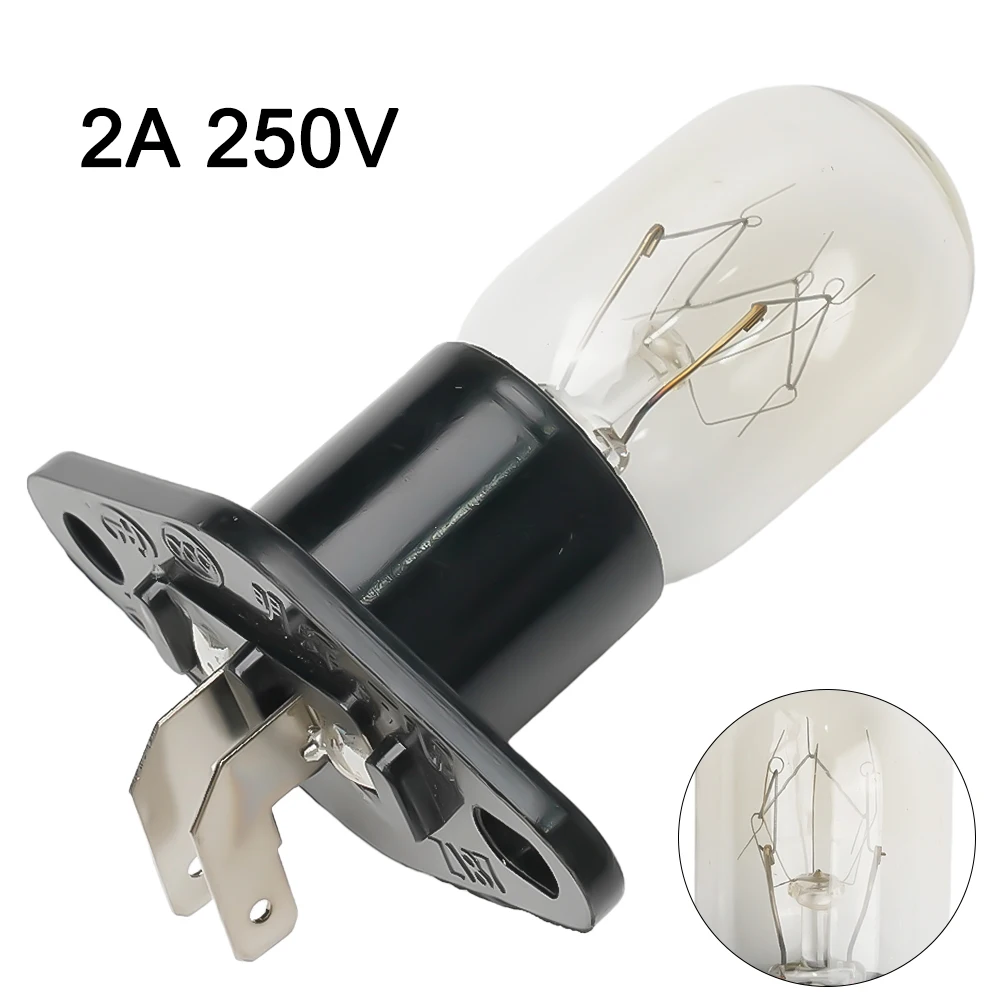
This appliance bulb presents a familiar tubular form factor, often designated as a T170 type, encased in clear, heat-resistant glass. The glass envelope feels substantial, suggesting a resilience against the thermal fluctuations inherent in microwave ovens. Unlike generic household bulbs, this unit integrates a sturdy black plastic flange mount base, engineered for secure attachment within an appliance cavity. The base itself exhibits clean molding, indicating a precision in manufacturing that contributes to its overall durability.
The base features two pre-drilled holes, allowing for direct screw-in installation. This design choice simplifies the mounting process significantly. Two robust metal spade connectors protrude from the rear of the base, providing a reliable electrical interface. These connectors are thick, ensuring a snug fit into existing wiring harnesses. The metal appears to be a standard plated steel, offering adequate conductivity and corrosion resistance for indoor appliance use.
Compared to the often flimsy or proprietary bases found on some OEM bulbs, this universal design prioritizes ease of replacement. The integrated holder eliminates the need to salvage or adapt an old socket, streamlining the repair. This is a direct upgrade for many older appliances where the original bulb and holder might have degraded over time due to heat cycling. The tactile feedback of the plastic base is firm, not brittle, which is crucial for components exposed to vibrations and temperature changes.
Operating at 250V and rated for 2A, this bulb delivers a 25W output, providing ample illumination for the interior of a microwave oven or refrigerator. The 25W power rating is a critical detail. It ensures sufficient brightness to clearly see food items or refrigerator contents without being excessively bright or generating undue heat. This wattage is a common standard for appliance lighting, striking a balance between visibility and energy consumption for its intended purpose.
When activated, the incandescent filament glows with a warm, clear light. This traditional light quality is instantly recognizable and effective for its function. The bulb reaches full brightness almost instantaneously, a characteristic benefit of incandescent technology. Imagine opening your microwave door and instantly seeing your meal, or quickly locating an item in a dimly lit refrigerator. This immediate response is vital for user convenience in frequently accessed appliances.
Unlike lower wattage bulbs that might struggle to adequately light a full microwave cavity, this 25W unit projects a broad and even spread of light. Compared to the often dim or flickering performance of a failing original bulb, this replacement offers consistent and reliable illumination. The 250V rating also provides a wider compatibility range, accommodating various regional electrical standards, making it a truly versatile component for global appliance models.
The design of this appliance bulb strongly emphasizes straightforward installation, making it an ideal choice for the DIY repair specialist. Its flange mount base is a common configuration, allowing for direct replacement in numerous microwave and refrigerator models. The spade connectors are a standard size, ensuring compatibility with most existing wiring terminals. This means less time spent searching for obscure adapters or attempting complex wiring modifications.
Installation typically involves removing a few screws to access the bulb compartment, disconnecting the old bulb, and then securing the new unit. The process is often completed in under fifteen minutes. This empowers homeowners to quickly resolve a common appliance issue, avoiding the inconvenience and expense of a service call. The mounting holes on the flange are spaced to align with many OEM fixture points.
Unlike some proprietary bulb designs that require specialized tools or intricate disassembly, this bulb's design simplifies the task. The robust nature of the spade connectors ensures they can withstand repeated connections and disconnections during installation or future maintenance. This ease of fitment is a significant advantage over generic bulbs that might require jury-rigging or compromise the integrity of the appliance's electrical system. It is a simple swap.
Before purchasing, verifying the exact fitment against the original bulb is paramount. While described as universal, the term applies to its common design principles rather than guaranteed compatibility with every single appliance. Users must confirm the voltage, wattage, and critically, the physical dimensions of the bulb and its mounting base. This includes the spacing of the mounting holes and the orientation of the spade connectors.
A quick visual inspection of the existing bulb and its housing will provide most of the necessary information. Take a picture of the old bulb. Measure its length and diameter, and note the configuration of its electrical terminals. Comparing these details to the product images and specifications ensures a precise match. This diligent approach prevents frustration and ensures a successful repair on the first attempt.
This verification process is a cornerstone of effective DIY repair. It differentiates a successful, cost-saving project from a frustrating return. Unlike simply guessing based on appliance brand, a direct comparison of specifications ensures the replacement bulb integrates seamlessly, maintaining the appliance's original design and safety standards. The small effort upfront saves considerable time and potential rework.
This appliance bulb is specifically engineered for heavy-duty applications, a crucial distinction from standard household bulbs. The robust filament construction and heat-resistant glass are designed to endure the extreme temperature fluctuations and vibrations often found within microwave ovens. These conditions can quickly degrade lesser quality bulbs, leading to frequent replacements. Its design directly addresses these operational stresses.
The value proposition of this bulb extends beyond its initial purchase price. By enabling a DIY repair, it significantly reduces the overall cost of appliance maintenance. A service call for a simple bulb replacement can easily exceed the cost of the bulb by ten or twenty times. This component offers a substantial return on investment for any homeowner willing to undertake the repair themselves. It is a smart financial decision.
Compared to the short lifespan of a standard incandescent bulb in a high-vibration environment, this heavy-duty variant offers extended operational hours. This means fewer replacements over time, translating into both cost savings and reduced inconvenience. The bulb's ability to withstand repeated heating and cooling cycles without premature failure underscores its quality. This is not a temporary fix.
While highly effective and reliable, this bulb utilizes incandescent technology. This means it is inherently less energy-efficient than modern LED alternatives. Incandescent bulbs generate light by heating a filament, with a significant portion of energy lost as heat rather than light. For an appliance like a microwave, which operates intermittently, this energy consumption is often negligible in the grand scheme of household electricity use.
However, for a refrigerator bulb that might be accessed multiple times a day, the cumulative energy consumption could be a minor consideration for the most energy-conscious users. The trade-off is the immediate, full-spectrum light output and the simple, robust design that requires no complex driver circuitry. It simply works. This simplicity is often preferred in repair scenarios where compatibility and reliability are paramount.
Unlike LED bulbs that can sometimes introduce flicker or compatibility issues with older appliance control Boards, this incandescent bulb offers guaranteed performance. Its straightforward electrical requirements mean it integrates seamlessly without unexpected complications. For those prioritizing a direct, no-fuss replacement that matches OEM performance, the incandescent nature is a feature, not a flaw.
The simplicity of this bulb's design also translates into straightforward troubleshooting. If the bulb fails to light after installation, the most common culprits are easily identifiable. First, always ensure the appliance is completely unplugged before any inspection. A quick check of the spade connectors for a secure fit is often the solution. Loose connections are surprisingly common.
The filament itself can be visually inspected through the clear glass. A broken or blackened filament indicates a burned-out bulb, confirming the need for replacement. If the new bulb still does not illuminate, testing the appliance's power outlet with another device can rule out a broader electrical issue. These simple steps empower the user to diagnose and resolve problems efficiently.
Compared to complex electronic components that require specialized diagnostic tools, this bulb's issues are typically mechanical or immediately visible. This accessibility reinforces the DIY-friendly nature of the product. The ability to quickly identify and rectify a problem instills confidence in the user. It is a simple component.
Opting for a DIY repair with this appliance bulb offers significant advantages beyond just cost savings. It provides a sense of accomplishment and a deeper understanding of Household Appliances. The process of identifying the correct part, carefully installing it, and seeing the appliance restored to full functionality is incredibly rewarding. This bulb facilitates that experience.
The availability of such a universal replacement part means that older, perfectly functional appliances do not need to be discarded simply because a minor component has failed. This promotes sustainability and reduces waste. It extends the life of valuable household items. This bulb is a small but mighty contributor to a more repair-oriented mindset.
Imagine the satisfaction of opening your microwave, seeing the interior brightly lit once more, knowing you fixed it yourself. Picture the convenience of easily finding items in your refrigerator without fumbling in the dark. This appliance bulb doesn't just provide light; it restores functionality and empowers the homeowner. It is a small investment that yields significant practical and personal returns, keeping your essential appliances running smoothly for years to come.
Illuminating Appliance Interiors: Design and Construction
This appliance bulb presents a familiar tubular form factor, often designated as a T170 type, encased in clear, heat-resistant glass. The glass envelope feels substantial, suggesting a resilience against the thermal fluctuations inherent in microwave ovens. Unlike generic household bulbs, this unit integrates a sturdy black plastic flange mount base, engineered for secure attachment within an appliance cavity. The base itself exhibits clean molding, indicating a precision in manufacturing that contributes to its overall durability.
The base features two pre-drilled holes, allowing for direct screw-in installation. This design choice simplifies the mounting process significantly. Two robust metal spade connectors protrude from the rear of the base, providing a reliable electrical interface. These connectors are thick, ensuring a snug fit into existing wiring harnesses. The metal appears to be a standard plated steel, offering adequate conductivity and corrosion resistance for indoor appliance use.
Compared to the often flimsy or proprietary bases found on some OEM bulbs, this universal design prioritizes ease of replacement. The integrated holder eliminates the need to salvage or adapt an old socket, streamlining the repair. This is a direct upgrade for many older appliances where the original bulb and holder might have degraded over time due to heat cycling. The tactile feedback of the plastic base is firm, not brittle, which is crucial for components exposed to vibrations and temperature changes.
Powering the Light: Electrical Specifications and Performance
Operating at 250V and rated for 2A, this bulb delivers a 25W output, providing ample illumination for the interior of a microwave oven or refrigerator. The 25W power rating is a critical detail. It ensures sufficient brightness to clearly see food items or refrigerator contents without being excessively bright or generating undue heat. This wattage is a common standard for appliance lighting, striking a balance between visibility and energy consumption for its intended purpose.
When activated, the incandescent filament glows with a warm, clear light. This traditional light quality is instantly recognizable and effective for its function. The bulb reaches full brightness almost instantaneously, a characteristic benefit of incandescent technology. Imagine opening your microwave door and instantly seeing your meal, or quickly locating an item in a dimly lit refrigerator. This immediate response is vital for user convenience in frequently accessed appliances.
Unlike lower wattage bulbs that might struggle to adequately light a full microwave cavity, this 25W unit projects a broad and even spread of light. Compared to the often dim or flickering performance of a failing original bulb, this replacement offers consistent and reliable illumination. The 250V rating also provides a wider compatibility range, accommodating various regional electrical standards, making it a truly versatile component for global appliance models.
Seamless Integration: Installation and Compatibility
The design of this appliance bulb strongly emphasizes straightforward installation, making it an ideal choice for the DIY repair specialist. Its flange mount base is a common configuration, allowing for direct replacement in numerous microwave and refrigerator models. The spade connectors are a standard size, ensuring compatibility with most existing wiring terminals. This means less time spent searching for obscure adapters or attempting complex wiring modifications.
Installation typically involves removing a few screws to access the bulb compartment, disconnecting the old bulb, and then securing the new unit. The process is often completed in under fifteen minutes. This empowers homeowners to quickly resolve a common appliance issue, avoiding the inconvenience and expense of a service call. The mounting holes on the flange are spaced to align with many OEM fixture points.
Unlike some proprietary bulb designs that require specialized tools or intricate disassembly, this bulb's design simplifies the task. The robust nature of the spade connectors ensures they can withstand repeated connections and disconnections during installation or future maintenance. This ease of fitment is a significant advantage over generic bulbs that might require jury-rigging or compromise the integrity of the appliance's electrical system. It is a simple swap.
Verifying Fitment: A Crucial Step
Before purchasing, verifying the exact fitment against the original bulb is paramount. While described as universal, the term applies to its common design principles rather than guaranteed compatibility with every single appliance. Users must confirm the voltage, wattage, and critically, the physical dimensions of the bulb and its mounting base. This includes the spacing of the mounting holes and the orientation of the spade connectors.
A quick visual inspection of the existing bulb and its housing will provide most of the necessary information. Take a picture of the old bulb. Measure its length and diameter, and note the configuration of its electrical terminals. Comparing these details to the product images and specifications ensures a precise match. This diligent approach prevents frustration and ensures a successful repair on the first attempt.
This verification process is a cornerstone of effective DIY repair. It differentiates a successful, cost-saving project from a frustrating return. Unlike simply guessing based on appliance brand, a direct comparison of specifications ensures the replacement bulb integrates seamlessly, maintaining the appliance's original design and safety standards. The small effort upfront saves considerable time and potential rework.
Durability in Demanding Environments: Longevity and Value
This appliance bulb is specifically engineered for heavy-duty applications, a crucial distinction from standard household bulbs. The robust filament construction and heat-resistant glass are designed to endure the extreme temperature fluctuations and vibrations often found within microwave ovens. These conditions can quickly degrade lesser quality bulbs, leading to frequent replacements. Its design directly addresses these operational stresses.
The value proposition of this bulb extends beyond its initial purchase price. By enabling a DIY repair, it significantly reduces the overall cost of appliance maintenance. A service call for a simple bulb replacement can easily exceed the cost of the bulb by ten or twenty times. This component offers a substantial return on investment for any homeowner willing to undertake the repair themselves. It is a smart financial decision.
Compared to the short lifespan of a standard incandescent bulb in a high-vibration environment, this heavy-duty variant offers extended operational hours. This means fewer replacements over time, translating into both cost savings and reduced inconvenience. The bulb's ability to withstand repeated heating and cooling cycles without premature failure underscores its quality. This is not a temporary fix.
The Incandescent Trade-off: Efficiency Considerations
While highly effective and reliable, this bulb utilizes incandescent technology. This means it is inherently less energy-efficient than modern LED alternatives. Incandescent bulbs generate light by heating a filament, with a significant portion of energy lost as heat rather than light. For an appliance like a microwave, which operates intermittently, this energy consumption is often negligible in the grand scheme of household electricity use.
However, for a refrigerator bulb that might be accessed multiple times a day, the cumulative energy consumption could be a minor consideration for the most energy-conscious users. The trade-off is the immediate, full-spectrum light output and the simple, robust design that requires no complex driver circuitry. It simply works. This simplicity is often preferred in repair scenarios where compatibility and reliability are paramount.
Unlike LED bulbs that can sometimes introduce flicker or compatibility issues with older appliance control Boards, this incandescent bulb offers guaranteed performance. Its straightforward electrical requirements mean it integrates seamlessly without unexpected complications. For those prioritizing a direct, no-fuss replacement that matches OEM performance, the incandescent nature is a feature, not a flaw.
Empowering the Home Fixer: Maintenance and Troubleshooting
The simplicity of this bulb's design also translates into straightforward troubleshooting. If the bulb fails to light after installation, the most common culprits are easily identifiable. First, always ensure the appliance is completely unplugged before any inspection. A quick check of the spade connectors for a secure fit is often the solution. Loose connections are surprisingly common.
The filament itself can be visually inspected through the clear glass. A broken or blackened filament indicates a burned-out bulb, confirming the need for replacement. If the new bulb still does not illuminate, testing the appliance's power outlet with another device can rule out a broader electrical issue. These simple steps empower the user to diagnose and resolve problems efficiently.
Compared to complex electronic components that require specialized diagnostic tools, this bulb's issues are typically mechanical or immediately visible. This accessibility reinforces the DIY-friendly nature of the product. The ability to quickly identify and rectify a problem instills confidence in the user. It is a simple component.
The DIY Advantage: A Smart Repair Choice
Opting for a DIY repair with this appliance bulb offers significant advantages beyond just cost savings. It provides a sense of accomplishment and a deeper understanding of Household Appliances. The process of identifying the correct part, carefully installing it, and seeing the appliance restored to full functionality is incredibly rewarding. This bulb facilitates that experience.
The availability of such a universal replacement part means that older, perfectly functional appliances do not need to be discarded simply because a minor component has failed. This promotes sustainability and reduces waste. It extends the life of valuable household items. This bulb is a small but mighty contributor to a more repair-oriented mindset.
Imagine the satisfaction of opening your microwave, seeing the interior brightly lit once more, knowing you fixed it yourself. Picture the convenience of easily finding items in your refrigerator without fumbling in the dark. This appliance bulb doesn't just provide light; it restores functionality and empowers the homeowner. It is a small investment that yields significant practical and personal returns, keeping your essential appliances running smoothly for years to come.